 © Nagoya Women’s Marathon
Nagoya Women’s Marathon 2026: 26.2 Miles of Women, a Royal Duel, and Sheila Chepkirui on Top
On March 8 in Nagoya, Japan, women didn’t just run a marathon—they wrote a story of endurance, resilience, and pride across 42.195 kilometers (26.2 miles). In this unique event on the global running calendar, where thousands of women take the start line together, the victory ultimately came down to the narrowest of margins. After a breathtaking duel that lasted until the very final meters beneath the city’s dome, Kenya’s Sheila Chepkiruisuccessfully defended her title at the Nagoya Women’s Marathon, winning in 2:21:54, just two seconds ahead of Japan’s Sayaka Sato, while Ethiopia’s Aynalem Desta completed the podium. An intense and vibrant all-women race that once again proves how special this Japanese marathon has become in the global running landscape.
In the streets of Nagoya, in central Japan, the morning of March 8 carried the feel of a powerful statement. A statement about women’s running in all its strength: thousands of strides, ambitions arriving from around the world, and a race that celebrates—year after year—the place of women in the history of distance running. In this electric setting, shaped by unpredictable winds, the race was ultimately decided by just two seconds after 42.195 kilometers. Inside the finishing area beneath the dome of the Japanese city, Sheila Chepkirui held off Sayaka Sato to claim her second consecutive victory at the Nagoya Women’s Marathon. Final time: 2:21:54. Sato followed just two heartbeats behind in 2:21:56, while Ethiopia’s Aynalem Desta took third in 2:22:37.
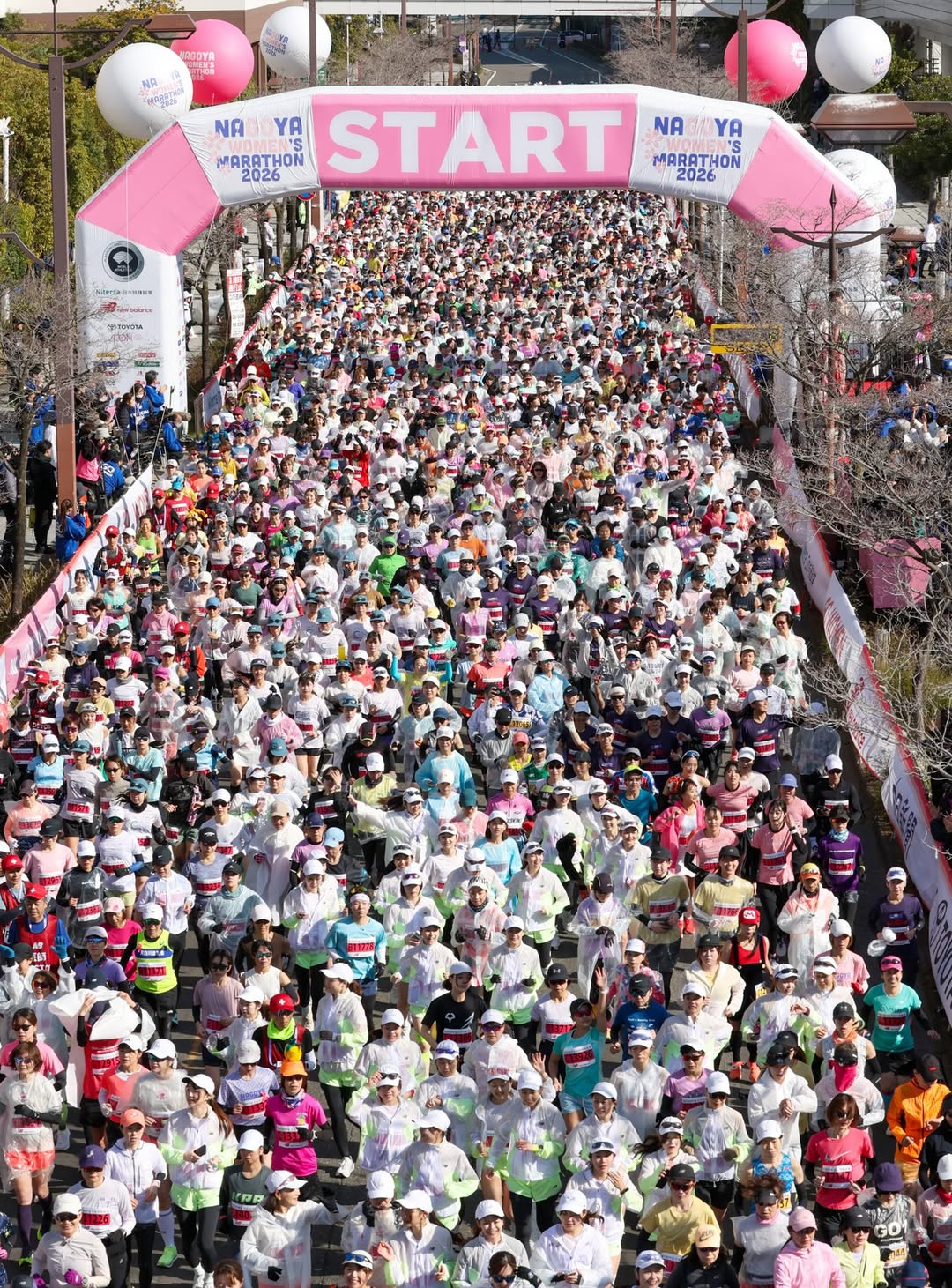
A gripping duel in what has become, over the years, one of the premier events in the global women’s marathon calendar. Certified with World Athletics Platinum Label status, the Nagoya Women’s Marathon holds a rare distinction: only women start the race. Around 20,000 participants, from elite athletes to recreational runners, take part each year in this massive celebration of women’s distance running. And this Sunday morning in Nagoya reminded the world of one simple truth: when women run, the spectacle rarely lacks drama.
| Headwinds and Japanese ambitions
The race started at 9:10 a.m. under clear skies—but tricky conditions. Temperatures hovered around 6°C (43°F), with a persistent north wind and gusts capable of disrupting even the most carefully planned pacing strategies. In the lead pack, Japan was dreaming of a big day. Among the contenders were national record holder Honami Maeda and Olympian Ayuko Suzuki. Setting the early pace was a prestigious pacemaker: Nozomi Tanaka, the Japanese record holder in the 1,500m and 5,000m on the track.
The early kilometers unfolded exactly as expected: 3:17 for the first kilometer, then 16:34 at 5 km. The pack remained compact, disciplined, almost silent in the cold morning air. But the wind soon began to reshuffle the deck. Even before the 10-kilometer mark, Suzuki started to fall back. Soon after, others began to pay the price.

| A war of attrition
Between 10 km and 20 km, the marathon turned into a battle of endurance. Strong headwinds slowed the rhythm, with the pace hovering around 3:30 per kilometer. Gradually, the casualties mounted. Maeda, Kabasawa, Ando—one by one, runners dropped away as the marathon’s natural selection took hold. At halfway (1:10:51), a new lead group formed around ambitious Japanese runners: Rika Kaseda, Natsuki Omori, and Rino Goto.
Among this strong local contingent were two foreign challengers with steady legs: Chepkirui and Desta. The marathon was entering its favorite phase—the moment when every kilometer becomes a negotiation with the body.
| Attack, response, and a final duel
Approaching 30 kilometers, the race began to explode. Goto launched the first serious move, quickly neutralized. Then Sato took control. Kaseda followed. The group shrank. At 35 km (1:57:54), the stage was set for an explosive finale. Between 35 and 38 kilometers, Chepkirui made her move. A decisive surge—but the group still held together. Then the cracks appeared. Kaseda finally dropped off at 39 km, followed shortly by Desta. At the front, only two silhouettes remained. Chepkirui vs. Sato. Kenya vs. Japan. Experience vs. a nation’s dream.
With 600 meters to go, the Japanese runner launched a fierce acceleration. The crowd erupted. The scene suddenly felt like an Olympic final. But Chepkirui refused to break. In the final straight, the Kenyan responded, surged again, and crossed the line first—two seconds ahead of Sato. A breath of difference. A victory earned through courage.
| A key race for Japan’s Olympic future
In Japan, this marathon is never just about the winner. The race also plays a strategic role in the qualification process for the Marathon Grand Championship (MGC)—the national selection race that determines Japan’s marathon team for the 2028 Olympic Games in Los Angeles. Several Japanese runners used this edition to secure their place. Behind the podium, Rika Kaseda (4th, 2:22:53), Natsuki Omori (5th, 2:23:45), Sora Shinozakura (6th, 2:24:34), Rino Goshima (7th, 2:24:44) and Aika Murakami (9th, 2:25:07) all clinched qualification for the national final scheduled this fall. Sixteen athletes will compete there for a chance to chase the Olympic dream.
| A champion confirmed
For Sheila Chepkirui, this second consecutive victory in Nagoya further strengthens her status among the world’s top marathoners. At 35 years old, the Kenyan once again proved that experience remains one of the most formidable weapons over 26.2 miles. Her personal best of 2:17:29 already speaks to her international caliber. But this Sunday’s win was far from a dominant display. It was a battle. A demonstration of resilience. A masterclass in navigating chaos.
In a marathon world often dominated by major European and American cities, Nagoya offers something different: a stadium filled with marathon-running women, thousands of female strides echoing through the streets, and a tradition that continues to grow. In the end, a champion stands atop the podium. But behind her, an entire generation of Japanese runners keeps building its future. And on the asphalt of Nagoya, one thing feels certain: women’s marathon running has never looked more alive.
✔ Results of the 2026 Nagoya Women’s Marathon

Dorian VUILLET
Journalist