 © Osaka Marathon
Osaka Marathon 2026: Ibrahim Hassan and Mare Dibaba shine in one of the world’s deepest fields
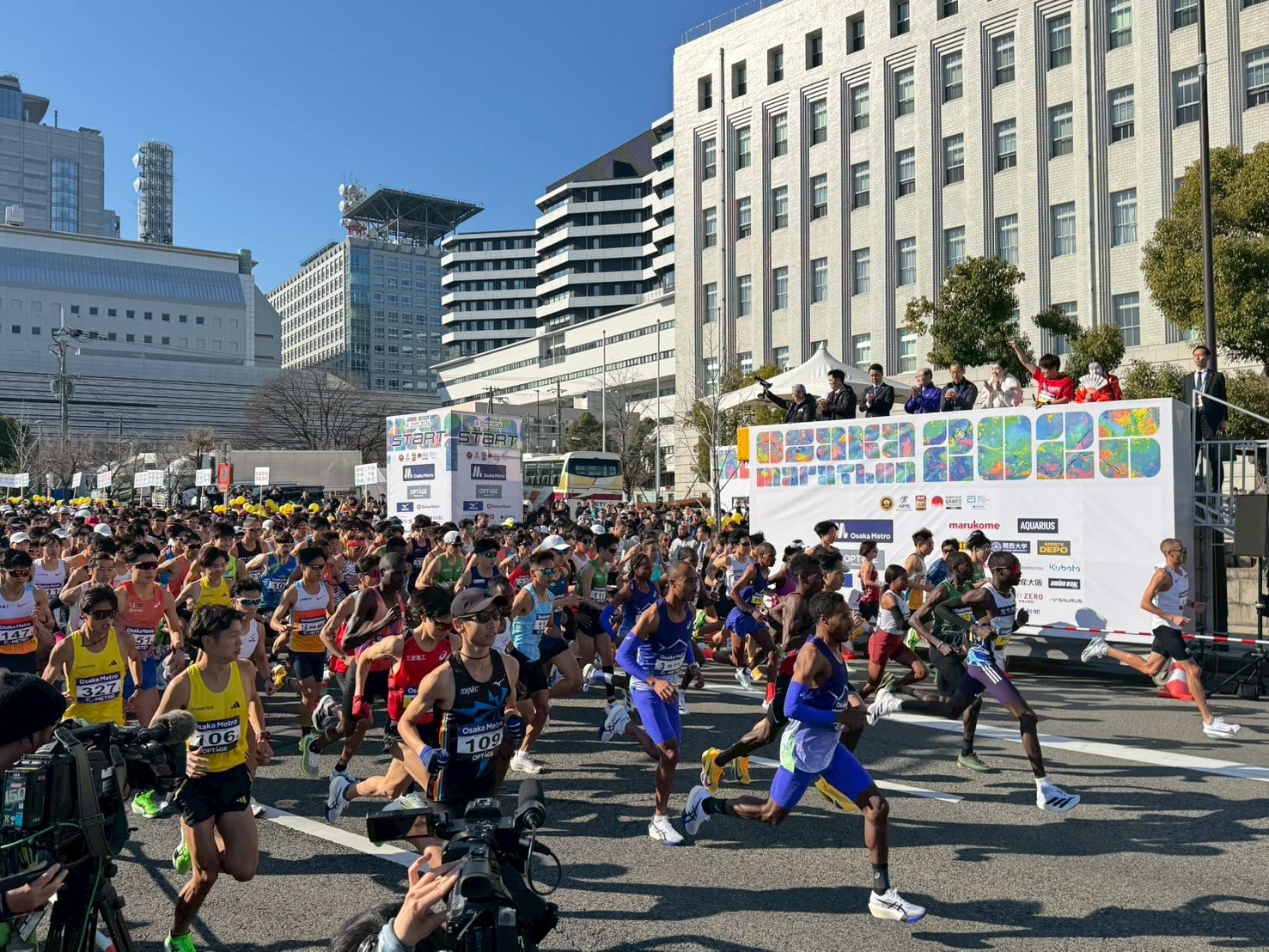
There are fast marathons. There are deep marathons. And then there is Osaka. Less media-exposed than Valencia, less flashy than its World Major neighbor Tokyo, the Osaka Marathon remains, year after year, one of the fastest and most competitive races on the global calendar. In 2026, both course records fell. Ibrahim Hassan stormed to a blistering 2:05:20, setting a new national record for Djibouti, while Mare Dibaba crossed the line in 2:21:44. After Marugame’s incredible half marathon depth earlier this season, Osaka once again delivered a clear message: in Japan, depth is not a myth. It’s a reality.
| Ibrahim Hassan in control, Kiyoto Hirabayashi confirms
Few marathons have been this spectacular.
From the gun, the pace was aggressive: 14:50 through 5K—right on 2:05 tempo. Then, at 8K, Hibiki Yoshida decided to write his own script.
The 2026 Hakone Ekiden hero surged solo. No hesitation. No calculation. With projections dipping toward 2:04 and even 2:03 high, the 24-year-old ran like he wanted to prove something immediately. He even missed several aid stations. The crowd roared. In Japan, boldness is respected.
But the marathon punishes excess.
By 30K, the pace began to fade. Behind him, Ibrahim Hassan—Djibouti’s national record holder—and Kiyoto Hirabayashi reeled him in methodically. Experience prevailed. At 35K the gap had nearly vanished; two kilometers later, Yoshida was caught.
Hassan surged away and claimed victory in 2:05:20, breaking both the national and course records. Calm, composed, perfectly managed.
Behind him:
Yihunilign Adane – 2:05:33
Ezra Kipketer Tanui – 2:05:55
Benson Tunyo – 2:06:10
A 100% East African top four.
Hirabayashi, the top Japanese finisher, placed fifth in 2:06:14. Yoshida faded to 34th in 2:09:35. Some will call it naïve. Others will call it courage. In Japan, that kind of attempt builds legacy.
Men’s Top 10
1. Ibrahim Hassan (DJI) – 2:05:20
2. Yihunilign Adane (ETH) – 2:05:33
3. Ezra Kipketer Tanui (KEN) – 2:05:55
4. Benson Tunyo (KEN) – 2:06:10
5. Kiyoto Hirabayashi (JPN) – 2:06:14
6. Ichitaka Yamashita (JPN) – 2:06:18
7. Yuki Takei (JPN) – 2:06:24
8. Yuhei Urano (JPN) – 2:06:41
9. Kyohei Hosoya (JPN) – 2:06:44
10. Ryo Goda (JPN) – 2:06:51
| Mare Dibaba in total control
The women’s race delivered high-level competition as well.
The leading quartet passed halfway in 1:09:58. At 40K, Mare Dibaba made her decisive move. At 36 years old, the Ethiopian proved she remains a force over 42.195 km.
Women’s Podium
1. Mare Dibaba (ETH) – 2:21:44 (Course Record)
2. Esther Chemtai (KEN) – 2:22:04
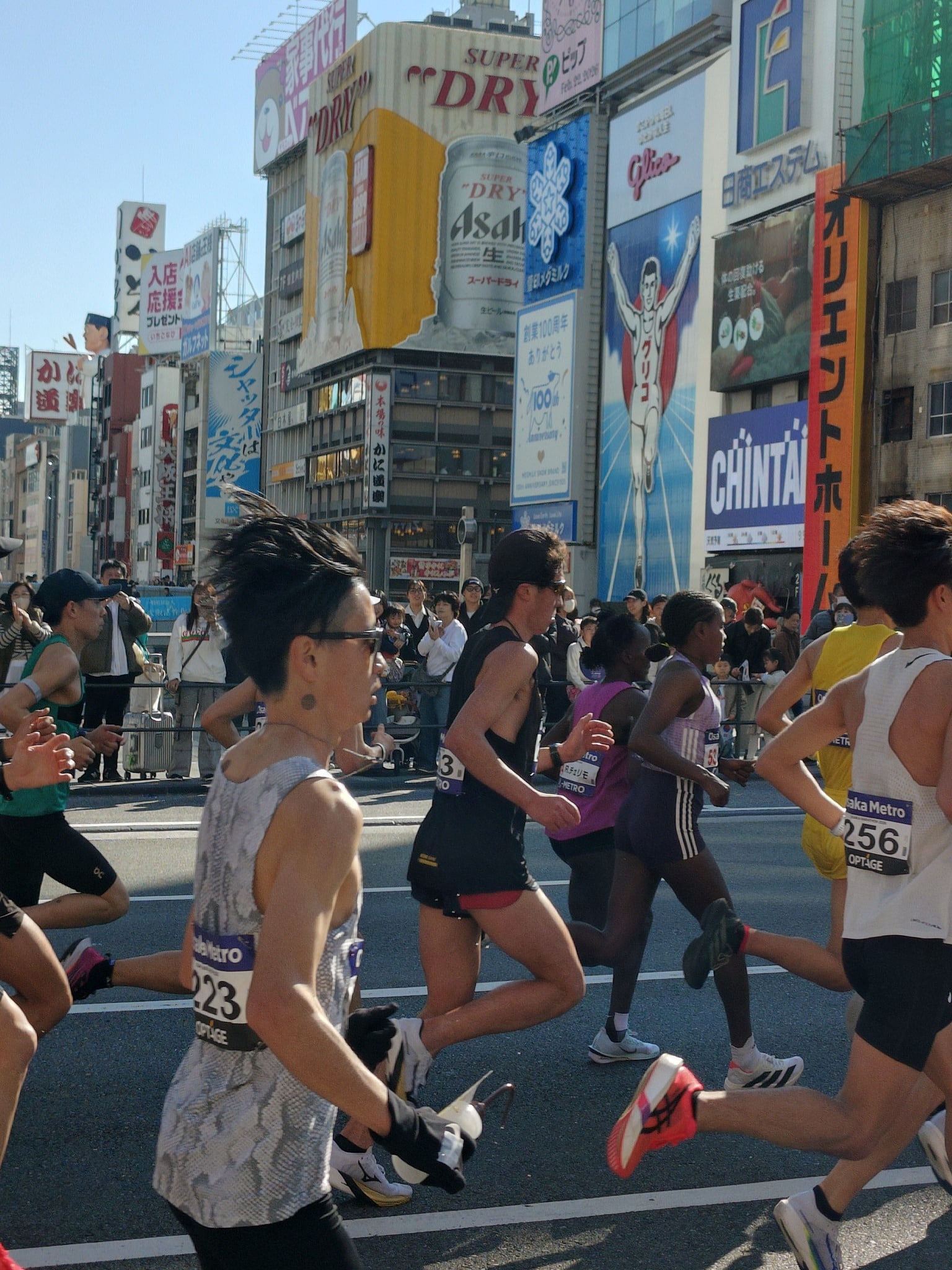
3. Rose Chelimo (BRN) – 2:22:52
All top five finished under 2:25. Kaede Kawamura, sixth in 2:25:55, was the top Japanese finisher and secured her place in the Olympic qualifying pathway for LA 2028.
| Ethan Shuley: the American surprise
Few expected Ethan Shuley to be a headline name.
A film student in Shinjuku. Former BYU teammate of Conner Mantz and Clayton Young. Unsponsored. Quietly progressing (2:20 in 2024, 2:18 in 2025, then 2:11 later that year).
In Osaka, he didn’t chase a specific time—he raced. Staying in the lead pack behind Yoshida until 31K on sub-2:05 pace, he eventually faded when Hassan and Hirabayashi attacked. Cramps hit. He fought through.
2:07:14. 14th place.
The sixth-fastest American marathon in history.
In a race this deep, that performance is enormous—and possibly a launchpad for a professional career.
| Benjamin Choquert: a French immersion
Benjamin Choquert was the lone French elite. His 2:10:44 doesn’t tell the full story. In a race this dense, even 2:10 places you deep in the pack.
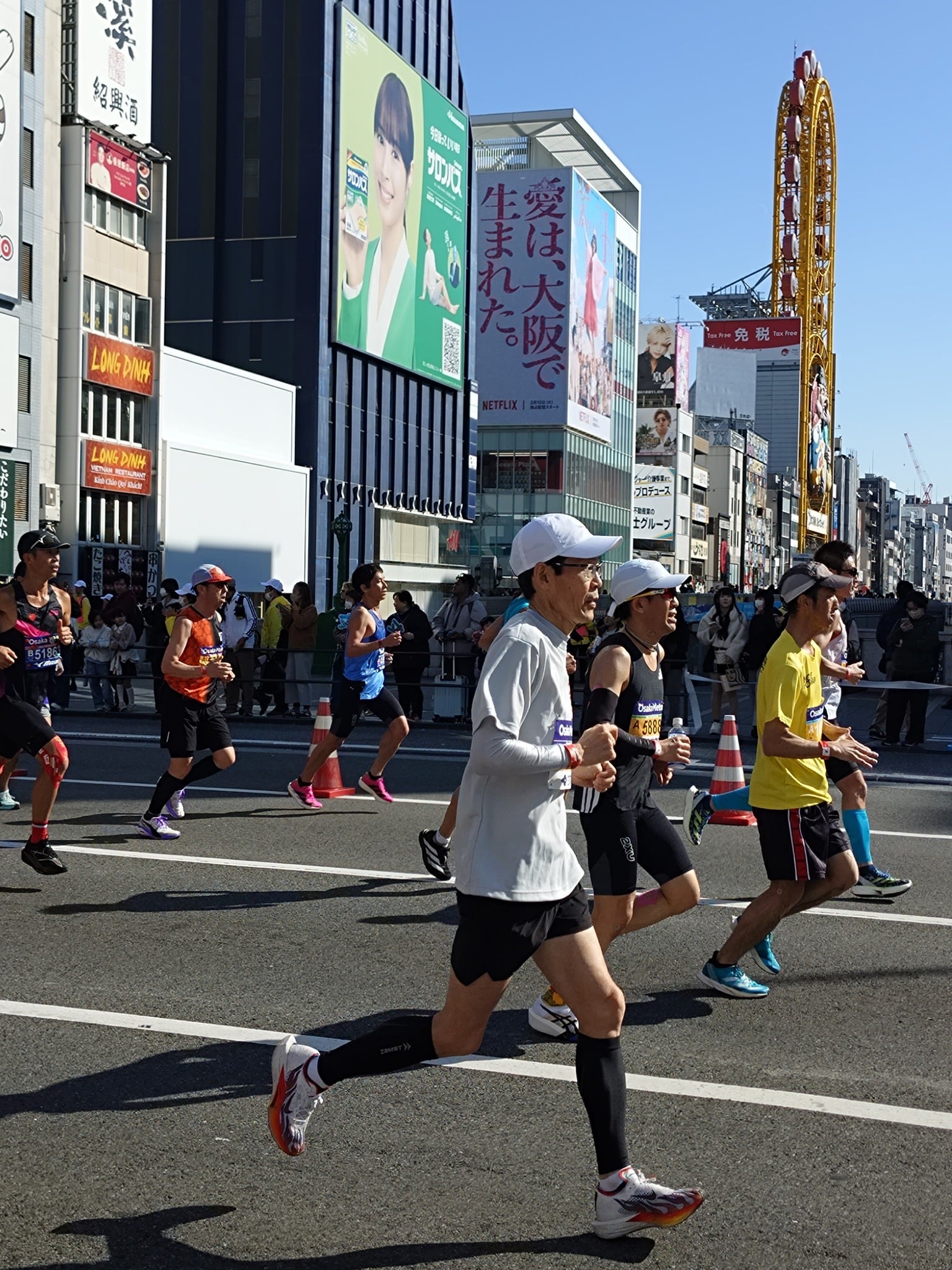
The two-time world duathlon champion (2019, 2025) struggled to latch onto the final packs but praised the flawless organization, atmosphere, and fluid aid stations. A lover of Japanese culture, he left with more than a time—his watch showed 66 km by day’s end.
Marathon and sightseeing? Why choose?
| Osaka vs Valencia: speed or density?
Valencia is often called the fastest marathon in the world—and rightly so. But proportionally, Osaka’s density is staggering.
Valence 2025
Sub 2:10 – 32
Sub 2:15 – 77
Sub 3:00 – 5,333
Finishers – 30,772
Osaka 2026
Sub 2:10 – 37
Sub 2:15 – 75
Sub 3:00 – 1,318
Finishers – 11,164
Thirty-seven runners under 2:10 in a field three times smaller than Valencia. In the men’s top 50, 40 were Japanese. Japan doesn’t chase global stars. It produces its own—by the hundreds.
| A course built for performance
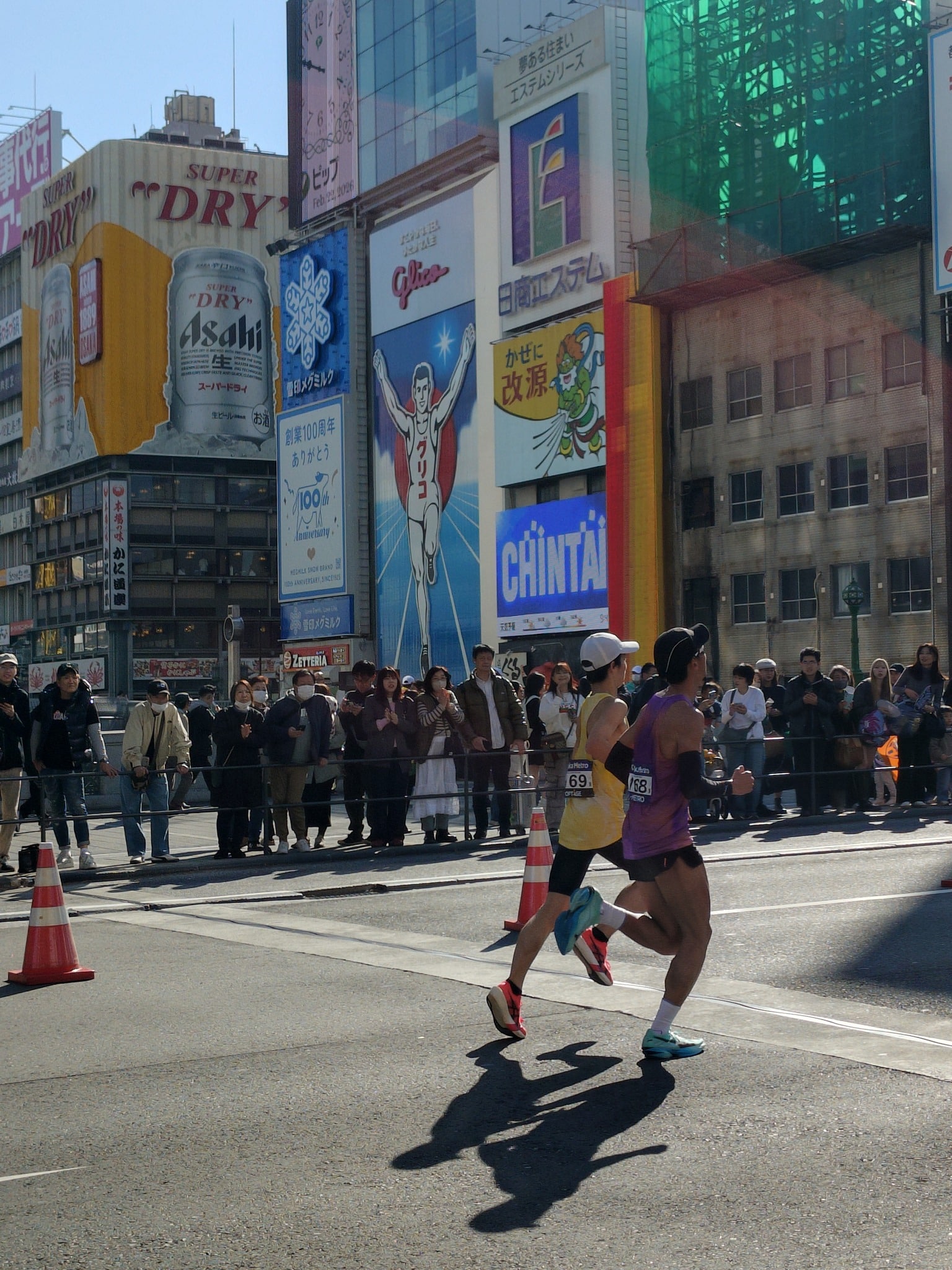
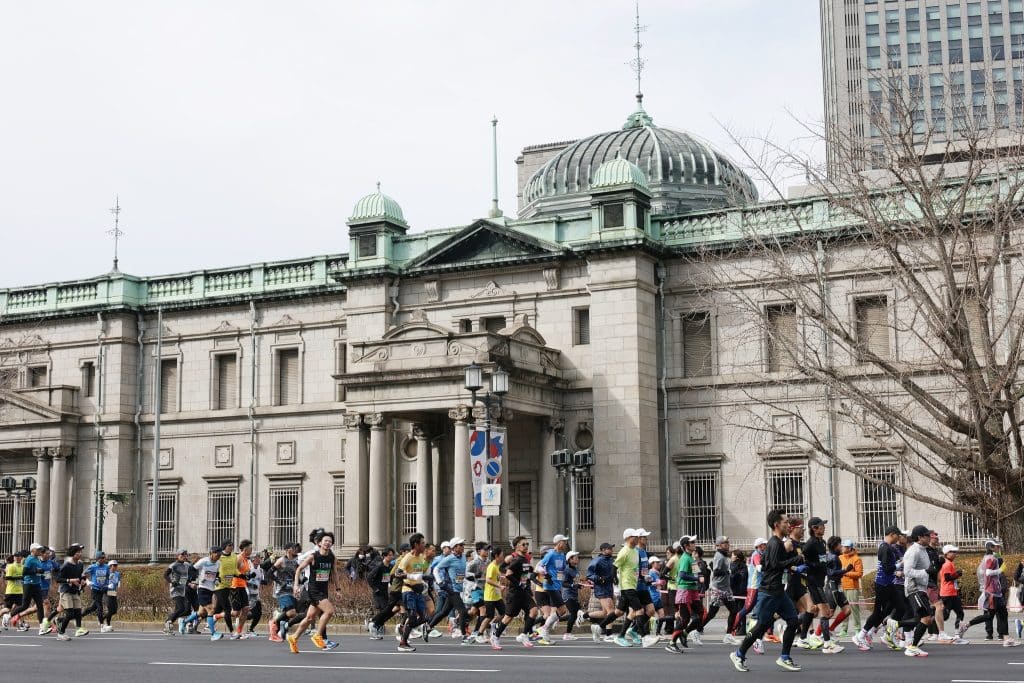
Osaka’s layout winds through Japan’s third-largest city: long straightaways, wide boulevards, meticulous organization. Ultra-flat, with only a modest rise at 33K.
It holds a World Athletics Gold Label—a mark of quality and excellence.
| A culture that manufactures marathoners
What stands out in Osaka—and in Marugame—is the army of 2:06–2:15 runners. Corporate team athletes. University runners from Hakone Ekiden programs. Weekly mileage that can exceed 300 km in elite groups.
The philosophy is collective, disciplined, relentless.
You start fast. You commit. You sometimes explode. But you learn.
Osaka 2026 embodied that spirit—with Yoshida’s daring first half and 37 men under 2:10 confirming once more that this is one of the deepest marathons on Earth.
Osaka may not boast 2:01 world records. But it may be the densest marathon in the world. Where a film student runs 2:07. Where 37 men break 2:10. Where a 24-year-old dares to chase 2:04 in his debut. After Marugame, Osaka confirms Japan as one of running’s great nations—structured, disciplined, quietly powerful. The running world may need to look East more often. Next stop: Tokyo, March 1.
✔ Full results of the Osaka Marathon 2026 available online.
Clément LABORIEUX
Journalist