
Hash House Harriers, running against the grain
 © Le logo d'un des multiples groupes Hash House Harriers © Ann Arbor Hash House Harriers
At a time when running is measured in finish times and shared through Instagram Stories, one strange fellowship still runs for the simple pleasure of being together. The Hash House Harriers, founded nearly a century ago, embrace a social, joyfully imperfect approach. Part run, part treasure hunt and part shared beer, they place the essentials somewhere far removed from self-imposed discipline.
“A drinking club with a running problem”: the moment you land on a website or social profile bearing the Hash House Harriers name, you are confronted with the group’s philosophy. Its politically incorrect edge is entirely intentional. Born in Anglo-Saxon culture during the first half of the 20th century, the Hash House Harriers now bring together nearly 30,000 participants around the world. There are around 1,500 active groups spread across more than 100 countries. There is no Hash House Harriers federation, but the group’s culture runs deep. France has its own scene too, with 20 groups listed and linked through the organisation’s global website. Members are fiercely attached to their “home”. Whether you are in Paris, Toulouse, Strasbourg or Avignon, there is probably a merry band near you offering something rather unusual, somewhere between running and a treasure hunt. Their promise? Run without pressure, get lost, and celebrate together when the “game” is over. Before looking at the rules, let’s go back to the origins of the Hash House Harriers.
The origins of the Hash House Harriers
The story of the Hash House Harriers dates back to 1938, in the Malaysian city of Kuala Lumpur. At the time, a group of British expatriates, led in particular by Albert Stephen Ignatius Gispert, decided to organise weekly runs inspired by a traditional British game: hare and hounds. The principle is simple: one or more “hares” lay a trail using scraps of paper or flour, which the other participants must follow. Before long, though, the sporting side became intertwined with another, more sociable ambition. The founders wanted not only to exercise, but also to rein in their fondness for overindulgence and build social connections. The group’s official aims, recorded as early as 1950, are telling: to promote physical fitness, have fun together and celebrate the moment over a beer. Needless to say, excessive drinking is harmful to health, and this article is not promoting alcohol intoxication.
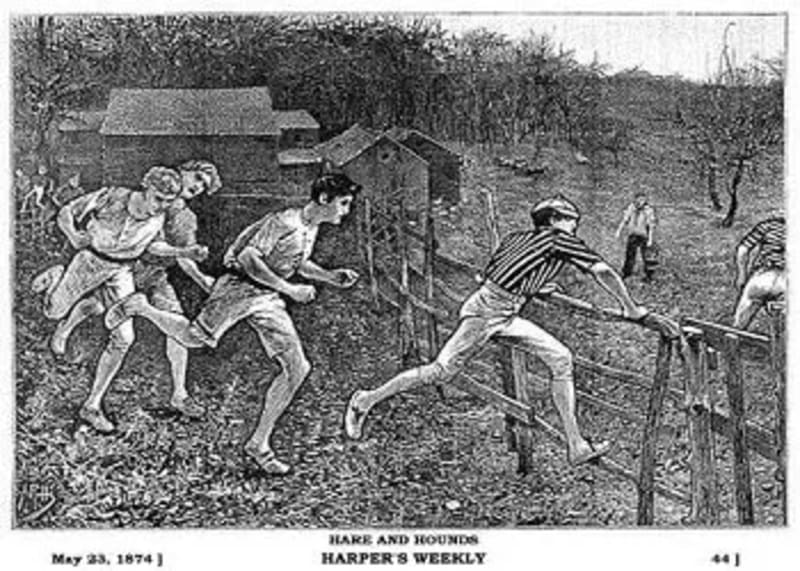
The name itself, Hash House Harriers, comes from the Selangor Club, where members used to eat. The place was nicknamed the Hash House because of the dubious quality of its cooking, with hash being British slang for an unappetising mixture. It captures the British talent for poking fun at everyday life. Unsurprisingly, Hash House Harriers groups often seem to be made up mostly of British expats.
The years passed, and the movement gathered momentum, gradually spreading around the world. From the 1960s onwards, new chapters appeared in Asia, then in Europe, the Americas and elsewhere. In 1978, the first “international” gathering of the Hash House Harriers was held in Hong Kong, then a stronghold of the British colonial empire. The original spirit remains intact: a run with nothing at stake, where cooperation matters more than competition. Trails are deliberately peppered with false clues, forcing the fastest runners to slow down and giving everyone else a chance to catch up. This playful format is one of the pillars of Hash philosophy: no one gets left behind.
The rules of the game
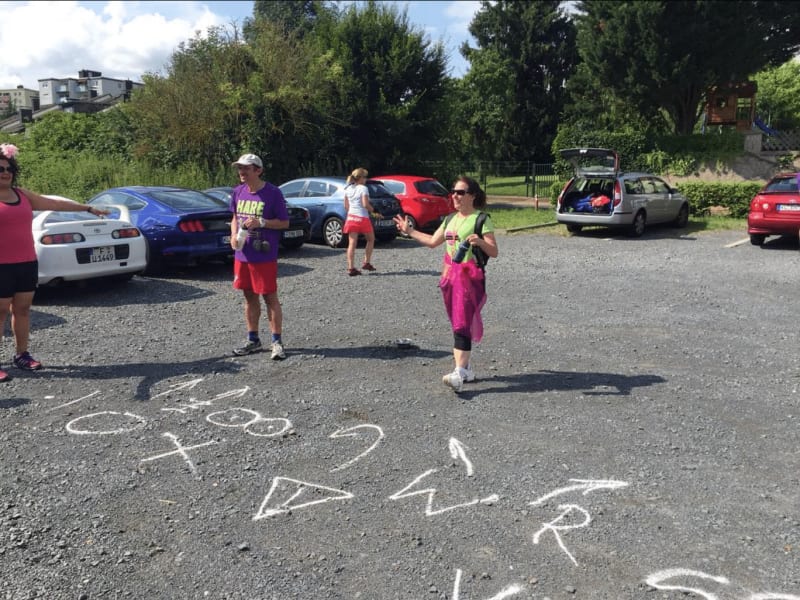
So what exactly does hare and hounds involve? There are two groups of runners: the “hares” and the “hounds”, borrowing the language of the mounted hunts beloved by the English aristocracy. Once again, the irony behind these labels is hard to miss. The hares lay a flour trail for the hounds to follow. You deliberately get lost, have a laugh, and end up sharing a drink.
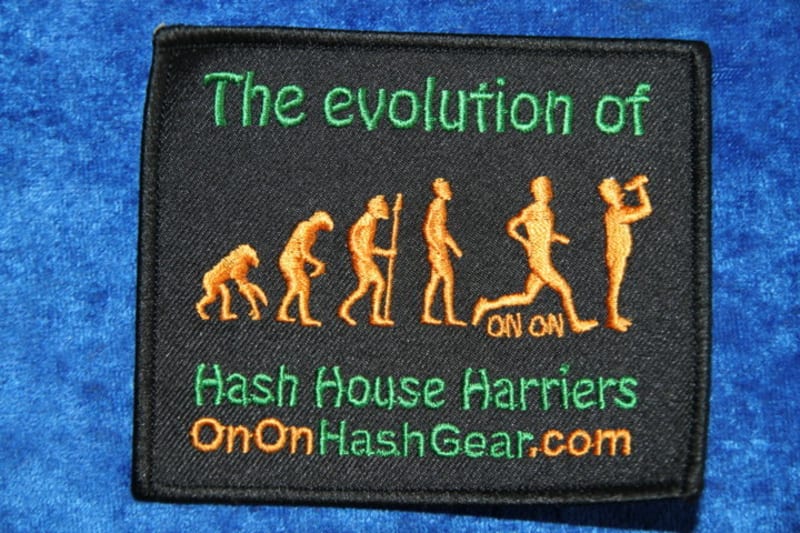
Each session, known as a “hash”, follows a simple principle. One or more participants, the “hares”, set off ahead to mark out a trail using flour, chalk or paper. The rest of the group, known as the “pack”, then sets off in pursuit. But unlike a conventional race, the trail is deliberately designed to be deceptive. It may include:
➜ “Checks”: areas where the trail disappears, forcing the group to search
➜ False trails that send runners in the wrong direction
➜ Backtracking
➜ Shortcuts or alternative routes
Hashing welcomes every ability level. Unlike many running clubs, where performance gaps can lead to separate groups of similarly paced runners, the Hash House Harriers design their trails to keep everyone together. False trails, “checks” and detours force the fastest runners to wait for the slowest. Every run ends with the group eating, drinking and singing together. Regular participants are given humorous nicknames.
A stand against modernity
In an age defined by individualism and the pursuit of performance, this approach can look like a form of resistance. Without presenting itself as a model, it reminds us that sport can be an excuse to meet people, connect and let go. While some runners try to optimise every stride, hashers claim the right to run “badly”. That philosophy makes the Hash House Harriers a curiosity in today’s sporting landscape, but also a form of cultural resistance.
A certain kind of asceticism is increasingly held up as an ideal: a constant demand to improve ourselves, as though we were machines rather than human beings. There is a kind of philosophical sobriety in hashing: a refusal of excessive control, a step back from these modern demands, and a return to simple pleasure. Running without a goal. Almost for the laugh of it. Another kind of carnival. Partying before heading back into an overly serious world. Trails may cross cities, forests, muddy ground or improbable paths. You get lost, find your way back, and above all, have fun.
It is impossible to talk about the Hash House Harriers without addressing alcohol. Historically, it was an integral part of the experience. That tradition naturally raises questions at a time when the public-health risks associated with alcohol are better understood. It is worth pointing out, however, that drinking remains optional in most groups. Many emphasise that everyone is free to take part in their own way, without pressure. Some even focus on alcohol-free alternatives or on a more family-friendly and inclusive approach. Joining a hash should never mean putting yourself at risk or being subjected to social pressure. The enjoyment at the heart of the practice can only exist in an environment that respects everyone.
Beyond the purely festive side, it is this desire to come together and share moments of good humour that makes the Hash House Harriers so compelling.