La 6000D by Dare2B: Climbing—Really Climbing
09/03/2026 19:40At La 6000D, you don’t start by talking about distance or elevation gain. You talk about the silence that settles in with altitude, the stride that naturally slows without apology, the gaze lifting because the body demands it. From July 30 to August 1, 2026, La 6000D by Dare2B won’t try to impress—it sets a rhythm, a logic, a stripped-back approach to mountain running. For more than thirty years, this iconic race in the Savoie region of the French Alps has drawn runners who come not just to run a trail, but to experience a climb in its rawest form.
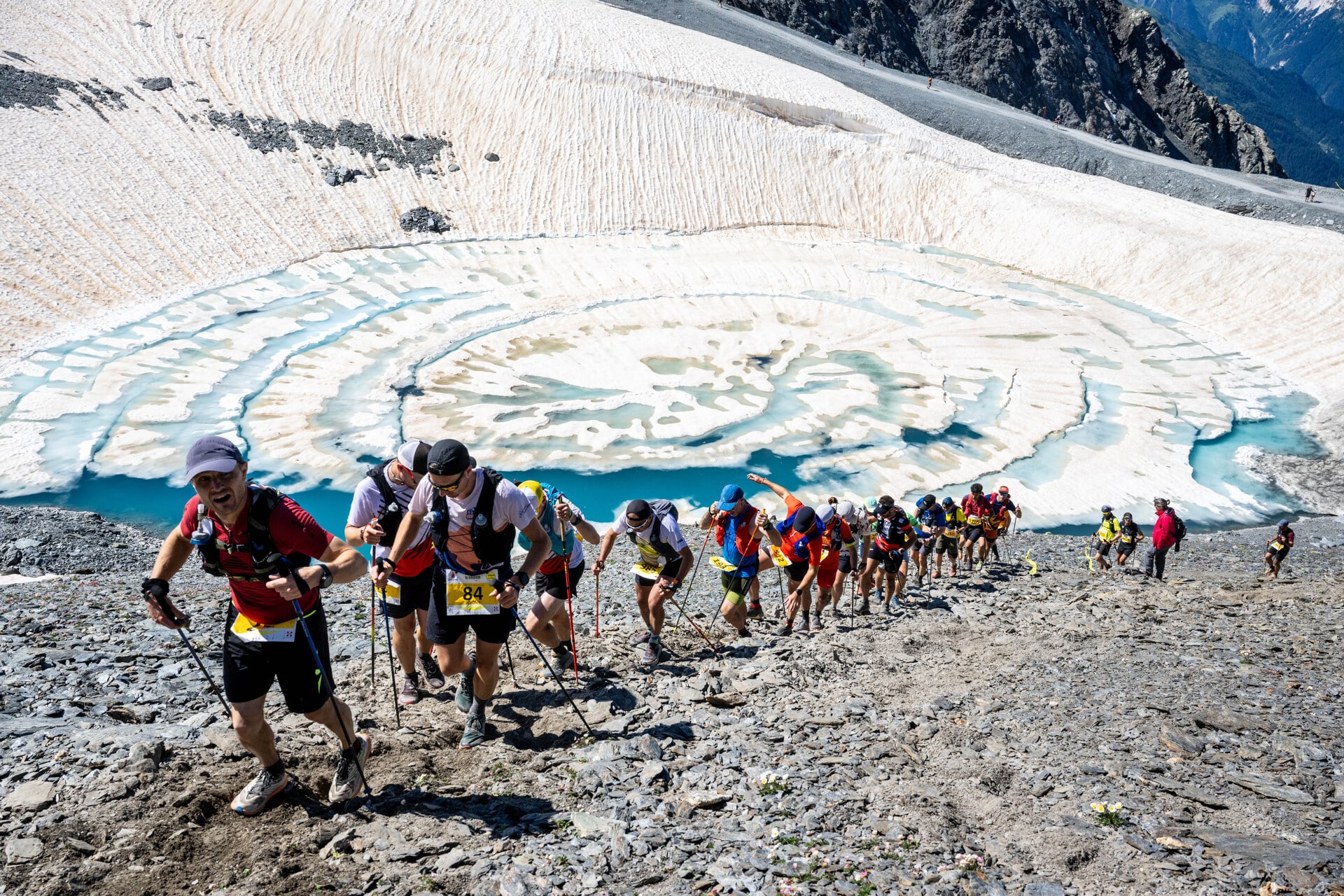
Many races come and go, and as runners—whether elite or recreational—we often end up staring only at our watches. But there comes a moment when it makes sense to look up. And La 6000D is exactly that moment. Over 69 kilometers with 6,000 meters of elevation gain, this is far more than a trail race. The course runs almost entirely on mountain paths, including a unique passage through France’s only Olympic bobsleigh track in La Plagne, before climbing all the way to the snowfields of Live 3000 at 3,057 meters (10,030 feet).
Backed by 450 volunteers and driven by a rare kind of passion, La 6000D is run as much with the legs as with the gut. For its 36th edition, from July 30 to August 1, 2026, the Savoyard race stays true to its guiding principle: start low, finish high—no frills, no shortcuts. A simple, almost raw idea. And yet, every summer, it continues to draw thousands of runners. Because some things never age when they just feel right.
| A race born before trail running became a trend
In the early 1990s, when La 6000D was created, “trail running” wasn’t yet the global phenomenon it is today. People spoke instead of mountain racing—long efforts, serious elevation, and respect for the terrain. La 6000D fits perfectly into that philosophy, built on a simple idea: the mountain isn’t just a backdrop—it’s the main character. The principle has never changed. Starting from the valley town of Aime, runners gradually climb toward the heights of La Plagne, eventually reaching high-altitude terrain close to 3,000 meters. The progression feels natural, almost educational. You don’t just enter the race—you enter the mountain itself.
| Le parcours : une ascension plus qu’un tracé
On paper, La 6000D looks intimidating. In reality, it leaves a mark. The opening kilometers act as a full-scale warm-up. The body finds its rhythm, the mind settles. Then, without unnecessary brutality, the climb begins. Trails narrow, forests give way to alpine pastures, and eventually to rocky, high-altitude terrain.
Everything changes with elevation: stride, breathing, even your sense of time. Some sections are runnable, others demand long stretches of hiking. And no one pretends otherwise. La 6000D doesn’t reward reckless pace—it rewards clarity. Up high, the landscape does the rest. The view stretches endlessly. Silence takes over. Even the most time-focused runners eventually pause, if only for a second, to take it all in.
| What to know before taking the start line
Because La 6000D is something you dream about… but also something you prepare for.
The formats
One of the event’s strengths is its wide range of races. Around the main event, a full lineup allows every runner to find their distance:
➜ A long, demanding trail for those chasing a true endurance challenge
➜ Intermediate formats to experience altitude without going all the way
➜ Shorter races and youth events to discover the atmosphere
Not everyone is ready to tackle 69 kilometers in one go. Some prefer a gradual approach, others run mainly on weekends, and younger runners can take their time before stepping into extreme distances. No problem. Over three days, La Plagne hosts around ten races designed for all levels—from kids’ events to more ambitious formats, including relay options and marathon-distance trails.
From the 6D Kid’s (ages 6–15) to the 6D Aventure (ages 6–16 alongside an adult), from the beginner-friendly 6 Découverte to the 6D Lacs, not to mention the 6D Marathon for the more ambitious, the 6000D relay, the 6D Bob, the 6D Foulée, and the 6 Défi—there’s a race option to match every runner’s mood and ambition.
Start times
Long-distance races begin very early—sometimes before sunrise. It’s a logistical necessity, but also a defining moment. Running by headlamp while the mountains are still asleep is part of the experience.
Race management
La 6000D is rarely run flat out from start to finish. Altitude demands respect. Those who succeed are often the ones who know when to slow down, when to hike without ego, and how to anticipate key sections of the course.
| More than just a race atmosphere
Despite its scale, La 6000D retains a genuine sense of warmth. Volunteers know the terrain inside out, encouragement is constant, and the event feels as much owned by the local community as by the runners. The race village lives to the rhythm of finishes, shared stories, and tired but happy faces. Runners exchange impressions, compare strategies, and sometimes promise to come back “and do it differently next time.” The partnership with Dare2B reflects that same philosophy: a focus on real-world use, on authentic mountain conditions—not a romanticized version of them.
In a calendar packed with events, La 6000D has never tried to do too much. It doesn’t chase trends. It offers a clear, coherent, almost timeless experience. Running La 6000D isn’t just about performance. It’s about embracing a different relationship with time, effort, and the mountains. A race that plays out as much in the mind as in the legs—and leaves behind something deeper than a result on paper.
➜ More information and registration

Dorian VUILLET
Journalist