
Running with animals: when humans race alongside, or against, their domestic companions
Humans have been running for millions of years, together or alone. We now run for pleasure rather than to hunt, but endurance remains our defining physical quality and may well have helped us survive through the ages. We also domesticated all kinds of animals early on. Many people form deep bonds with them and want to share memorable experiences together. What better way to do that than to pursue a passion for running alongside a pet, or even test ourselves against four-legged competitors?
Gaya, international athlete Yoann Kowal’s loyal training partner
Many amateur and professional athletes enjoy running with their dogs. French steeplechase runner Yoann Kowal is one of them. A six-time French Elite champion over 1,500 m and 3,000 m steeplechase, he also won the European title in the latter event. His dog, Gaya, is just as well known as the athlete, having become a genuine mascot of French athletics over the years.
For thirteen years, the Australian Shepherd joined Yoann Kowal every day for training, unless he was on the track, sometimes twice a day and throughout the winter. Kowal has repeatedly said that Gaya was one of his sources of motivation and played an important role in his development as a runner. The dog was unbeatable on hill sessions and could run around 100 kilometres a week. That helped drive her owner to the highest level, from the Olympic Games to the European and World Championships.
Gaya even has her own Instagram account, @gaya_run. Now retired, the athlete’s loyal friend joined him on training camps several times, notably in Font Romeu, as well as at the Interclubs, the French club athletics championships, much to the delight of the other runners.
Gobi, the first animal to officially run the Paris Marathon with a race number
In 2019, Dion Léonard, an Australian passionate about long-distance racing, ran the Paris Marathon with his dog, Gobi. It was a first for the event, with Gobi becoming the first animal to officially line up in the French capital.
Their meeting sounds like the plot of a heartwarming film. In 2016, the runner took part in the Ultra Trail Gobi March, held in the heart of China’s Gobi Desert. The six-stage race covered the equivalent of a marathon a day. During the second stage, a stray dog joined Dion Léonard and stayed with him until the end of the gruelling race.
The ultrarunner was touched by the animal and decided to bring her home to Scotland and adopt her. Léonard refused to abandon Gobi, who seemed to have chosen him, even though he could not explain why she had bonded with him rather than another runner. The administrative and financial hurdles involved in bringing the dog home were considerable, but the Australian was not deterred. He launched a fundraiser that was hugely successful, while the story attracted media attention around the world. The runner returned to China to collect Gobi. After she went missing and was hit by a truck, all hope of finding her alive seemed gone, until he managed to track down his friend and adopt her permanently. The dog then became his training and racing partner.
That is how race number 4915 at the 2019 Paris Marathon was assigned to Gobi, who surely won the hearts of the runners lining the course.
Running with donkeys, a sport in its own right
What country other than the United States would come up with a race run in pairs with... a donkey? Pack Burro Racing is an 80-year-old American concept that has made its way to France, specifically Normandy. The event, which went on to become a national sport, honours the donkeys that carried prospectors’ equipment during the American gold rush, as well as the prospectors themselves.
The first French edition took place on 16 March 2024 in Moyaux, driven by the Western Pack Burro Racing France association. The principle is simple: each runner is connected to a donkey by a lead rope throughout the 7 km trail race. The aim is to beat the other human-donkey pairs. Strict rules apply. Runners may not let go of their donkey partner’s lead rope or touch the other animals. Animal cruelty is, of course, forbidden, and a veterinarian examines the animals to make sure they are fit. Any breach of these conditions results in disqualification.
As surprising as it may seem, donkeys can cover long distances at a good pace. The donkey originated in the deserts of North Africa, where it can trot 60 km a day in search of food. Domestication has removed those constraints, but the animal is now at risk of obesity because of limited exercise and rich food. Donkeys are often left in a field and do not receive the same treatment as horses, even though they are perfectly capable of covering many kilometres. Running with a donkey is the best way to keep it healthy.
The race gives the association a way to draw public attention to animals that are often neglected, mistreated and misunderstood. If you are looking for a new animal to join you on your long runs, all that remains is to adopt a donkey!
Man vs Horse Marathon, when humans take on the equine world
The Man vs Horse Marathon is a 35 km race held since 1980 in Llanwrtyd Wells, Wales. The course includes roads and forest trails, as well as technical sections through moorland, marshes, streams and mountains. The route is designed to give humans and horses the advantage at different points.
At the first edition, 35 runners and eight horses took the start. Today, more than 700 runners and 60 horses, ridden by their jockeys, line up each year. The idea began with a bet between a pub owner and a horse breeder. The former argued that a human could beat a horse over a hilly course if the distance was long enough, while the latter backed the horse.
Humans have won three editions, in 2004, 2007 and 2022, by margins of between two and 11 minutes. It took 25 years for a runner to beat the horses in the race.
The Running of the Llamas, a llama festival with a headline race
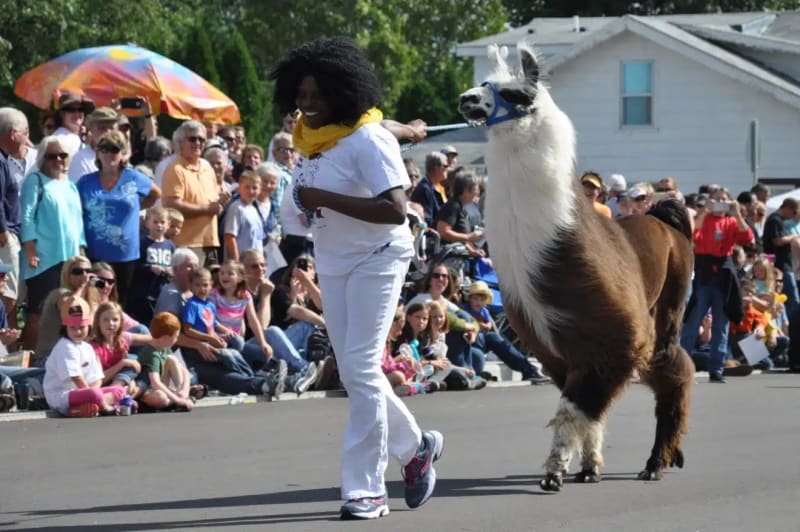
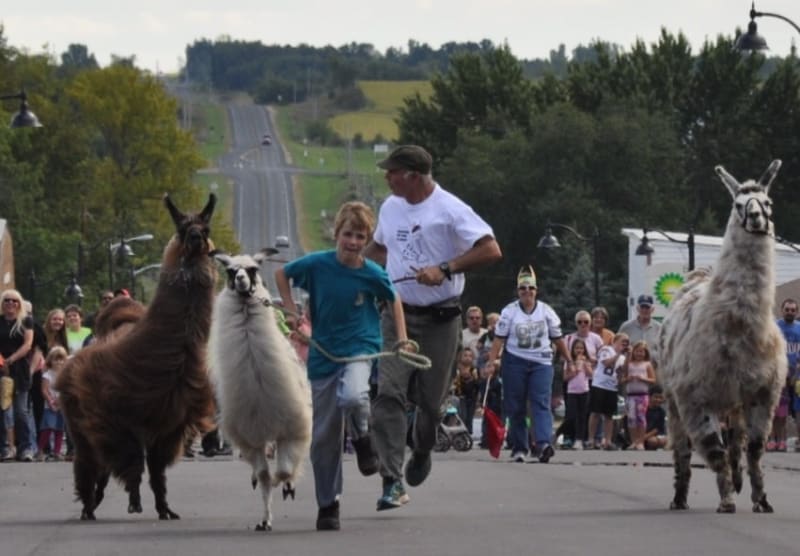
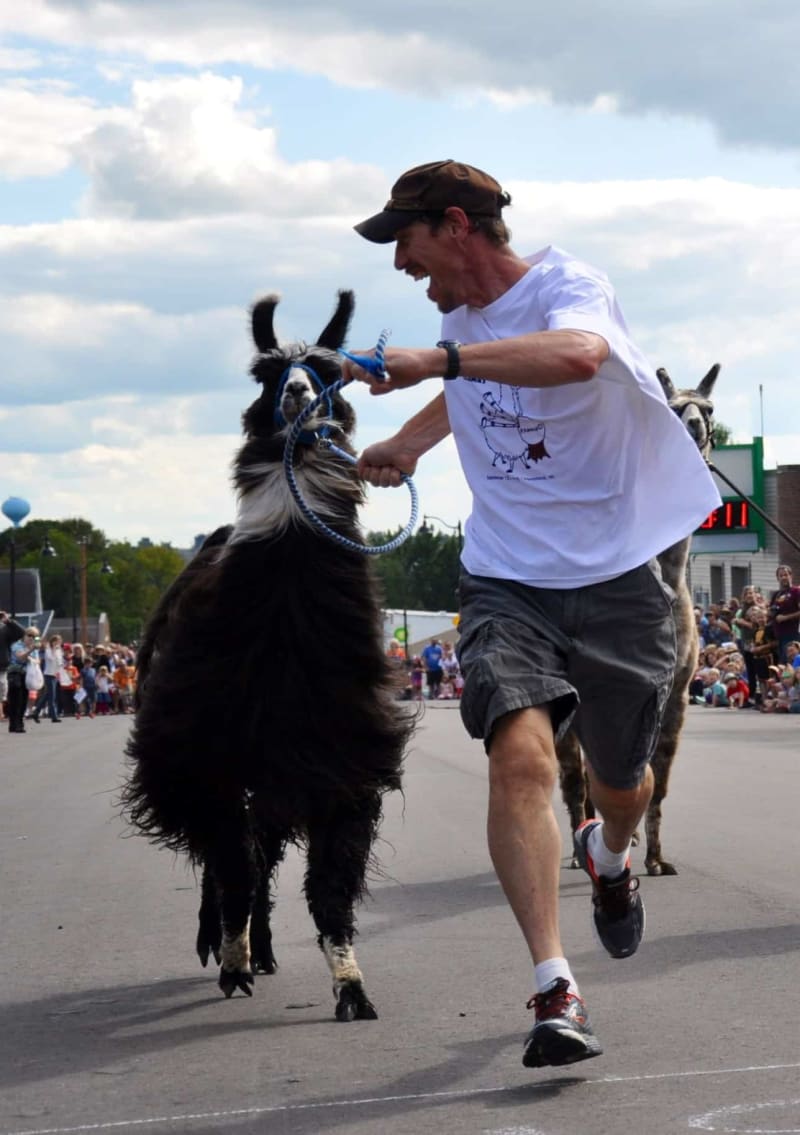
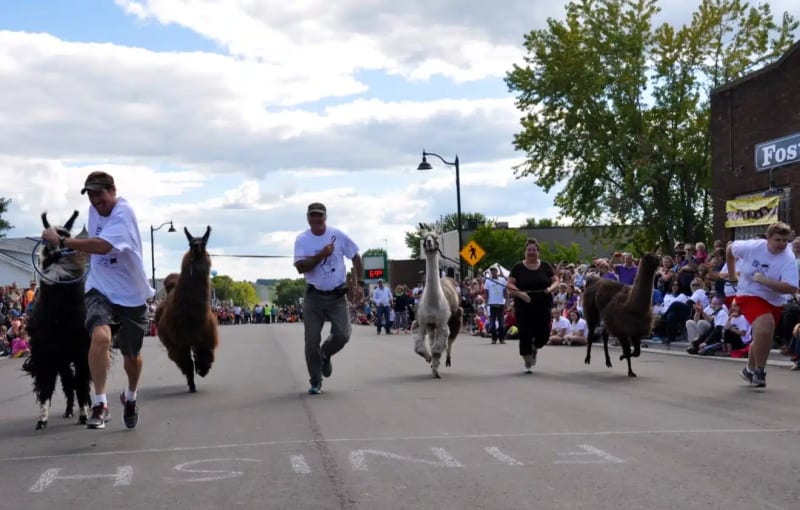
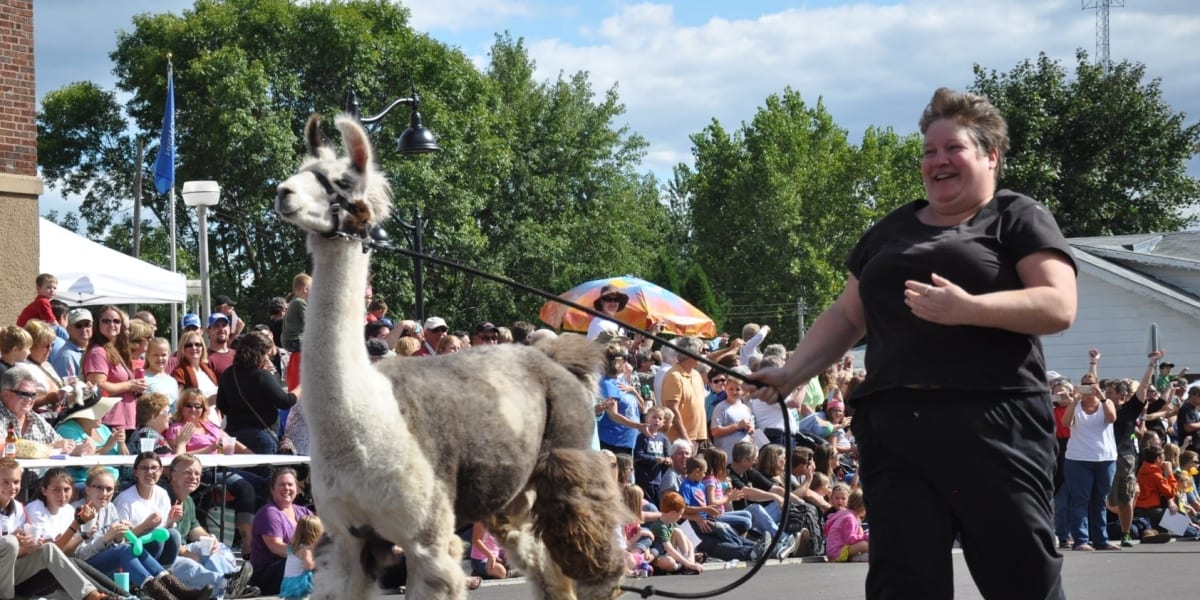
For 20 years, the small town of Hammond, Wisconsin, came alive to the sound of The Running of the Llamas, a race as unusual as it was festive. Every year until 2016, hundreds of visitors, some in costume, flocked to celebrate these endearing animals with parades, entertainment and games for all ages.
The highlight? A race in which llamas and their owners competed along the main street, with frantic sprints and stubborn animals prompting plenty of laughter from the crowd. The event became so popular that it left its mark on the town’s walls... and in The New York Times.
And the winner’s prize? A bucket of green salad and eternal glory!
The secret that allows bipeds to outlast other animals lies in our ability to sweat. We can regulate our temperature through perspiration without stopping, unlike horses and other animals, which have to pause when their body temperature rises too high. Humans therefore have an advantage in warmer conditions, as in 2007. Rigorous veterinary checks are also carried out before, during and after the race to monitor the animals’ health.