
The Self-Transcendence 3100 Mile Race: the world’s longest race
 © wikimedia commons
5,000 km. That’s the distance covered by the world’s longest official race, held every year in Queens, New York. Created by spiritual teacher Sri Chinmoy, the Self-Transcendence 3100 Mile Race takes its competitors more than 40 days to complete.
Every summer since 1997, a small group of ultramarathoners has taken on an extraordinary challenge in the Queens borough of New York City. Their goal: to cover 3,100 miles, or nearly 5,000 kilometres, in under 52 days, on an urban loop measuring just... 883 metres. Five thousand kilometres is roughly the width of Europe. There are no breathtaking landscapes here to help runners through the task, or even give the race a sense of purpose. Competitors run from 6 a.m. to midnight, covering the equivalent of more than two marathons every day.
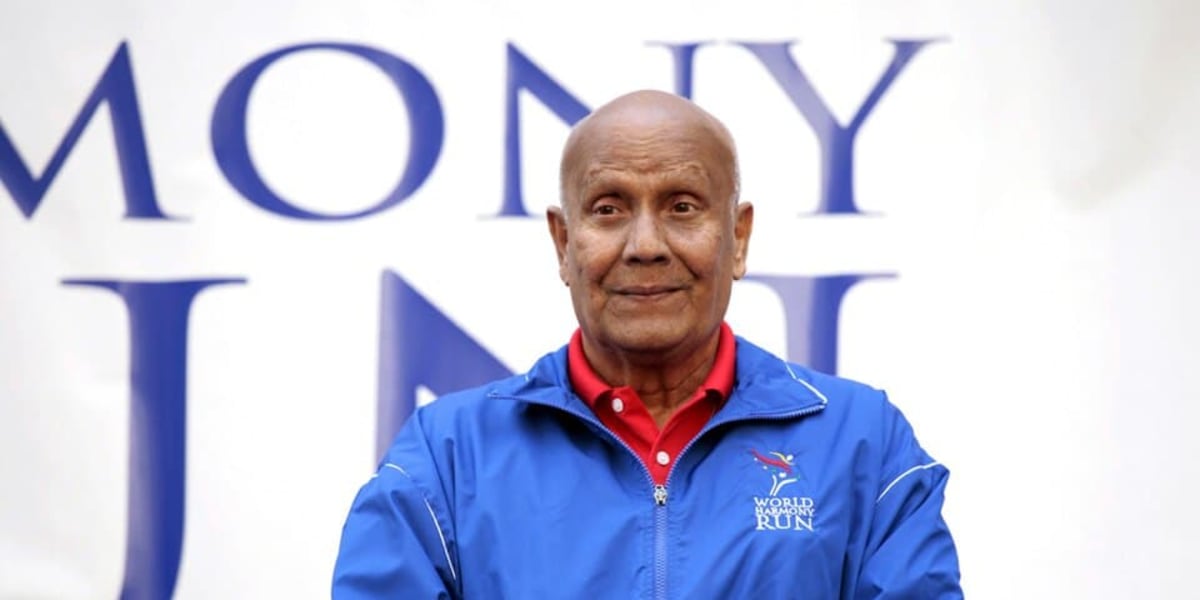
Behind the race lies a philosophy inherited from its founder, Sri Chinmoy, a figure admired by many and controversial to others. Regarded during his lifetime as an international voice for dialogue and peace, Sri Chinmoy (1931–2007), a poet and musician who spent much of his life in New York, maintained close ties with the United Nations, where from the 1970s onwards he led meditation sessions for diplomats and international officials. His message of understanding between peoples earned him invitations to numerous international events. A true diplomat, he regularly met the great and good of the world. He launched symbolic initiatives such as the Peace Run, running relays held around the world to promote global peace. He was also a major advocate of physical activity in general, which he saw as a way to “transcend oneself”. That is essentially what the name Self-Transcendence 3100 Mile Race means.
The world’s longest race, run on an... 883-metre circuit!
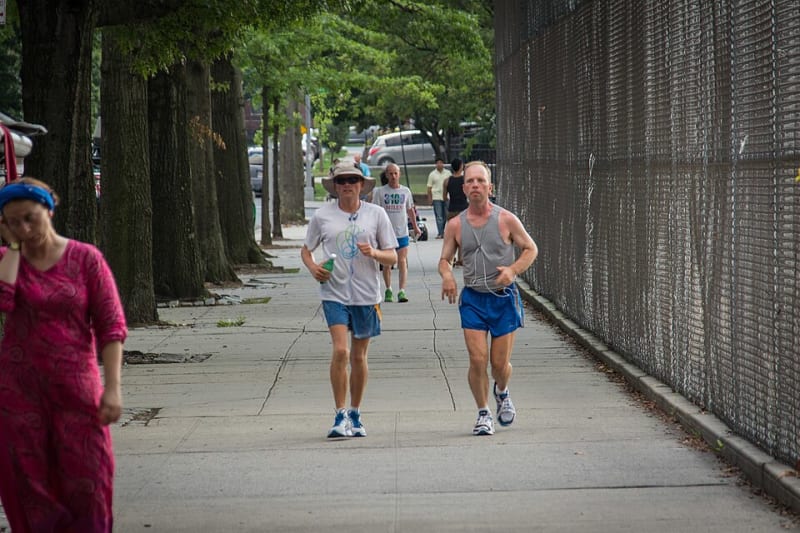
The Self-Transcendence 3100 Mile Race is recognised as the world’s longest officially sanctioned footrace. Organised since 1997 by the Sri Chinmoy Marathon Team (SCMT), it follows a simple principle: cover 4,989 kilometres on a closed urban circuit of around 883 metres in the Jamaica neighbourhood of Queens, New York. Competitors have a maximum of 52 days to finish, requiring an average of close to 96 kilometres per day. Two marathons a day for more than a month. The race traditionally starts in mid-June and attracts a very limited field, often fewer than 15 runners. Each day begins at 6 a.m. and ends at midnight, leaving athletes just a few hours to recover before starting again. It remains an extraordinarily selective event.
 © John Gillespie
Since 1997, only around 50 people have managed to reach the finish within the time limit. The men’s record belongs to Finland’s Ashprihanal Aalto, who won in 2015 after 40 days, 9 hours and 6 minutes of racing, covering more than 122 kilometres per day. The mark is listed in the Guinness World Records. The 3100 Mile Race is also notable for its sheer harshness: more than 5,600 laps of the same city block, repeated for over a month. An alienating challenge, surely as mentally demanding as it is physical. There is no natural beauty to offer relief, and no escape route. Through this course rooted in the everyday, Sri Chinmoy was doubtless sending a message to his disciples.
Sri Chinmoy and the birth of a “spiritual” race
The race is inseparable from the personality of Sri Chinmoy, a spiritual teacher who settled in the United States in the 1960s. Born in Bangladesh in 1931, he developed an early spiritual practice influenced by Hinduism and meditation. After arriving in New York, he founded an international spiritual movement and encouraged his disciples to combine physical activity with inner development. It should be said that Sri Chinmoy loved sport and saw it as a way to push beyond one’s limits. Passionate about physical activity from a young age, he developed an intense training routine within the community where he grew up. He excelled particularly in football and volleyball, as well as in sprinting, where for many years he posted the best performances in his group.
At the time, he ran 100 metres in 11.30 seconds. From the 1970s onwards, he turned increasingly towards distance running and ultra-endurance. Marathons, ultramarathons and daily training then became central to his lifestyle. Sri Chinmoy adopted a particularly demanding routine, sometimes fitting in as many as three training sessions a day, from sunrise until late evening. It was this relentless intensity, which could develop into psychological control, that his critics would later hold against him.
 © Muhammad Ali and Sri Chinmoy © srichinmoycentre.org
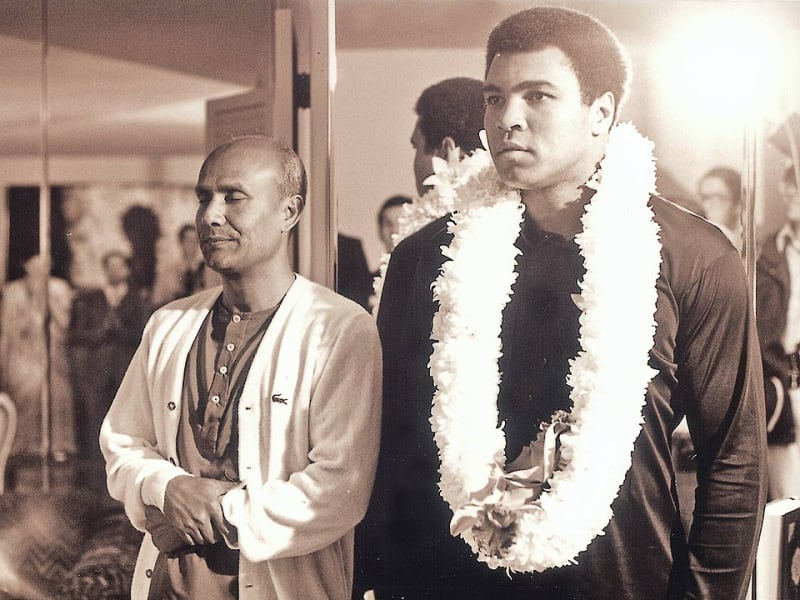
Alongside his own physical pursuits, he founded the Sri Chinmoy Marathon Team in 1977, an organisation that soon began staging distance and ultra-endurance races. For him, running was a way to explore human limits and reach a form of personal transcendence. These races also served as showcases for his organisation. In 1996, Sri Chinmoy first launched a 2,700-mile race; the following year, he increased the distance again to 3,100 miles. He saw these extreme efforts as a way to reveal unsuspected mental and spiritual resources. Ultrarunners often speak of introspection, moving meditation or an intense inner experience. American runner Dean Karnazes spoke to us about ultramarathons in these terms last April.
What about France?
After Sri Chinmoy died in 2007, the race continued to be organised by members of his organisation. The movement remains highly active around the world, including in France. The word spiritual tends to raise eyebrows in France, which has looked into the activities of the influential Hindu teacher on numerous occasions, with some considering him a guru. However, none of the parliamentary reports published between 1995 and 2025 mentions any offence within the organisation, which continues to organise numerous peace races.
The French branch of the Sri Chinmoy Marathon Team (SCMT) organises several running events and sporting activities, mainly focused on endurance and wellbeing. Among the best-known events are the Peace Runs, held in various French cities, along with 6-hour, 12-hour and 24-hour races for ultra-distance enthusiasts. These events are generally open to everyone and promote a non-competitive approach to running, centred on personal progress, camaraderie and sustained effort.