
Which animals are the fastest?
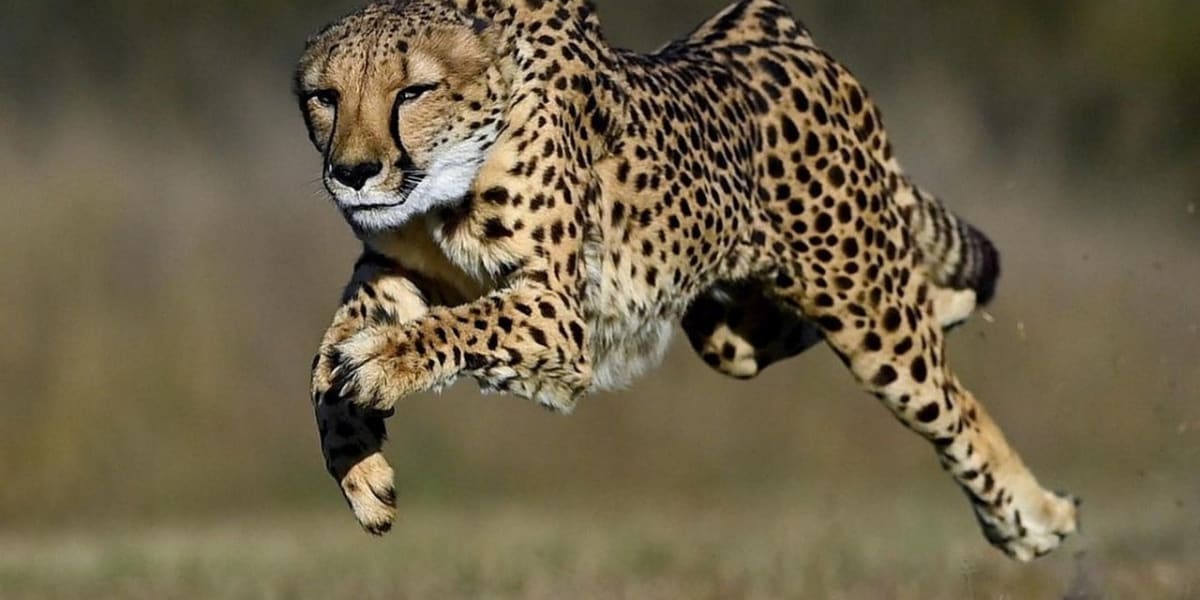
The cheetah leads the land-speed rankings, with bursts topping 110 km/h, but some far more unusual species can also hold their own. Here’s a closer look.
The green basilisk, the lizard that really does run on water
No, you’re not imagining it. This small reptile, just under a metre long including its tail, can genuinely run across water. Thanks to its slender, webbed feet, the green basilisk, also known as the Jesus Christ lizard, can reach speeds of 1.5 m/s and 10 km/h. Quite an achievement for a species native to Central and South America. As soon as it senses a predator, the “little king” wets only its hind feet, puffs out its chest and churns its back legs… Impressive.
Théo Masini, a seller at Reptilis Shop in Bailleul, northern France, sees his charges win people over very quickly, not necessarily because of their speed but because of their physical characteristics. Because yes, as well as being a rocket, this excellent climber has plenty of other assets. A large crest on its head, bright yellow eyes, an azure-blue throat, an emerald-green body speckled with white spots… “Their appearance is hugely appealing to private owners,” the specialist says.
French camel-racing championships do exist
“At top speed, they can reach 70 km/h.” Namir Glif, French camel-racing champion in 2018, knows what he’s talking about. The trainer has worked with these animals since he was 19. “I adopted one at that age. I worked on desensitising it. You have to get it used to all sorts of things that might unsettle it.” While most of the camel-racing scene is based in the Canary Islands, the behaviourist really began training in 2016. He started alone, then with his camels, and later alongside Olivier Philipponneau on the tracks. Philipponneau is president of the Fédération française des chameaux de Bactriane et des dromadaires.
“The gallop is more comfortable than the trot. It’s a rocking motion. The camel moves both left legs forward, then both right legs. You don’t get much sense of speed. Their movements are so long and sweeping. One camel stride is equivalent to one and a half horse strides.” The jockey does not sit over the centre of gravity. “The saddle sits behind the hump. We have to brace our abs and grip tightly with our legs,” he adds. Although this animal lover stopped racing because of his extremely busy schedule, he still has two camels at home in Brive.
This bird can’t fly, but it can charge along at 70 km/h
There’s no clear winner between the camel and the ostrich. Both animals can approach 70 km/h. The largest bird of them all is too heavy to take flight, but it can easily wear down predators with its impressive speed. As with camels, races are organised, mainly in South Africa and the United States. Usain Bolt would almost certainly be left behind…
Ranking the fastest animals
➜ 1 – Cheetah: 100–120 km/h (top speed over a short distance, such as 500 m)
➜ 2 – Lion: 80 km/h (in short bursts, 100–200 m maximum)
➜ 3 – Antelope: 80–100 km/h (some pronghorns reach around 100 km/h over several kilometres)
➜ 4 – Ostrich: 70 km/h
➜ 5 – Hare: 70 km/h
➜ 6 – Swordfish: 100–110 km/h, in water
➜ 7 – Shark: 70–80 km/h (top speed, particularly for the mako)
➜ 8 – Peregrine falcon: 320 km/h (in a dive, the absolute record in the animal kingdom)
➜ 9 – Golden eagle: 240–280 km/h (in a dive)
➜ 10 – Dragonfly: 50–60 km/h
What is the slowest animal?
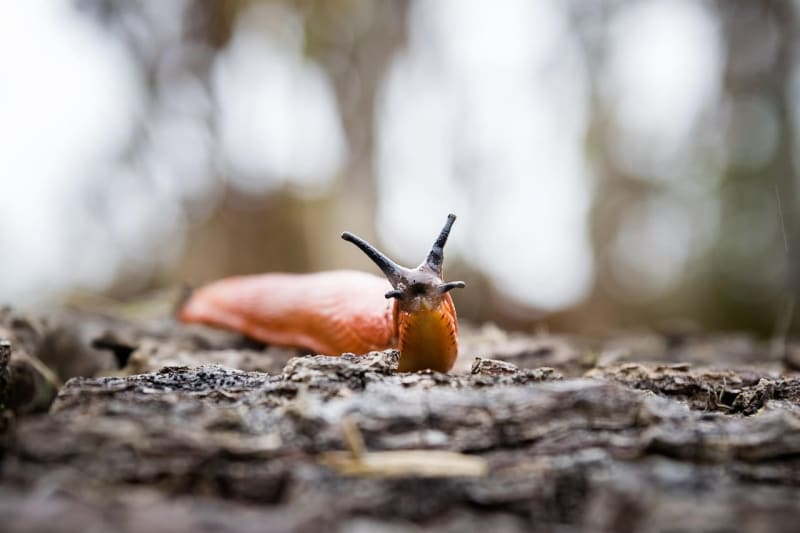
While some animals set speed records, others are true champions of slowness! At first glance, you might think the sloth takes the title: this mammal certainly lives up to its name, moving at barely 0.27 km/h. The same goes for the koala, known for its long naps of around 20 hours a day. When it wakes up, this small Australian marsupial goes in search of food, but never in a hurry: its top speed is a painfully slow 3.2 km/h. Yet some animals are even slower! The slug, for example, moves at the dizzying pace of 0.5 millimetres per second, covering less than 2 metres in an hour (0.002 km/h). At that rate, this shell-less gastropod holds the title of the slowest animal on the planet!
✓–From reptiles to mammals and birds, all these animals have the ability to run. With wild animals set to be banned from circuses from 1 December 2028, their domestication will gradually disappear.
So yes, the cheetah smashes the clock, the ostrich tears down the track and the lizard runs on water… but rest assured: to beat a slug or a sloth, you don’t need carbon-plated shoes or a 6 a.m. interval session. Just goes to show, in racing as in life, everything comes down to pace… and sometimes staying slow is a record in itself.