 © Zurich Rock ‘n’ Roll Running Series
Madrid Marathon: what is the elevation gain and how can you optimize your race strategy?
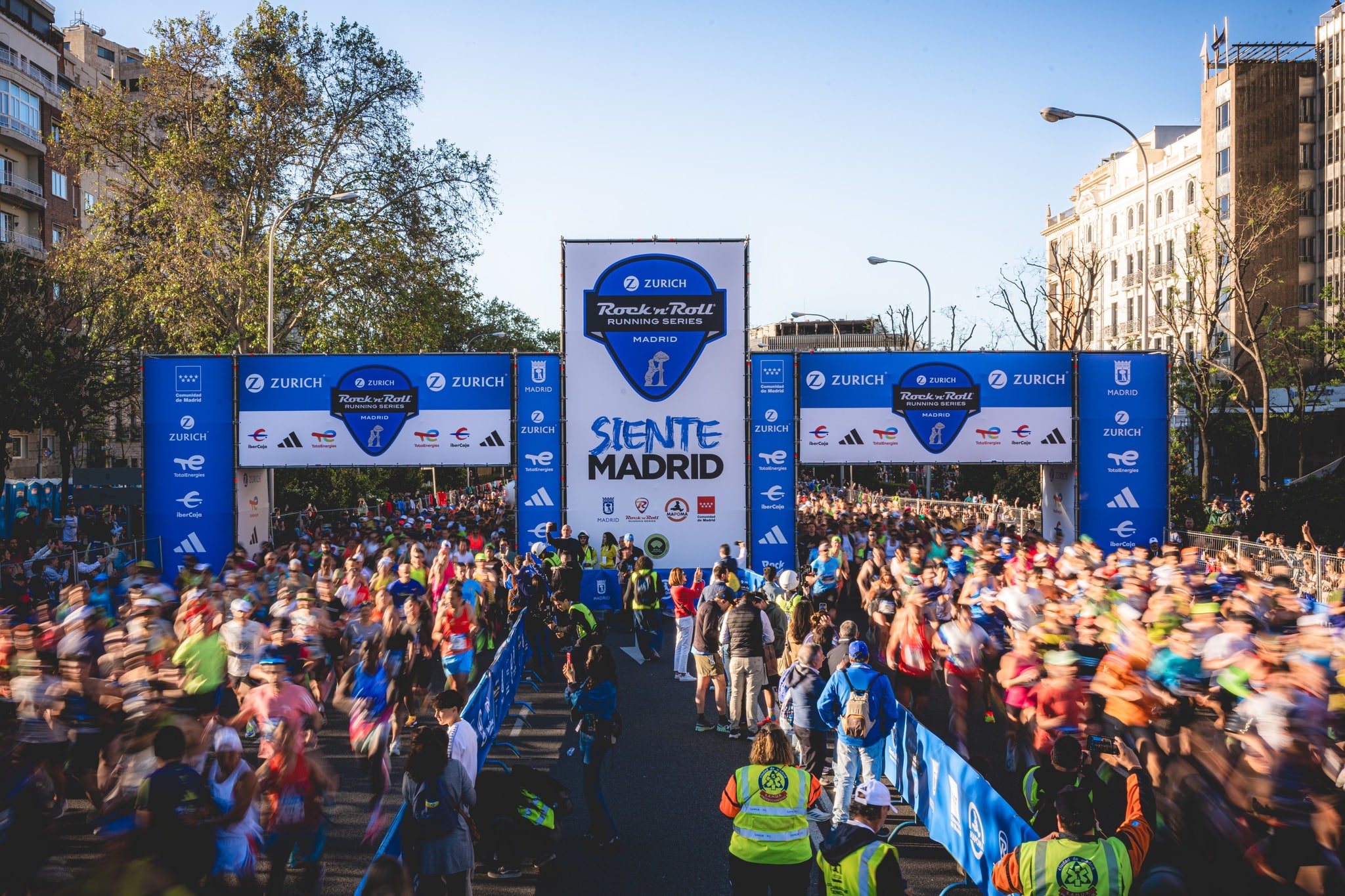
Every spring, the Zurich Rock ‘n’ Roll Running Series Madrid transforms the Spanish capital into a huge playground for runners. With nearly 47,000 participants expected at the end of April, the event has become one of the biggest in Europe. At the heart of this festive weekend is, of course, the marathon. And in Madrid, everything is done on a grand scale. Recently added to the prestigious European Marathon Classics series and holding a World Athletics label, the Madrid Marathon ticks all the boxes of a major international event: meticulous organization, a strong elite field, a scenic course, and a buzzing atmosphere with more than 30 live music points along the route. Running in Madrid is a real celebration, but behind those beautiful images lies a tougher reality for runners: with its many hills, Madrid is a difficult marathon. Let’s be clear from the start: the Madrid course is anything but easy.
✓ What is the elevation gain of the Madrid Marathon? Discover our course analysis.
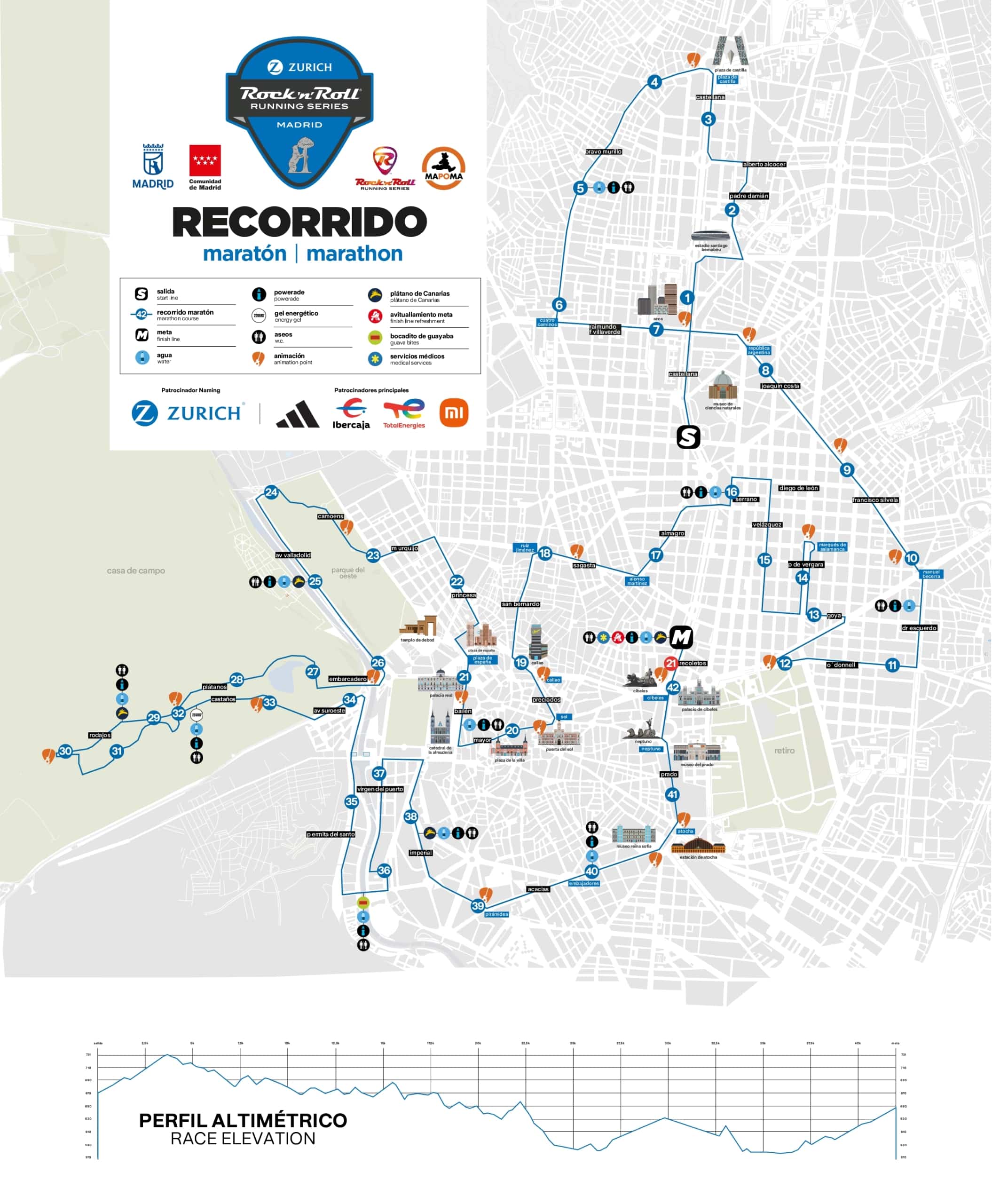
| A demanding marathon profile: around 400 meters of elevation gain
The Madrid Marathon features around 400 meters of elevation gain. Yes, you read that right: 400 meters. That puts it firmly in the category of the most hilly and demanding marathons. Here, becoming a finisher is a real achievement.
But beyond the raw number, it’s the way that elevation is distributed that makes the race especially tricky:
➜ A first half that trends downhill until halfway, but with many uphill surges
➜ A much tougher second half, with a build-up of false flats and long climbs
➜ Final kilometers uphill, often brutal on tired legs… if you still have any left
One thing runners often say is: “It doesn’t hit you all at once… but it wears you down constantly.” And that sums up Madrid perfectly. It doesn’t break your legs immediately, but it steadily drains your energy.
| A beautiful urban course… but far from easy
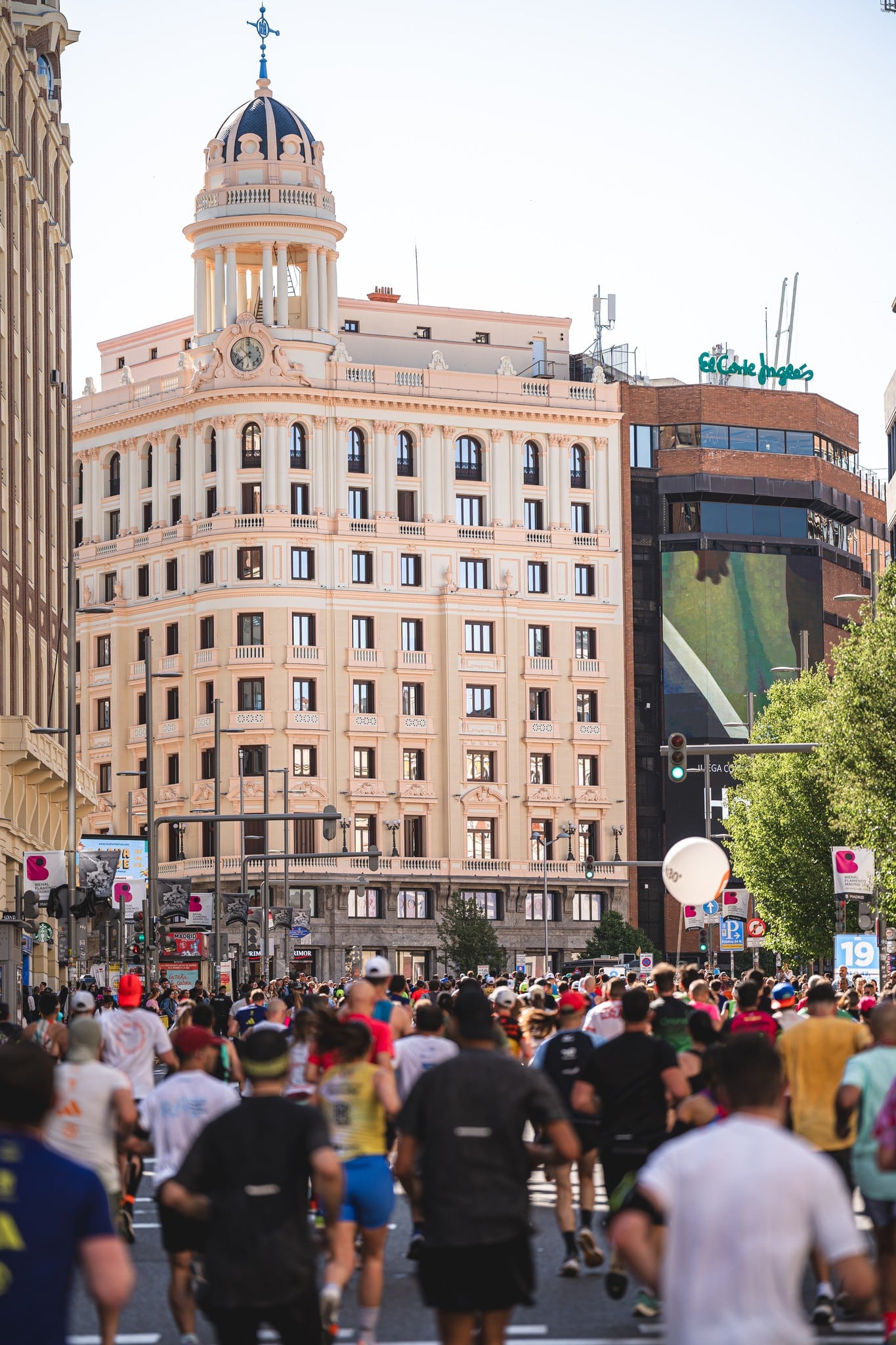
The route offers a true sightseeing tour of the city:
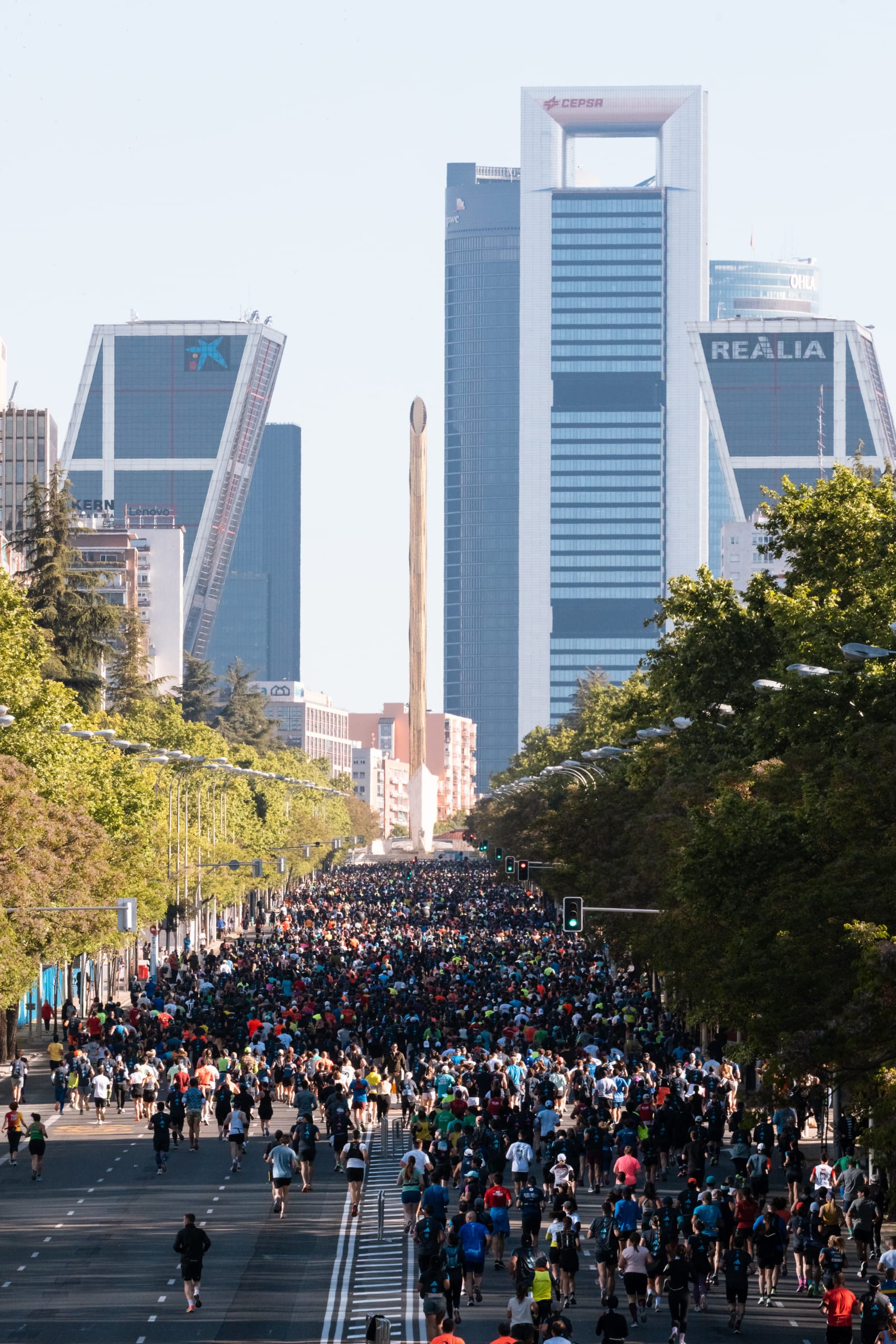
✔ Start on Paseo de la Castellana
✔ Pass by the Santiago Bernabéu
✔ Run through Puerta del Sol and the historic center
✔ A detour through Casa de Campo
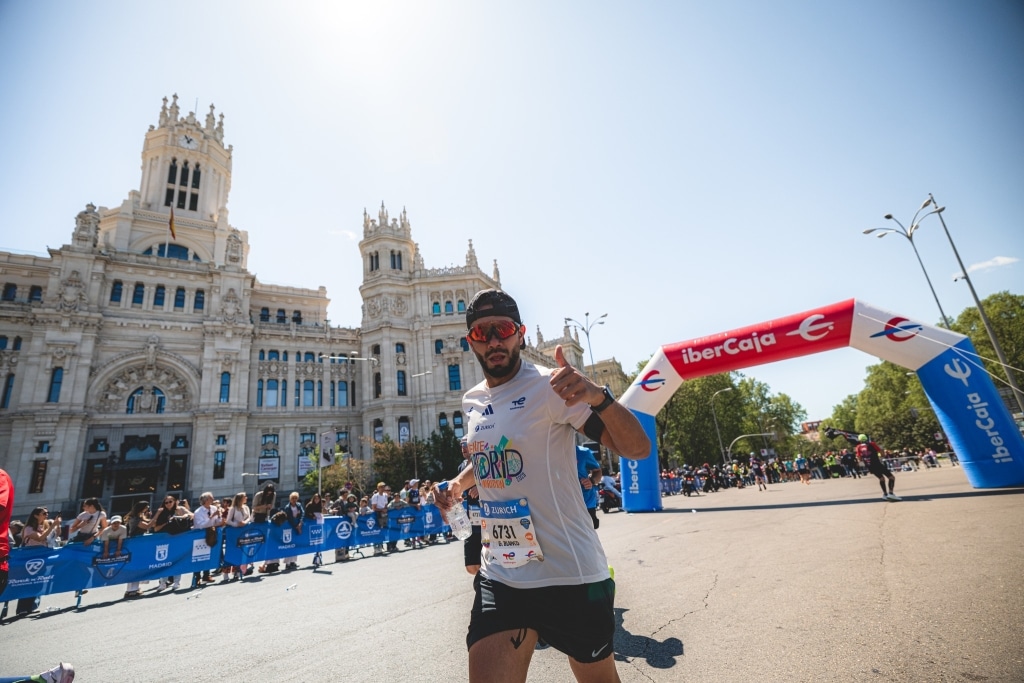
✔ Finish along the main avenues toward Paseo de Recoletos
On paper, it sounds like a dream. But in reality:
➜ The course is a constant succession of pace changes
The long straight roads can create the illusion of a fast course… but that’s not really the case. The uphill false flats keep coming. And there is one especially key section: between km 30 and km 36. This is where the race really turns. Fewer spectators, heavy legs, and climbs that break your rhythm at the hardest moment of the race. You need strong mental resilience and very solid legs to hold your pace here.
| Watch out for the weather: the real deciding factor
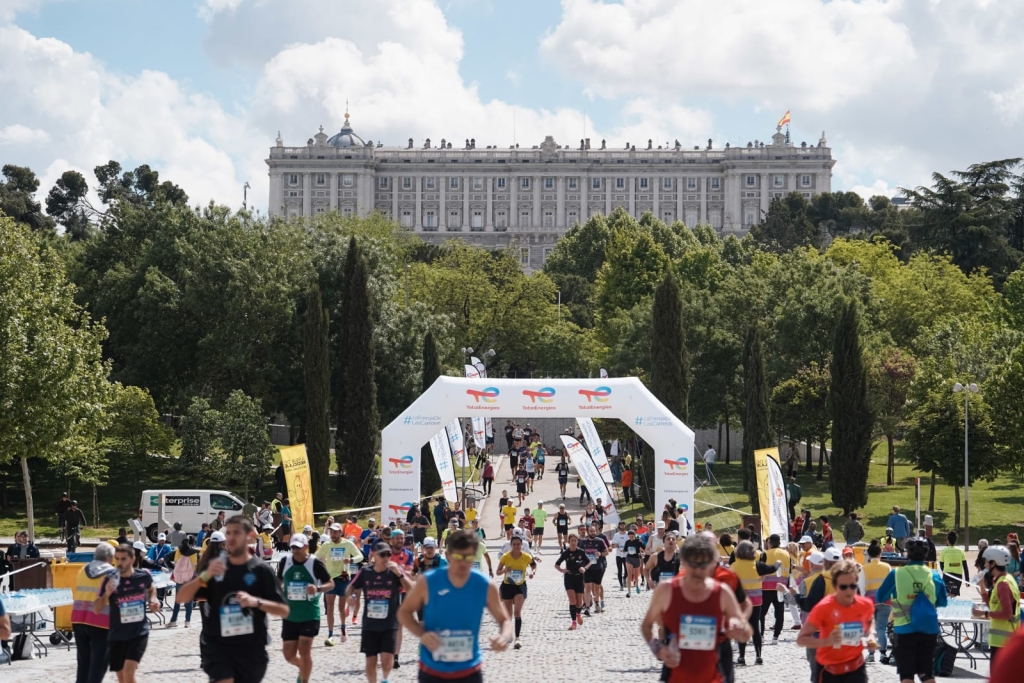
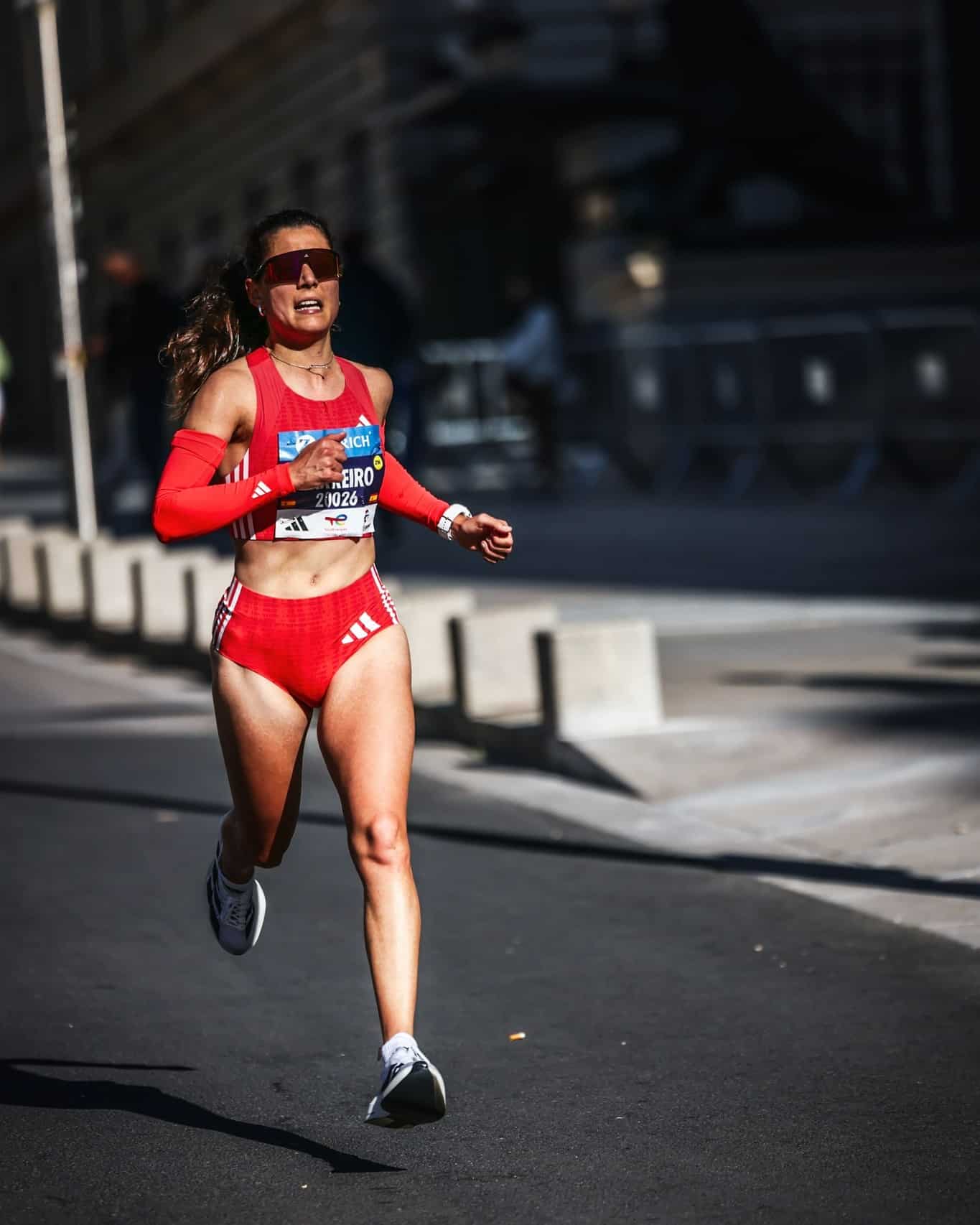
Running in Madrid at the end of April also means dealing with one difficult variable: heat.
✔ Average temperature: 15 to 20°C
✔ But some editions can reach 25°C or more
For runners taking more than 3:30, things can go badly wrong late in the race. But today, no marathon is immune. Even the fastest courses in the world, like Berlin, can be affected by high temperatures. In Madrid, the sun can become a real problem in the second half, so it’s important to adapt to the conditions on the day: slow down if temperatures rise above 18 to 20°C, and hydrate consistently throughout the race.
| 4 tips to manage the Madrid Marathon well
1. Do not get carried away in the first half
The classic trap: using the downhill profile to go out too fast.
The result:
➜ Glycogen stores burn too quickly
➜ Greater muscular fatigue
➜ A blow-up in the final third of the race
Advice:
✔ Run slightly under control until halfway, around 5 to 10 seconds per kilometer slower than your planned marathon pace. Your quads will thank you later.
2. Adapt your pace to the terrain
In Madrid, forget about running at a perfectly even pace. You need to think in terms of effort, not strictly time.
➜ Climb under control, without forcing, about 5 to 10 seconds slower than marathon pace
➜ Let your legs roll naturally on the descents without trying to accelerate
➜ Accept losing a few seconds here and there
✔ Goal: avoid intensity spikes, which cost a lot of energy
3. Anticipate the “Madrid wall”
The Madrid cocktail can be brutal for less experienced runners: elevation + heat + fatigue. Here, the wall can hit much earlier than expected.
Strategy:
➜ Fuel regularly, starting after 30 minutes of running
➜ Drink at every aid station
➜ Never wait until you feel hungry or thirsty
4. Prepare specifically
You already know this: a marathon cannot be improvised. Madrid confirms that golden rule. Things to include in your preparation:
➜ Downhill running practice to build stronger legs, often overlooked by runners
➜ Long runs with elevation
➜ Hill work
➜ Strength training sessions
 © Zurich Rock ‘n’ Roll Running Series
| A marathon to experience… while forgetting about the clock?
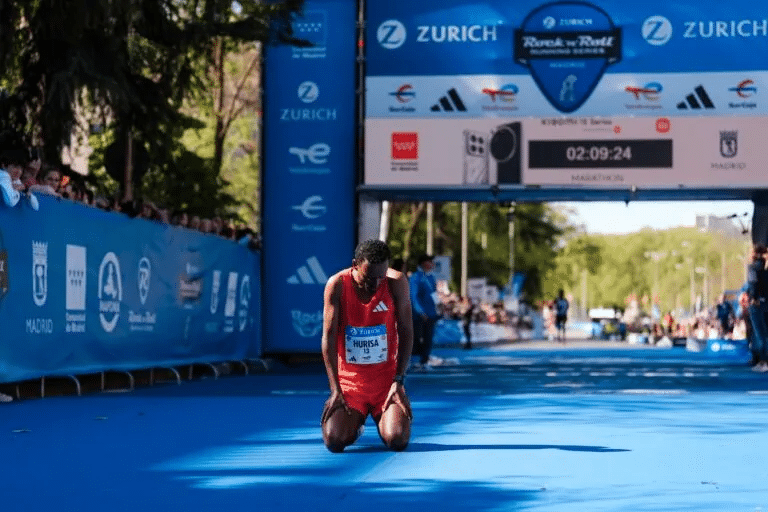
As you’ve probably understood by now, the Madrid Marathon is not the ideal race for setting a personal best. Even though some elites are still able to run very fast here, as shown by the course records: 2:08:18 for the men by Reuben Kerio in 2019, and 2:24:37 for the women by Siranesh Yirga in 2022. But that’s not really the point.
A marathon is much more than a time on the clock. It is a true journey, a personal adventure. And in Madrid, that adventure takes on its full meaning.
The Madrid Marathon is:
✔ Demanding
✔ Spectacular
✔ Festive
✔ Deeply memorable
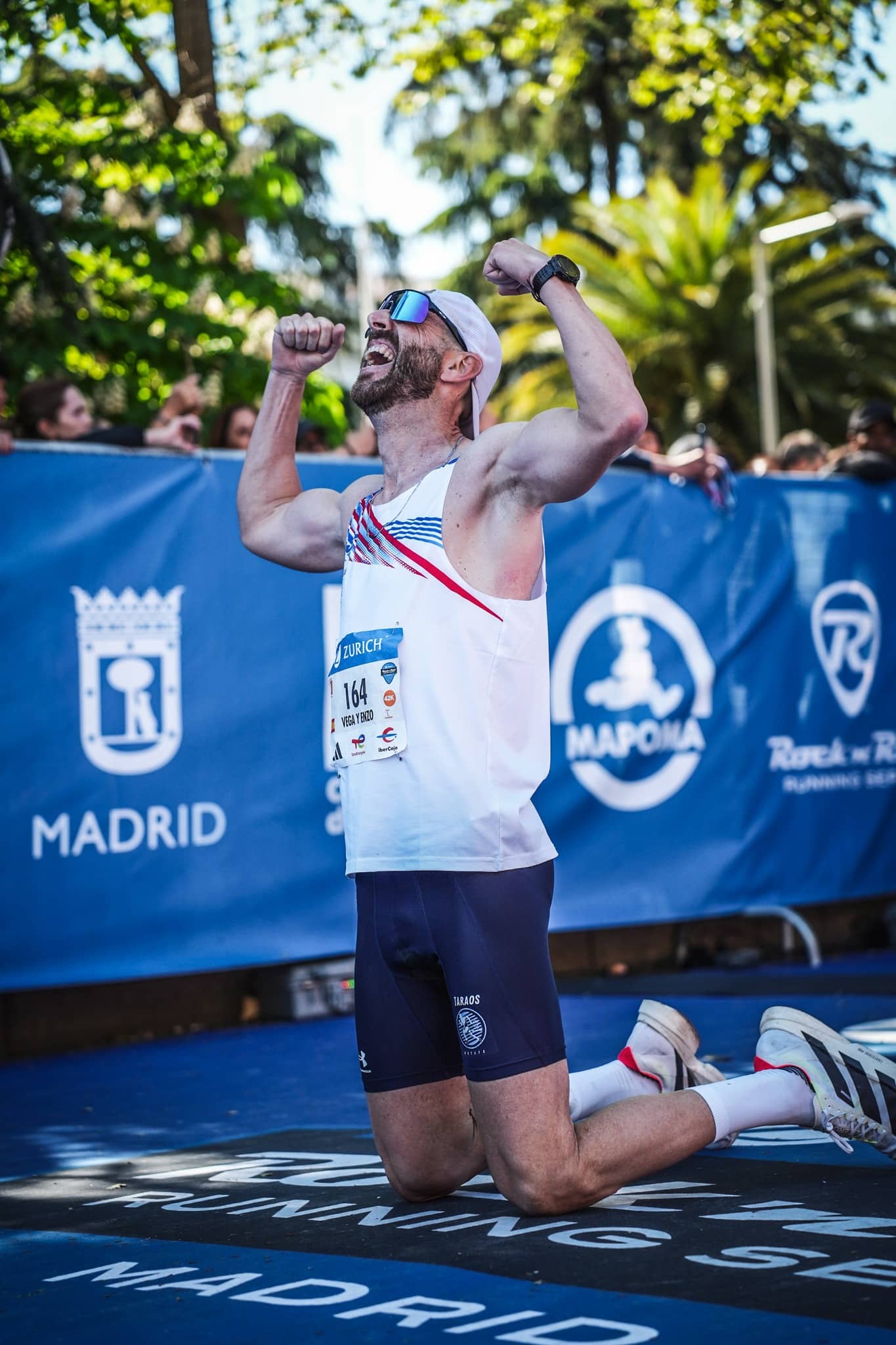
With its long avenues, iconic landmarks, and unique atmosphere, Madrid offers an exceptional running experience. Yes, the elevation is real. There is no escaping those 400 meters of climbing. Yes, the course is difficult. But that is also what makes the finish line even more rewarding. In Madrid, you do not come only for a time. You come for a huge sporting challenge, for a race experience that stays with you for life. Because that is also, and above all, the beauty of the marathon.
✔ Find all registration details for the Madrid Marathon
Clément LABORIEUX
Journalist