
Why Is the Berlin Marathon So Fast?
 © SCC Events
Of all the races on the calendar, the Berlin Marathon is probably the one that inspires the most runners chasing a personal best. A founding member of the World Marathon Majors, it has built a legendary reputation in the running world. The numbers speak for themselves: 13 world records have been set here. Berlin is quite simply the temple of speed over 42.195 km. But what makes the German capital such fertile ground for record-breaking performances? Here is a closer look at the ingredients that make this one of the fastest marathons in the world.
A flat course built for speed
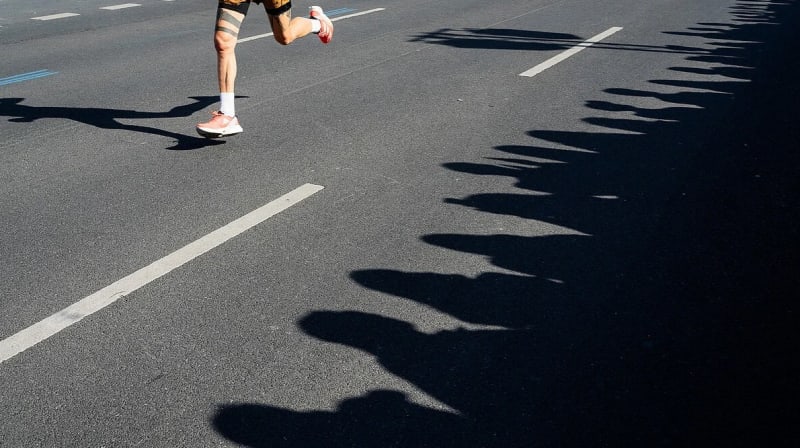
One of Berlin’s biggest advantages is its ultra-flat course. The total elevation gain is no more than 73 metres: essentially a motorway for marathon runners. That makes it possible to hold a steady pace without ever disrupting the rhythm. The result is a stable heart rate, a smooth stride and improved running economy.
There is another advantage: the long straight sections and very few turns, fewer than twenty in total. Everything is designed to let runners maintain their cadence without being slowed by changes of pace.
And there is even one more detail: the surface. In Berlin, runners race on asphalt, which is more forgiving than concrete and places less stress on the joints, as race director Mark Milde confirms: “It seems to be more favourable. Athletes tell us they feel less joint pain.”
Near-perfect racing conditions
At the end of September, the German capital often delivers ideal conditions: little wind and temperatures ranging from 12°C to 18°C. Experts generally agree that the perfect temperature for running fast lies between 10°C and 16°C, and Berlin’s historical average sits right in that range, at around 15°C. Coincidence? No, it is a genuine natural advantage.
This year, however, the forecast calls for a slightly warmer start than usual, at around 20°C.
 © SCC Events
 © SCC Events
The weight of history and records
Thirteen world records have been set here. Thirteen! No other marathon has seen as many. From Kipchoge to Sawe via Assefa, that reputation draws the world’s best marathoners to Berlin every year and creates unrivalled competition.
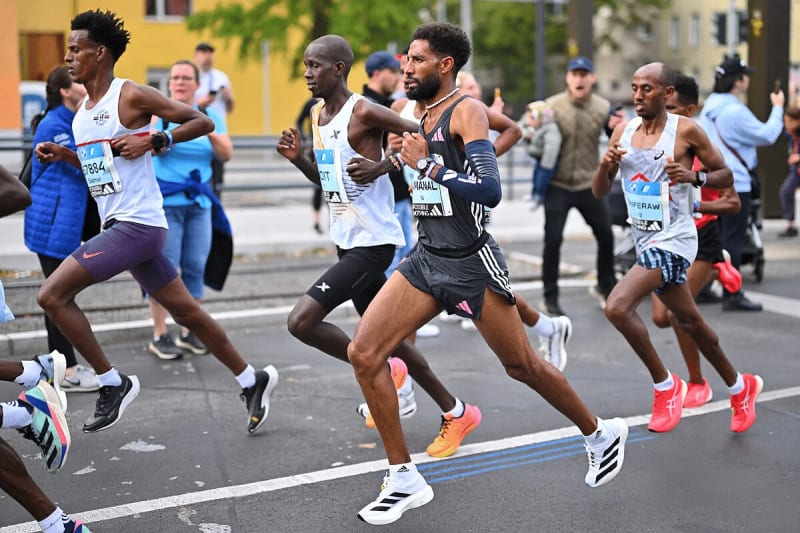
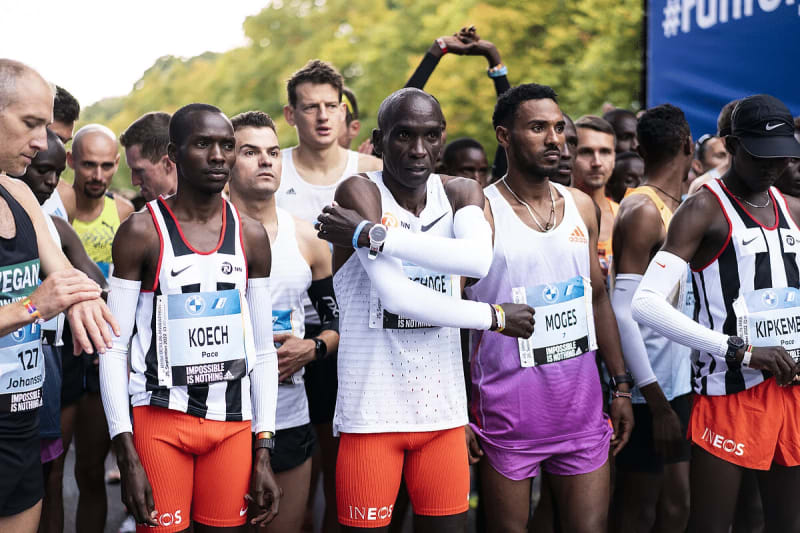
But unlike London, where the depth of the field can turn the race into a tactical battle, Berlin takes a different approach: it concentrates its firepower on one or two record contenders, with pacemakers tasked with taking them through 30 km. One or two athletes chasing the world record. No more. Beyond that, the race would become a tactical fight for first place and the winner’s prize, making it slower.
This year’s field is particularly enticing. Kenyan Sabastian Sawe, who has a personal best of 2:02:05, opted out of the Tokyo World Championships to go big in Berlin. After two emphatic victories in Valencia in 2024 and London this year, he arrives in Germany intent on making history.
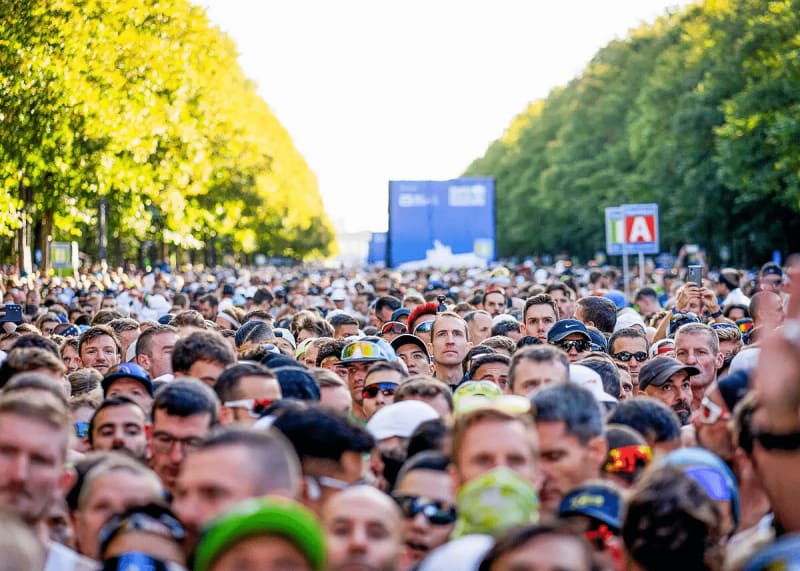
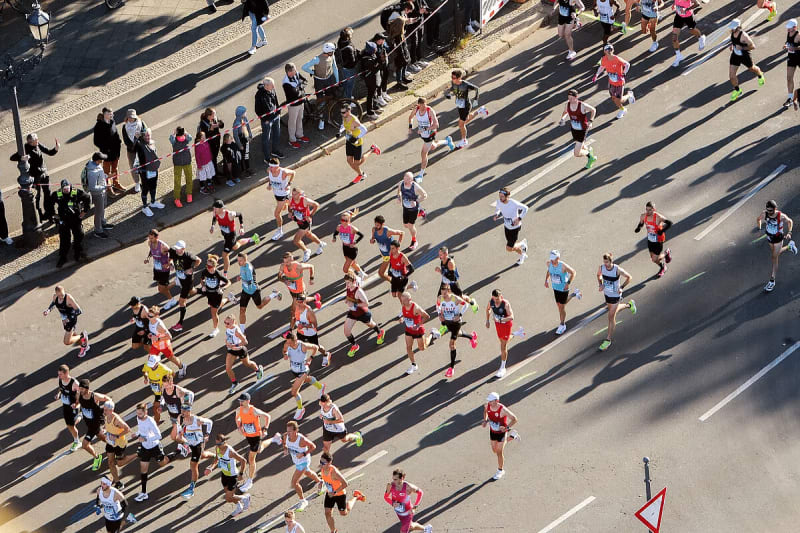
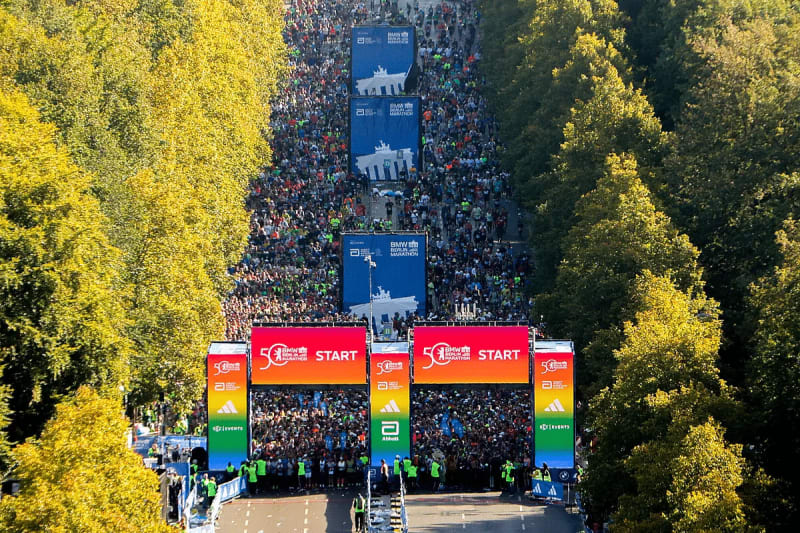
For amateurs, just as in the elite race, Berlin offers exceptional depth: from the front to the back of the field, every runner finds their rhythm within the pack.
I chose Berlin because it is one of the fastest courses in the world. After running Valencia and London in 2:02, my goal is to run the fastest race possible and, of course, if everything goes well, to win it.
Kipchoge, king of Berlin
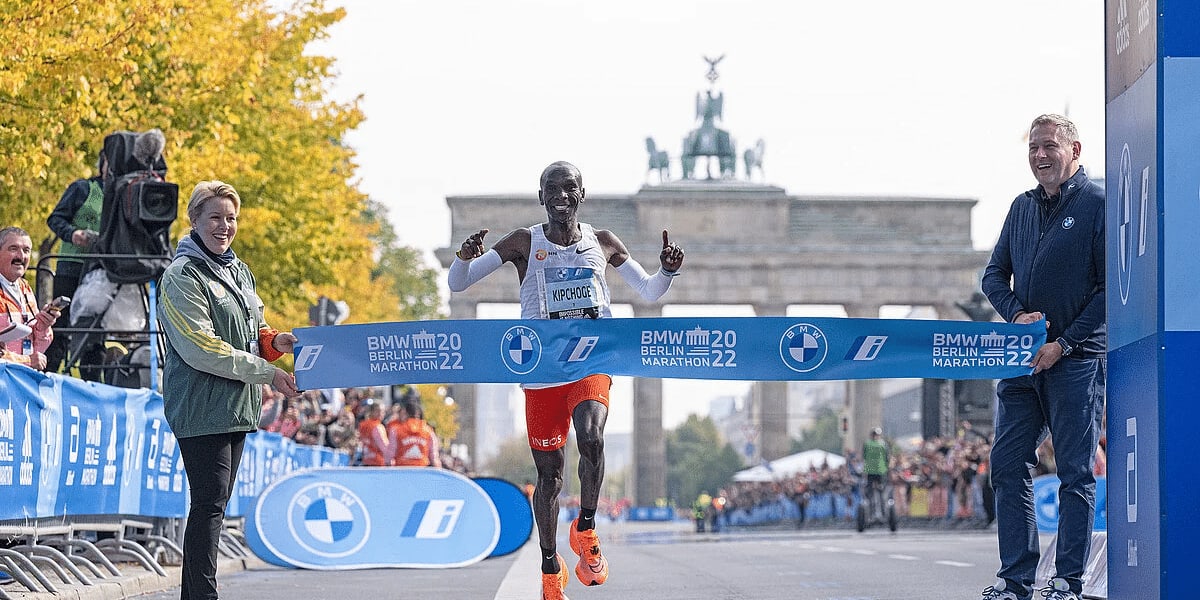
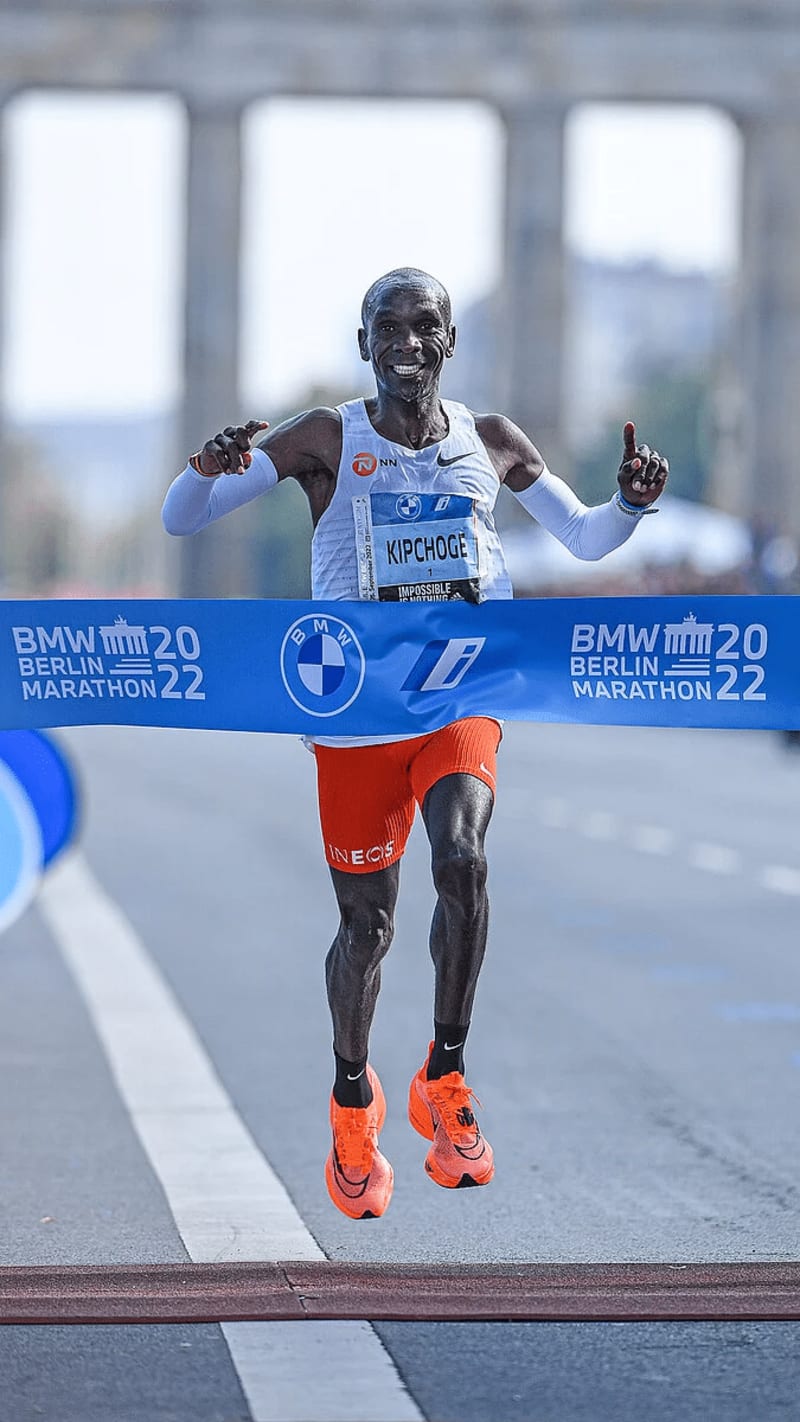
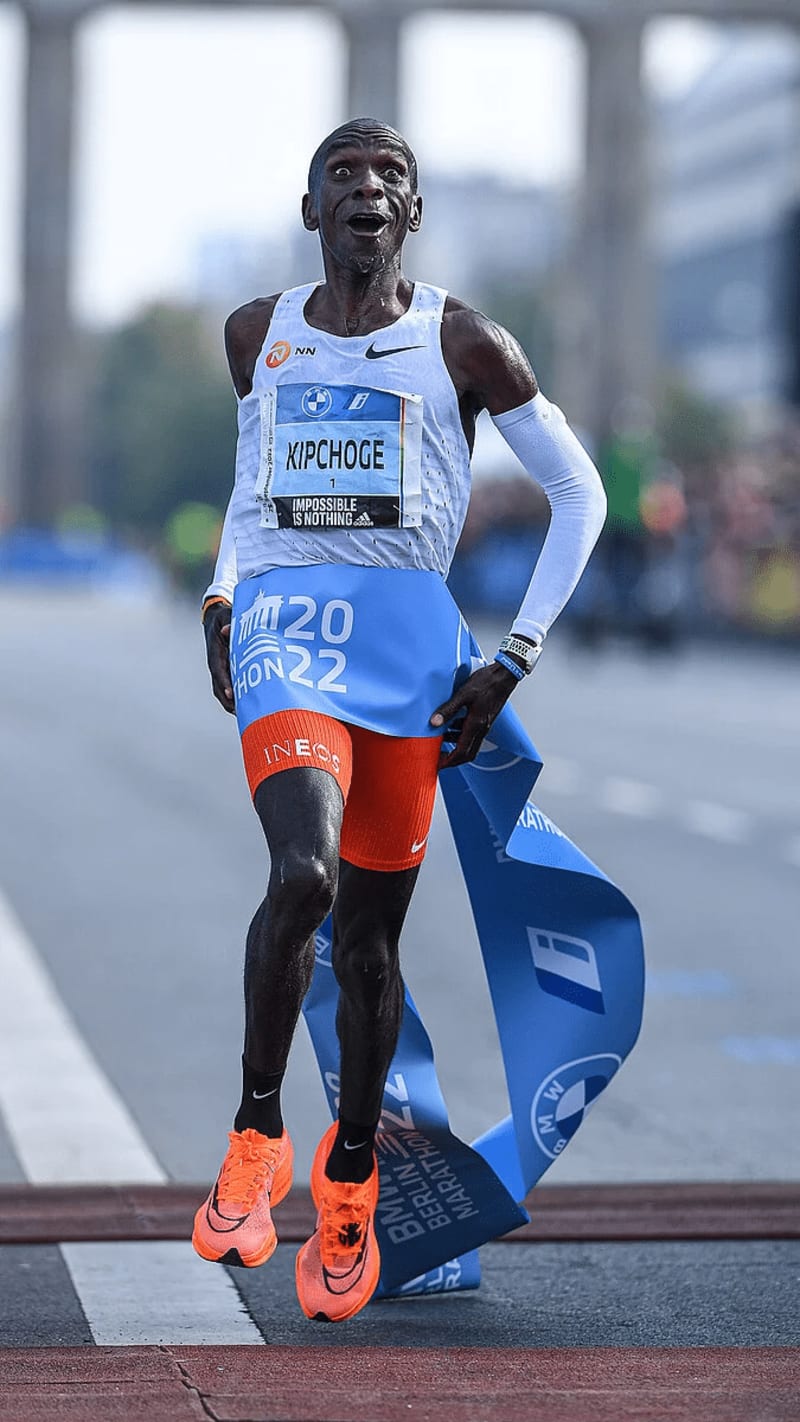
It is impossible to talk about Berlin without mentioning the marathon GOAT: Eliud Kipchoge. On 25 September 2022, the two-time Olympic champion clocked a stratospheric 2:01:09, setting a new world record at the time and the second-fastest performance in history. It was a masterclass, made even more remarkable by the fact that he passed halfway in 59:50 before easing off slightly in the closing stages.
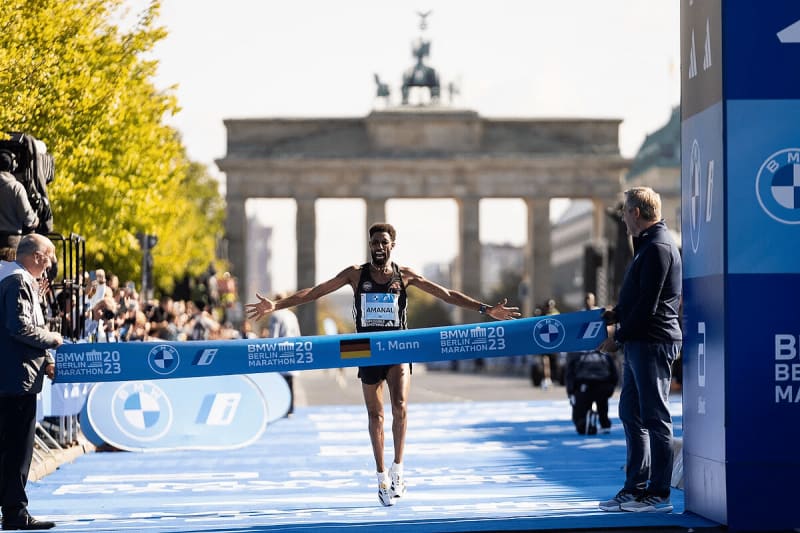
With five victories in Berlin (2015, 2017, 2018, 2022 and 2023), Kipchoge became the undisputed master of the city’s streets. His 2022 performance captures the magic of this course better than anything else.
 © SCC Events
 © SCC Events
 © SCC Events
 © SCC Events
Pacemakers and perfectly timed fuelling
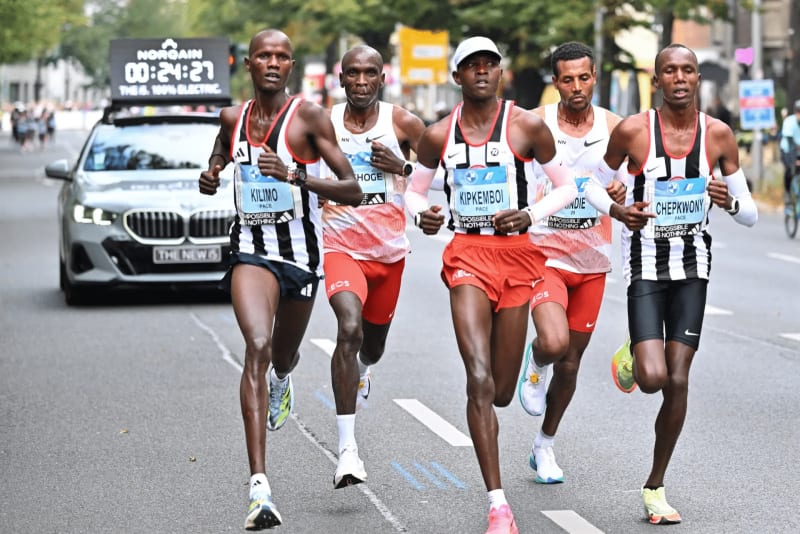
Berlin is also an exercise in precision. Pacemakers play a key role, holding an unwavering pace through 30 km. Thanks to them, many champions have built their records around a negative split, running the second half faster than the first.
But one of the lesser-known secrets lies in the personalised bottle service. Elite athletes prepare their bottles the day before, and volunteers hand them over during the race. Claus Henning-Schulke, better known as “Bottle Claus”, even became a legend for his infectious enthusiasm and surgical precision at the 2022 edition, when he personally helped Kipchoge with his drinks.
As the Kenyan himself put it: “My greatest memory of Berlin is this man handing me water. He is still my hero today.”
Henning-Schulke described the task to our colleagues at Runnersworlds almost like a parallel race: “Imagine this: they are running at more than 20 km/h. You have to keep visual contact, shout, and hand him the bottle at exactly the right moment. Then you jump on the bike and race at 40 km/h to the next station, ready to do it all over again. It is exhausting, but every successful handover is a victory. ”
Imagine this: they are running at more than 20 km/h. You have to keep visual contact, shout, and hand him the bottle at exactly the right moment. Then you jump on the bike and race at 40 km/h to the next station, ready to do it all over again. It is exhausting, but every successful handover is a victory.
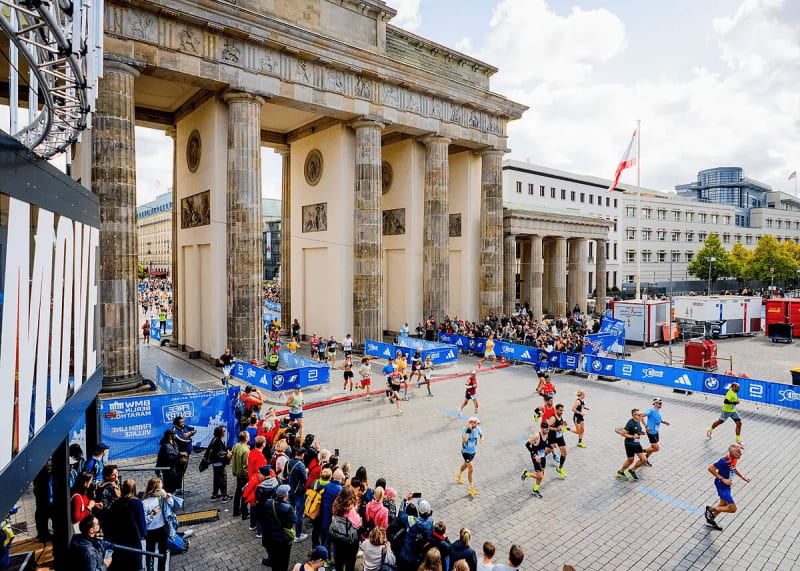
Berlin is not fast by accident. It is the combination of a flat, straight course, mild weather, a more forgiving surface, a history packed with records and flawless organisation. German efficiency. Everything here is designed to help runners, amateur and elite alike, push their limits. Every September, the Brandenburg Gate becomes the stage for extraordinary performances. So who will write their name into the history books this year? In Berlin, more than anywhere else, anything seems possible.