 © ASO
© ASO
Marathon: the essential equipment checklist before and after the race
Organization is a runner’s best friend. Properly preparing your equipment for a marathon is an essential step. The preparations before and after the race are just as important as your race strategy or your training. Marathons.com has put together a list of essentials not to forget as your race approaches, so you can line up at the start in the best possible conditions.
Who has never forgotten their pair of socks, their safety pins, or even their lucky bracelet for the race you have been preparing for so long? Between stress and travel, many runners have already experienced this unsettling situation. Forgetting an important item can disrupt your goal on race day. Runners, stay alert, Marathons.com has prepared the ultimate checklist of essential equipment for before and after a marathon.
| Essential accessories
Quick pre-race checklist: equipment for a marathon
- Racing shoes
- Proper socks
- Warm-up clothes and compression socks
- Technical race outfit, lightweight and breathable, tested in training
- GPS watch
- Gels, drink, nutrition, container, shorts with pockets, belt or trail pack
- Race bib and safety pins
- Phone, ID, license or PPS
- Small first aid kit
- Light gloves, neck warmer, cap, arm sleeves, headband, beanie, sunglasses, to be adjusted depending on the weather
- Emergency blanket if needed before the start
- Creams: anti-chafing cream, warming cream, pre-race muscle preparation cream, massage oil, Tiger Balm
Let’s start with the shoes. Remember to bring your running shoes for the warm-up, as well as your racing shoes. It is recommended not to discover them on race day, but to have already done a few training sessions with them beforehand, to avoid blisters or simply realizing that the pair does not suit you. The same applies to socks, it is up to you to choose between low-cut, mid-cut or high socks depending on your preferences. Put several pairs in your bag so you can change them if needed. Test them during several runs to make sure they suit you. Technical models with reinforcement in friction areas are often preferred.
In your marathon bag, don’t forget to pack four safety pins, tissues or toilet paper, shower essentials and, if needed, a warming cream, a pre-race muscle preparation cream or an anti-chafing cream. Massage oil or Tiger Balm can also be useful to prepare your muscles for the effort the day before and on race day. Likewise, if it rains, you can apply oil to your legs, which will protect them from the rain like a waterproof layer. Some creams are also designed to help prevent blisters.
| A suitable warm-up outfit
Small medical items such as bandages, scissors or antiseptic are also essentials to include in your bag. Also remember your ID, your license or PPS, your phone and a means of payment. The day before, don’t forget to carefully prepare your sports drinks, your nutrition and to attach your race bib to your shirt. Plan enough water and food for before and after the race.
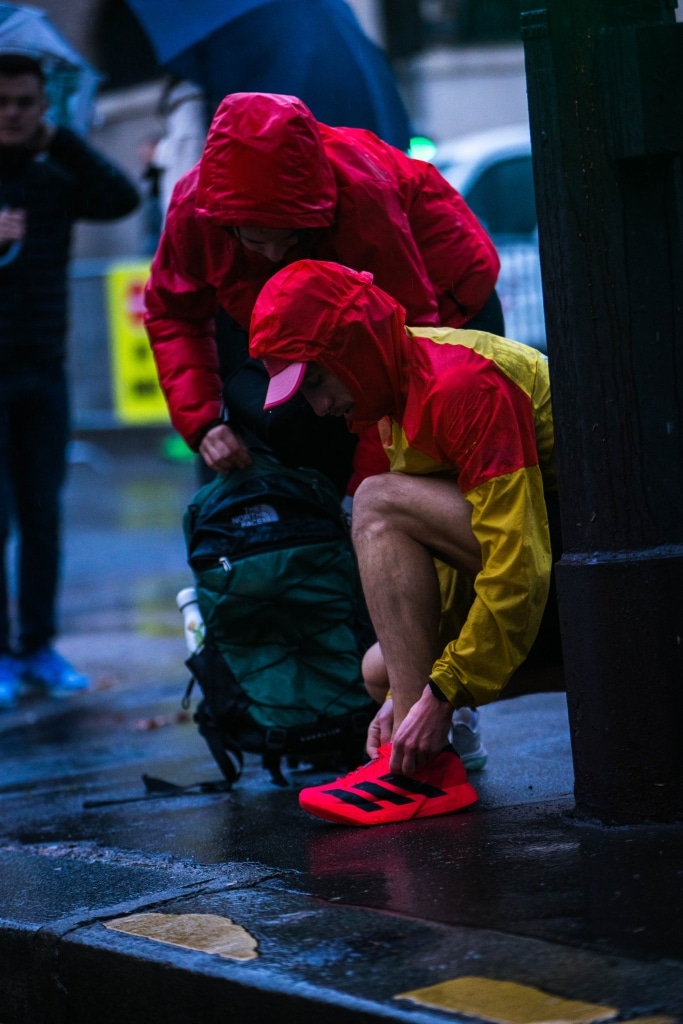
For the warm-up, bring an outfit that is warm enough, but not too warm either to avoid sweating. The best option is to wear leggings or sweatpants over your race kit so you don’t get too cold. On top, a T-shirt and a windbreaker, waterproof or not, or a zip-up top can work depending on the temperature and whether it is raining. You can wear compression socks in the hours leading up to the start to help your legs feel lighter. Many runners bring a large trash bag or an emergency blanket, very useful items to stay warm right up until the start.
| The ideal outfit for running a marathon
When it comes to your marathon outfit, choose something technical and comfortable, that does not cause chafing and in which you feel good. A singlet, a club jersey or a simple short- or long-sleeve T-shirt all depend on your preferences. You can also opt for arm sleeves, a neck warmer and light gloves if it is cold. These accessories are very useful because, in addition to keeping you warm, they can easily be removed during the race. Keep in mind not to overdress. Just like your shoes, make sure to test your entire outfit and accessories before race day.
When running, you warm up quickly. Shorts or half-tights are therefore ideal and can be worn year-round, except in extremely cold temperatures. For a marathon, go for bottoms with pockets so you can easily access your gels and soft flasks. Otherwise, rely on trail packs or race belts. More and more races are banning cups, so don’t forget to bring your own containers. Remember to use your GPS watch to monitor your pace.
| And after the race?
Quick post-race checklist: equipment for a marathon
- Warm, dry clothes
- Change of shoes and socks
- Towel and/or shower essentials
- Recovery drink
- Solid snack
Once the marathon is over, taking a shower or simply drying off with a towel and changing into warm, dry clothes is essential. Even in summer, you will almost certainly feel cold after running, so sweatpants, a long-sleeve top and a sweatshirt are essentials. Remember to change your socks and shoes. It is also the perfect time to rehydrate with a recovery drink and eat something solid to optimize recovery.
Preparing your bag and having the right equipment is an integral part of marathon preparation. Forgetting key items can disrupt you and negatively affect your race. Careful organization will allow you to approach race day with confidence and stay fully focused on your goal.
➜ Discover the marathon calendar

Emma BERT
Journaliste