
How to Plan Your Running Season
 © Alanis Duc
Find out how to plan your running season with practical advice for beginners and experienced runners alike, covering goals, training, recovery and race selection. The racing calendar is packed with thousands of events, from 5Ks, 10Ks, half marathons and marathons to cross-country races and ultradistance events. Faced with such an irresistible spread, it is tempting to gorge yourself on the lot… but indigestion is guaranteed by the end of the season. The best approach is to plan the year properly and avoid burnout, overtraining and injury.
Tip 1: Set your priorities
 © Alanis Duc
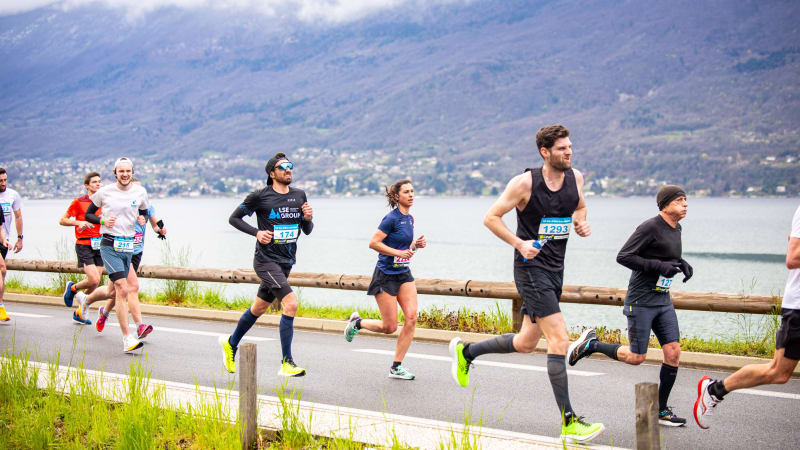
No more than two or three goals per season
Planning a season starts with setting the right goals: realistic, motivating targets. When it comes to racing, choose two or three key events at which you want to be in your best shape. Do not enter every race going. It is both unnecessary and counterproductive: you will not only wear yourself out physically, but also arrive at the start line mentally drained, especially for longer distances.
Space out your races
Racing back-to-back is not a good idea, unless you are a professional athlete (and even then). You need to allow time to recover between competitions, especially when the distance is long. A simple rule of thumb is to race no more than once a month. You should, however, schedule a tune-up race either five weeks or three weeks before your main goal.
Tip 2: Follow the principle of progression
 © Alanis Duc
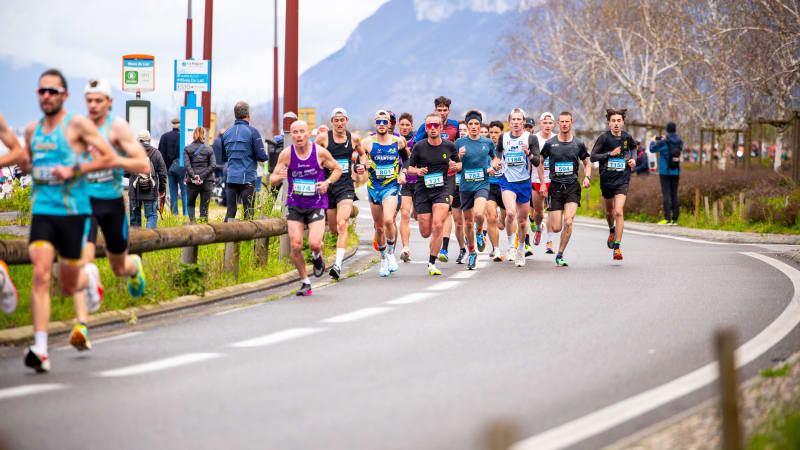
Decided to take on the challenge of a marathon this year? It is an ambitious goal, but be careful not to ramp up your training load too quickly. Any quantitative or qualitative change must be progressive. Training loads, including volume, intensity and specificity, should increase gradually from one training cycle to the next and from one season to the next. As a general rule, do not increase your training load by more than 15% from one year to the next. For example, if you trained for eight hours a week last year, you should not exceed nine hours and 15 minutes per week this season. Do the maths for yourself. To avoid injury, you need to give your body time to adapt to the stress created by an increased training load.
Tip 3: Build coherent training cycles
 © Léo Berret
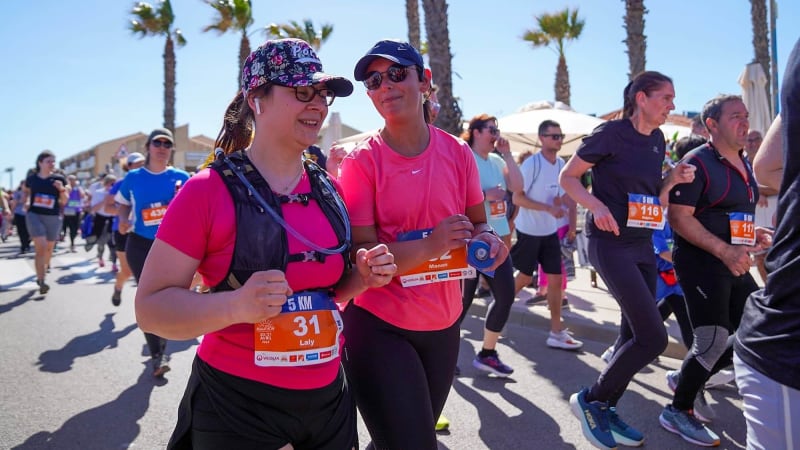
Plan your season in cycles
The training method known as periodization involves starting with a general preparation phase (strength training and development of physical qualities such as endurance) before moving towards a specific preparation phase (race-pace work, improving speed and technical downhill training).
PHASE 1: GENERAL PREPARATION
Endurance and strength training are the two priorities. Cross-training, such as running, cycling and ski touring, allows you to vary both your activities and the demands placed on your muscles, tendons and joints.
➡️ Duration, whatever the target distance: four weeks.
PHASE 2: SPECIFIC PREPARATION
The next phase focuses on developing specific qualities such as running speed and running economy. Sessions should therefore target the quality you want to improve.
➡️ Duration: six weeks for a 10K or half marathon, eight weeks for a marathon.PHASE 3: TAPER
In the run-up to your target race, reduce your training load to encourage supercompensation and preserve freshness for race day.
➡️ Duration: seven to 10 days for a 10K and up to two weeks for a marathon.RACE
PHASE 4: REGENERATION
After every race, the recovery phase should include one or more full rest days before resuming cross-training, such as easy swimming or cycling.
➡️ Duration: after a race, one full rest day for every 10 km raced. At the end of a training cycle, spend one week doing low-intensity sessions and cross-training.
The importance of variety
Varying your sessions is essential for breaking the routine and developing every aspect of your running. Alternate between VO2 max sessions, threshold work, steady-state running and easy aerobic mileage. One important point: around 75% of your training should be done at low intensity. In other words, you should not be running flat out all the time. There is no benefit to it.
Tip 4: Never forget to recover
 © STADION-ACTU
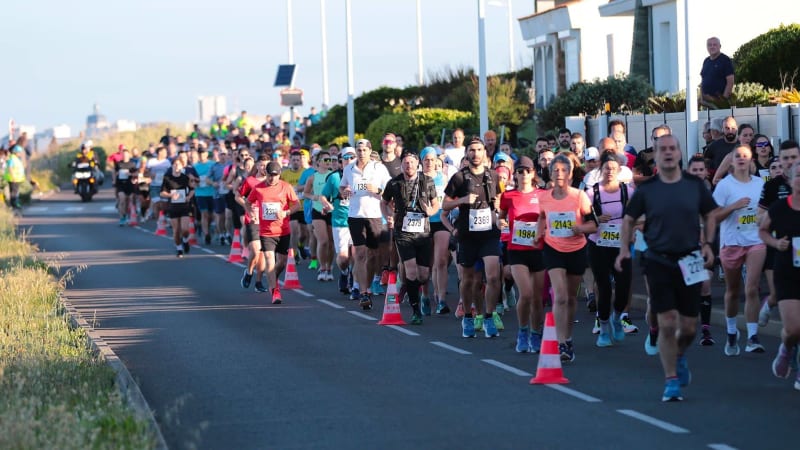
Recover after a race or training cycle
It is said, written, read and repeated. Yet athletes still struggle to follow the golden rule: recovery is an integral part of training. A demanding run, a hard session, a training cycle lasting several weeks or a race should always be followed by recovery, whether active or passive, lasting one day or several weeks.
Post-race recovery should be complete, meaning no physical activity at all. Stick to massage, muscle treatments, appropriately programmed electrical stimulation and cold-water baths. Only after this period of complete rest should you resume activities such as walking, cycling and swimming. The key to good recovery is listening to your body, your feelings and your mind.
Plan at least two breaks each year
To allow your body and mind to regenerate, schedule two two-week breaks during the season. These periods of downtime can come after each of your two main goals. Usually, one break is planned at the end of the season, in early winter, and another may be scheduled during the summer depending on your race calendar. Athletes targeting longer distances, such as 100 km or 24-hour races, can extend the length of their breaks.
Should you get a coach?