
Strava’s (Almost) Secret Features Even Your Triathlete Friends Don’t Know About
 © Strava
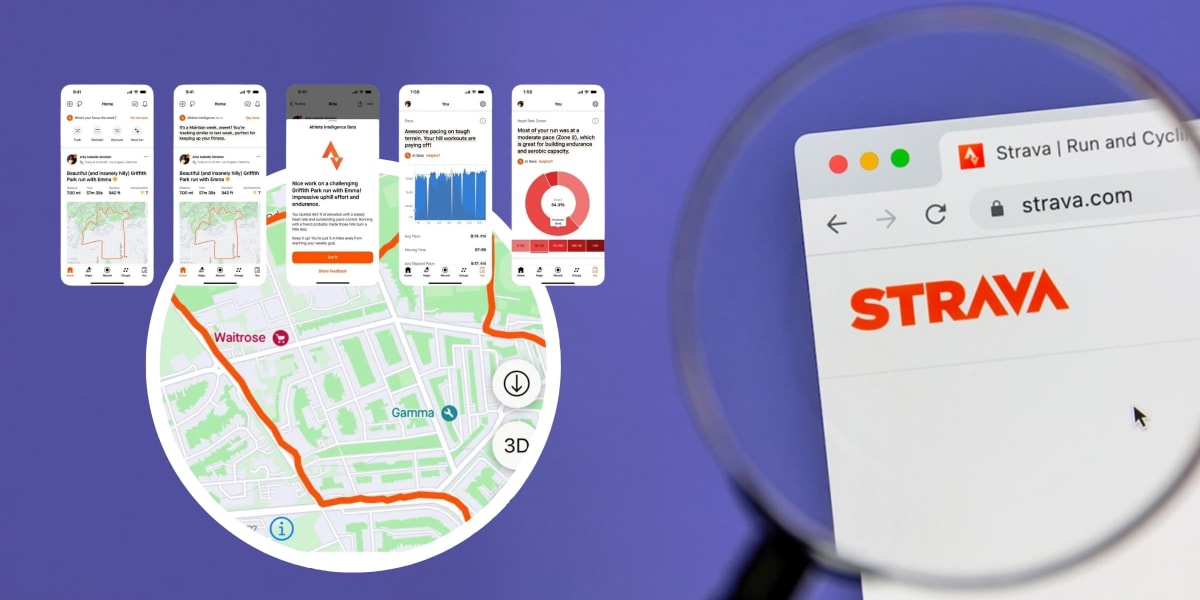
Often dismissed as a social training log, Strava is actually a Swiss Army knife for runners, cyclists and stats nerds. You just have to dig a little. Some features are well hidden, others simply overlooked. Here’s a selection of these low-key but seriously useful tools that deserve far more attention.
Strava is a bit like that friend at a party who starts off fairly low-key, then, two drinks in, reveals that they speak fluent Japanese, have climbed Kilimanjaro and make a secret banana bread recipe. Behind its flashy orange interface and endless stream of kudos, the app is hiding plenty of gems. Small features that don’t always get much attention, but deserve their moment in the spotlight. Here, then, is a top eight of Strava’s hidden features, the ones you’ll love showing off on your next long run or over coffee with your cycling mates.
1. Flyby: replay your activity like an interactive film
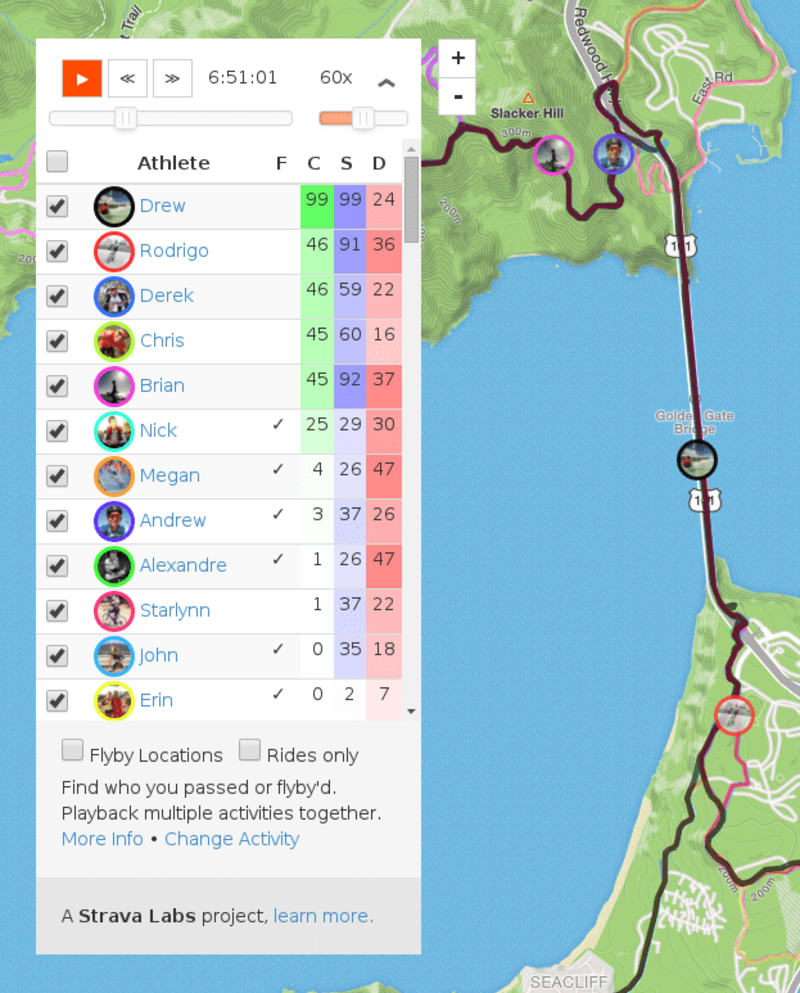
A fleeting encounter during a run, a familiar silhouette overtaken mid-effort… and the feeling that you missed something. With Flyby, Strava offers an animated replay of every activity, showing all the other users you passed on the same stretch at the same time. The result: a kind of onboard-camera replay, with every GPS point turned into a moving avatar.
 © Strava’s Flyby tool © Mapbox © OpenStreetMap
Technically, the feature is brilliant. It lets you visualise routes, encounters and differences in speed. Ideal for replaying a race, or simply checking who got dropped on the day’s climb. The only catch: everyone else involved must also have the feature enabled in their settings. Flyby is Strava in completely pointless spy mode, which makes it absolutely essential.
● Enable it here: strava.com/athletes/flyby (but the other person has to enable it too).
2. Hidden segments: the other side of the KOM
Anyone chasing records knows the segments around their patch inside out. But few realise that hundreds more are hidden from view by default. Dig into the “Analysis” tab, then select “All Segments”, and you’ll uncover a parallel map: forgotten routes, tiny measured climbs and quiet streets transformed into time-trial arenas.
These alternative segments let you test yourself over sometimes unlikely stretches, or stumble across records held by strangers with cryptic usernames. More importantly, they offer a more organic view of performance, away from the overexposed leaderboards. A chance to race… yourself, and nobody else.
● Tip: go to “Analysis” after an activity and click “All Segments” to uncover some local gems.
3. Fitness & Freshness: three charts to understand your body
Available only with a paid subscription, this graph tracks how your fitness changes from week to week. Three curves representing fitness, fatigue and training stress intersect like an aerial dashboard, revealing intensity spikes, periods of overload and high-risk phases.
The tool is made for planners: athletes preparing for a target event, returning from injury or simply trying to balance training load and recovery. Visually clear, it offers a straightforward view of the relationship between the work you put in and the benefits you get out. A real asset for fine-tuning your training cycles.
➜ Read also: “ StravArt, or the art of drawing while running ”
4. The personal Heatmap: mapping your life in running shoes
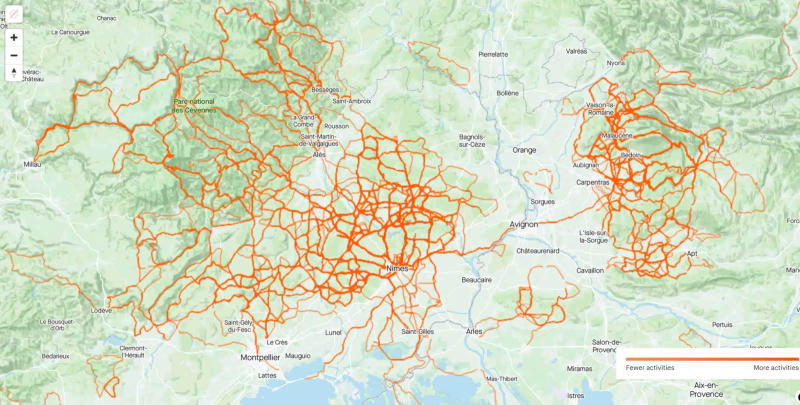
When you keep repeating the same loops, it can be hard to see your routes with fresh eyes. Strava’s personal heatmap changes that: it displays every GPS trace you’ve accumulated over time in colour. The redder roads are the ones you use most, while pale areas remain unexplored.
This almost artistic visual becomes a motivational tool in its own right. Some users set out to “fill in” their neighbourhood, while others try to connect empty areas, turning the whole thing into a game of conquest. At a glance, the map tells a story: that of a personal territory patiently drawn, one footstrike at a time.
● Available here: strava.com/heatmap – click “My Heatmap”.
5. Smart route builder: optimised loops in three clicks
Plotting a coherent route without dead ends or U-turns can quickly become a headache. Strava offers a surprisingly clever route generator: enter a starting point, target distance and a few preferences, such as road or trail, hilly or flat, and the tool suggests a route based on the real-world habits of other users.
The advantage is that the suggested routes are often pleasant, safe and already tested in the real world. Fewer nasty surprises, less time wasted and the satisfaction of setting off with a workable route, even somewhere unfamiliar.
6. Gear tracking: knowing when to replace your shoes (or chain)
Most runners put it off: as long as their shoes are still standing, they stay in rotation. Bad idea. A pair can lose its cushioning long before the first hole appears. With gear tracking, Strava lets you record every model you use and automatically assign the mileage you run in it.
Alerts can be set according to the type of activity, the model or how often it’s used. It’s a good way to avoid overuse injuries, compare the feel of two models or justify buying a new pair. The goal? Run more, but with better equipment.
➜ Read also: “ Strava, the race for kudos and social recognition ”
7. Hidden badges and improbable challenges
Alongside the usual monthly challenges, Strava occasionally slips in more low-key tests. A midnight outing, an activity exactly 42.2 km long, a climb on the day of the solstice… These mini-goals sometimes unlock special badges, or even discounts from partner brands.
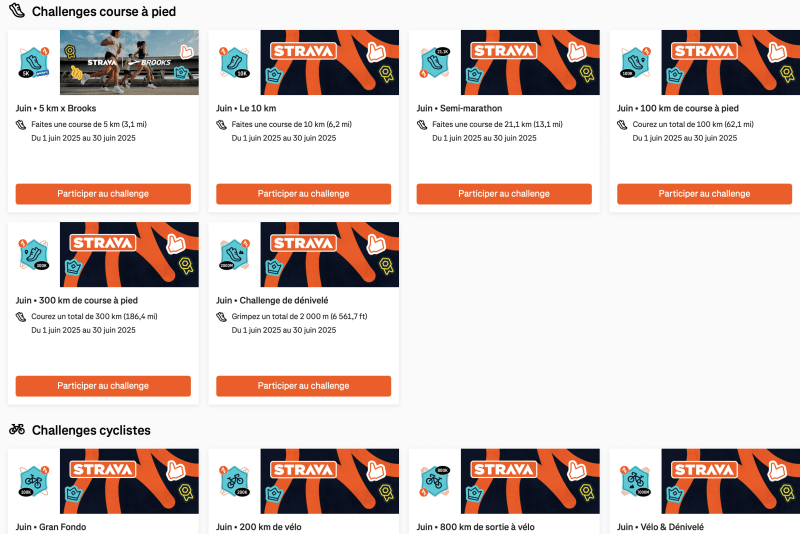
Often pointless but always fun, these little trophies keep alive the joy of the game. For some users, they become a genuine driver of consistency, every bit as much as a conventional training plan. With a dash of humour thrown into the pursuit of performance.
8. Strava Clubs: a no-fuss leaderboard for you and your mates
Creating a club on Strava lets you bring together members of the same team, club or group of friends. The benefit? An automatic weekly leaderboard, a centralised activity feed and the ability to follow everyone’s performances without having to chase the WhatsApp group ten times.
For anyone who enjoys a bit of friendly competition without making a big deal of it, it’s ideal. Everyone checks in when they want, the kilometres add up automatically and the records appear at the top of the table. No organisation required, just a little team spirit
Explore Strava’s less obvious corners and you’ll find a genuine toolbox, built for curious athletes, data obsessives and fans of a good map. Some features take a little time to get the hang of; others are instantly addictive. But they all help turn the sporting experience into something richer, more playful… and impressively well designed.