
The Essential Gear for Running
 © Alanis Duc
Around 12.5 million people run in France, representing 25% of the population. Running is one of the most accessible sports: you can head out straight from your front door, and you do not need much equipment or a major investment to get started. That said, choosing the right gear is crucial if you want to run while minimizing your risk of injury. At Marathons.com, we take a look at the essential equipment every runner needs.
Gear matters
Having the right running gear matters, even if you are not aiming for the next World Championships. Whether you are taking up running or preparing for a marathon, there are a few essentials to add to your running wardrobe. Equipment does not determine performance entirely (some technologies now give athletes a genuine performance boost), but it can improve comfort and help you get more from your training. Worn-out or unsuitable gear can be behind some injuries. Having the right kit makes perfect sense. It also helps you deal with the weather, whether it is hot or bitterly cold.
A runner’s essential gear
✔ Running shoes
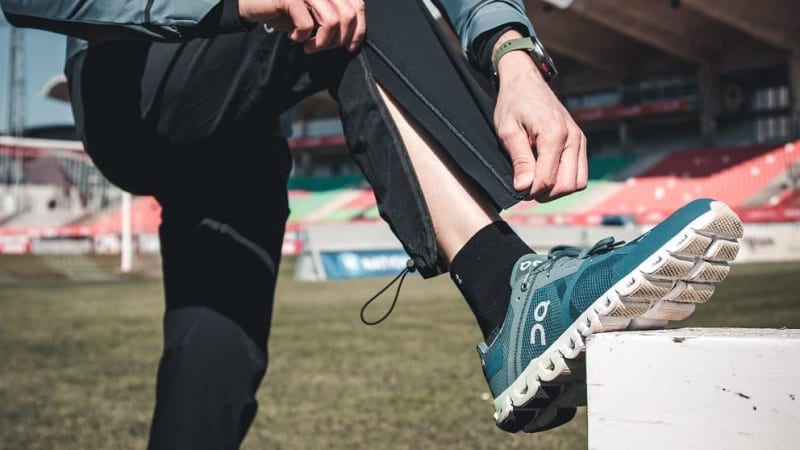
Running shoes are the cornerstone of any running kit. Although some athletes run barefoot, like the legendary champion Abebe Bikila, the vast majority of runners own a pair of shoes. Their main benefit is comfort: they provide cushioning under your foot with every impact on the ground.
Let’s dispel one myth straight away. There is no single best pair of running shoes. Every runner has an ideal pair because every runner has different needs and characteristics, from foot shape and injury history to body weight and goals. The key is finding the pair that suits your running and your profile. The best advice is to visit a specialist retailer, where staff can guide you towards the right shoes after carrying out a few tests.
Depending on their experience, ability and goals, some runners adopt a shoe rotation strategy. This means alternating between several pairs of shoes. Each pair has its own characteristics and is suited to a particular type of training, such as easy aerobic running, racing or long runs. The benefits are numerous: reducing shoe wear, making the most of each pair’s technology and technical features, and lowering the risk of injury. Naturally, this approach requires a bigger shoe budget. You can absolutely run without rotating several pairs.
 © Alanis Duc
✔ Running apparel
The other key part of a runner’s kit is clothing. Quite simply, we do not run naked. (And if you do, that is none of our business.) A T-shirt, shorts, underwear and a pair of socks will generally give you everything you need to get out the door. Once again, it all comes down to comfort and performance. Weather conditions are the main reason to invest in good running apparel, but they are not the only one. A suitable outfit is essential for running comfortably. The wrong clothing can cause chafing and irritation, which is hardly ideal when you run several miles a week. And, of course, running means sweating. Sports brands now offer lightweight clothing made from fabrics designed to wick moisture away from the skin. Shorts, T-shirts, tights, singlets… there is something for every preference and budget.
✔ Accessories and tech
For gear enthusiasts and anyone looking to fine-tune their training, a little technology can round out the perfect runner’s kit. GPS smartwatches are among the essentials. From a basic smartwatch to a fully fledged training tool, every type of runner can find a model that suits them. To monitor heart rate during training, runners pair their watch with a heart-rate monitor chest strap. It is an essential tool when you want to stick precisely to your training zones.
Other accessories can improve comfort and support training, including all kinds of recovery tools: foam rollers, massage balls and massage guns, recovery socks, and electrical muscle stimulation devices.
Finally, a few can come in handy, such as a phone holder, hydration belt, soft flasks, gloves, beanies, caps, arm sleeves, sunglasses and plenty more.
 © Alanis Duc
Adapt your running kit
A well-stocked running wardrobe is one thing, but you also need to . Runners should adapt their equipment to the type of workout, the terrain and the conditions. Shoes are a good example. To get the most from a pair’s particular strengths, it is best to use it for the right terrain and type of training. For example, a responsive pair, potentially with a carbon plate, is generally preferable for quality or high-intensity sessions than a more comfortable pair. This helps limit the risk of injury and slow down shoe wear. Plenty of runners make the mistake of buying shoes that do not suit their running.
Adapting your gear also means finding the best balance for the weather. Waterproof layers come into their own when it rains, while shorts and a singlet take over in hot conditions.
The essential running kit is fairly basic: shorts, a T-shirt and a pair of shoes. That is enough to go running. To improve comfort and get more from your training, additional clothing and accessories are worth considering. Adapt your running gear to the weather and to every workout.