
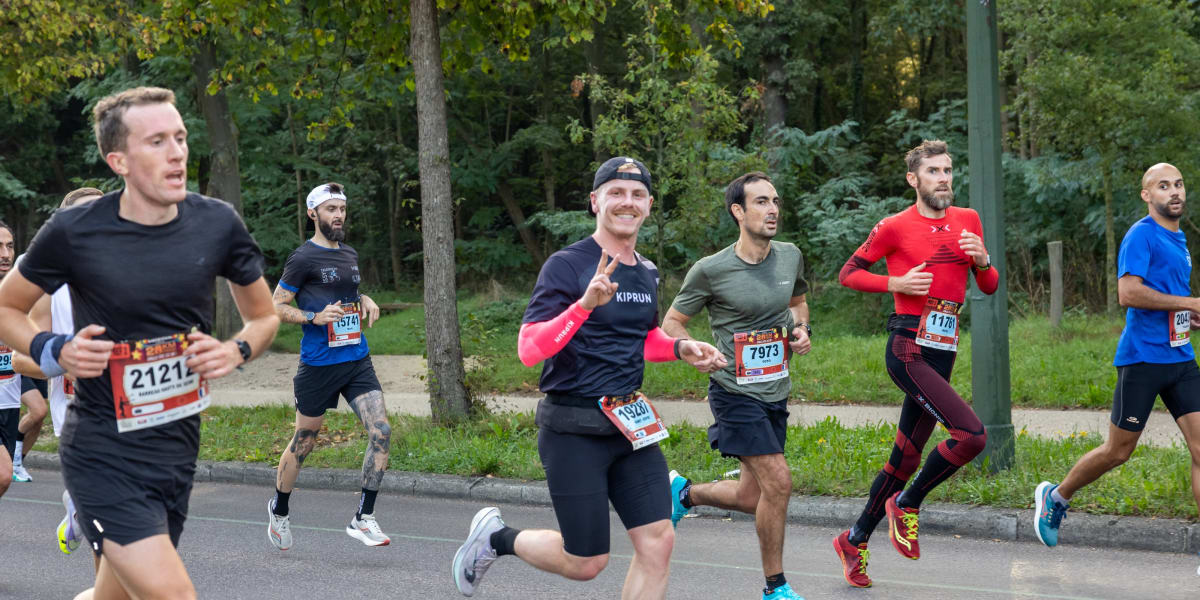
“Feeling angry? Go blow off some steam, you’ll feel better!” This popular piece of advice has stood the test of time. Whether we’re angry, stressed or upset, we often assume the answer is to work off our tension through physical activity. Is that really a good idea?
Some people settle for punching the sofa cushions while screaming at the top of their lungs, much to the annoyance of the neighbours. Others lace up their trainers and head out for a wild run. But can sport, and running in particular, really help us deal with the problems we face in our personal or professional lives? Can running provide catharsis?
Catha… Cathar… What exactly?
The word “catharsis” comes from the Greek katharsis meaning purification, cleansing, the separation of good from bad. Catharsis therefore refers to the purging of negative emotions, accompanied by a positive change in a person’s life. In psychoanalysis, it is a therapeutic method through which a doctor helps a patient release repressed emotional trauma. The aim is to clear out whatever is weighing us down: stress, tension, anger, agitation, fear… There are several ways to achieve catharsis. Alongside psychiatric therapy, we can talk to a friend, listen to music, write down how we feel, or take up sport. So how can physical activity help us make peace with ourselves and with others?
Action dampens emotion
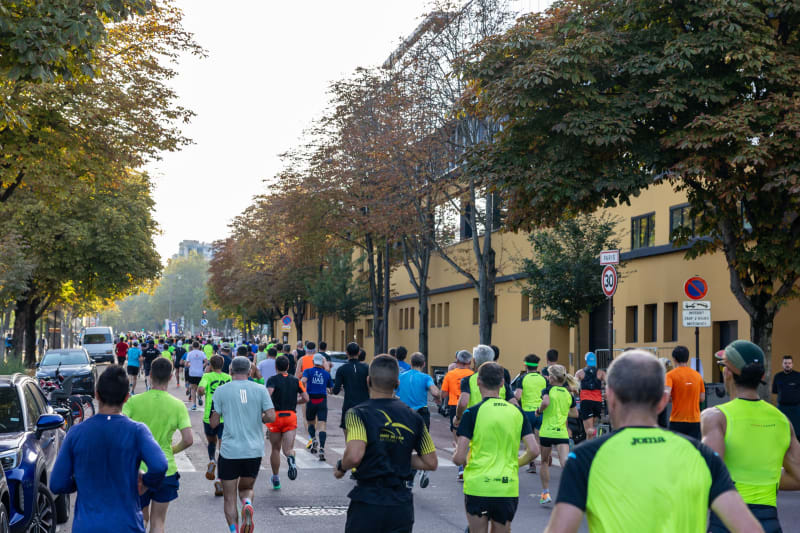
Mental coaches have known this for a long time: when it comes to channelling an emotion, before a competition for example, it is better to stay active. Putting the body in motion helps us manage mental tension more effectively. The mind focuses on the action at hand rather than on anxiety about the next day’s race. Likewise, when worries keep circling around, going for a run can help bring a sense of calm. Thoughts often continue to churn during the first few minutes of a run, but they soon fade and eventually disappear altogether as our attention shifts to the activity itself. In that sense, running creates a degree of well-being because it puts an end to rumination. The effect is even stronger if we can run mindfully, focusing on the present moment and on every sensation we experience: the air on our face, the warmth on our arms, the smell of nature, the colour of the flowers and the sky… Connecting with the here and now helps clear away negative emotions and recurring thoughts.
Running, an endurance sport, can also make us feel better because it stimulates the production of endorphins, those famous hormones that can quickly become addictive because of the pleasure they generate. With a regular endorphin hit, it can feel as though running is helping us feel better. If we run for long enough or at sufficient intensity, exercise also brings on fatigue, which promotes sleep, improves recovery and leaves us feeling fitter overall. Problems are easier to face when we are better rested.
When trying to overcome life’s obstacles, some people throw themselves into running wholeheartedly. Training becomes a priority because the activity delivers a sense of well-being that is missing from their lives: as long as we run, we forget our problems. Training becomes a kind of parenthesis in the life where our worries, concerns and anxieties originate. So we run more and more often, for longer and longer, giving this escape from time and from the “real” world an ever larger place in our lives. But is that really catharsis? Or are we simply running away without truly cleansing ourselves?
What if it’s just a myth?
Many runners say that running was their therapy. That it helped them get through a difficult period, overcome serious problems and break free. Sometimes it even saved them. High-profile examples have highlighted running’s life-saving role. But are we just kidding ourselves? Are we refusing to see what is really at work in the sometimes excessive practice of running? Although running has many health benefits, it can also come with harmful effects: injuries, eating disorders, overtraining, withdrawal from social and family life, exercise addiction…
Those who praise running for its mental-health benefits are nonetheless partly right. Sport creates both an outlet for physical release and time that belongs entirely to us, a chance to reconnect with ourselves, our bodies and our sensations. Without necessarily purging the mind of its worries and ruminations, running gives us a break from the whirlwind of thoughts and emotions. If we are happy with the session we have completed, it also adds a reward to the equation, a reason to feel proud of ourselves. Running injects something positive into a circuit otherwise dominated by negativity.
But does running necessarily provide catharsis? Not so fast. Studies have shown that yoga, meditation and breathing exercises are more useful than running, cycling or boxing when trying to calm anger. In other words, when we are particularly wound up, calming activities are preferable to those that drive our level of arousal even higher. If we are feeling irritated, going for a two-hour run may not be the best idea. Likewise, if we tend to put ourselves down and suffer from a severe lack of confidence, going for a run in a group or somewhere we will compare ourselves with others is probably not very helpful: we will find plenty of reasons to keep ruminating rather than feel better. Another example: escaping a tense relationship situation by going running as often as possible is likely to perpetuate the tension, and may even widen the distance between partners. The time spent outside running may be a breath of fresh air for the runner, but it is likely to suffocate intimacy, communication and peace at home. The examples could go on, with countless real-life situations to illustrate the point. Used badly, running can be completely counterproductive.
 © STADION-ACTU
Ultimately, it is difficult to give a definitive answer: is catharsis through running a myth or a reality? There can be no one-size-fits-all answer, since everything depends on the individual and on the nature of the problem they are trying to ease through sport. Each person will have to discover what running can do for them, while remembering that excess often signals escape, distraction or even a refusal to face reality. Running to forget your problems will not solve anything; it is more like the fleeting hit sought by an addict. Running can, however, form part of a broader approach to feeling better. In that context, it truly becomes a form of “health sport” in every sense: physical, mental and social. It can also be one stage in a healing process, provided it is understood as such rather than treated as the end goal.
Read more
➜ Read our article: “ One Stride at a Time: Together, Women Are Putting Their Trainers Back On ”
More articles

Is running the new dating app?
Could Strava become the new dating app? As sport and dating collide, more relationships are starting out in running shoes.
Wed, September 9, 2026
Women’s races are showing no signs of slowing down
Women-only races have surged in recent years. With stronger institutional backing, they are attracting more and more participants.
Wed, September 9, 2026

Gravel running: the urban runner’s latest escape route?
Gravel running isn’t replacing road or trail. It’s a third lane: closer to home, freer, and less obsessed with the clock.
Wed, August 5, 2026