
 © PSG
© PSGWhen clubs lace up: PSG, Toulouse and the rest are turning running into their new playing field
Published on Wed, August 5, 2026
The shirt on your back, trainers on your feet, and a few kilometres to knock out around town. What sounded like a community manager’s stunt a few years ago has become a real undercurrent in French pro sport. From PSG to Stade Toulousain, via Stade Français, Stade Rennais and Aviron Bayonnais, clubs are diving into grassroots running with one clear goal: to matter well beyond the 90 or 80 minutes that usually define them. Here’s what’s behind a movement that’s only just getting started.
Table of contents
- Toulouse, or rugby translated into strides
- Stade Français, or when the third half is run
- Rennes, Bayonne, Nantes: the running map keeps expanding
- A model imported and given a French twist
- The jersey economy, in running shoes
- Running, the new fan-recruitment ground
- What if tomorrow everyone had their own circuit?
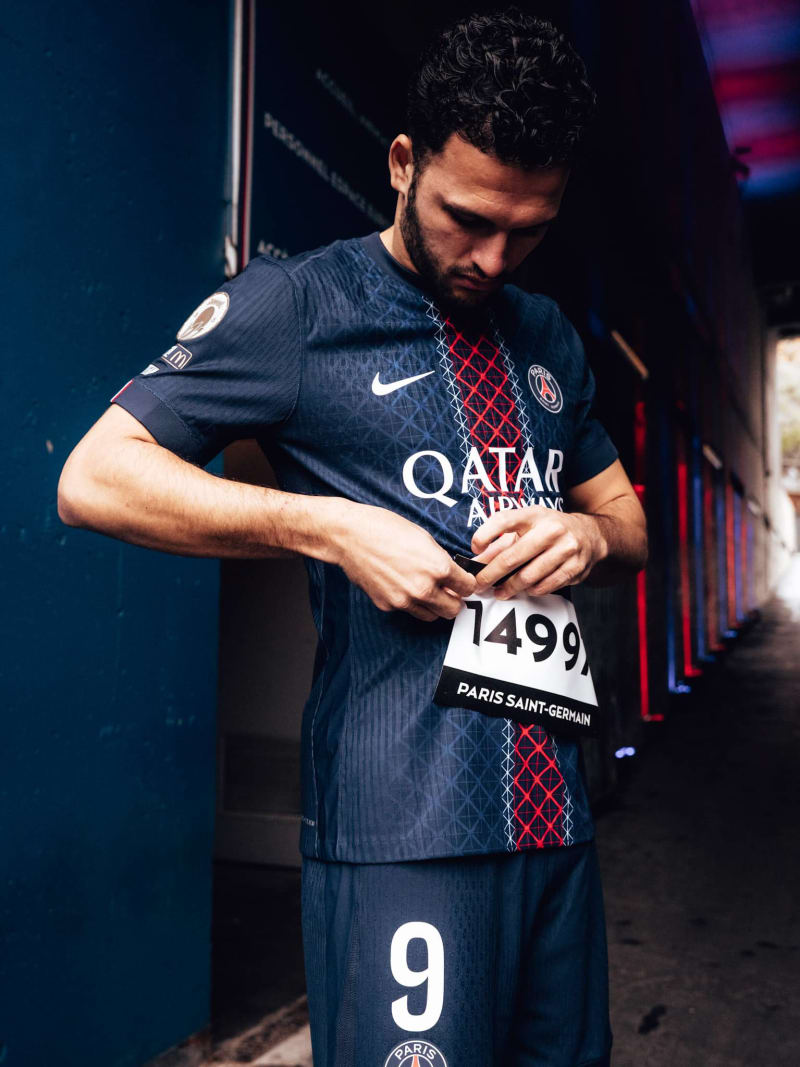
In the race for a second European star, PSG is also chasing running events. With PSG We Run, the Paris club isn’t just setting the Parc des Princes alight anymore, it’s now taking over the capital’s streets, trainers on. And in its wake, other clubs are following suit. In Toulouse, Stade Toulousain has turned its rugby passion into a red-and-black 10K, while in Paris, Stade Français will roll out its fifth ekiden in June 2026.
But the loudest signal is coming largely from PSG. In 2023, the club staged the first edition of We Run Paris, pulling in more than 10,000 participants straight away. Three years later, the 10,000 bibs for the second edition were snapped up in just four hours after public sales opened. PSG-style running is hitting like a Champions League night against Bayern.
From Porte de Saint-Cloud to the Seine riverbanks, Paris turns into a playground, and the Parc des Princes into a running temple. The finish right in front of the iconic stadium is the event’s masterstroke. For plenty of runners, crossing the line just metres from the red-and-blue fortress delivers an emotion even a sold-out match doesn’t always match. It turns a simple race into a full-on immersion in the club’s world.
But PSG hasn’t just revived a 10K. It has launched PSG Running, a year-round programme dedicated to running, designed to bring together fans and runners in France and internationally, with the rollout of international Run Clubs and a digital PSG Run Club on Strava. A top-tier ambassador like Sir Mo Farah, four-time Olympic champion, now embodies the project. The Brit, one of the greatest legends in world track, sums up the club’s ambition neatly: « It’s an honour to be associated with Paris Saint-Germain, an iconic Club that drives major projects and is constantly exploring new horizons, like running now. » When a football club brings in Mo Farah as an ambassador, you get the message: running is no longer a side project, it’s a strategy.
 © PSG
© PSG © PSG
© PSG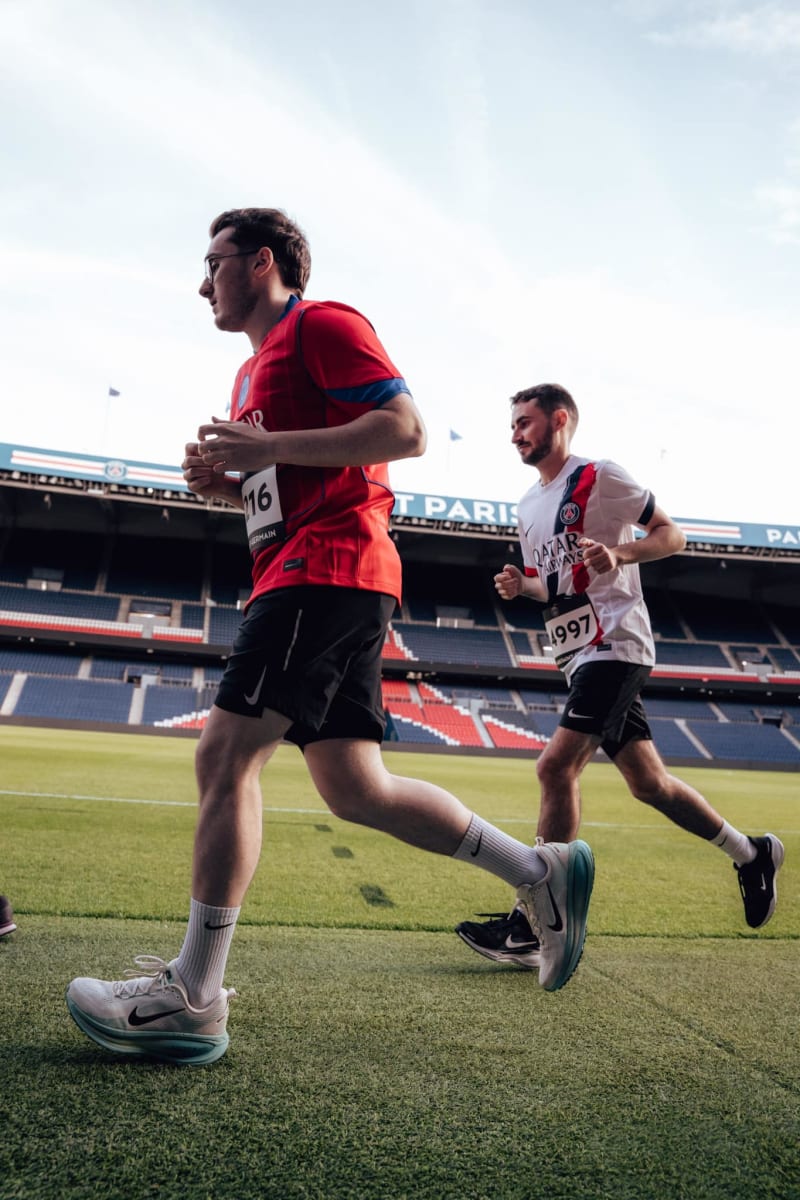 © PSG
© PSG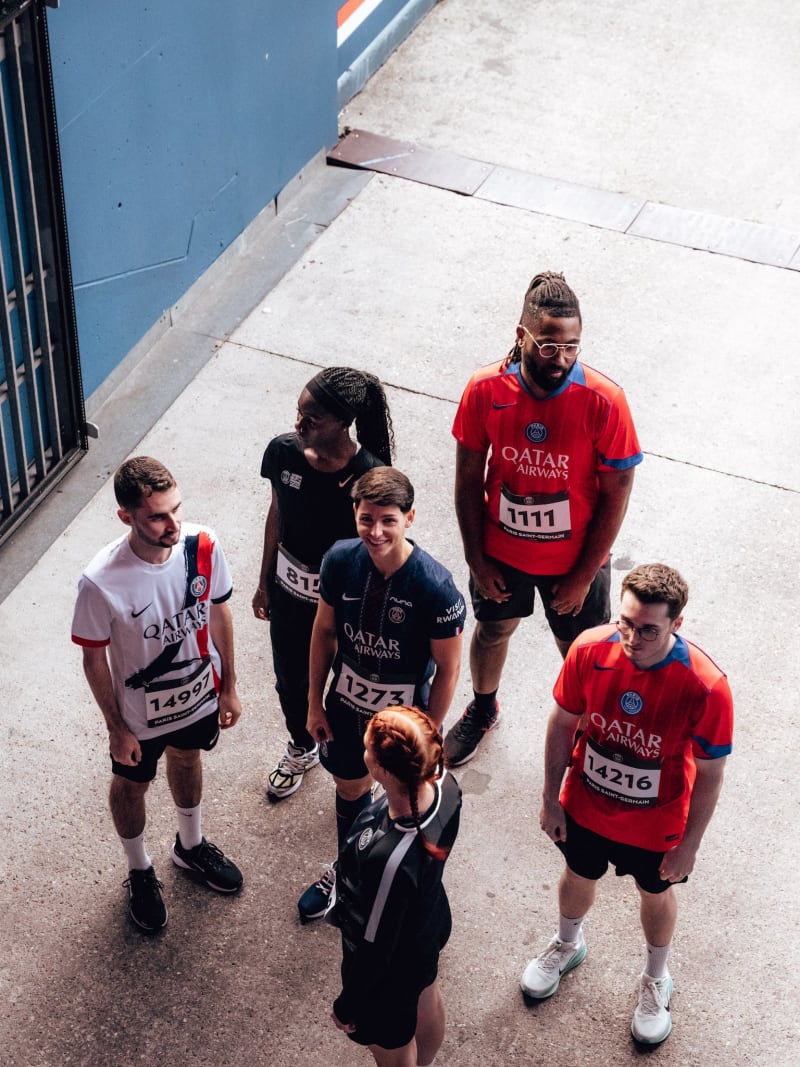 © PSG
© PSG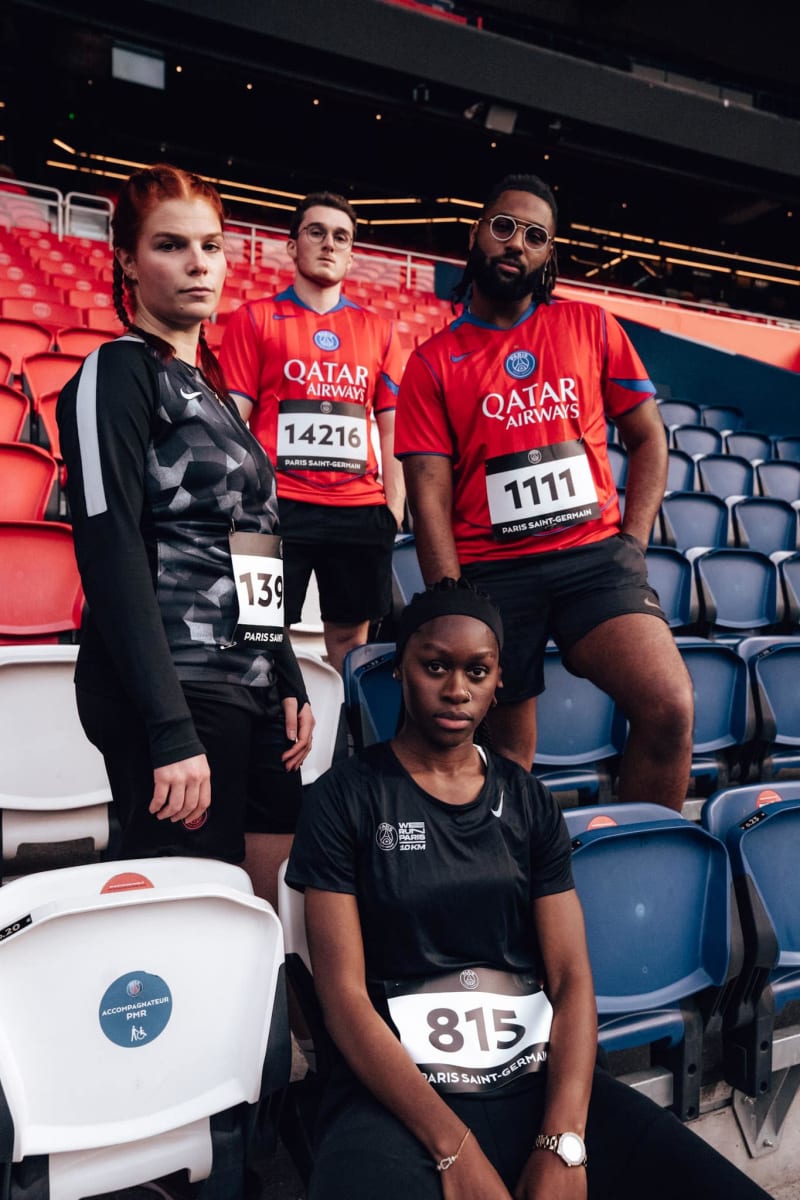 © PSG
© PSGToulouse, or rugby translated into strides
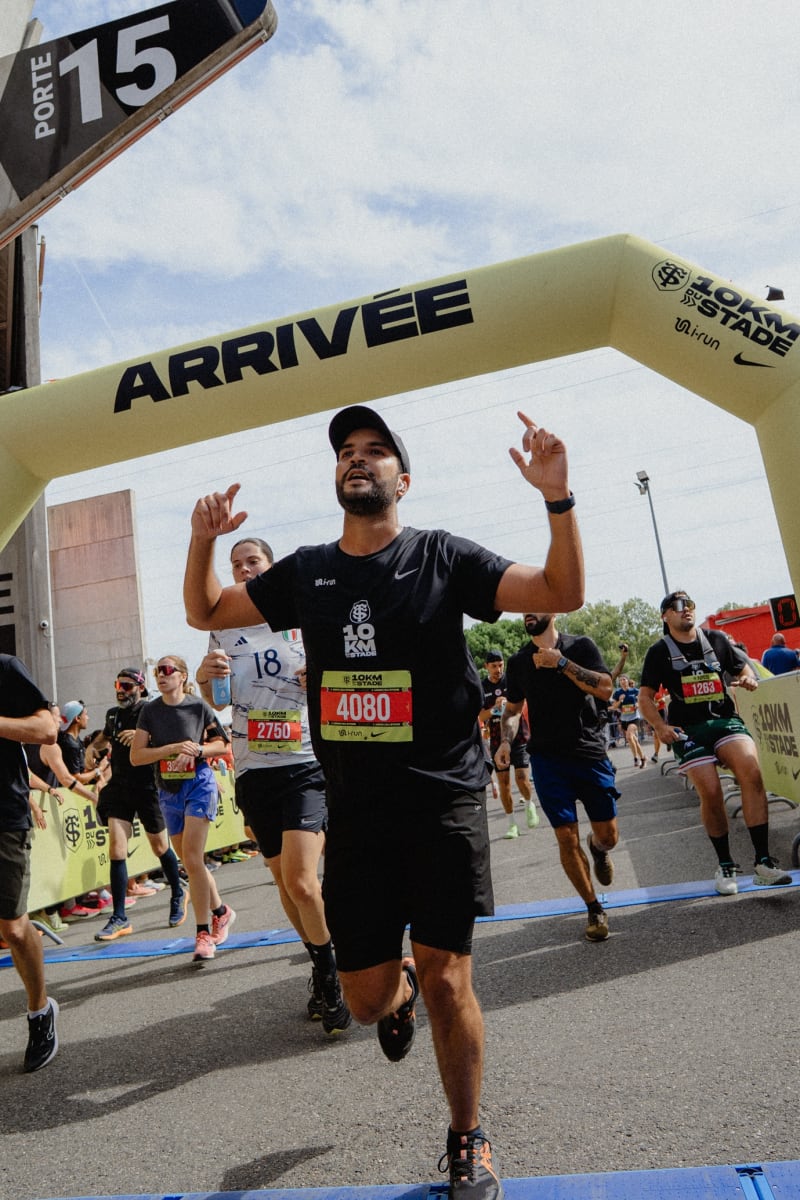
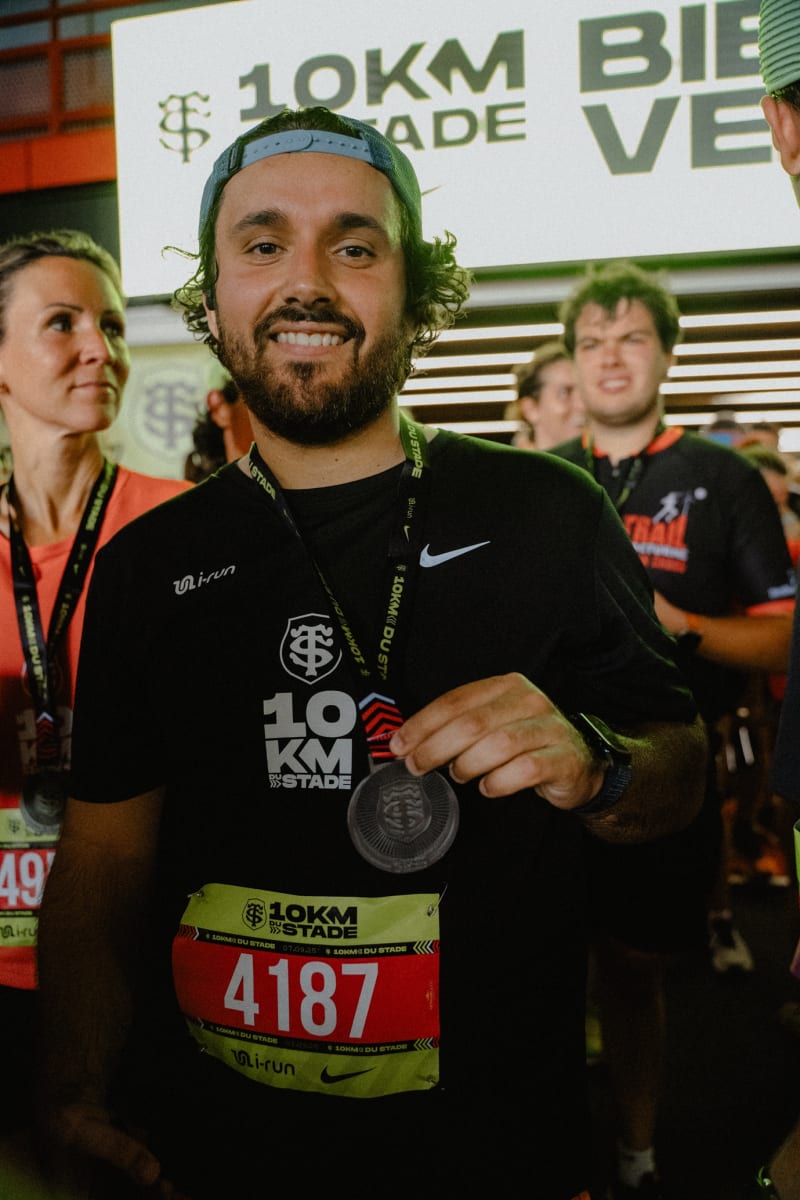
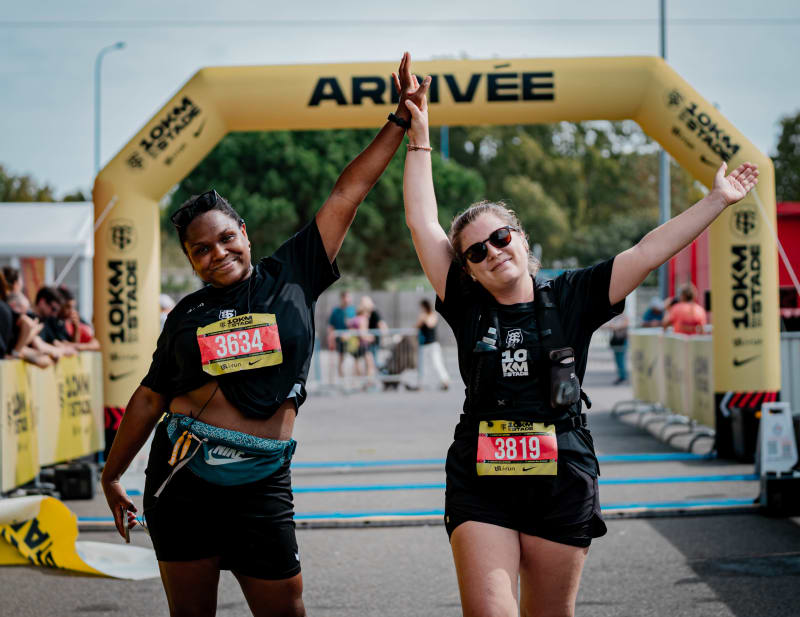
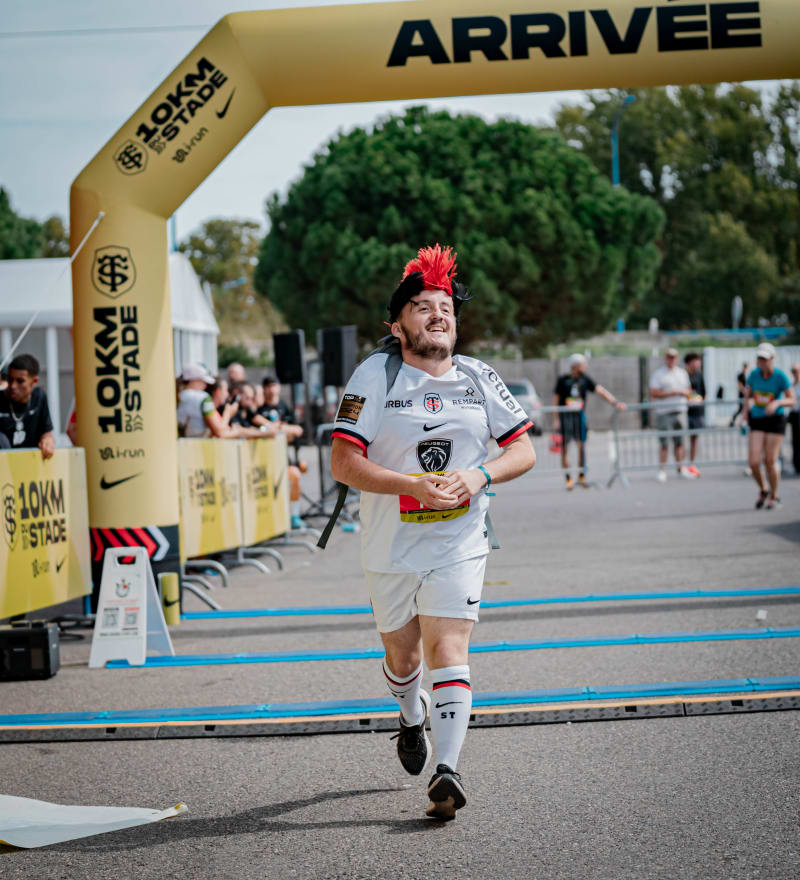
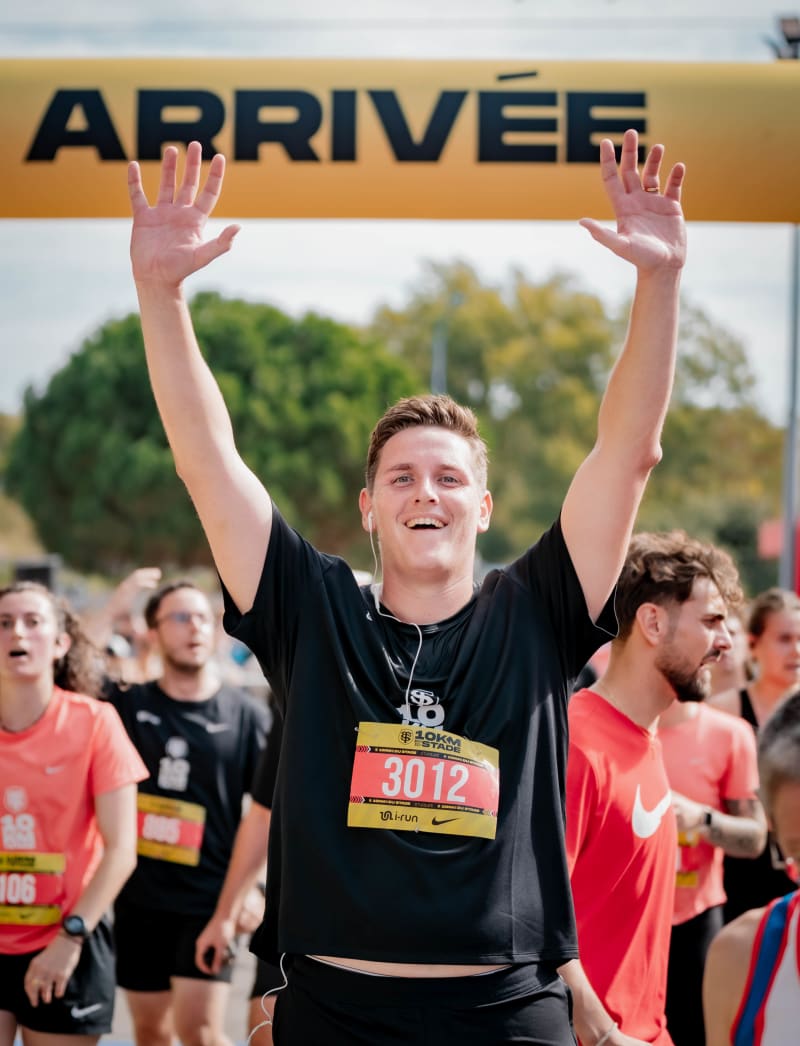
700 kilometres further south, Stade Toulousain Rugby held its first 10K on Sunday 7 September 2025, starting and finishing at the iconic Ernest-Wallon stadium. More than 5,000 runners and 300 volunteers showed up for this first edition of the 10 km du Stade. An instant hit that surprises no one: the reigning French rugby champions boast the biggest supporter base in Europe among non-national teams. In other words, the community was there, ready to lace up.
The route took runners along the Garonne, past the Dôme de la Grave, through Saint-Cyprien and the Prairie des Filtres, before heading to Place Saint-Pierre and the legendary Chez Tonton bar, then finishing alongside the Rouge et Noir’s main pitch. A course worthy of a converted try.
The race was built around club values like inclusion, sharing, pushing your limits and team spirit. No surprise from a club that forged its legend on exactly that. With i-Run and Nike Running on board, Stade Toulousain also understood that a running event needs to be properly pro. A collector Nike Miler T-shirt, a medal, and an activity village in the heart of Ernest-Wallon: the runner experience was dialled in from start to finish.
 © Stade Toulousain Rugby
 © Stade Toulousain Rugby
 © Stade Toulousain Rugby
 © Stade Toulousain Rugby
 © Stade Toulousain Rugby
Stade Français, or when the third half is run
At Stade Jean-Bouin, home turf for Stade Français players, the approach is a bit different. No individual 10K, but an ekiden now heading into its fifth edition. Victor Pélissier, who leads the event’s marketing, fully owns the choice of format: « We’re a team sport. It was unthinkable for us to launch a simple individual 10K. The ekiden, with teams of six, let us bring the rugby spirit straight into running. Run together, win together, finish together. »
The formula has clearly landed. From 2,000 runners in the first edition, the Ekiden du Stade Français now draws 6,000 participants and has been sold out for three years. But the real signature is what happens after the finish. « We wanted to do the opposite of races where, once you cross the line, everyone goes home, » says Pélissier, with that locker-room punchline. Here, Stade Jean-Bouin becomes the runners’ home. The third half is a core part of the event, almost as much as the race itself. » Bandas, DJs, activities, bars, food trucks, slip’n’slide… the after-race is dialled in like a derby night.
We were clearly one of PSG’s benchmarks before they launched their 10K. They even came to run the Ekiden to understand how a team-sport club could break into running.
And anyone turning up with preconceived ideas about a “village fair” vibe can move along. « Festive doesn’t mean unprofessional. The event is certified, recognised by the FFA, and the racing is real. We care as much about sporting credibility as we do about the experience. » Stade Français is also the club that clearly paved the way in France. « We were clearly one of PSG’s benchmarks before they launched their 10K, » Victor Pélissier points out. They even came to run the Ekiden to understand how a team-sport club could break into running. »
Rennes, Bayonne, Nantes: the running map keeps expanding
The trend isn’t limited to the heavyweight names in Paris and Toulouse. In Rennes, the Roazhon Run has built its own identity by forging a link that doesn’t feel forced at all. As Adrien Beaugendre, one of the organisers, explains: « Stade Rennais Foot and Stade Rennais Athlétisme, historically, share the same DNA. The race helped rebuild the connection between the two clubs. » A reminder that football and athletics live under the same roof in Brittany, and that running can be the thread that ties generations back together.
The Roazhon Park atmosphere naturally spilled onto the routes. « In Brittany, popular sport is the real deal, » Beaugendre assures. You find that same vibe in the stadiums and out on the races. » And the inclusivity promise is hammered home. « Roazhon Run has to be one of the most inclusive races in France, » he insists. We want everyone from the very young to the very old, from racers to the Sunday jogger. »
In Bayonne, Aviron Bayonnais jumped into the mix with the Avirun. Céline Bonnard, the club’s head of communications and events, sums up the original intuition with a line that says it all: « We thought: we’ve got a legendary stadium right in the city centre, a really strong community around the club… it felt natural to bring all that together in an accessible event, open to everyone and with a charitable side. » And the outcome exceeded expectations. « Without even really communicating, we already had 5,000 entries, » she says. It shows how powerful the club’s community is. »
The Basque Country corner, famous for its festive buzz, fits this kind of format perfectly. « Our region and our club are known for being festive, friendly, all about sharing, » Céline Bonnard can only agree. So of course the race had to be built in that spirit. We want a two-in-one event: the race… then the party afterwards. » She happily admits it too: « The race almost becomes an excuse to come and spend a weekend in the Basque Country. » Hard to find a better sales pitch.
A model imported and given a French twist
If all of this feels new on this side of the Channel, the British are watching with a knowing smile. Over there, clubs made the turn much earlier. Liverpool FC, for instance, runs the Run to Anfield, a 5K and 1K through Stanley Park, finishing inside Anfield with the Kop as your finish-line backdrop, hard to get more symbolic than that. The event also raises funds for the LFC Foundation’s health and wellbeing programmes.
Oxford United, meanwhile, launched United Run Dept., an initiative that brings supporters and the local community together around monthly runs and social events, with advice, motivation and guaranteed good vibes. A second-tier English club creating its own affiliated running club is further proof the phenomenon isn’t reserved for global football giants.
Football clubs have realised they can ride the running boom to reach people who don’t necessarily come to the stadium. For a long time, stadiums felt empty outside matchdays. Today, these races give them a new life.
In France, the wake-up call is more recent, but it’s accelerating. In Nantes, the DAG takes over the streets with FC Nantes’ Canary energy as the backdrop, while in Lille, the LOSC Run Solidaire blends performance with social commitment under the Dogues colours. « Football clubs have realised they can ride the running boom to reach people who don’t necessarily come to the stadium, » Adrien Beaugendre puts it bluntly. For a long time, stadiums felt empty outside matchdays. Today, these races give them a new life. »
The jersey economy, in running shoes
Behind the strides, the business logic is crystal clear. These events aren’t just “feel-good” outings. They help clubs strengthen their brand well beyond the stadium, attract sponsors from sport-and-health, lifestyle or active tourism, and put their facilities to work in a different way. PSG becomes “more than a club”, to borrow Barça’s phrase, and turns into a global sport-and-lifestyle brand.
« Rugby clubs now operate like full-blown businesses, » Céline Bonnard notes. They’re looking to diversify their activities and the audiences they reach. » And running, accessible, universal, photogenic, is perfect territory for that. The number that sums up the stakes better than anything is the one PSG itself puts forward: running counts more than 12 million regular participants in France, and nearly 600 million worldwide. With a market that size, no serious club can afford to ignore it.
Running, the new fan-recruitment ground
One of the most striking angles is the sociology of the audience. The 95% of Ekiden du Stade Français participants who don’t set foot in the Jean-Bouin stands the rest of the year is a reality Victor Pélissier embraces without hesitation. « 95% of Ekiden participants aren’t regulars at Stade Français matches, » he explains. The running crowd is very different, and that’s exactly what interests us. They discover the stadium through a different lens.»
Adrien Beaugendre says the same for the Rennes race. « Football clubs today are trying to speak to a broader, more popular audience. Running does that instantly. » More female, younger, more family-oriented, and often less tied to the club to begin with, the running audience is exactly what big clubs’ marketing departments have been trying to capture for years. And a race bib can be a loyalty driver that a match ticket doesn’t always provide.
In Rennes, the virtuous circle works the other way too. « People are proud to run in their club’s colours, just like they’re proud to wear them in the stadium. » The shirt is no longer just terrace gear, it becomes part of personal performance. And for a brand, that’s gold dust.
You could imagine some kind of tournament or a mini-league between clubs. If tomorrow five or seven Top 14 clubs organise a race, it could become something really cool.
What if tomorrow everyone had their own circuit?
People in the space can feel the movement stepping up a gear. Céline Bonnard is already picturing what’s next. « You could imagine some kind of tournament or a mini-league between clubs, » she hopes. If tomorrow five or seven Top 14 clubs organise a race, it could become something really cool. » Adrien Beaugendre also backs the trend. « We’re seeing more and more Ligue 1 clubs ride this running wave, » he says. There’s clearly an opportunity opening up. »
Victor Pélissier doesn’t hide the fact that Stade Français helped kick-start a dynamic that’s spreading. « A lot of clubs are launching fairly classic 10Ks. We wanted to break the mould, like we’ve always done at Stade Français. If you’re going to get into running, you might as well do it our way. » A philosophy that, applied across France, could produce a seriously tempting club-race circuit for runners hungry for sensation and identity.
« Every year, when the last team comes in, the whole stadium stops. People bang on the barriers, the announcer goes wild, and the last runner crosses the line to a standing ovation. It’s an incredible moment. » Maybe Pélissier says it best through the image he keeps from his events. A moment neither a last-minute goal nor a rugby ball slammed into the turf can quite replace. Proof that running has found its own field.
More articles

Running, the new playground for brands from outside sport
More and more non-sport brands are moving into running to reach runners and earn credibility.
Thu, October 22, 2026

Investigation: The new running addicts: why they start… and never stop
Running was never your thing. Then one day you started, and now you’re a regular finisher. But have you ever wondered why you run so much?
Wed, September 9, 2026

BlablaRun Club brings runners together on the streets of Nancy
Every Tuesday, BlablaRun Club brings Nancy runners together at Place Stanislas, with three pace groups to choose from.
Wed, September 9, 2026