
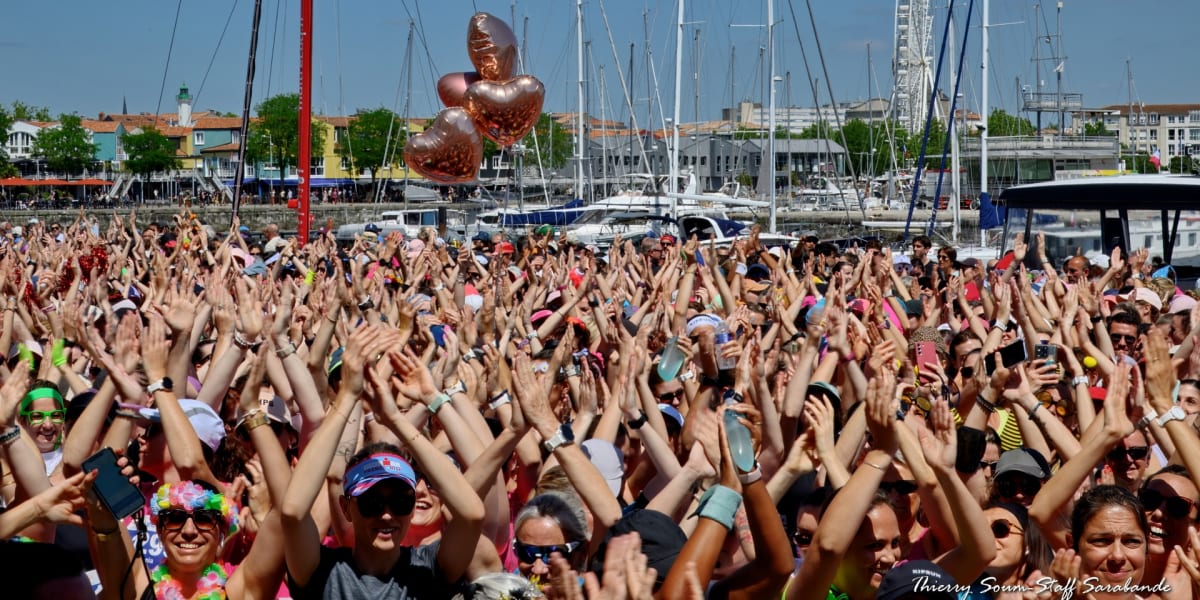
Running with other women is gathering pace. Women-only races are springing up across France and drawing ever-growing crowds. Backed by local authorities, clubs and sporting bodies, they answer a deep-rooted need: to give women a legitimate, visible and supportive place in the running world. With growing institutional recognition and the backing of town halls, sporting committees and the French Athletics Federation, these events celebrate another way to run: together, among women, with an energy built on performance, pride and sisterhood.
Being a woman and running: two parts of life that are not always easy to reconcile. The reasons are familiar: the mental load of being a mother or partner, work, children to look after, and everything else that fills daily life, sometimes leaving no time to run or even sign up for a race.
Taking part in a women-only race is a chance to enjoy yourself, by fully committing to preparing for the event and then seeing it through, while also sharing a sociable moment with friends, colleagues or family members: a whole generation of women coming together around running.
How women-only races began
➜ Putting women in the spotlight: visibility and recognition
In 1997, Patrick Aknin created La Parisienne to challenge sexism in sports media, put women centre stage and offer a new vision of sport focused on wellbeing rather than performance. Following that lead, La Sarabande des filles de La Rochelle appeared in 2003. When it was launched, the race did not immediately enjoy the popular success it has today. Its president, Dominique Bartoli, remembers that the event was criticised in its early days: « It was quite revolutionary when we decided to put on a women-only race, because the momentum around women’s sport was only just getting started. In the early years, people would say, “A women’s race? What nonsense.” Now that women have got involved, all the athletics clubs around us thank us because they have increased their membership among women. » Inspired by La Parisienne, La Sarabande was born from a desire to make women more visible in the running world, because, as she points out, « in mixed races, it’s the men who tend to take the top places, and women get less exposure, in the press and elsewhere. In short, people talk about them less ». In Amiens, at an associations fair, Anne-Marie Quelin, former president of Femmes Solidaires, set out to partner with a sports club that could help promote women’s sport. « The association has always cared deeply about this issue, because we feel women are not valued enough in sport, either in terms of pay or media representation », explains current president Martine Tekaya. US Camon Athlétisme proved to be the ideal partner for the project. And so, 16 years ago, the Course Solidaire Féminine d’Amiens was born, the result of a committed partnership between Femmes Solidaires and the Camon-based club.
➜ Helping women feel they belong in running
In the early years, the co-organisers split the profits. But after Femmes Solidaires began receiving grants, the association chose to stop taking a share of the proceeds, since the athletics club handled the event. The initiative led by Femmes Solidaires continued a tradition of Amiens races once dedicated to women, such as L’Amiénoise, now known as the Jules Verne. Those events had gradually moved away from their original purpose by becoming mixed, and therefore more conventional, at the expense of keeping women in the spotlight. It was a backlash, a response to the disappearance of those events. Some women did not run, or had stopped running, because their husbands came first when it came to taking part in sport. The idea was to turn the tables: « Let the men stand on the sidelines cheering the women on », says the association president. It was a way to give women back the freedom to run, and to feel that they belonged and were visible in sporting spaces.
➜ A desire to challenge the status quo
In 2019, La Duchesse was launched. This 100% women-only race takes place in the evening, among Nantes’ historic landmarks, with an unusual finish at the Château des Ducs de Bretagne. Created by La Fabrique Sportive, an association working to promote women’s sport across the metropolitan area, La Duchesse quickly became a major October fixture. La Parisienne, created 28 years ago by Patrick and his daughter Jennifer, who later joined him as a yoga expert, was already driven by a similar desire to put women first, as was La Sarabande in La Rochelle. A pioneer in the field, it attracted 1,500 participants for its first edition. In 2010, participation reached a record 40,000. In September 2025, France’s first 100% women-only event will bring 25,000 runners onto the streets of the capital, an impressive figure that reflects the growing success of this race and the many others inspired by it, driven by a range of motivations: sporting, social and symbolic.
 © Louis Legon
Why women choose to run together
Several factors help explain the growing appeal of women-only races in recent years.
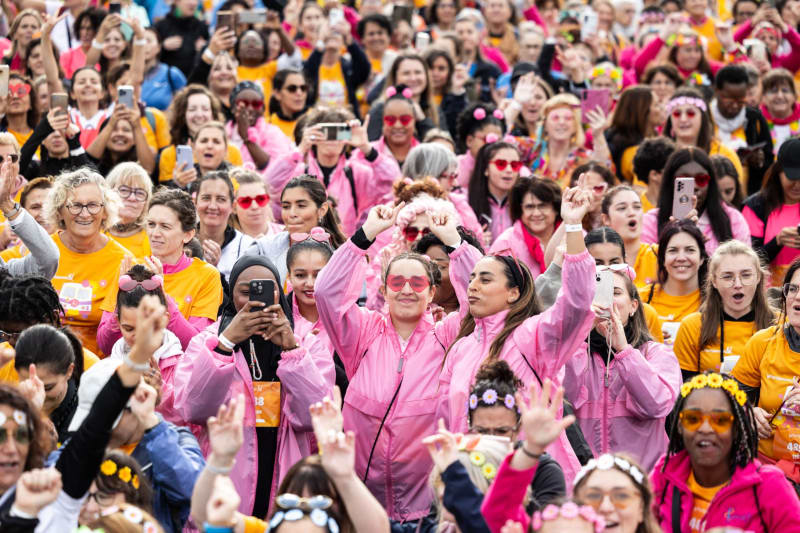
✔ The sociable atmosphere and the desire to come together as women are among the main reasons for their success. Many women sign up in groups to make the most of the event. « Hen parties come to challenge each other, along with friends and colleagues… That’s really what creates the buzz », explains Dominique, president of the La Sarabande association. The driving force is that collective spirit, built on encouragement, hugs at the finish and the shared joy of experiencing something special together. Of course, some participants set off alone, but they too find their place in a welcoming, reassuring atmosphere. Whether they come with their companies or independently, « that enthusiasm, that female solidarity, and the recognition that comes from seeing their names on their bibs show just how much the race carries them », says the woman who has witnessed the event from its earliest days.
The same sisterhood can be found at La Parisienne, as Jennifer Molina, communications manager at Golazo Events, explains: « You don’t usually do La Parisienne on your own. There’s a lot of solidarity and camaraderie, and that’s what makes people want to come back the following year with colleagues or a friend. » Every year, participants prepare around a theme announced in advance. For several years, the event celebrated different countries because its founder, « who loved travelling, wanted to showcase a different destination each year », explains one of the event organisers. The themes are now more playful. This year, superheroes will take over the streets of Paris for a party, perfectly capturing the spirit of this festive race, a true festival spread over three days in a village designed to welcome participants, their partners and their children, with childcare available. More than 1,500 musicians bring the event to life, with a band stationed every 500 metres to keep the course moving to upbeat melodies.
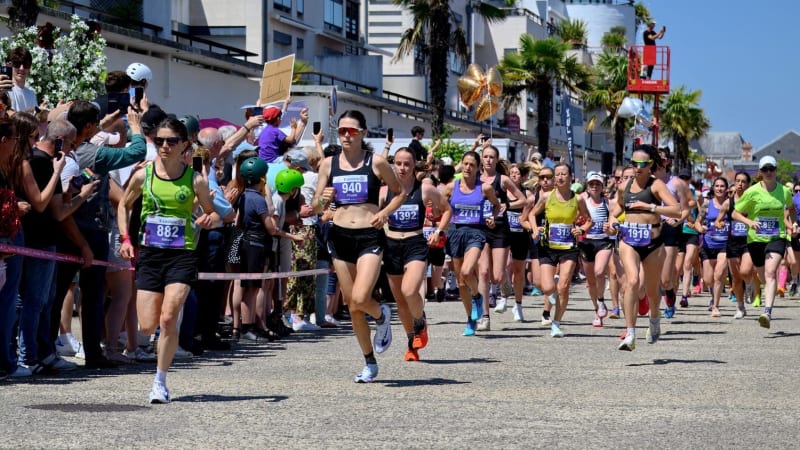
✔ The accessibility of these races also adds to their appeal. The Course Solidaire Féminine d’Amiens covers 5 km, split into three laps of the same course in La Hotoie park. The format is designed to make the race accessible to as many people as possible. The aim is clear: to help as many women as possible feel ready to take part, without intensive preparation or the risk of injury. « It’s about running without feeling self-conscious, not necessarily winning. » The field includes experienced runners and beginners alike, some there to take on a personal challenge and others simply to share a moment. The Nordic walking option is a welcome alternative, opening the event to women « who can’t run ». Femmes Solidaires president Martine Tekaya adds: « Like me, as I have a hip replacement and take part in the walk ». The aim is also to keep the event financially accessible by offering « the lowest possible entry fee », explains Jean-Yves Evrard, the organiser in charge of the Amiens event. This year, the entry fee was even reduced for students to make it easier for them to take part.
Other races follow a similar approach, including La Duchesse, which offers several formats: a 10K for those who want to test themselves over an official distance, and a mixed doubles race for those who would rather share the experience with someone close, sometimes a man, or run as part of a mutual support partnership. For several years, La Parisienne offered a race of around 6.2 km, then 7 km. « It was deliberate that there was no official distance, precisely to tone down the performance aspect », explains Jennifer Molina. It is a way of promoting physical activity in a healthy, relaxed spirit.
✔ The personal challenge, set against the demands of everyday life and the effort women put in for themselves, also helps explain the popularity of women-only races. « Sometimes they forget everything for half an hour or an hour. The men look after the children », Dominique observes. The roles are reversed: it is often the women who cheer their partners from the roadside. During this brief escape, they are the ones who see signs addressed to them: « Go on, Mum. You’re the strongest! »; « We’re waiting for you at the drinks. The beer’s going to be warm. » This consideration, shown equally to the first and last participant by the crowd, volunteers and organisers, helps less experienced runners feel comfortable and make it to the finish. Madame Bartoli stresses the importance of treating everyone equally: « They need to know that even if they take twice as long as the winner, we’ll still be waiting for them. » No runner should feel pressured to finish quickly: « The barriers aren’t taken down before the last participants arrive. And I think that’s something they appreciate. »
The impressive performance of some participants, such as this year’s Amiens winner, shows that a personal challenge means something different to everyone. Given her young age, the time posted by Eloïse Evain, a U23 athlete from Amicale du Val de Somme, points to a promising future. In keeping with this performance-driven momentum, Golazo Events, organiser of La Parisienne, launched a new race, the 10K, in response to repeated requests from participants. For the past seven years, several formats have been available: a 7K, a 10K and a walking event. Regulars and newcomers can now take on an official distance, which has proved hugely popular with runners stepping up from the previous year’s 7K, as well as more experienced participants bringing their friends along for the challenge. « For some, moving from 7 to 10 km is a real achievement, and that’s fantastic », says Jennifer. La Parisienne can sometimes provide the push women need to get started.
✔ The symbolism really matters. The Course Solidaire Féminine d’Amiens always takes place around the emblematic date of 8 March, International Women’s Day. « The original rule was to hold it on the Sunday after 8 March, or on the day itself if it fell on a Sunday », explains Jean-Yves Evrard, the US Camon organiser. Other women’s events have chosen October, such as Odysséa, a charity race directly linked to Pink October, the annual breast cancer screening awareness campaign. Staying true to the feminist momentum championed by Femmes Solidaires, every participant received an « anti-creep whistle » at the finish, a useful gadget in case of danger in the street. The gifts vary, but remain relevant, reflecting women’s issues or current fashion trends. After crossing the finish line at Sarabande des filles de La Rochelle, runners received leopard-print socks. Following a few debates between women from different generations within the association, leopard print won out and was added to the volunteers’ T-shirts as well as the finisher gifts.
The success of these races therefore comes from the need to step away from the roles of woman, mother and boss. It also reflects a desire to enjoy themselves while taking care of their bodies and wellbeing. Signing up for a race means training for it, providing the momentum needed to practise regularly a sport that had been difficult to maintain.
Races that thrive… but can still disappear
Despite the success of women-only races, some face genuine challenges in staying afloat. La Duchesse in Nantes attracted 1,500 runners in its 2022 edition, the year it raised a record amount in donations. One euro from every entry, along with additional donations, went to Endofrance. Unfortunately, after several highly successful years, various constraints linked to the 2020 pandemic, weather conditions in 2023 and undisclosed reasons in 2024 prevented the final two editions from going ahead. Organisers have to find ways to deal with such setbacks, which is not always straightforward. La Duchesse has therefore ceased to exist, at least for now.
Others, by contrast, are doing very well. As the Femmes Solidaires representative explains: « Even though the amount we raised wasn’t huge, I think the race has always made a profit. » Since the association began receiving grants, it has found it easier to contribute financially to organising the event. For the March 2025 race, capacity was reached very quickly, forcing organisers to turn away further entries. The participation record was comfortably broken, with 426 athletes recorded as finishers. La Sarabande des Filles de La Rochelle also saw an impressive rise in participation, despite moving from two races, each limited to 1,500 people (5 km and 10 km), to a single 7 km event. The association’s president says: « We reduced capacity to 3,000, and we sold out in 18 days. I had to turn people away again and again, and I opened waiting lists that I couldn’t even clear ». La Parisienne, meanwhile, has a 50% return rate every year. Many participants discover the event for the first time, but plenty come back the following year. It is proof of the race’s success, having won over hearts with more than 20,000 participants in recent years.
 © Thierry Soum
Do these races reinforce stereotypes, or seek to move beyond them?
It is a fair question. On the one hand, these women-only sporting events have removed barriers to participation: a sense of safety, a supportive atmosphere, accessible formats and solidarity between participants, among other things. Some, such as La Parisienne, have been running for more than 25 years and attract tens of thousands of women every year, proving that they serve a real purpose.
A women’s section was created at US Camon alongside the launch of the Course Solidaire Féminine. Recently, its members asked for mixed training sessions to be reinstated because they wanted to train alongside their male counterparts. Some saw it as a way to improve, by running with pacers, as well as an opportunity for social interaction: sharing a sporting practice regardless of gender.
By organising races reserved for women, is there also a risk of leaving them on the margins of the sporting world? Does it help perpetuate a reductive image of the female athlete, who supposedly enters a race only for the atmosphere and the fun, relaxed side of the event, without pursuing performance? Meanwhile, men would continue to claim sporting spaces by focusing solely on performance, never losing sight of their goal and overlooking the human side of the event.
Whatever some people may think, women-only races provide fertile ground for performance, whether that means completing the distance or chasing a time to meet a season’s targets. If they continue to thrive, it is because they meet a real need and offer a space where female runners feel they belong.
As women’s running continues to grow, it is worth regularly reassessing the value of these events, what they involve and what they inspire among the people they are intended for. Today, it is clear that these races offer women a dedicated space, still too rare elsewhere, where they can build confidence, push themselves and, for one of them, cross the finish line in first place. The priority remains to meet women’s needs, as they « sometimes need to come together as women in a context where men take up a lot of space », concludes the president of Femmes Solidaires.
Read more
➜ Read our article : « One stride at a time: together, women are lacing up again »
More articles

Investigation: The new running addicts: why they start… and never stop
Running was never your thing. Then one day you started, and now you’re a regular finisher. But have you ever wondered why you run so much?
Wed, September 9, 2026

BlablaRun Club brings runners together on the streets of Nancy
Every Tuesday, BlablaRun Club brings Nancy runners together at Place Stanislas, with three pace groups to choose from.
Wed, September 9, 2026

10K of Magical Aid Stations: the race where every sip makes your head spin
The Food Runners Club’s 10K of Magical Aid Stations returns for a festive sixth edition, where drinks, community and fun matter more than the clock.
Wed, September 9, 2026