

There’s no denying it: running has become one of the most popular sports in France. Every indicator points in the same direction, with participation continuing to rise across the country. Sociologists David Le Breton, professor emeritus at the University of Strasbourg, and Olivier Bessy, a specialist in running, explore the many reasons why so many people are turning to the sport for new adventures.
From postmodernity to transmodernity
The figures are dizzying. According to the Running Observatory, more than 12 million people in France laced up their running shoes in 2025. To understand the sport’s growing appeal, “You have to go back to the 1970s,” says Olivier Bessy, a researcher at the TREE Laboratory for Energy and Environmental Transitions and a specialist in running. “This sport breaks the mould. Women started running. We saw a new relationship with the body, and a new way of thinking about what it means to be athletic. It is about satisfying a need for freedom and autonomy,” adds the native of Pau. “A lifestyle, a commitment to the world, an art of living,” sums up his colleague David Le Breton, professor emeritus of sociology at the University of Strasbourg.
Hypermodernity succeeded postmodernity at the end of the 20th century, in the 1990s. The framework shifted towards more extreme practices. “The motivations behind the first revolution are still there. Those of the second have been added to them. They have not replaced them,” warns Olivier Bessy, himself a accomplished athlete. “Fewer people are involved. The aim here is to have an experience, to feel alive, reap the benefits and flirt with death as is the case in ultramarathons,” says the man who has taken part in the Diagonale des Fous three times. The motto “faster, higher, farther” takes on its full meaning here. “The marathon is a game played with pain. We willingly subject ourselves to pleasurable exertion because it is a choice,” his fellow sociologist continues.
According to Olivier Bessy, the third period, known as transmodernity, dates back to the 2008 subprime crisis. It prompts us to question the meaning behind running. “A new relationship with others and with the environment is emerging, somewhere between confrontation and immersion. Races contribute to the construction of identity,” observes the author of Running: From 1968 to the Present Day. “This phase is hybrid, even incoherent, caught between the logic of acceleration and deceleration, and torn between minimalist practices and maximalism.”
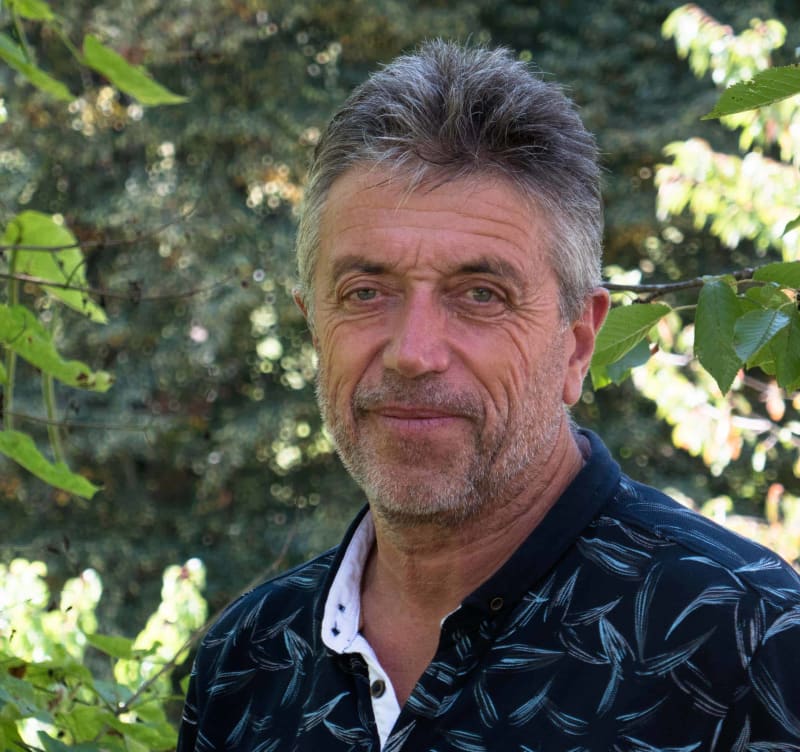 © Olivier Bessy © Étienne Follet
“A passive body makes its demands heard”
David Le Breton does not mince his words. “Humanity is sitting down. Behind its computers, behind the wheel of its cars. The body demands exertion, physical commitment,” he says as he prepares to head south for a walking trip, his haven of peace. “The mobile phone is ravaging our lives.” To escape immobility, people in France have turned to running, hoping to “find a form of freedom.” It was an impulse that began during Covid and has never faded. “A lot of people ran within the one-kilometre radius we were allowed,” the anthropologist recalls.
For some time now, Olivier Bessy has noticed an ambiguity in the way people practise the sport. “The values of hypermodernity are being called into question. Some people advocate sobriety and simplicity, sometimes even boycotting races, choices that are almost philosophical. But at the same time, we are subjected to pressure to consume. Running comes at a price. Road racing is becoming very expensive. It reflects our society: paradoxical and contradictory.”
Bessy, who is due to publish Running Without Limits: The Ultra-Trail Revolution (1990-2025) next July, also highlights the growing importance of social media. “We are constantly comparing ourselves with others. Some people even go so far as to hire a jockey. Strava is that taken to the extreme. Some people run for the approval of others. It is the bandwagon effect.” “Social media embody a world of the other without others; they exorcise those others by reducing them to signs, controlling contact without any responsibility towards them and without being burdened by their presence,” David Le Breton writes in his 2024 book The End of Conversation? Speech in a Spectral Society.
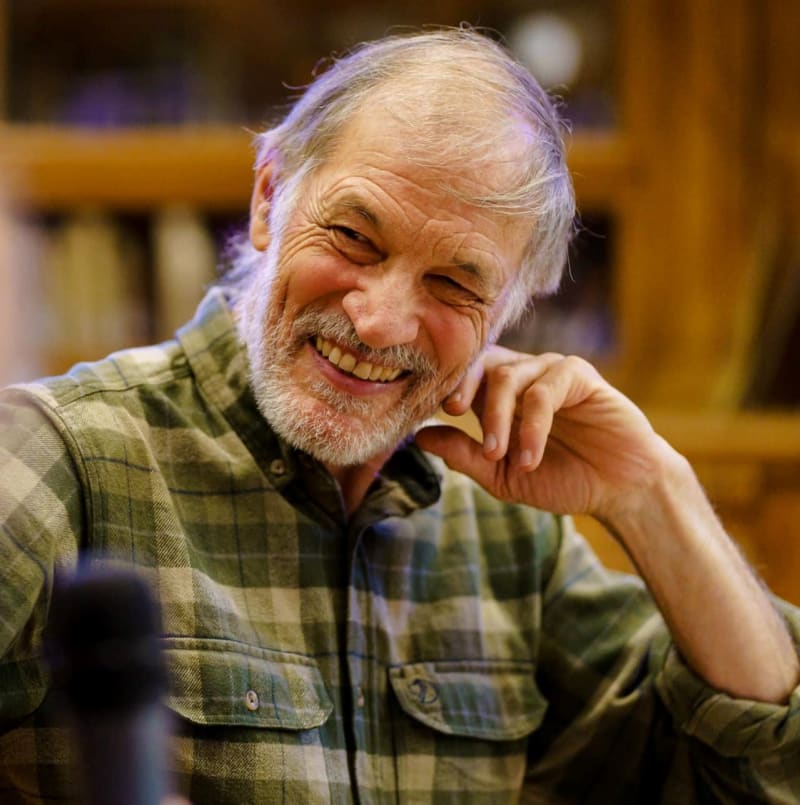 © David Le Breton
Social diversity: a myth?
If we are witnessing the “end of a restrictive era,” along with a “change in the image of Stakhanovite running,” who is most likely to answer the call of the asphalt? “Running requires an organised daily life. The countless jobs that keep people sedentary create a desire to reconnect with the beating heart of the world,” says David Le Breton. “The pursuit of performance among the most advantaged socio-professional groups in their working lives is reflected in running,” adds Olivier Bessy.
“At the Paris Marathon, the number of higher socio-professional categories is greater than outside the Paris region.” At the Ultra-Trail du Mont-Blanc in Chamonix, social diversity is even less apparent, “only the cream of the crop”. The event’s profile offers everyone something to gain. “We will tell the story of its twists and turns, meet people and make plans for future races,” David Le Breton adds. “There is no self without the other.”
Between the pursuit of performance, pleasure and happiness, running offers the finest thing of all: freedom. A freedom that keeps changing, thanks in part to social media and running apps, leading the “contemporary hyper-individual” to perceive “their physical and human surroundings as secondary” (The End of Conversation? Speech in a Spectral Society, David Le Breton).
Ready to join the more than 12 million people running in France? Want to get started but still missing a few tips? No problem, Marathons.com has put together a list of the 10 mistakes to avoid when running.
More articles

Run with Your Old Man: the run club bringing generations together
Eden Yaïche’s intergenerational run club brings runners together with a parent or relative for shared miles, memories and plenty of laughs.
Thu, September 10, 2026

Running Therapy Takes Psychology Out of the Office
Running with your therapist brings movement, the outdoors and body awareness into the therapeutic process.
Thu, September 10, 2026
Move to Make a Difference: An Evening Rethinking Health in Valenciennes
In Valenciennes, sport, health and the environment came together for an evening with Nicolas Vandenelsken and the film 100 Marathons from the Heart.
Wed, September 9, 2026