

Running Therapy Takes Psychology Out of the Office
Running with your therapist. That’s the approach some professionals are using to support their patients in a different way. The consulting room, where traditional sessions take place, can feel stifling. Outside, the senses come alive in a different way, and the body becomes part of the therapeutic process. Enter running therapy.
✓ A closer look with psychologist Sarah De Jong.
In Belgium, people can book one or more running therapy sessions. Sarah De Jong, a health psychologist and addiction specialist, is one of the pioneers of this approach in the country. Working as a clinical psychologist, she became interested in sport as a therapeutic tool. But because she had no training in supervising vulnerable people in running, she first decided to qualify as a sports coach. Through Running coach, the Belgian professional learned how to structure a training plan and deepened her knowledge of training load and intensity. She came away reassured. She then tested her coaching skills with a few friends, who were delighted to have support as they returned to running.
A tragedy would eventually give her the opportunity to put those skills into practice. « A runner friend lost his father while preparing for a 42 km trail race, she recalls. I wasn’t his therapist, but we could still talk about what was happening for him. When he had a long run, we talked about what was going on in his head. During the more intense interval sessions, there was a real opportunity to let things out and release some of what he was carrying. Some sessions, for example, finally allowed him to cry because he was struggling to do so. » Supporting him through his grief gave Sarah confidence. « It gave me the momentum to think: I can see how to build bridges between sport and therapy, and I can start offering this to people. »
Before officially incorporating running therapy into her practice, she joined the « Move More » running and walking programme, which is open to all levels. She coached a group of beginners there, including people with profiles similar to those she sees in consultations, particularly people experiencing burnout or alcohol-related problems. The experience allowed her to observe, in a more informal setting, how running can support some participants’ wellbeing and personal growth. Convinced of the approach’s therapeutic potential, she decided to offer it remotely and then in person.
Two formats offered by Sarah De Jong
Running therapy is a form of therapeutic support that can take place in two different formats. First, Sarah De Jong offers a « structured » approach delivered remotely over twelve weeks. It includes therapeutic goals defined during an initial assessment, a running test for regular runners to help tailor the sessions, and regular exchanges via WhatsApp. These contacts provide both athletic and therapeutic follow-up, highlighting the links between running and the psychological issues addressed during the programme.
In her view, the twelve-week duration helps foster lasting change and develop the patient’s autonomy. The aim is for them to gradually continue on their own, maintaining the connection between their experience in training and their psychological experience. « The idea is for the programme to support them sufficiently in relation to their therapeutic goals,» confirms the psychologist, who is qualified in mental coaching.
Physical activity gets both reflection and conversation moving.
Sarah De Jong now offers another form of support. Running or walking becomes a tool directly integrated into the session. Physical activity takes the patient out of the traditional consulting-room setting, allowing the mind to move along with the body. This approach can be particularly suitable for people who need to move and/or find it difficult to express themselves and open up face to face.
These sessions are not part of a specific training plan. They are more occasional and are generally arranged at the patient’s request, depending on their needs or wishes as therapy progresses. Based on their age, physical condition and state on the day, the psychologist and patient go for a walk or run as part of the consultation. Outdoor sessions and office-based appointments can alternate. « Sometimes a person comes for the programme and then continues with more traditional therapy. Or they start with therapy and discover that the programme exists. Sometimes it happens at a point when the patient is already doing better, and we support something they have already built. Then they take flight on their own. It’s incredibly flexible », she explains. The method is suitable both for people who already run and for those who want to return to physical activity.
When movement becomes a therapeutic tool
Leaving the consulting room changes the therapeutic relationship. Running or walking side by side can open up the conversation, particularly for people who need to be moving in order to think, gain perspective or release certain emotions. The therapeutic goals, however, remain specific to each individual.
For someone who is hyperactive, running therapy can provide a space to burn off energy while talking. For someone experiencing burnout, the challenge may be entirely different: learning to slow down and make more time for themselves. Easy running at a conversational pace can be particularly useful, as it can bring the runner up against frustration while encouraging greater awareness. « Physical activity gets both reflection and conversation moving », the psychologist points out.
Running also offers metaphors to work with: breathing, rhythm, obstacles, endurance and pushing beyond one’s limits. « A descent after a difficult climb is an opportunity to see that if we keep going, other things are waiting for us on the other side, even when we can’t see them yet », she explains. It helps shift attention towards bodily sensations rather than intrusive thoughts. During the activity, runners need to adapt their pace to the terrain, regulate their breathing, listen to their thirst, recognise their limits and respond to the natural environment. Paying attention to the body and its sensations brings them back to the present moment. « For someone experiencing burnout, one session might involve directing their attention to what is around them and to what is happening in their body rather than in their head. This puts practical tools in place during the session, which can then be transferred into the therapeutic work. » Running then becomes a way of approaching certain psychological issues from a different angle.
Benefits, yes. A miracle cure, no
Beyond psychological support, regular physical activity can have positive effects on several aspects of daily life, including sleep, eating habits, mood and overall balance. « Physical activity is a basic need that public health overlooks far too often », she says. But the impact of running therapy depends on the difficulties each patient is facing. For someone living with depression, for example, it can help get them moving again and gradually restore their motivation. « Interval sessions, where we slow down and speed up several times, can prompt us to ask: what does this physical movement represent psychologically? » Other significant effects observed include reduced stress, greater self-confidence, increased resilience, improved emotional regulation and less severe trauma-related symptoms.
When it comes to anxiety, the goal is not to make worries disappear completely, but to help the person develop tools to manage them more effectively. « We start with the person’s broad goal, which is often a life goal, such as learning to manage their anxiety, and then break it down into more specific objectives. We look at which areas of their life or which specific aspects of their anxiety they would like to make progress with. We really try to work in depth on the areas they have chosen », she says.
Despite its value, running therapy does not replace traditional therapy. It can complement it or serve as a standalone form of support for a given period, but it is not intended as a long-term practice. It may not be suitable for everyone, either, and is still offered by relatively few psychologists. Ultimately, each person must find the approach that works for them.
More articles

Run with Your Old Man: the run club bringing generations together
Eden Yaïche’s intergenerational run club brings runners together with a parent or relative for shared miles, memories and plenty of laughs.
Thu, September 10, 2026
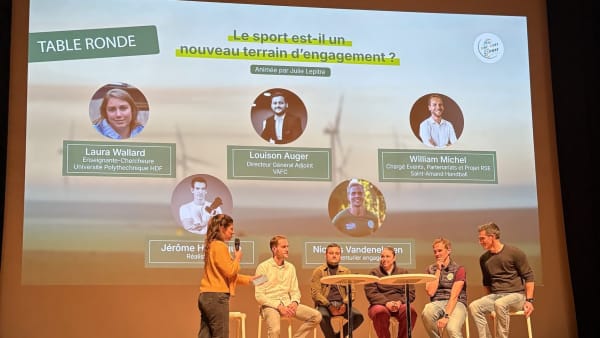
Move to Make a Difference: An Evening Rethinking Health in Valenciennes
In Valenciennes, sport, health and the environment came together for an evening with Nicolas Vandenelsken and the film 100 Marathons from the Heart.
Wed, September 9, 2026

Ultra Back To Life: when ultratrail meets ecological regeneration
Ultra Back To Life combined ultra-endurance with biodiversity projects and environmental education in a new model for sporting events.
Wed, September 9, 2026