
Apex, Alphafly 4, Swooshfly: Nike reshapes its marathon lineup with a super shoe for every runner
 © Nike
Nike is making a major strategic shift and completely restructuring its carbon-plated marathon shoe lineup. Three new models target every kind of runner, from first-timers to elite athletes. The Apex is built to chase every second, the Alphafly 4 to break personal records, and the Swooshfly is an accessible new super shoe priced at $145. At that price, Nike is shaking up a market often fixated on ultimate performance, sometimes at the expense of everyday runners. The Alphafly 4 and Apex are clearly aimed at faster athletes, delivering the best the American brand has to offer in innovation and performance. With the Apex, Nike finally enters the hyper shoe segment while the Swooshfly opens a new chapter. And when the American giant sets a new course, the rest of the industry usually follows...
Nike is in a league of its own in running. Its influence across sport and society has made it one of the world’s best-known brands. Its history is unique, and its image is closely tied to elite performance. But in recent years, the Swoosh seemed to be resting a little too comfortably on its past success and reputation. ZoomX foam that barely evolved, less innovative racing models, disappointed runners, a distribution strategy far removed from specialist retailers, and a situation that allowed competitors to gain ground in starting corrals. With a complete restructuring of its marathon lineup, Nike is sending a powerful message and finally bringing major innovation back to its racing range.
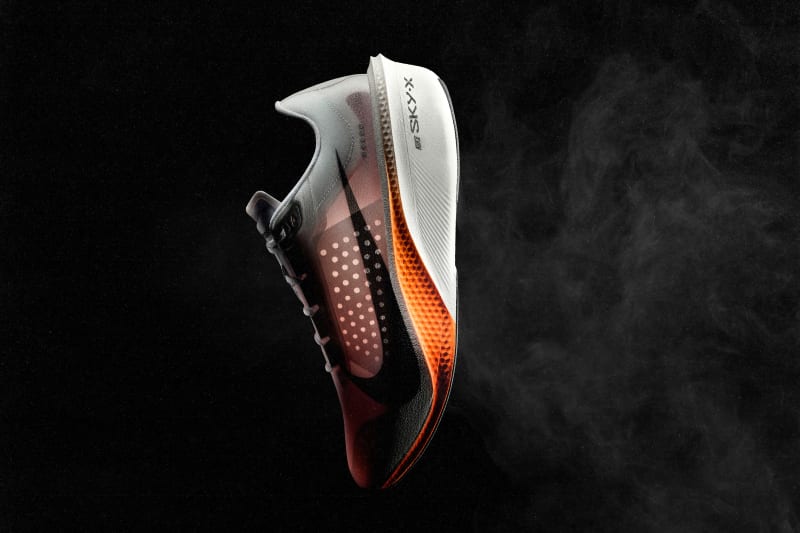
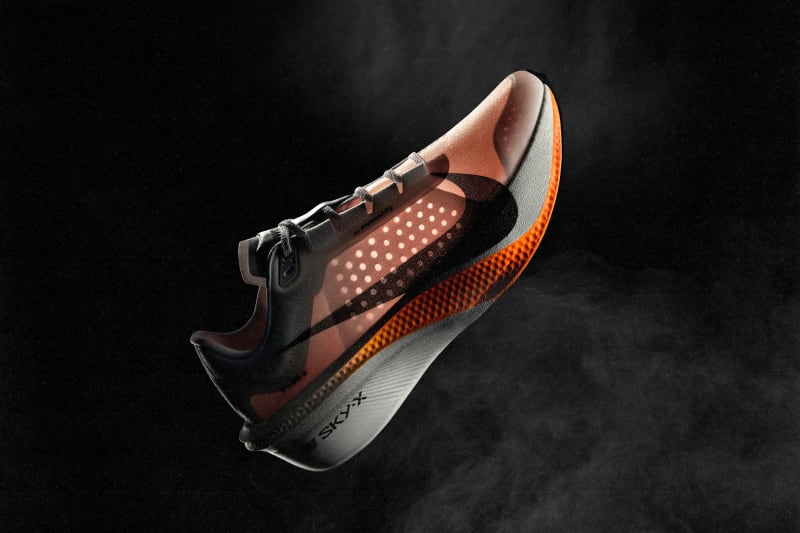
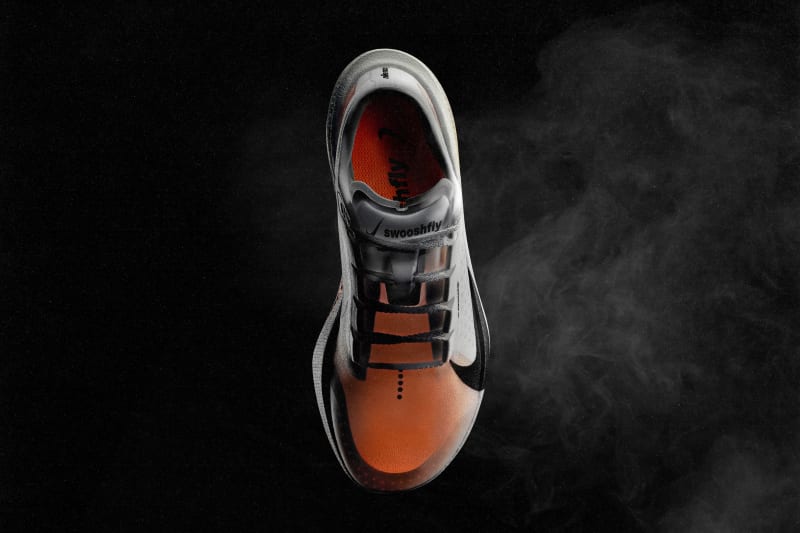
NIKE SWOOSHFLY
The super shoe for everyday runners
Although it was conceived at Nike’s headquarters in Oregon, the Swooshfly was born far from the United States, in China. Nike has a special connection with the country, a genuine hub of international sport. China has not escaped the running boom either. In 2024, the Chinese Athletics Association recorded 749 marathons held across the country, with more than 7 million participants. The numbers are staggering and confirm the huge appeal of the marathon.
And when we talk about 7 million runners, we are obviously talking about the overwhelming majority of recreational athletes: the people covering 42.195 km in four hours or more. For them, a shoe needs to deliver energy return, but above all, comfort and stability. Nike has therefore created an entirely new platform. The brand insists on this point: the Swooshfly is not a variation on an existing model, but a new kind of super shoe designed for runners who do not want to sacrifice comfort on race day. That means recreational runners and marathon first-timers, in other words, the vast majority of today’s race fields.
A first race can be both exciting and intimidating. We created the Swooshfly to give runners the support they need to take on that challenge, arrive at the start line with confidence, and know that with these shoes, they are capable of doing it and belong there.
 © Nike
 © Nike
 © Nike
 © Nike
New, more durable SkyX foam
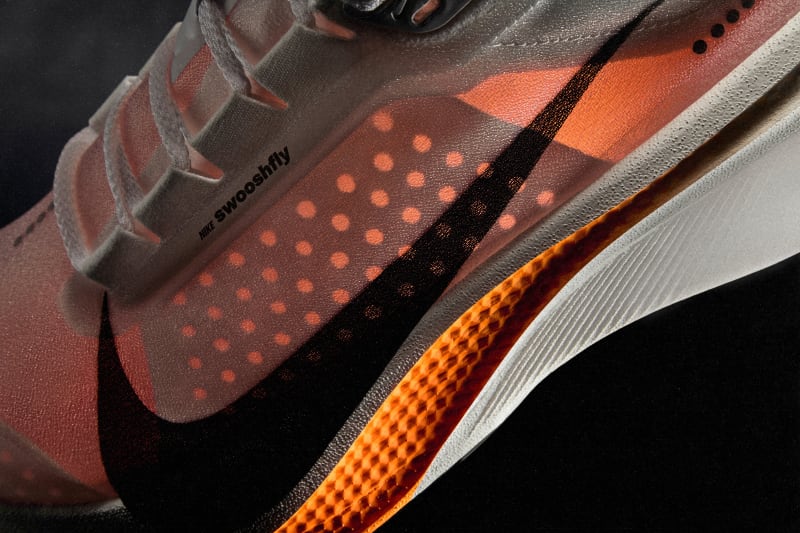
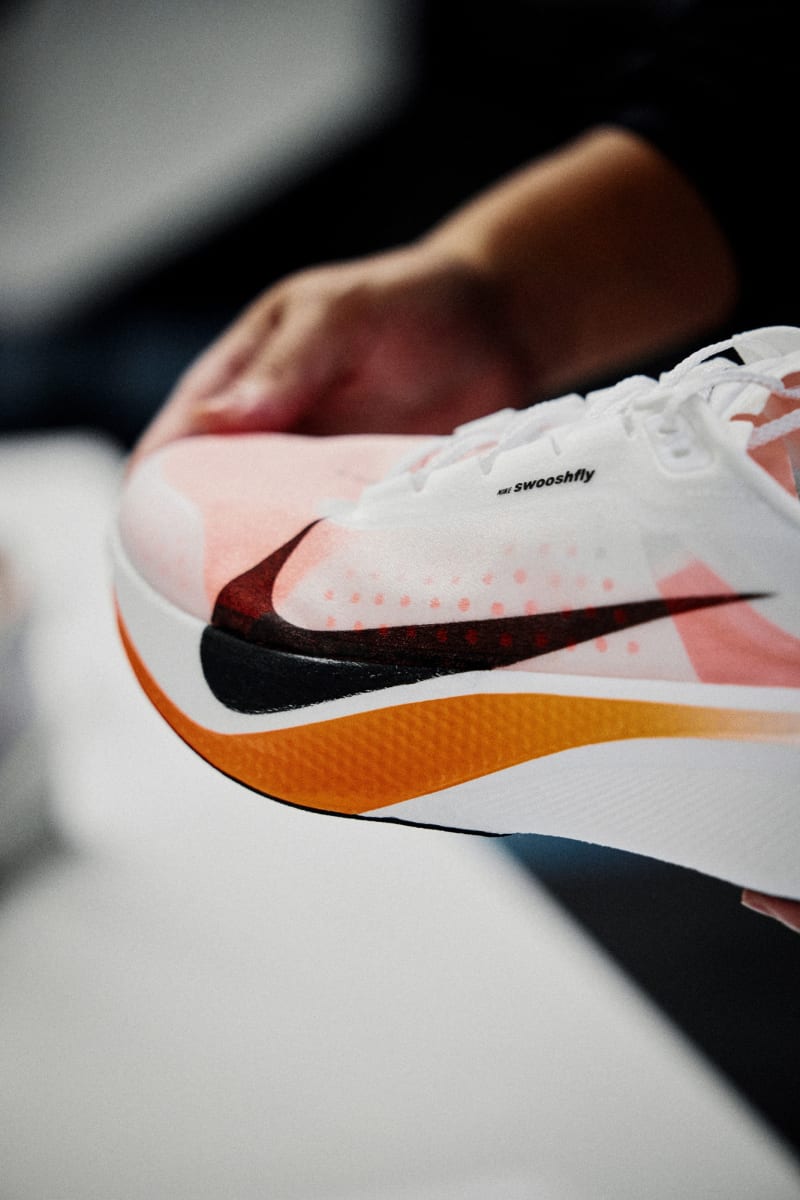
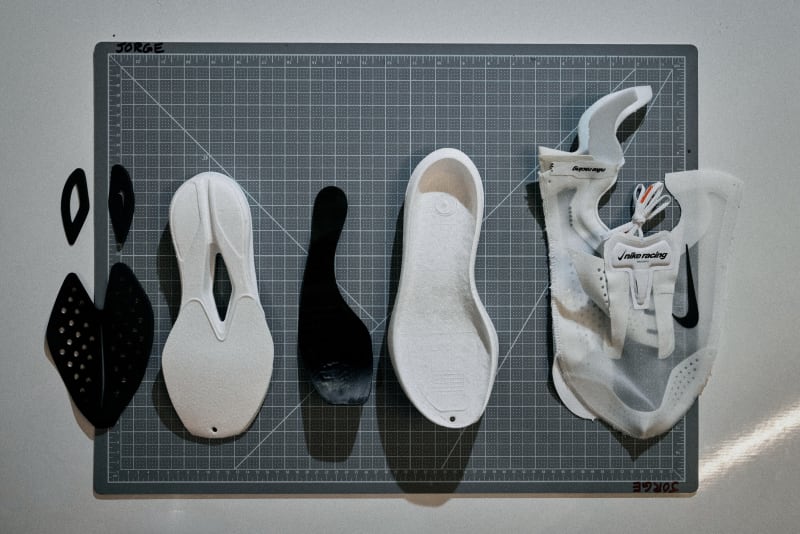
At its core is Nike’s new SkyX foam. This supercritical foam is made from TPU beads processed with steam, with different densities in the heel, beneath the plate and in the forefoot. It creates a heel-to-toe rocking effect and returns energy, especially for runners who land heavily on their heels.
What drew Nike to this type of foam was its durability. Nike says the Swooshfly is built to last through several races with ease.
“SkyX is our lightest, most durable, most responsive and most cushioned foam to date, with a manufacturing process that makes it more affordable,” says Ryan Shi, Product Footwear Lead. In his view, it will last through one race, then a second, a third and more.
 © Nike
A more forgiving Flyplate carbon plate
The SkyX foam works with a carbon-fiber Flyplate, but this plate has been designed differently. This time, it is more forgiving and less rigid, making it well suited to supporting the foot’s natural roll at any pace.
Nike claims up to 16% more energy return than the Vaporfly 4, based on a men’s US size 10.
 © Nike
Remarkable comfort and stability
These are essential qualities for recreational runners, especially over the marathon distance. Unlike more elite-focused models, the Swooshfly delivers on both comfort and stability. The shoe’s platform is wider and more welcoming, with a midfoot band, race-specific lacing and a fairly structured heel counter. The insole is also made from supercritical foam, while the tongue and collar are padded. The Vaporweave upper, a translucent woven material, remains light and breathable. Underfoot, the Swooshfly uses two different rubber compounds and features new GOATEK rubber in the forefoot for better grip. That detail matters, particularly at aid stations, where wet asphalt can quickly become slippery.
A price that opens up a new market
And then there is the price: $145. For a high-performance Nike carbon-plated model, that is unprecedented. Nike is going head-to-head with Chinese brands such as Xtep, Li-Ning and 361°. Beyond the price and the brand’s desire to make a performance shoe accessible to as many runners as possible, Nike has developed a product that is precisely tailored to the everyday runner.
Runners often think that paying less means getting less. With this shoe, you have everything you need to go farther.
The speed of the project is impressive too. The Swooshfly was developed in roughly a year, about half the time required for a conventional new model. Nike relied on smaller teams, intensive testing phases and close collaboration with factories in China. The method is already being used as an internal blueprint: SkyX will appear in future non-plated shoes, while other products are in development for the ACG, Nike Training and Nike Mind lines.
The Swooshfly will launch first in China in February 2027, then worldwide in spring 2027, on nike.com and through select retailers.
NIKE ALPHAFLY 4
The marathon super shoe for record chasers
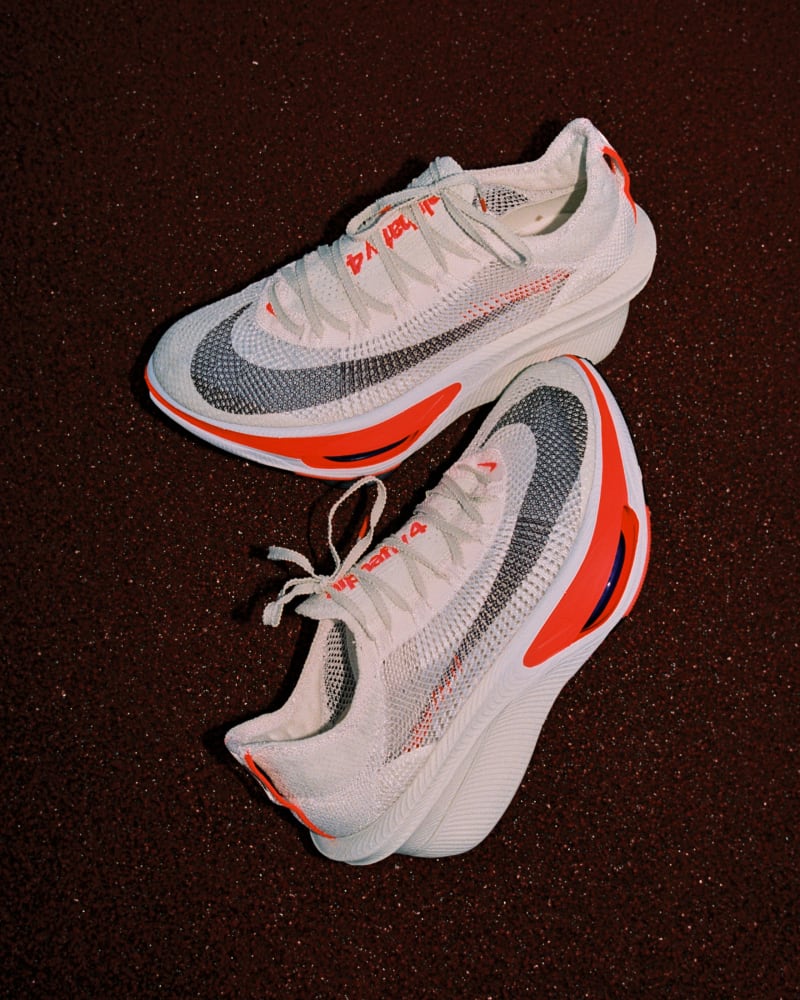
Available in limited quantities since September 17, the Alphafly 4 will receive a wider release on October 29 through nike.com and specialist retailers, priced at €279.99. At the heart of Nike’s racing system, it carries the brand’s historic legacy in the marathon and Eliud Kipchoge. This fourth-generation model is aimed both at elites chasing the podium and recreational runners hunting a personal best.
Nike has revised every component: new ZoomX LT foam combined with ZoomX, an Atomknit upper, two Air Zoom units in the forefoot, a carbon Flyplate and a Fast Shot outsole. It delivers 10% more energy return than the Alphafly 3 and weighs 5% less in a men’s US size 8.5. Addisu Gobena wore it to win the Sydney Marathon in a course-record time. Find all the details on the Alphafly 4 in our dedicated article.
 © Nike
NIKE APEX
The answer to the record chase
At the very top of the pyramid sits a new model: the Apex. Nike describes it as its most complete expression of speed, designed for marathoners chasing every second. It is the first racing shoe equipped with two double-stacked Air Zoom units, for four units arranged in two pairs. It also contains more Air in the forefoot than any Nike running shoe before it. Visible from the side, this platform compresses, stores and then releases energy in a significant way. Nike claims up to 40% more energy return than the Alphafly 3 in a men’s US size 10, while weighing more than 10% less. The figures confirm the model’s position in the ultimate-performance segment.
Nike claims 40% more energy return than the Alphafly 3 in a men’s US size 10.
 © Nike
 © Nike
 © Nike
 © Nike
 © Nike
The Apex builds on that legacy and represents one of the biggest leaps we have ever made in the marathon. It brings together everything we have learned about speed, efficiency, endurance and Air innovation in a system designed to help runners chase every second.
Zero drop, ZoomX LT foam, Flyknit X upper, GOATEK outsole
This was not on our radar. The Apex has zero drop, with a 40 mm stack at both the heel and forefoot, the maximum permitted by World Athletics for road racing. Its geometry clearly breaks with market standards. Beneath the Air platform sits a layer of ZoomX LT, a foam that is softer, lighter and more energetic than ZoomX. Above it is a raised carbon Flyplate in an “inverted wave” shape that directs load toward the Air units while promoting propulsion and stability. A wider outsole and rocker geometry complete the setup. Underfoot, Nike has worked to reduce weight as much as possible. GOATEK rubber and Fast Shot are placed only where needed beneath the forefoot. The foot is wrapped in a new Flyknit X upper and a close-fitting knit collar. The surprising detail is the absence of an insole, creating the sensation of a true second skin.
“Air remains essential because it delivers lightweight cushioning, responsiveness and energy return while maintaining its performance throughout the marathon,” explains Phil McCartney, Nike’s Chief Innovation, Design and Product Officer. “Runners therefore get a more consistent feel from the first kilometre to the last.”
Jacob Kiplimo has already raced in it. This year, he broke the half-marathon world record in Lisbon in 57:20, then ran 2:00:28 in London.
 © Nike
I relied on Nike prototypes in some of the biggest races of my career over the past few months, from the half-marathon world record in Lisbon to the fastest marathon of my life in London. The best innovations are the ones that let you think less about what is happening under your feet and more about the challenge ahead. That is what the Apex does.
The Apex will be available in January 2027 on nike.com and through select retailers. It is priced at $350. Yes, that is expensive, but still far below its competitors, which sell for around $500. The Apex is not the lightest option, but it is clearly Nike’s entry into the hyper shoe category right now.
Why now?
We all remember 2017 and the arrival of carbon plates on the market. With the Vaporfly, Nike was preparing to transform the shoe and performance landscape. Every brand followed, and the term “super shoe” became standard for many runners. These shoes have almost become essential for the most committed athletes. We also remember Breaking2 and the INEOS Challenge, where Eliud Kipchoge ran 1:59:40 in a prototype of what would become the Alphafly.
 © Nike
 © Nike
 © Nike
In 2026, the landscape has changed radically. Everyone has now caught up with Nike, and many new players have emerged. Innovation is at the heart of every brand’s strategy, and marathon records have fallen more frequently over the past 10 years than ever before. 2026 marked a major turning point for running when Sabastian Sawe delivered the first official sub-two-hour marathon in history, running 1:59:30 at the London Marathon. Yomif Kejelcha also went under the mark 11 seconds later, with both men wearing Adidas Adios Pro Evo 3 shoes. Jacob Kiplimo finished third in 2:00:28 wearing an Apex prototype. For the American brand, known for being the most successful in sport, the symbolism is powerful. The Apex and Alphafly 4 are not merely responses; they confirm that Nike intends to reclaim its throne in elite performance.
At the same time, running has exploded in popularity. According to Nike, global marathon participation rose by 18% in a single year. With the Swooshfly, the brand is offering an option that fits the vast majority of runners lining up for a marathon every week around the world. A race for records on one side, growing race fields on the other: Nike’s new racing shoe system responds to both realities.
An option for every runner, not a hierarchy
One particularly interesting point is how the three products are positioned within Nike’s range. The American brand did not simply stack its models from most accessible to most expensive. Each shoe has a specific role and answers the needs of a different kind of runner. The Apex is for runners chasing every second, like Jacob Kiplimo. The Alphafly 4 aims to bring marathon speed to more athletes, from elites to fast recreational runners. And the Swooshfly is an invitation to take on a first race. The prices may naturally suggest a hierarchy, but Nike’s message is clear: performance no longer has a single definition, and a 4:30 marathon deserves just as much innovation as a world record.
 © Nike
Key facts
Nike Swooshfly | Nike Alphafly 4 | Nike Apex | |
Runner profile | First marathon, new goal | Personal best, recreational to elite | Elite, every second counts |
Foam | Nike SkyX (supercritical, TPU beads) | ZoomX + ZoomX LT | ZoomX LT |
Plate | Carbon Flyplate | Carbon Flyplate | Carbon Flyplate, “inverted wave” |
Air Zoom | – | 2 Air Zoom units (forefoot) | 4 Air Zoom units (2 stacked pairs) |
Upper | Translucent woven Vaporweave | Atomknit | Flyknit X, no insole |
Outsole | Dual rubber, GOATEK in the forefoot | Fast Shot | GOATEK + Fast Shot |
Stack height | N/A | 39 mm heel / 31 mm forefoot | 40 mm heel / 40 mm forefoot |
Drop | N/A | 8 mm | 0 mm |
Weight | N/A | 208 g | Approx. 196 g |
Energy return | +16% vs Vaporfly 4 | +10% vs Alphafly 3 | +40% vs Alphafly 3 |
Price | $145 | $275 | $350 |
Release | China: February 2027 / Worldwide: spring 2027 | September 17, 2026 / October 9, 2026 | January 2027 |
With the Apex, Alphafly 4 and Swooshfly, Nike is looking to reclaim the ultimate-performance marathon segment while speaking directly to the mass of recreational runners. Three shoes, three roles, one clearly defined lineup. One major absentee remains: the Vaporfly. It is a historic Nike model, and it is hard to imagine it disappearing. Nike promises more racing shoes to come. One thing is certain: for your next marathon, whether you are targeting 2:30 or five hours, there is a Nike model made for you.
Explore the full Nike Running range on nike.com.