 © EcoTrail Paris
At the EcoTrail de Paris, Blandine L’Hirondel and Les Cols Verts raise awareness about environmental issues
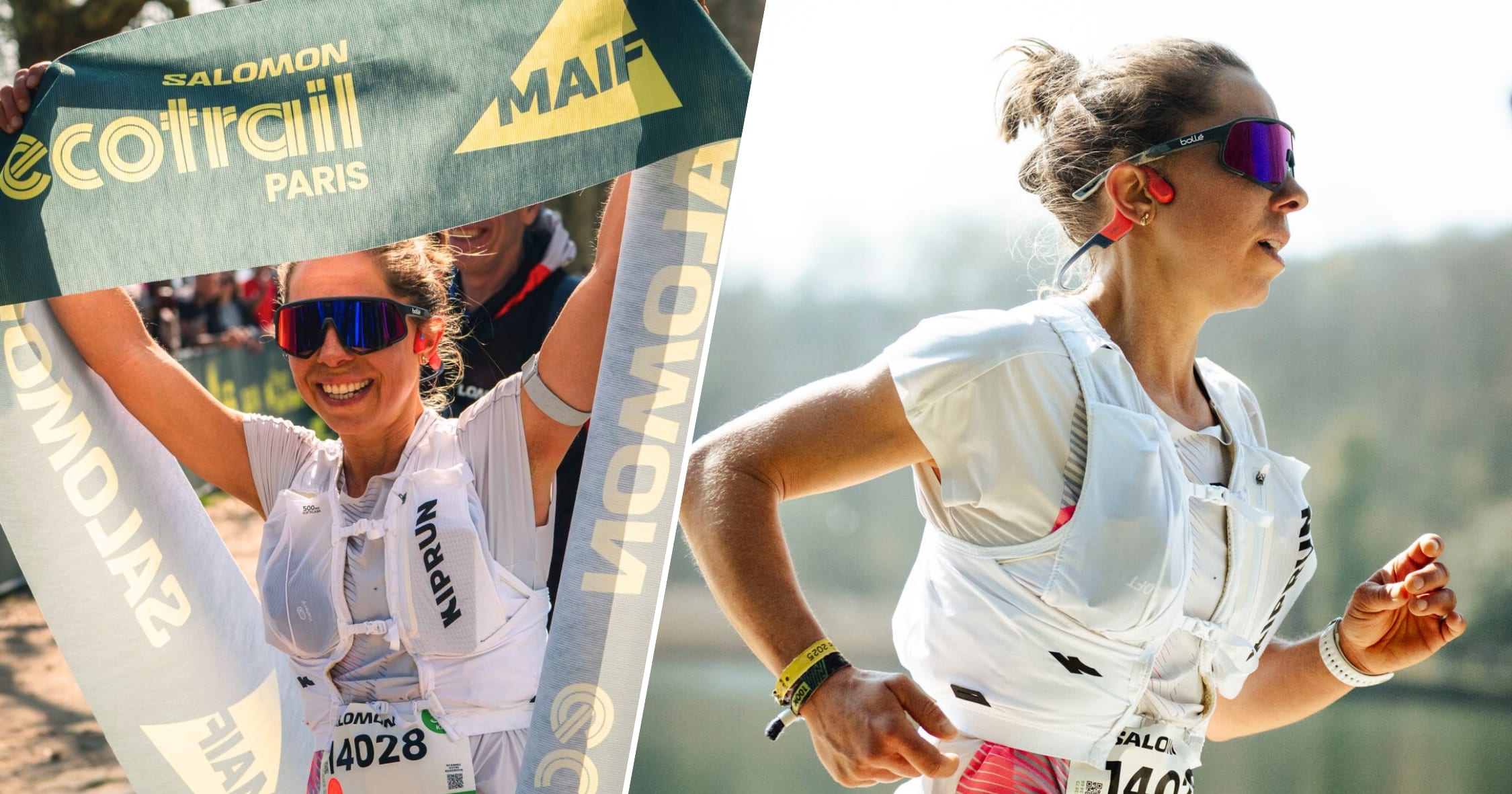
On March 21 and 22, the EcoTrail de Paris brought together nearly 18,500 runners across nine different races. On that occasion, Marathons.com spoke with Blandine L’Hirondel, a two time trail world champion and one of the event’s MAIF ambassadors, as well as with the director of Les Cols Verts.
March 21 marked both the first day of spring and the opening of the EcoTrail de Paris. The day before her victory in the 35 km race, Blandine L’Hirondel was present at the event expo in a new role. “I’m very honored to be the ambassador for the spring season as part of the MAIF Sport Planète project. It’s a year long initiative divided into four seasons, designed to raise awareness and promote environmental responsibility,” explained the two time trail world champion (2019 and 2022) and winner of the Diagonale des Fous. The initiative gave her an opportunity to learn more about pollination, insects, and plants. The goal is to encourage a different perspective on the natural environment, which serves as the playground for outdoor athletes. According to the French runner, environmental awareness is stronger among trail runners than within the general population.
“It’s my job to spend every day out on the trails. I can see how the environment, the courses, and the terrain are evolving, but also how people’s mindsets are changing. It’s a crucial issue in trail running because our activity inevitably impacts ecosystems, especially when thousands of us are moving along the trails at the same time”.
Blandine L’Hirondel
Individual efforts can nevertheless help reduce the impact caused by the growing use of natural spaces. Thanks to her elite status and visibility, the 35 km winner carried that message throughout the weekend.
| A mediator’s role
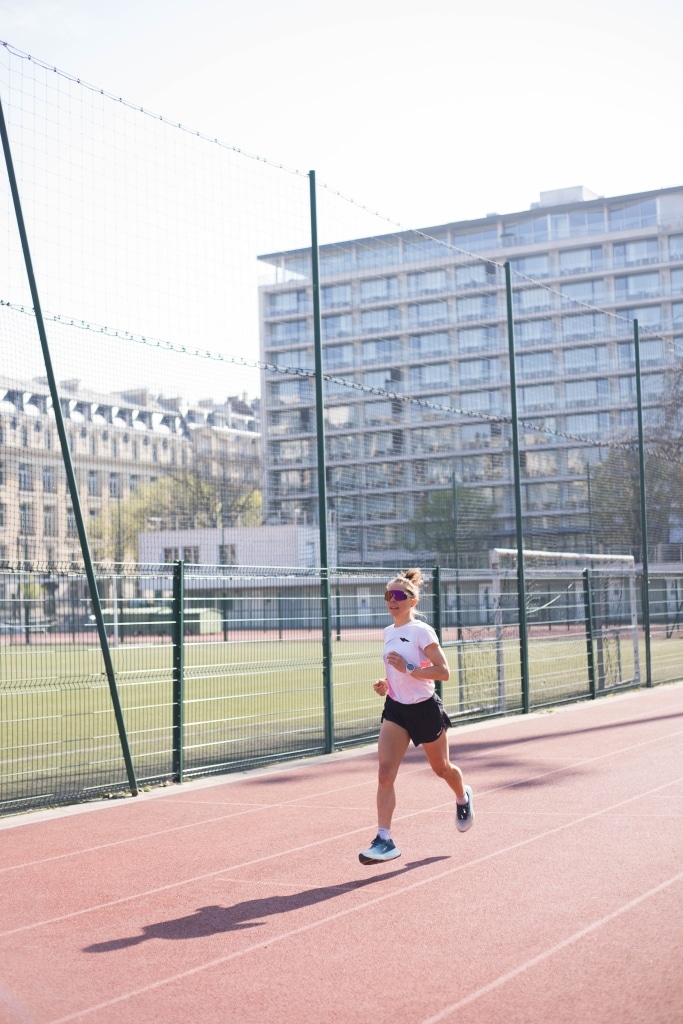
A belief she is eager to share through education and dialogue. “I don’t want to come across as judgmental or preachy. It’s important for me to show that I’m not perfect either, but that by taking an interest in these issues, we can learn a lot and change the way we see things. It’s the accumulation of small actions that can ultimately create a collective impact,” explained the athlete. The initiatives themselves can vary depending on where people live, whether in cities, the countryside, or the mountains.
The Caen native admits she is not “a pure mountain person.” “I wasn’t born in the mountains, I lived in the city, and many members of my family and friends still do. But that doesn’t stop me from caring about these issues. This race is a moment of sharing, and I really appreciate how accessible the course is, the fact that you’re constantly around people and never truly alone.”
The French international, currently preparing for the Transvulcania and the UTMB, hopes to share what she learns through her ambassador role, showing that this kind of awareness often begins when people simply take the time to pay attention. “I just want to encourage people to open their eyes and look at what’s happening around us. I’m not here to give orders, but to raise awareness about our impact, climate change, and the economic and social challenges that affect all of us.” Her goal is to highlight the decline of biodiversity, endangered species, and disappearing pollinators. Awareness, she believes, is the first step before thinking about possible actions at an individual or local level.
| The EcoTrail, a race built around environmental responsibility
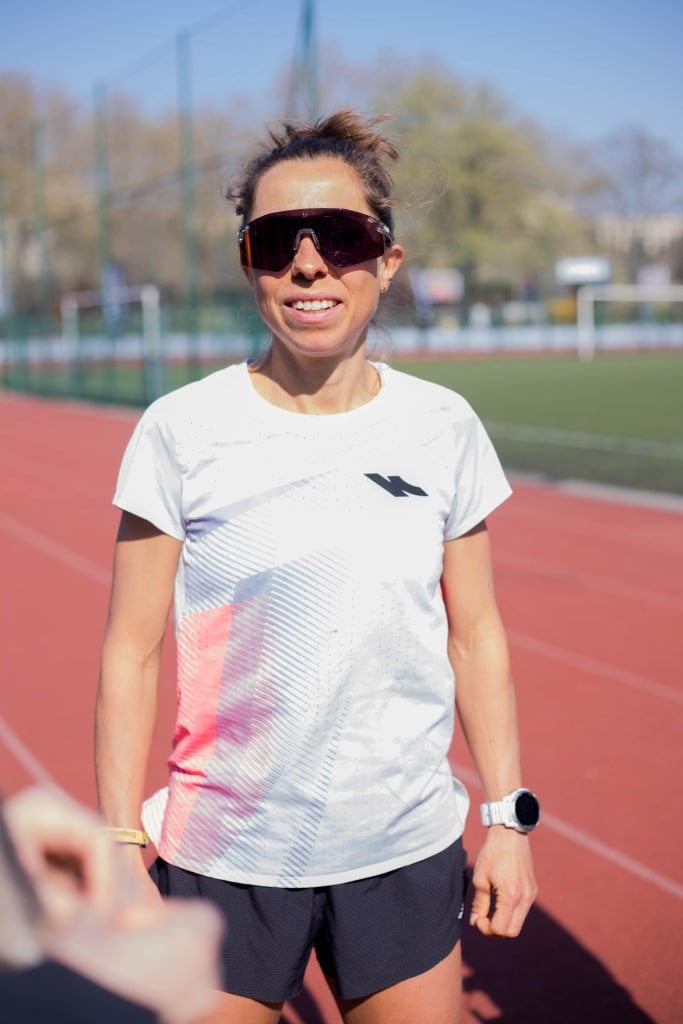
Balancing a major sporting event with respect for nature despite the presence of thousands of runners, that is the ambition of the EcoTrail de Paris organizers, who want to use the gathering as an opportunity to raise environmental awareness among the public. The event expo was also part of that initiative, welcoming several organizations committed to protecting ecosystems, including Les Cols Verts. The national non profit develops urban agriculture projects in underserved neighborhoods. Its initiatives are also carried out alongside MAIF as part of the partnership with the EcoTrail to promote more responsible sport.
The organization operates through two main approaches. First, by creating nationwide training and support programs. Second, by building networks of urban farms designed to support people facing economic hardship. From workshops to the development of farms focused on biodiversity, food education, and gardening, the projects cover a wide range of activities. These initiatives target different audiences, including schools, companies, and local communities.
The organization is currently active in four locations: Rennes, Strasbourg, La Ciotat, and Seine-Saint-Denis. Anna Roiné, the Île-de-France director, welcomed the opportunity for the organization to be part of such a major sporting event. “Trail runners are closely connected to nature, they already have that awareness,” she explained.
“They practice their sport outdoors, in a specific environment, not inside a gym. We spoke with people who all have different levels of awareness and understanding. We’re here to inform the general public about all these small things that we don’t necessarily know enough about.” The event offered valuable visibility for the organization, whose members were able to connect with an audience they do not often encounter. The director said she was delighted to reach a broader range of people.
| Activities for trail runners and spectators
At the event expo, several activities were organized around the theme of pollination. The first was a workshop dedicated to building shelters for solitary bees. “We tend to think of bees as domestic insects living in hives. But there are actually more than 1,000 species. Solitary bees, which do not live in swarms, are disappearing much faster than others,” explained Anna Roiné. The reason is that they have fewer places to feed and face competition from domestic bees. Creating this type of shelter helps provide them with a habitat and therefore supports their survival.
The second workshop invited runners to match flowers with their corresponding fruit or vegetable. The educational game was designed to highlight the importance of flowers. The third activity focused on making seed bombs, a mixture of soil, clay, and compost containing flower seeds. “It’s a way to plant seeds in very urban and mineral environments, for example in the cracks of walls or at the base of trees. These plants then become a food source for bees,” added the specialist.
| The need for nature in our cities
In heavily urbanized cities, the decline of natural spaces is leading to a loss of biodiversity. The consequences go far beyond the disappearance of insects. The impact is also directly felt in the well being of city residents. “It’s harmful for people’s health not to be connected with nature, and it also affects our ability to live in cities already impacted by climate change,” argued the director. The fewer green spaces a city has, the higher temperatures rise, making urban environments increasingly difficult to live in.
The association advocates for the creation of pockets of vegetation by cultivating these spaces to bring back cooler temperatures, wildlife, and plant life. Raising public awareness is considered essential, and extending that message throughout the EcoTrail de Paris was a natural fit.
“City dwellers have become disconnected from the natural world. We need to reconnect them with the rhythm of the seasons, and teach them again how to observe plants and animals. Urban farms help recreate green corridors that allow biodiversity to develop in a sustainable way.”
Anna Roiné
Through initiatives like these, the EcoTrail de Paris shows that trail running and environmental responsibility can, and should, move forward together. Running in nature also means understanding and protecting it, a message carried by the different organizations and speakers present throughout the event expo.
➜ Discover the calendar of marathons

Emma BERT
Journaliste
 29/04/2026
 29/04/2026
 23/04/2026