

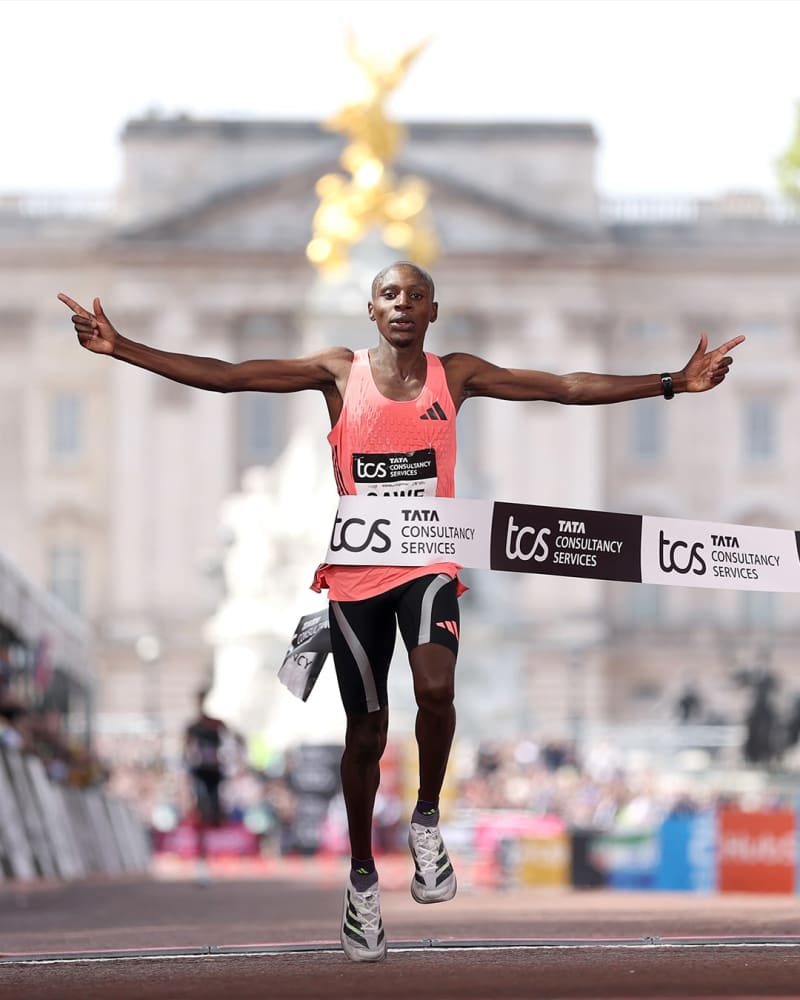
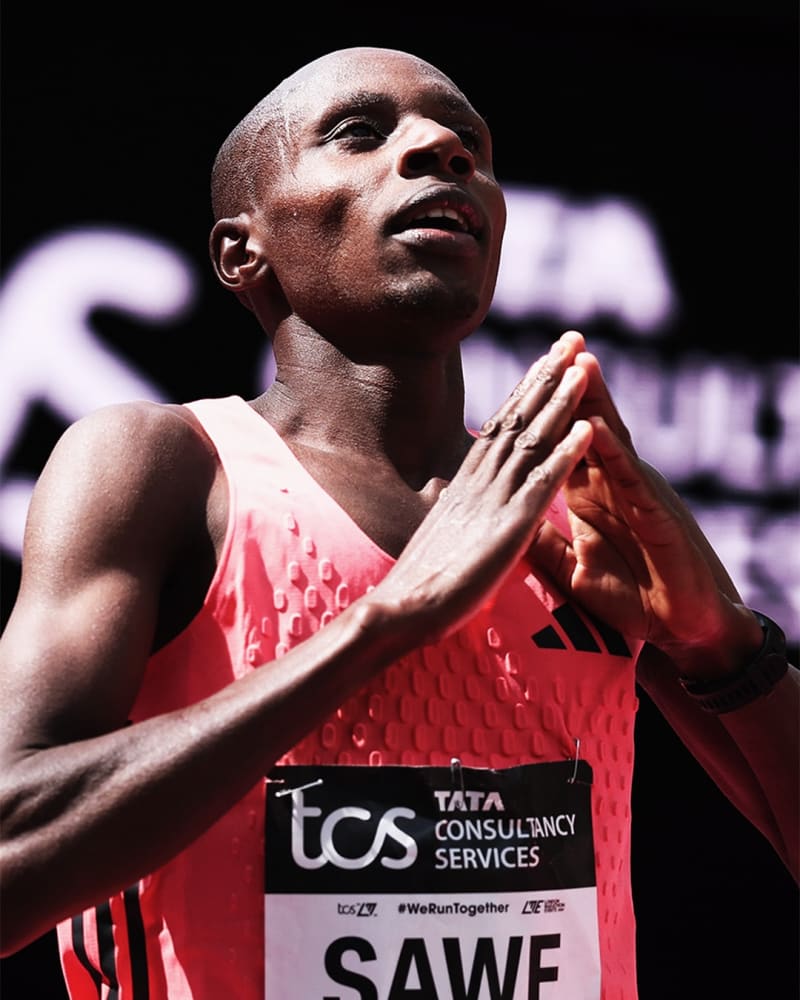
Ever since he broke the two-hour barrier in the marathon, Sabastian Sawe has been in the spotlight. His performance is at the center of every conversation, and his career has entered a completely new dimension. After all, he will forever be remembered as the first man to run an official marathon under two hours. The achievement is immense. Historic. Inspiring, even. But who is Sabastian Sawe, really? Just a few years ago, very few people knew his name, even among hardcore running fans. No brilliant track career like Kenenisa Bekele or Eliud Kipchoge. No Olympic medals. No carefully crafted marketing story built since his teenage years. Sawe arrived late. Almost quietly. The 31-year-old Kenyan slipped into history through hard work, perseverance and humility, very much like his personality. Today, everyone wants to know who the man nicknamed “the silent assassin” truly is.
A family story deeply rooted in resilience
Sabastian Kimaru Sawe was born on March 16, 1995, in Barsombe, in Kenya’s Uasin Gishu County, at the heart of the Rift Valley. A region known worldwide in distance running. But to truly understand the Kenyan runner’s story, you probably have to go back long before him. Long before London. Long before the marathon.
His father, Simion Sawe, is a farmer and belongs to the Nandi people, an iconic community of the Kenyan Rift Valley. The Nandi hold a special place in Kenya’s history: between 1890 and 1906, they led a long resistance against British colonization. A culture of resilience, self-reliance and refusing to give up that can still be felt in today’s generations. His grandfather, Musa Sitenei, was an agricultural worker. Little by little, he cleared land by hand until he owned more than 150 hectares of cornfields. A story often told within the family as a symbol of hard work, patience and discipline. Sawe never knew him personally, but that work ethic deeply shaped his childhood.
As a child, Sabastian was mainly raised by his grandmother Esther, nicknamed “Koko.” When his parents moved to Nandi County to work in agriculture, he chose to return to Cheukta with his sister to stay with her. Even today, he often speaks about his grandmother as the person who passed on his most important values: gratitude, faith, calmness and discipline. Sport also runs in the family’s DNA.
His mother, Emily Sawe, was a sprinter who already won school competitions in the 1990s before an early pregnancy ended her athletic career. His other grandmother, Vivian Kimaru, reportedly competed at the 1972 Munich Olympics in the 800 m and 1500 m. His uncle Abraham Chepkirwok, an important figure in his journey, represented Uganda at the Beijing Olympics in the 800 m. In the Sawe family, running was never just a sport. It was much more than that.
At school, Sawe was described as shy and reserved. Not the type looking for attention. Like many Kenyan children, he ran every day: a 10-minute run to school and another one back home. A teacher, Julius Kemel, quickly noticed his potential and encouraged him to keep running. But at the time, becoming a professional athlete did not really feel realistic.
𝟭𝗵𝟱𝟵'𝟯𝟬''. Record du monde sur le marathon de Londres pour Sabastian Sawe, dans une ambiance assez folle 🙌 pic.twitter.com/Gqy4Uk01Sl
— Eurosport France (@Eurosport_FR) April 26, 2026
Late beginnings at the elite level
Despite the strong sporting background in his family, nothing really predicted such an extraordinary rise for the Kenyan prodigy. For years, he remained discreet, shy and far from the spotlight. He spent several seasons in Iten without truly breaking through. In March 2020, he suffered the biggest injury of his career when he ruptured a tendon, forcing him to stop running for several months. He eventually returned to training, but competitions were canceled because of COVID. At that point, doubts were everywhere. He even considered leaving elite sport to pursue a more stable job in the police or the military, like his brothers Vivian and Ian.
Unlike many track superstars, Sabastian Sawe did not come through the traditional athletics pipeline. No junior titles. No huge times at age 20. But through hard work and perseverance, a turning point finally arrived. Sawe was unhappy in Iten. He needed a change. His Ugandan uncle Abraham Chepkirwok connected him with Italian coach Claudio Berardelli, who had been based in Kenya for more than 20 years. Sawe then joined a new training group in Kapsabet, the 2Running Club. A new chapter began. The joy of running returned, and Sawe quickly integrated with some of the best athletes in the group.
Then came the almost surreal moment that changed his life forever. In 2022, he was selected by his coach to pace the Seville Half Marathon. His role was simple: bring the lead pack through 10 km in 28:10. But just before leaving for Spain, he learned that his grandmother Koko, the woman who raised him, was seriously ill. He still decided to fly to Europe for his first international race experience. From the very beginning of the race, Sawe ran much faster than planned, almost as if he were paying tribute to his grandmother. Midway through the race, he realized he was alone. The group behind could no longer follow him. Instead of stopping his effort, Sawe kept going and dominated the race. He crossed the finish line first in 59:02, setting a new course record… despite being only a pacer. A few days later, his grandmother Koko passed away.
For coach Claudio Berardelli, the realization was immediate. He quickly understood he was coaching an extraordinary athlete. “He’s not just a good runner. He’s a different human being.” And what strikes everyone working with Sawe is not only his physiological engine. It is his attitude. His calmness. His discipline. His humility. His faith.
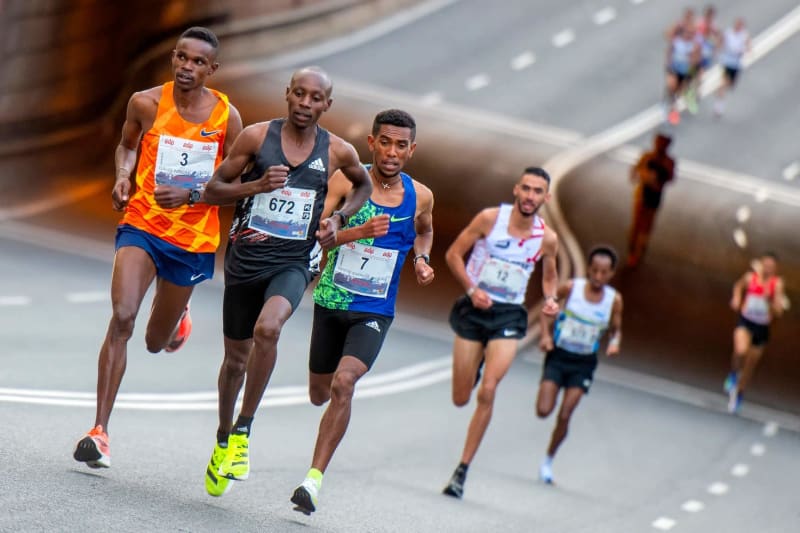 © Medio Maratón de Sevilla
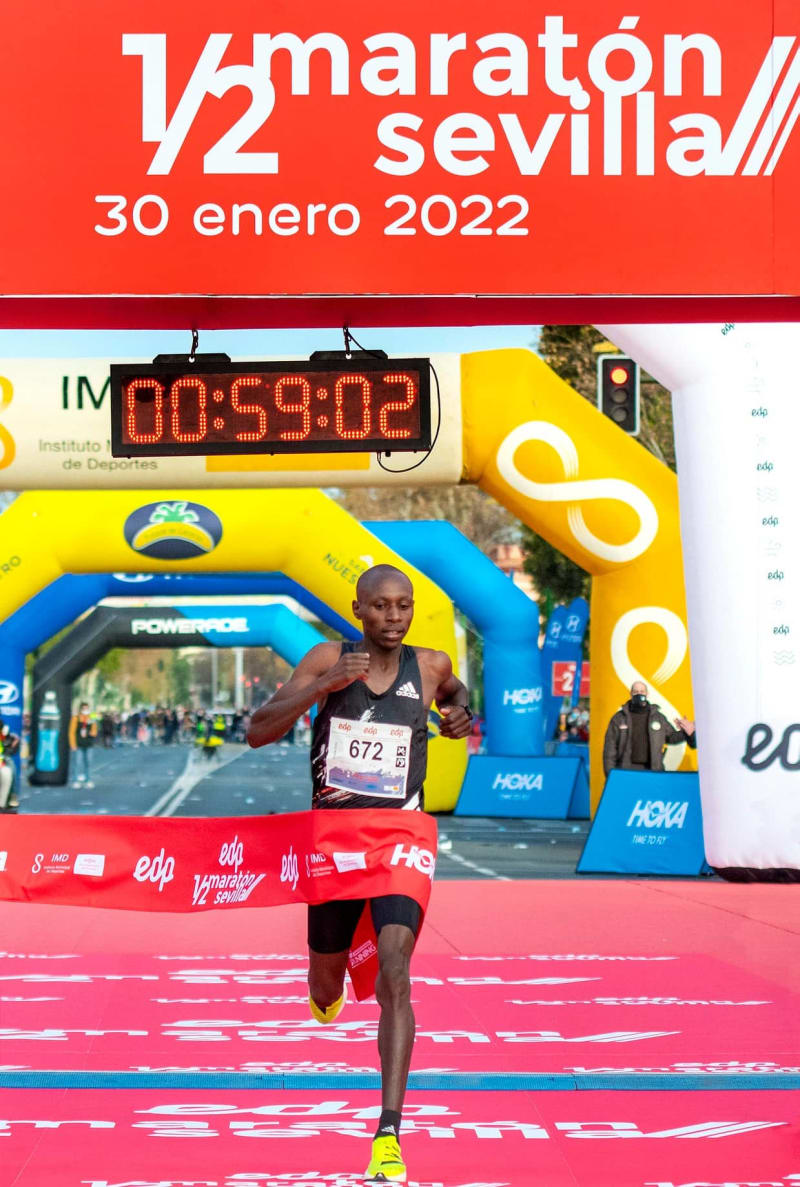 © Medio Maratón de Sevilla
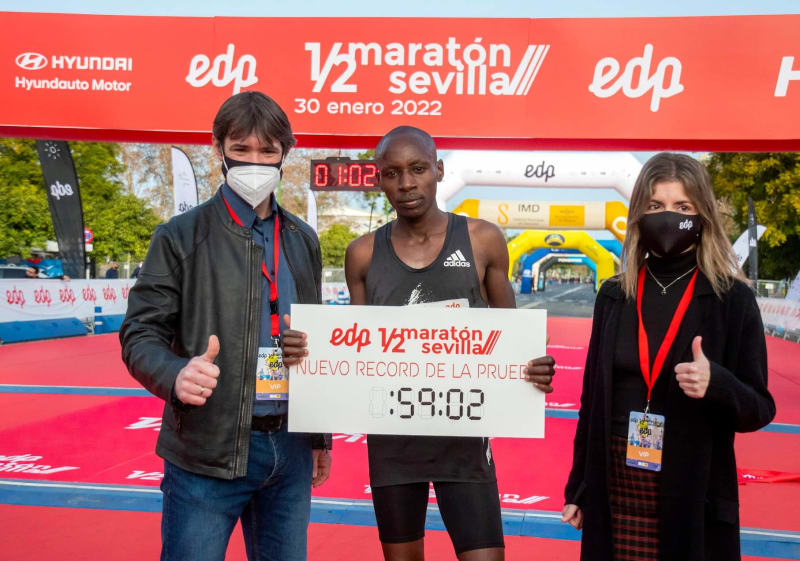 © Medio Maratón de Sevilla
An immediate rise in the marathon
The craziest part of Sawe’s story is how quickly everything happened. Just weeks after Seville, he ran 26:54 for 10 km in Germany, then nearly broke Mo Farah’s world one-hour record in Brussels by covering more than 21.2 kilometers in 60 minutes. But it was especially in Kenya, in some of the toughest races in the world, that he started building a real reputation. He notably won the brutally competitive Kenyan National Cross Country Championships, a race often considered deeper than many international championships because of the insane level of competition.
A few months later, he competed at the World Cross Country Championships in Bathurst, Australia, helping Kenya secure the team title with a strong seventh-place finish. Then came 2023, the year Sawe fully established himself among the world’s best runners. In Riga, he won the World Half Marathon title after a perfectly controlled race, leading a historic Kenyan sweep. A defining moment in his career.
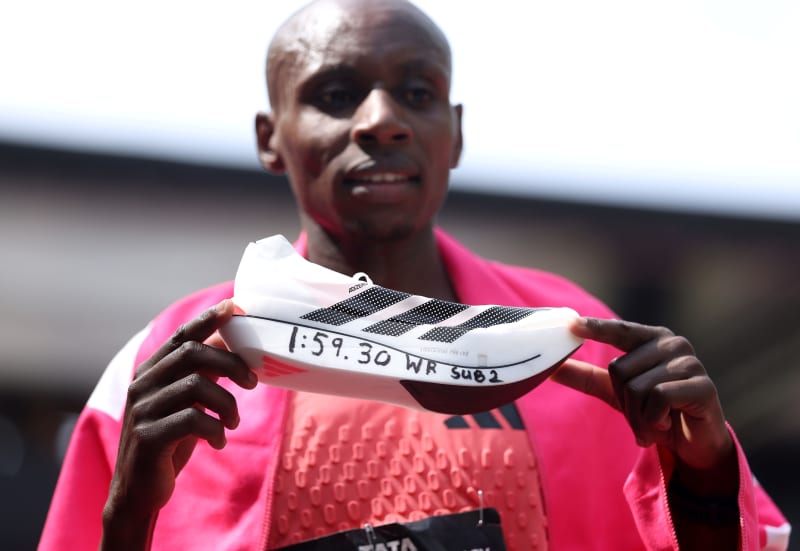
At that point, coach Claudio Berardelli started realizing Sawe possessed something different: a rare ability to accelerate after one hour of effort, exceptional running economy and incredible mental toughness. Finally, in 2024, Berardelli decided it was time for the marathon debut. Valencia. The original goal was somewhere around 2:03 or 2:04. Sawe ended up running 2:02:05 and winning the race. The second-fastest marathon debut in history, just 12 seconds behind Kelvin Kiptum. The marathon world had officially found its new phenomenon. A few months later, he won London. Then Berlin. Then London again in 1:59:30.
Four marathons. Four victories. Already a world record. And most importantly, he etched his name into history by becoming the first man ever to officially run under two hours in a marathon. His performance made headlines worldwide. The marathon had changed forever. So had Sawe. Like Kelvin Kiptum, he seems to possess that exceptional ability to accelerate in the final kilometers of a marathon. To become stronger while everyone else begins to fade. His second half marathon in London, run in 59:01, left a lasting impression. Nobody had ever finished a marathon that fast.
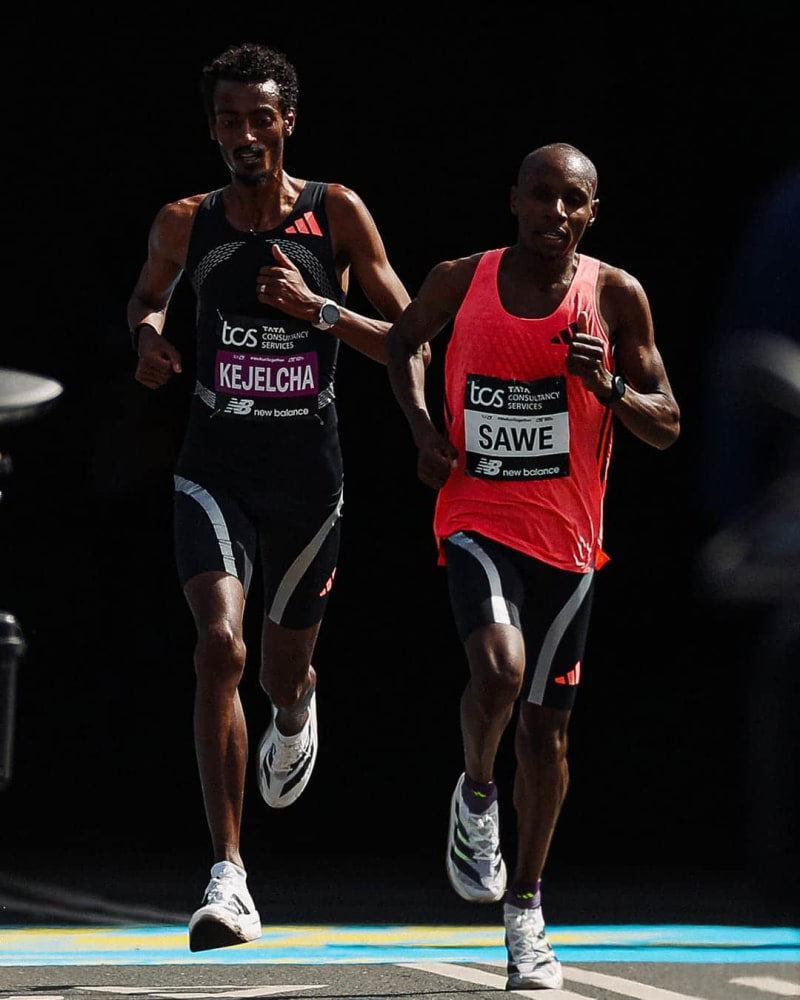
Life in Kapsabet: simplicity, altitude and mileage
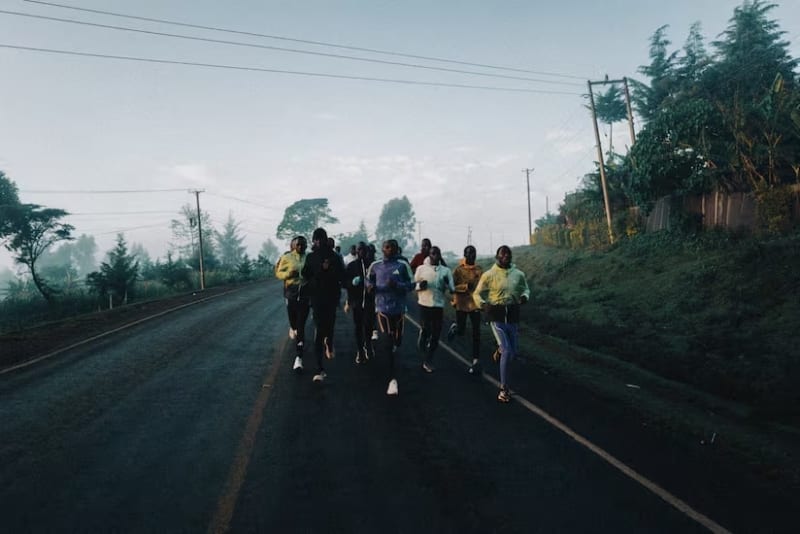
Even today, despite being the world record holder, Sawe’s life remains extremely simple. He trains around Kapsabet and Iten, between 2,000 and 2,400 meters above sea level, surrounded by some of the best marathoners on the planet. His days often follow the same rhythm: Early wake-up. First session before sunrise. Breakfast. Rest. A lighter second workout in the afternoon. Massage, recovery, meals, sleep. A lifestyle typical of elite Kenyan runners. Nothing extravagant. No overexposure.
People close to him describe an athlete almost obsessive in the way he lives for the marathon. He is known for high mileage and regularly exceeds 200 km per week during marathon-specific blocks. But above all, Sawe seems to possess something rare among great marathoners: no fear. In London, when he accelerated at the 30 km mark while on world-record pace, he was completely confident. That ability to race without fear probably explains why his agent Eric Lilot nicknamed him “the silent assassin.” Quiet in everyday life. Ruthless on the roads.
 © Dan King / Maurten
A new generation of marathoners
Sawe also represents a new generation of marathon runners. A generation transitioning earlier toward road racing and longer distances. A generation where absolutely nothing is left to chance. He benefits from massive support from sponsors such as adidas and Maurten, who invest heavily around him. Next-generation supershoes adapted to his stride. Ultra-precise nutrition. Advanced physiological analysis. Training load monitoring. Work on running economy. Even gut training to absorb more than 110 grams of carbohydrates per hour during races. Modern marathon running now almost resembles a performance laboratory. And Sawe is probably the athlete pushing this logic the furthest today.
To crown his 2025 season, he was even named “Out of Stadium Athlete of the Year” by World Athletics after victories at two Majors: London and Berlin.
 © adidas
His fight against doping
Whenever people talk about marathon running and Kenya, there is always the shadow of doping somewhere in the background. Unfortunately, Kenya has faced a major crisis in recent years, with dozens of athlete suspensions. Sawe knows this perfectly well. Together with adidas, his agent and his entourage, he voluntarily implemented an enhanced anti-doping testing program with the Athletics Integrity Unit (AIU).
The goal is clear: prove that he is clean. Before the Berlin Marathon, he was tested 25 times. Something never seen before in marathon history. But Sawe wants to do things properly. “Doping has become a cancer in my country,” he explained after his world record. A rare statement in the sport. And probably an important one for the image of modern marathon running.
You could summarize Sabastian Sawe’s story with a single time. But behind 1:59:30 lies a child from the Rift Valley, a quiet runner who developed far from the spotlight before exploding onto the world stage. His journey tells a story of patience, hard work and that uniquely Kenyan culture of resilience. Since April 26, 2026, and his historic performance at the London Marathon, his life has completely changed. But perhaps the most impressive part is this: with only four marathons in his career, “the silent assassin” still seems very far from reaching his limits.
➜ Discover Sabastian Sawe’s nutrition strategy at the London Marathon
More articles
Marathon de Chablis set to welcome 4,400 runners among the vines
The Marathon de Chablis returns on Saturday, October 24, with races, hikes and a festive atmosphere among the vineyards.
Wed, October 21, 2026

Avignon Marathon makes a winning debut with more than 3,450 runners
More than 3,450 finishers turned out for the successful first edition of the Avignon Marathon on Sunday, September 27, 2026.
Wed, September 30, 2026

Night races: why does everyone want to run while everyone else is asleep?
From Glow Runs to low-key trail races, night running is taking off, offering a more festive experience and a different relationship with the clock.
Thu, September 10, 2026