
How did Maurten help Sabastian Sawe run the first official sub-2-hour marathon?
 © Maurten
The marathon entered a new dimension in London. For years, the two-hour barrier looked like a myth. A round number that became a collective obsession for an entire generation of runners, scientists, coaches, brands and fans. Then, on April 26, 2026, Sabastian Sawe crossed the line in 1:59:30. And behind that historic performance, there was far more than extraordinary legs. For the Sawe machine to run at full power, there was also a nutrition strategy designed down to the smallest detail. Because today, at the highest level, running fast is no longer enough. You also have to fuel the body continuously for two hours in order to maintain the pace. And that is precisely where Maurten has become a central player in modern marathon history. Since Eliud Kipchoge’s INEOS 1:59 project, the Swedish brand has established itself as the absolute reference in endurance fueling. And this year, London confirmed it once again. Marathons.com dives into Maurten’s strategy to help Sabastian Sawe run under two hours.
The modern marathon: shoes, running economy… and nutrition
When you watch Sawe running at 2:50/km for 42 kilometers, you immediately think of his extraordinary abilities. Massive VO2 max, ultra-optimized running economy… But a marathon is also decided elsewhere. Yes, there are the new supershoes. But there is also the body’s ability to produce—and above all sustain—energy.
The problem is fairly simple: the human body has limited glycogen stores. In other words, even the best marathon runners in the world have a fuel tank that eventually starts to empty. And when that tank runs low, the famous “wall” appears. Legs get heavy, pace drops sharply, and the brain slows down. At the pace Sawe was running, that could happen very quickly. So to run under two hours, a solution was needed: deliver a huge amount of carbohydrates during the race without destroying the digestive system. And for a long time, that was exactly the limit of the marathon.
Sawe absorbed up to 115 grams of carbohydrates per hour
Just a few years ago, most nutrition recommendations were around 60 grams of carbohydrates per hour. Beyond that, many athletes experienced digestive issues: nausea, bloating, diarrhea, or simply an inability to absorb more.
The problem is that a marathon run close to two-hour pace requires a huge amount of energy. We’re talking about running at nearly 21.2 km/h for two hours. So Maurten decided to push that limit. And with Sawe, they pushed it very far. At the 2025 Berlin Marathon, the Kenyan was already taking in around 105 grams of carbohydrates per hour. In London, the target rose to 115 grams per hour. Across the full race, that represents roughly 230 grams of carbohydrates consumed during the marathon. Numbers that would have seemed completely unthinkable just a few years ago.
 © Maurten
 © Maurten
 © Maurten
 © Maurten
 © Maurten
Maurten spent 32 days in Kenya with Sawe
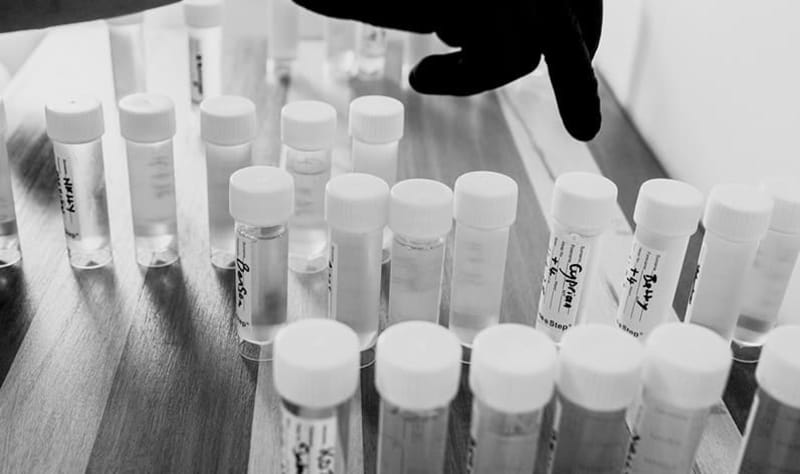
What stands out in this story is the level of precision and commitment around the athlete. Maurten did not simply send Sawe a few samples before London. The brand’s performance team spent 32 days in Kenya with his entourage to analyze his body, habits, digestive tolerance and exact energy needs. Daily, meticulous work. Like a mobile laboratory.
The testing included:
✔ VO2 max analysis
✔ Lactate testing
✔ Running economy measurements
✔ Energy expenditure analysis
✔ Thermoregulation monitoring
✔ Detailed nutrition analysis
✔ Carbohydrate absorption testing using ¹³C isotopes
✔ Training load monitoring
✔ Body composition analysis
The goal was simple: determine exactly how many carbohydrates Sabastian Sawe’s body could absorb and use at marathon intensity. Not in theory. In practice. Maurten’s team was able to analyze all of the Kenyan’s physiological data to find the ideal and maximum carbohydrate dose, with one clear challenge: avoid digestive problems at all costs. A collective effort, almost like an orchestra playing one score toward a single goal: running sub-2. Who said running was an individual sport?
A 30 km long run analyzed in detail
To confirm Sawe’s progress and his ability to absorb carbohydrates during effort, Maurten analyzed his data during a 30 km long run at 95% of marathon pace. One of the biggest sessions in his London build-up. The team had done the same before Berlin 2025.
The results were impressive. In this London-specific long run, Sawe completed the 30 km in 1:30:13, which was 1 minute and 7 seconds faster than during his Berlin preparation. Even more importantly, he did it with a slightly lower average heart rate: 154 bpm versus 156 bpm. In other words: he was running faster with a lower physiological cost.
The analysis also showed an exceptional ability to accelerate under fatigue. Between 20 km and 25 km, the most revealing segment in this type of session, Sawe ran 14:47, compared with 15:05 before Berlin. His final 10 km was also faster, showing excellent muscular endurance and improved energy management. Maurten also used a scientific protocol based on ¹³C carbon isotopes to measure his ability to absorb and use carbohydrates during exercise. The data showed that Sawe could oxidize nearly 100 g of carbohydrates per hour at the end of the session. Concrete proof that his gut training and nutrition strategy were perfectly dialed in before the big day in London.
Gut training: training the stomach like a muscle
This is probably the topic amateur runners are least excited about. We talk a lot about shoes, long runs, mileage, double threshold… but now elites also train their digestive systems. Literally. Because you don’t absorb 115 grams of carbohydrates per hour overnight. For months, Sawe repeated the exact same nutrition protocol in training. Gel before major sessions. Drink Mix at precise intervals during long runs. Everything was calibrated to prepare for the final performance in London.
The idea is simple: the more the gut is used to absorbing carbohydrates at high intensity, the more efficient it becomes at processing them. Maurten often presents this as a true energy system to train, just like the cardiovascular system. And that work probably played a huge role in the sub-2.
Hydrogel technology: Maurten’s real revolution
What changed everything for Maurten is its hydrogel technology. When mixed with water, carbohydrates are encapsulated in a hydrogel structure that passes through the stomach more easily before being absorbed in the intestine. During marathon effort, the stomach cannot function normally. Blood flow is prioritized toward the leg muscles, heart, skin and brain. With the hydrogel structure, the stomach is less stressed when processing carbohydrates.
The result:
➜ Less digestive stress
➜ Faster absorption
➜ Ability to ingest more carbohydrates
➜ More stable energy
In a marathon run close to 2:50/km, every detail matters. At that level, every small percentage represents precious seconds gained.
 © Maurten
Sabastian Sawe’s Maurten protocol in London
On marathon day, absolutely nothing was left to chance.
Before the race
6:45 a.m.: Maurten Bicarb System
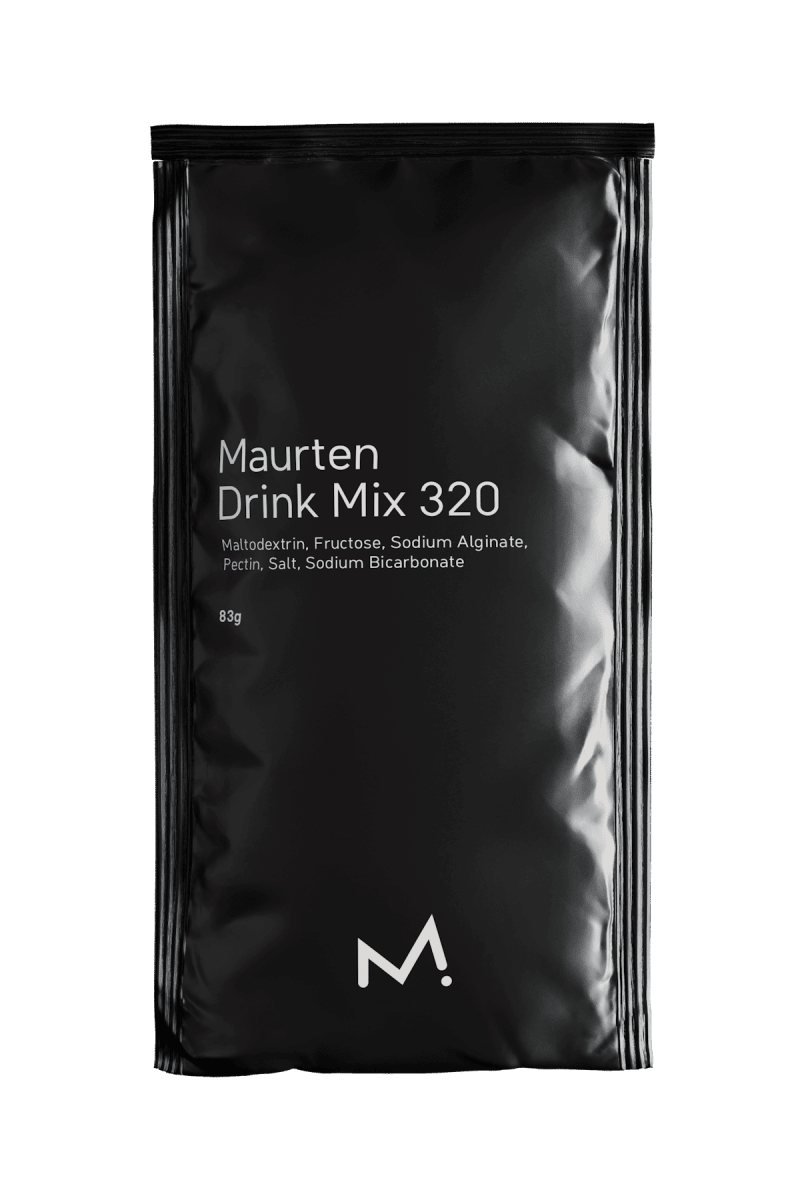
On the bus to the start: Drink Mix 320
5 minutes before the start: Gel 100
During the race
5 km: Drink Mix 320
10 km: Drink Mix 320
15 km: Drink Mix 320
20 km: Drink Mix 320 + Gel Caf 100
25 km: Drink Mix 320
30 km: Drink Mix 320
35 km: Drink Mix 320
40 km: Drink Mix 320
In total: around 115 g of carbohydrates per hour. An astronomical amount, mainly in liquid form. The results were clear. Sawe was still able to accelerate at the end. He ran the second half in 59:01 and his final 10 km in 27:36. No one had ever finished a marathon that strongly. For Maurten, it was a huge success. Proof that the work had paid off. After more than 1 hour and 50 minutes of effort, his engine still had fuel.
The role of bicarbonate: the other secret weapon
The other key element in the protocol was the Maurten Bicarb System. Bicarbonate has long been used in elite sport to improve the body’s buffering capacity—in other words, its ability to delay muscular acidosis. Put simply: it helps the body better manage the buildup of acidity in the muscles during very intense efforts. It is a common practice in athletics, especially in middle-distance events where the anaerobic component is significant.
The problem, again, is that older forms of bicarbonate often caused major digestive issues. Maurten managed to encapsulate bicarbonate using hydrogel.
The result:
➜ Better digestive tolerance
➜ More efficient absorption
➜ Ability to use higher doses
For Sawe, the idea was to push back the moment when the legs begin to explode. And when you see the violence of his acceleration after 30 km, it is hard not to think it played a role.
What amateur runners can learn from Sawe
Obviously, for most people, this article is not being read with the goal of running a marathon in under two hours. But what is interesting with Sawe is that the principles behind his performance can also apply to amateur runners. Not necessarily in the numbers. But in the logic. For a long time, many runners still treated fueling as a detail. You took a gel “when it started getting hard.”
Today, the modern marathon works differently. At the highest level, the best runners prepare their nutrition strategy with the same seriousness as their training plan. And for amateurs looking to improve, there are lessons to take from that mindset:
✔ Plan your fueling strategy in advance
✔ Test gels in training
✔ Train your gut
✔ Learn to consume carbohydrates early enough
✔ Improve recovery after sessions
These are often the small details that help avoid blowing up at 35 km.
Yes, taking several gels during every long run represents a significant budget during marathon training. But honestly, it will still always be cheaper than a carbon-plated shoe.
 © Maurten
Sawe and Maurten have pushed the limits of the marathon again
In recent years, the Swedish brand has occupied a unique place in endurance sport. There was Kipchoge’s INEOS 1:59 challenge. There is also a strong presence in cycling and triathlon. And now, Maurten has added the first official sub-2-hour marathon to its story. What is fascinating is that all these projects carry symbolic weight. They have helped change mindsets and the way the marathon is approached.
Nutrition is no longer just an add-on. It has become a central pillar of performance. On the same level as training, shoes and running mechanics. And honestly… when you see Sawe accelerate after 35 km as if he were only at the 5 km mark, it makes you want to take it seriously.
For a long time, we thought sub-2 would depend only on the qualities of an extraordinary athlete. But the 2026 London Marathon showed something else. Yes, Sabastian Sawe has exceptional talent. But this performance was also the result of an ultra-optimized environment: training, recovery, data science, shoes… and nutrition. The marathon has become a sport of precision. Every detail matters. And in this new era, Maurten seems to have taken a step ahead. Now, we have proof that running an official marathon under two hours is possible. So naturally, one question is starting to dominate every conversation among fans: how far can he still go?
✔ Find the full details of Maurten’s work on the official maurten.com website.