 © ASO
© ASO
Why More and More Runners Are Sticking With Their Old Running Shoes
At a time when running shoes are getting more expensive, thicker, and increasingly high-tech, a quieter trend is emerging among runners: sticking with their old pairs. Not out of habit, and certainly not out of neglect, but for the feel, the trust, and a certain vision of running—simpler, more controlled, and more personal.
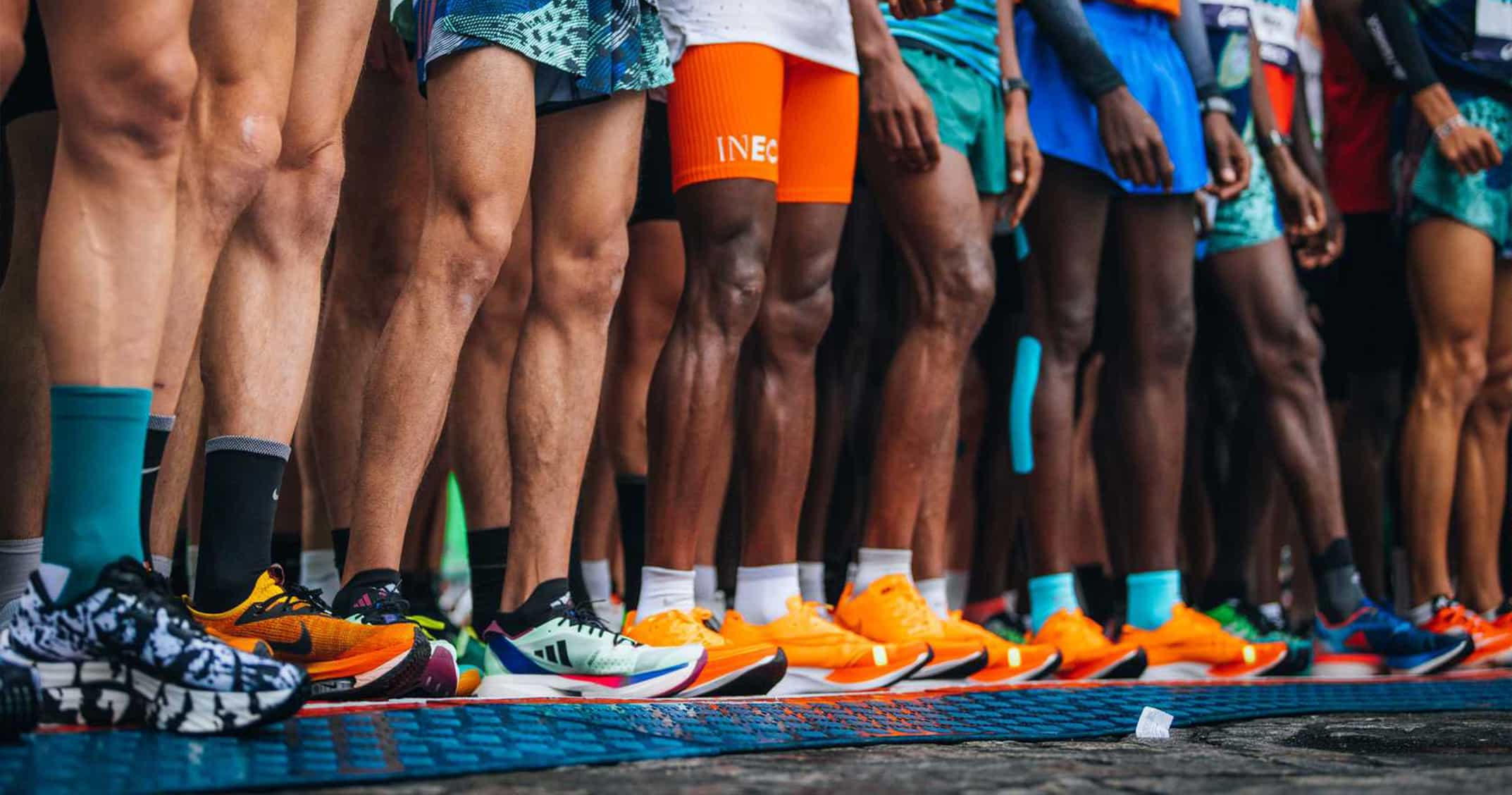
On a Sunday morning at the start line of a 10K on the Champs-Élysées in Paris, the scene feels familiar. Around, cutting-edge shoes, oversized soles, flashy logos. And then, in the middle of the pack, one runner calmly adjusts a pair whose mesh has yellowed and whose sole has clearly seen better days. A nearby runner smiles and remarks, “Those look like they’ve been through a lot.” The reply comes without hesitation: “Yeah, but I know exactly how they’ll behave.” The starting gun fires. The new shoes still shine. The old ones just get the job done.
In a running world obsessed with innovation—super foams, carbon plates, and the latest performance breakthroughs—a discreet but very real shift is taking shape. On roads, tracks, and park paths, more and more runners are still lacing up their old shoes. Not by default. By choice. These worn pairs remain, often preferred over brand-new models lined up on store shelves. Behind this deliberate return to the old lie several reasons: feel, confidence, a pushback against technological excess, and sometimes, a desire to slow things down.
| Foot memory over marketing promises
A worn-out shoe tells a story—the story of the foot that shaped it over time. The material has adapted, the stride has settled into balance. Ground contact becomes predictable, almost reassuring. “With my old shoes, I know exactly what’s going to happen with every step. No surprises, no trampoline effect. Just a clean response,” explains Julien, a regular runner for over a decade who prefers long runs without a smartwatch.
This feeling comes up often in conversations between runners. New shoes promise a lot—sometimes too much. Thick foam, aggressive rocker shapes, enhanced propulsion—features that look appealing on paper but can disrupt a well-established stride. Old shoes promise nothing. They simply follow. Modern running thrives on innovation, and progress has undeniably delivered measurable gains, especially in races. But in training, some runners feel a sense of overload.
“Sometimes it feels like the shoe is making decisions for you,” says Claire, an amateur marathoner who intentionally switched back to simpler models for her easy runs. “Foot strike, transition, propulsion… everything is guided. With my old pairs, I feel in control again.” Behind that sentiment lies a quiet but persistent critique: too much technology can dull the feel. Keeping old shoes becomes a way to return to basics—running without filters, without constant assistance, rediscovering a form of mechanical simplicity.
« My shoes have logged over 800 kilometers, but for easy runs, they still do the job just fine »
Claire, amateur marathon runner
Switching shoes—even to a well-reviewed model—requires an adjustment period. For some, that’s an unnecessary risk. Old shoes offer reassurance, especially during demanding training phases. “When fatigue kicks in, I’d rather run in something I know inside out. Mentally, it removes one variable,” Julien explains. That sense of trust plays an underestimated role. A familiar shoe reduces doubt: no need to monitor a potential pain point, no need to interpret an unfamiliar sensation. The mind stays focused on pace, breathing, and the simple pleasure of running. “My shoes have over 800 kilometers on them, but for easy runs, they still do the job perfectly,” Claire adds.
| The price factor—less glamorous, but very real
Running shoe prices have surged. Seriously. Crossing the €200 mark is no longer unusual. As a result, runners are adapting. Many now keep their older pairs for easy runs, recovery sessions, or workouts without time pressure. A smarter rotation—more economical, more sustainable. This approach reflects a broader mindset: consume less, but better. Running isn’t immune to that shift. There’s also an emotional layer.
Old shoes carry memories—a first half marathon, a tough training block, a breakthrough session in the rain. Throwing them away too soon can feel like closing a chapter before it’s truly finished. Some runners even speak of a relationship. “I know it sounds weird, but these shoes are part of my journey,” Julien admits with a smile. Without slipping into blind nostalgia, keeping old shoes becomes a conscious decision. A way to slow down in a sport often driven by the rush for the next new thing.
Still, worn-out shoes shouldn’t be romanticized. A pair that’s too far gone loses its protective role. Flattened cushioning, visible imbalance, unusual pain—these are warning signs that shouldn’t be ignored. Experts agree on one thing: extending a shoe’s lifespan is possible, but not at any cost. Adapt usage, listen to your body, stay aware. Because in the end, whether old or new, the right shoe is the one that keeps you running—comfortably, confidently, and injury-free.
➜ Discover the marathon calendar

Dorian VUILLET
Journalist
 17/05/2026
 11/05/2026
 29/04/2026