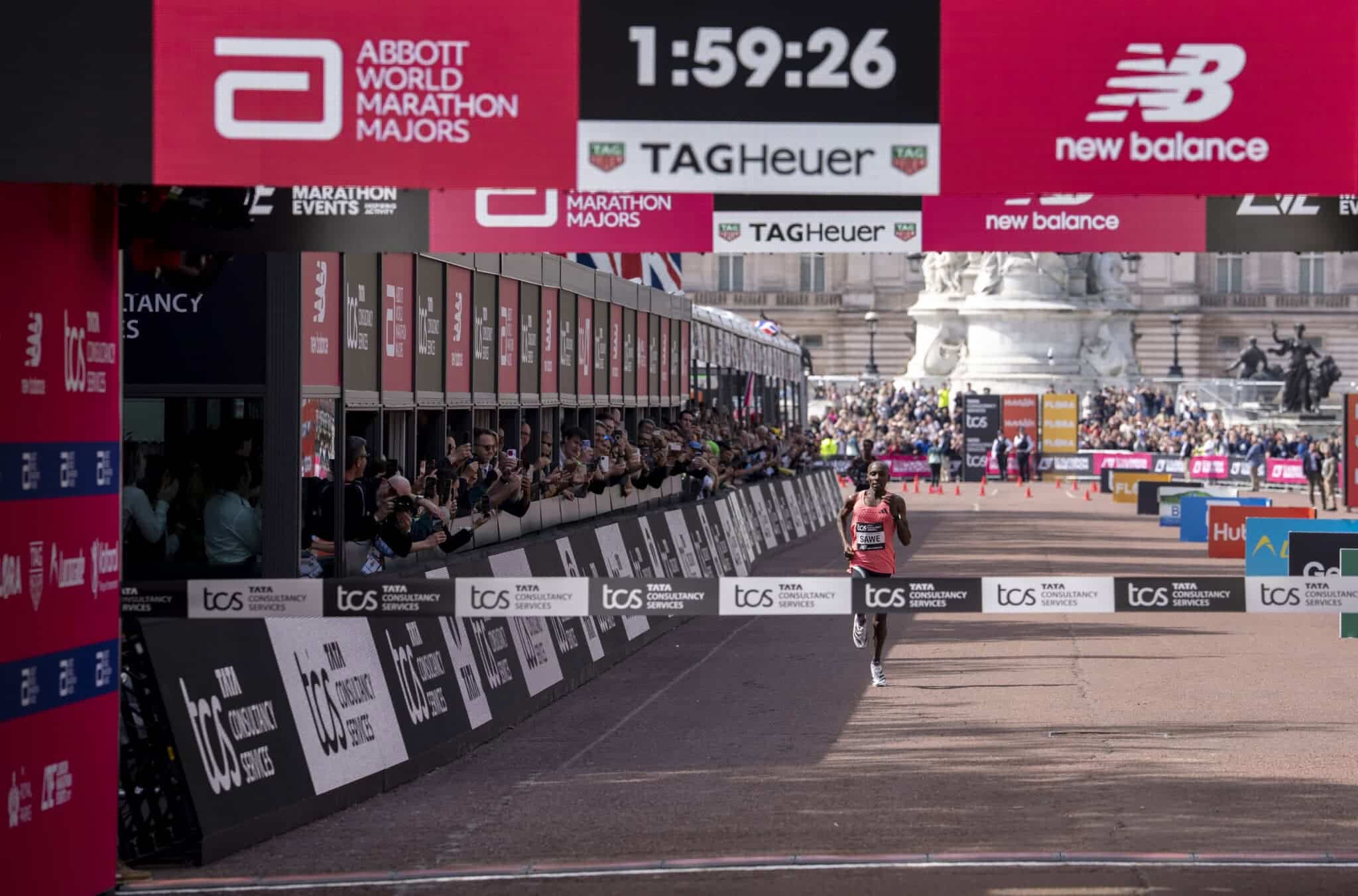
 © Andrew Baker / London Marathon Events
The Details Behind Sabastian Sawe’s Marathon Build-Up to Run 1:59:30 at the London Marathon
On April 26, 2026, in London, Sabastian Sawe shattered one of running’s most mythical barriers: a sub-two-hour marathon. 1:59:30 for 42.195 km. Of course, it takes extraordinary talent to hold 2:50/km pace over the marathon distance. But talent alone is not enough. Behind this historic performance lies an extremely structured preparation, designed down to the smallest detail by his Italian coach Claudio Berardelli. What makes Sawe fascinating is that his training perfectly blends two worlds: the Kenyan tradition of extremely high mileage and a modern, highly scientific approach to performance.
| Claudio Berardelli, the mastermind behind the achievement
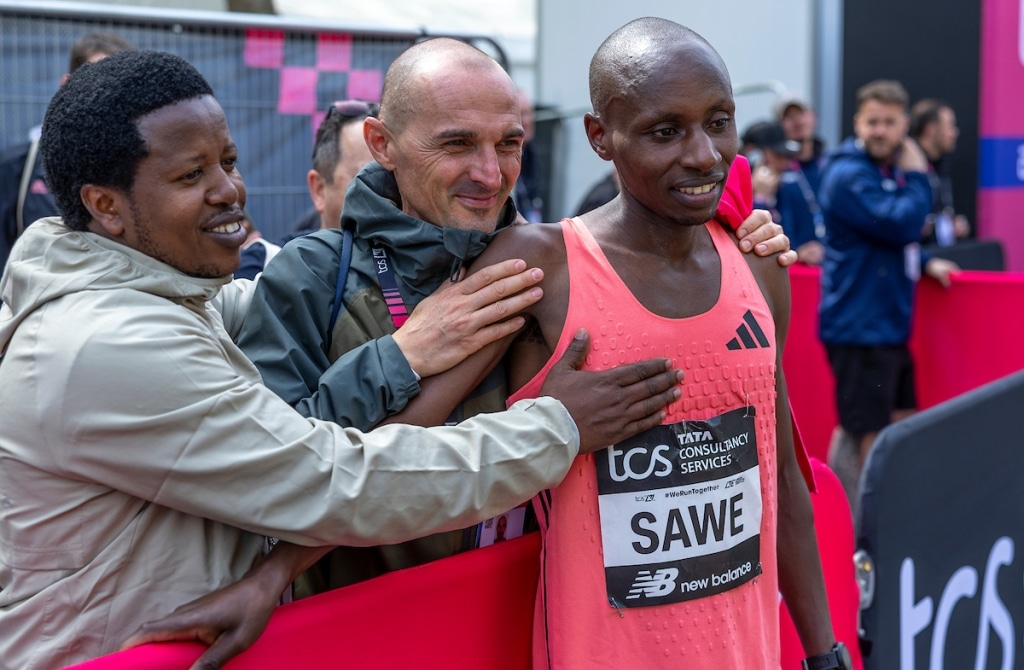
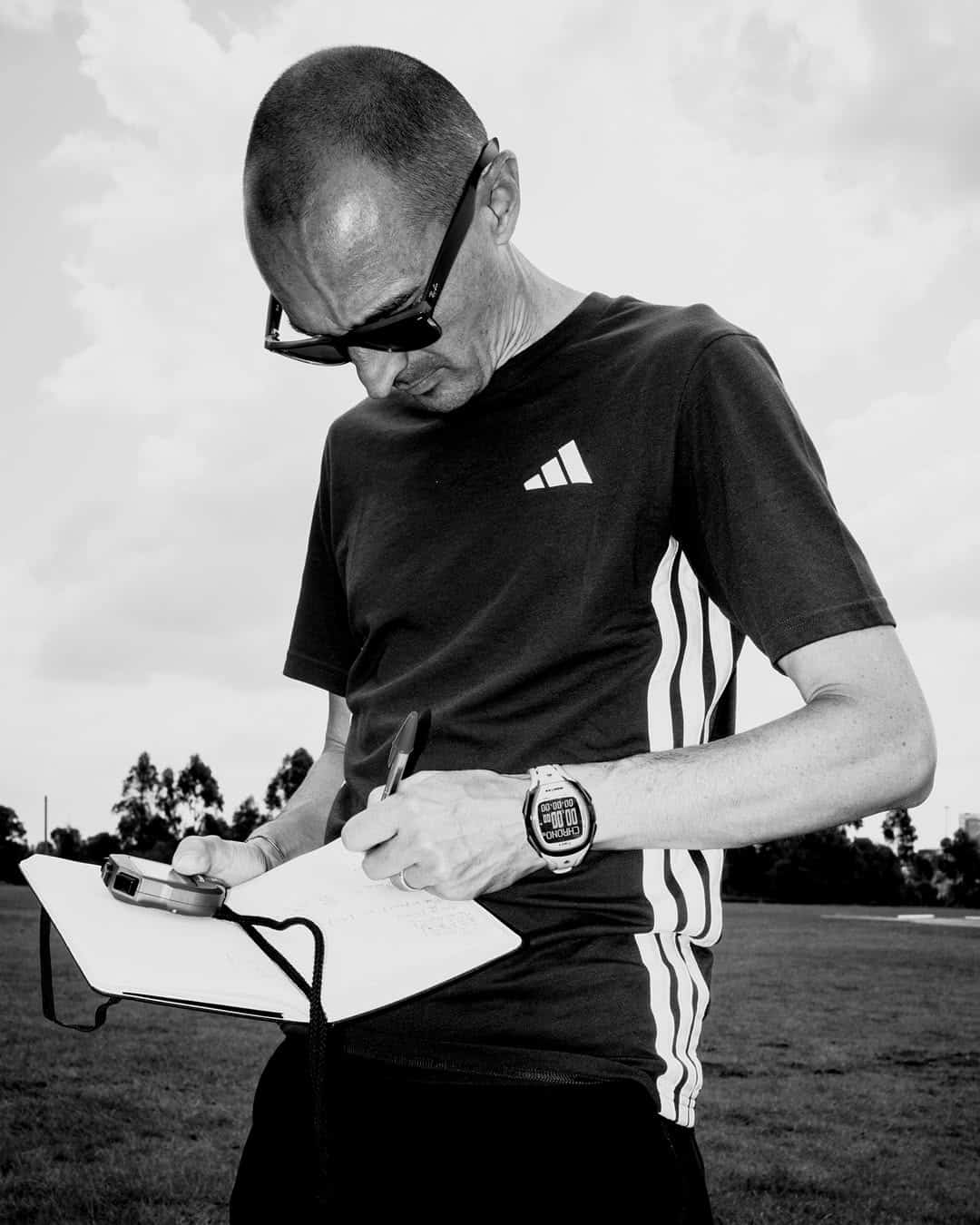
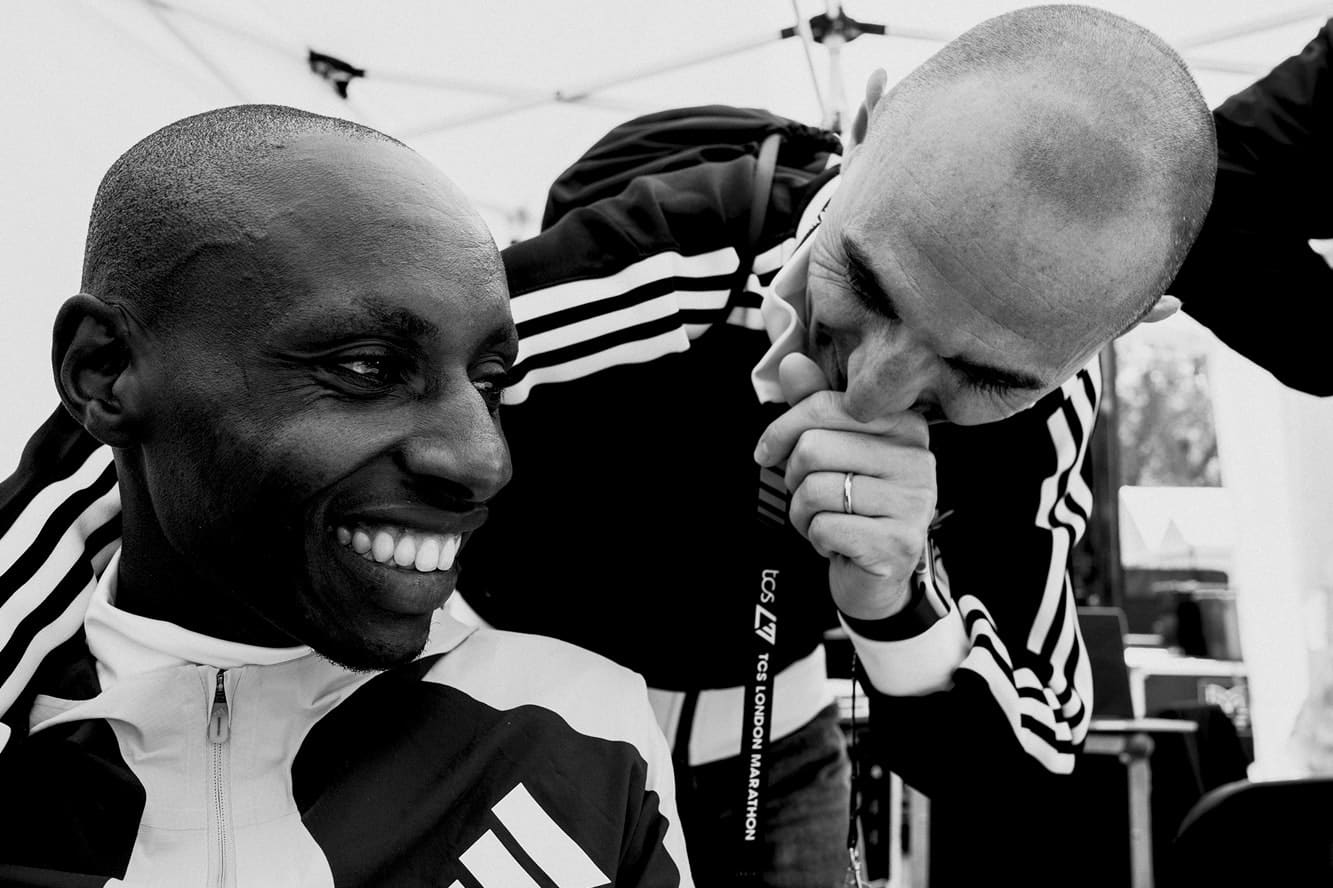
It’s impossible to analyze Sabastian Sawe’s progression without talking about Claudio Berardelli. Based in Kenya for over twenty years, the Italian is considered one of the country’s finest coaches. He has guided athletes such as Emmanuel Wanyonyi, Benson Kipruto, Evans Chebet, and Amos Kipruto to the highest level. We’re talking Olympic gold medals, world titles, and victories at the biggest Marathon Majors. Berardelli’s résumé is enormous. He has helped Kenya’s best athletes reach the summit of their disciplines, from the 800m all the way to the marathon.
His approach is unique. Unlike many traditional Kenyan coaches, Berardelli did not grow up in Kenya and was never an elite runner himself. His background is in cycling, but he quickly transitioned into coaching after earning a Master’s degree in Sports Science from the University of Milan. Wanting to work with the best runners in the world, he moved to Kenya in 2004 and never left.
He deeply respects Kenyan culture. He is married to a Kenyan woman, has two children, and speaks Swahili fluently. He completely embraced local customs and Kenyan training philosophy—but modernized it.
For him, the cultural foundations of Kenyan running must come first: nutrition, brotherhood, joy, resilience, and of course running as a way of life. At the 2 Running Club training camp, every day follows a similar pattern: athletes wake up early, run, and then share meals together. Of course, everyone knows why they’re there, but the human adventure and enjoyment of training must remain the priority. Athletes need mental peace and financial stability to fully unlock their training potential.
According to Berardelli, Sawe is one of the best not only because of physiology. Yes, he has exceptional genetics. Running 2:02:05 in his marathon debut was a pretty obvious sign. But his coach often describes him as “a different athlete,” someone with an extraordinary ability to absorb training, recover quickly, and maintain extreme speed deep into fatigue.
The scariest part? Sawe has only run four marathons. He’s only just beginning his journey over the marathon distance. “Sabastian is like lava still boiling inside a mountain. What the world saw in London was only a little smoke.”
| Training built around a 10-day cycle
One of the major differences in Sawe’s preparation is that he doesn’t operate on a traditional seven-day week. His training follows a 10-day cycle. The idea is simple: spread out difficult sessions more effectively to arrive fresher for key workouts and optimize recovery.
While many historical Kenyan marathoners stacked three major sessions per week with limited recovery (Tuesday, Thursday, Saturday), Berardelli prefers greater spacing between key efforts.
A typical block looks like this:
Day 1
Long run (30–40 km)
Day 2
Morning run: 20 km
Evening run: 10 km
Day 3
Morning run: 20 km
Evening run: 10 km
Day 4
Fartlek or short intervals (20–25 km)
Day 5
Morning run: 20 km
Evening run: 10 km
Day 6
Major long interval session
Day 7
Morning run: 20 km
Evening run: 10 km
Day 8
Hill session (20–25 km)
Day 9
Morning run: 20 km
Evening run: 10 km
Day 10
Morning run: 20 km
Evening run: 10 km
What stands out is the enormous amount of easy mileage combined with frequent doubles. Often 20 km in the morning and another 10 km in the evening. As a result, during marathon preparation Sawe regularly exceeded 200 km per week. At his London peak, he reportedly reached 240 km per week.
| Completely insane long runs
This may be the most impressive part of his preparation.
Before London, Sawe was running 40 km long runs at paces that almost seem absurd for training. Last year, before the Berlin Marathon, his final two major long runs were completed in 2:08 (3:12/km) and then 2:04 (3:06/km). This year he went even faster: his final 40 km effort was completed in 2:01:26 (3:02/km).
Remember, all of this happens at over 2,000 meters altitude, where oxygen availability is significantly reduced.
But perhaps more interesting than the pace itself is the way he finishes these sessions. Berardelli emphasized after London that the entire preparation focused on improving muscular durability—in other words, the ability to maintain very high speeds despite fatigue.
That famous negative split in London (1:00:29 then 59:01) was not an accident. The entire training process was built for it.
What stands out from the Berardelli philosophy is the importance placed on recovery and long runs. He believes athletes need to arrive fresh for these sessions to run as fast as possible and maximize adaptation.
It differs greatly from the training model of Eliud Kipchoge, who performs his long runs on Thursdays with only one recovery day between difficult sessions. It also contrasts sharply with European systems, where long runs often happen on Sundays with athletes carrying substantial accumulated fatigue.
| Developing speed—not just endurance
For years, many elite Kenyan marathoners mainly focused on threshold work and marathon pace. Sawe still develops pure speed.
His training regularly includes fast fartlek sessions and explosive hill workouts. Like elite middle-distance runners, some sessions involve up to 25 repetitions of 80-meter hill sprints.
The objective is clear: improve running economy and preserve neuromuscular power even after two hours of effort.
This likely explains his ability to unleash devastating surges late in races. We saw it again in London when he accelerated brutally after the 30 km mark and attacked once more in the finishing straight to drop Kejelcha.
| The importance of the Kenyan training camp
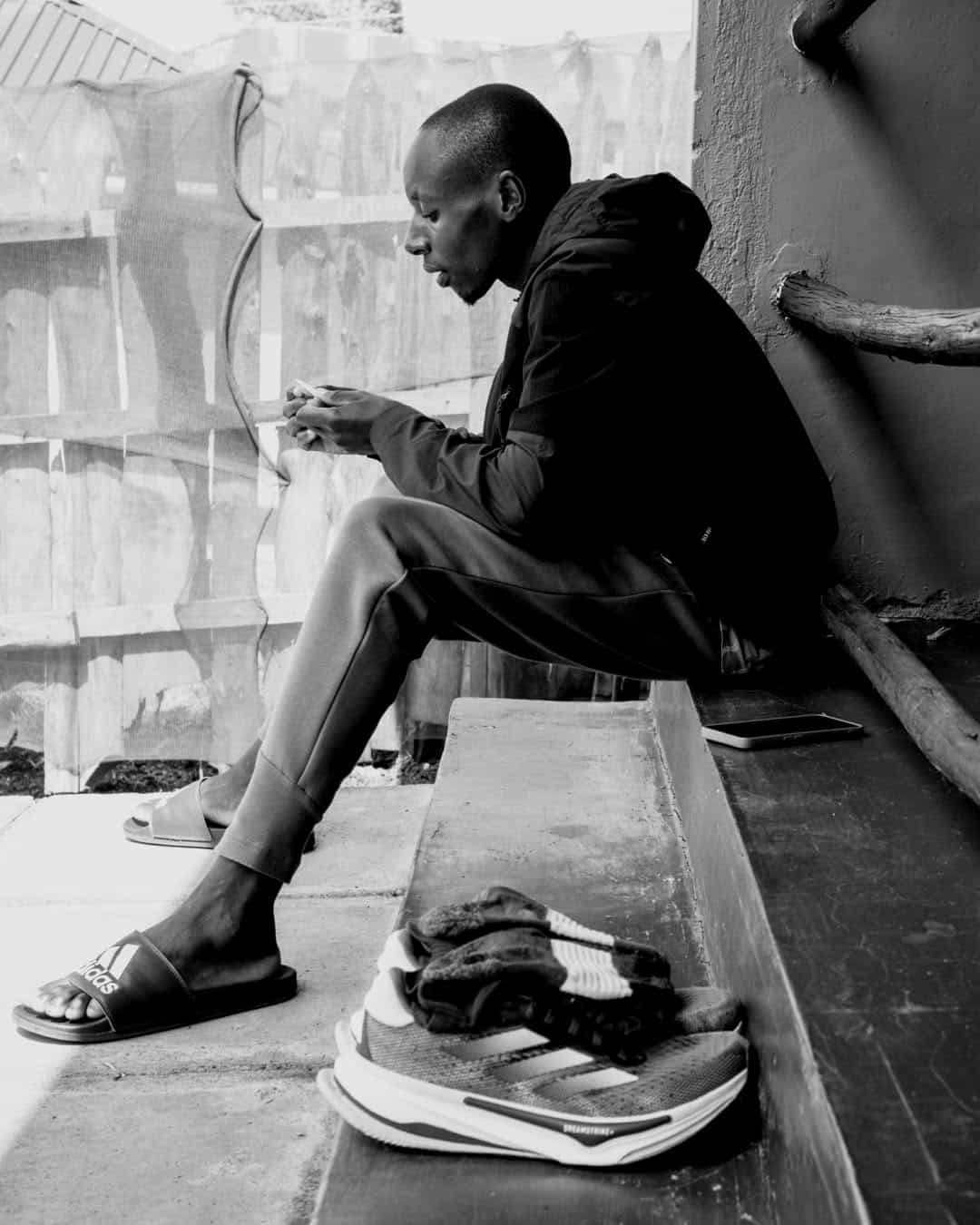
Like many of the world’s top runners, Sawe lives and trains in Kenya’s Rift Valley in Kapsabet, at more than 2,000 meters altitude.
But this is far from the image of a lonely athlete training in the mountains.
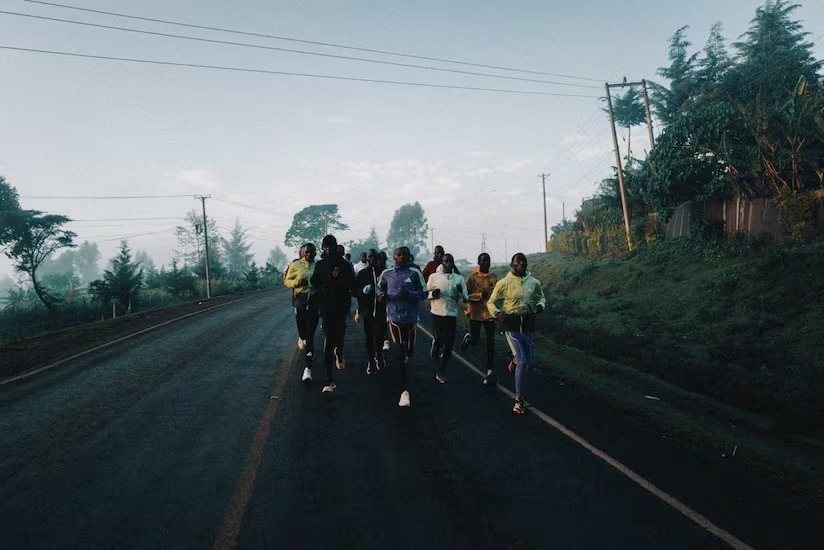
Everything is done as a group.
Berardelli’s 2 Running Club camp gathers multiple world-class athletes who train together every day. That density creates enormous motivation where everyone pushes one another forward.
And despite being arguably the world’s best marathoner today, Sawe remains faithful to simple Kenyan values: little media exposure, lots of training, huge amounts of recovery, and a daily life centered around running and simple things.
| A more modern approach… but still incredibly simple
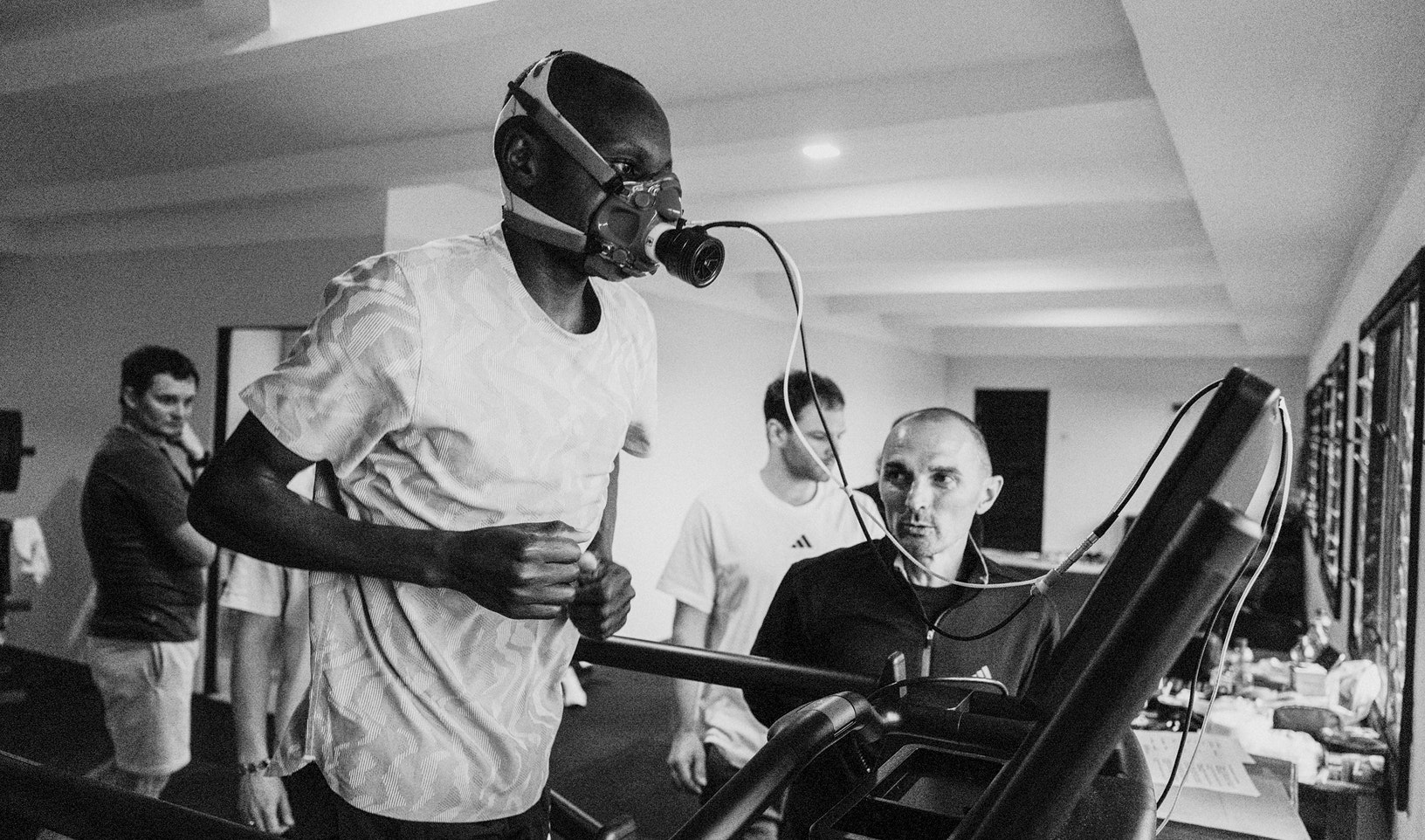
What stands out about Sawe’s preparation is the balance between sophistication and simplicity. Yes, he uses the best shoes in the world. Yes, his nutrition is scientifically analyzed. Yes, Maurten and adidas work directly with his team. But daily life remains incredibly simple.
According to Berardelli, his diet still resembles that of a traditional Kenyan runner: plenty of ugali, the classic cornmeal staple eaten almost every day. To support monstrous training loads, modern supplementation obviously plays a role: sports drinks, carbohydrate gels, and highly precise fueling strategies during workouts and races. And on the morning of the London Marathon? Two slices of bread. Honey. Tea. Absolute simplicity. A genuine life lesson.
If Sabastian Sawe became the first man to run an official sub-two-hour marathon, it wasn’t simply a story of talent. Behind the historic performance stands Claudio Berardelli, who built an ideal environment around him in Kapsabet. A training philosophy designed intelligently: massive mileage, many easy days to absorb the workload, enormous long runs, threshold work, and explosive hill sessions to develop top-end speed and running efficiency. All of it deeply rooted in Kenyan culture, where effort, resilience, community, and simplicity remain at the center of everything.
➜ Discover Sabastian Sawe’s fueling strategy during the London Marathon
Clément LABORIEUX
Journalist
 17/05/2026
 17/05/2026
 16/05/2026