 © SCC EVENTS
Where Does Sabastian Sawe’s 1:59:30 Rank Among the Greatest Performances in Athletics History?
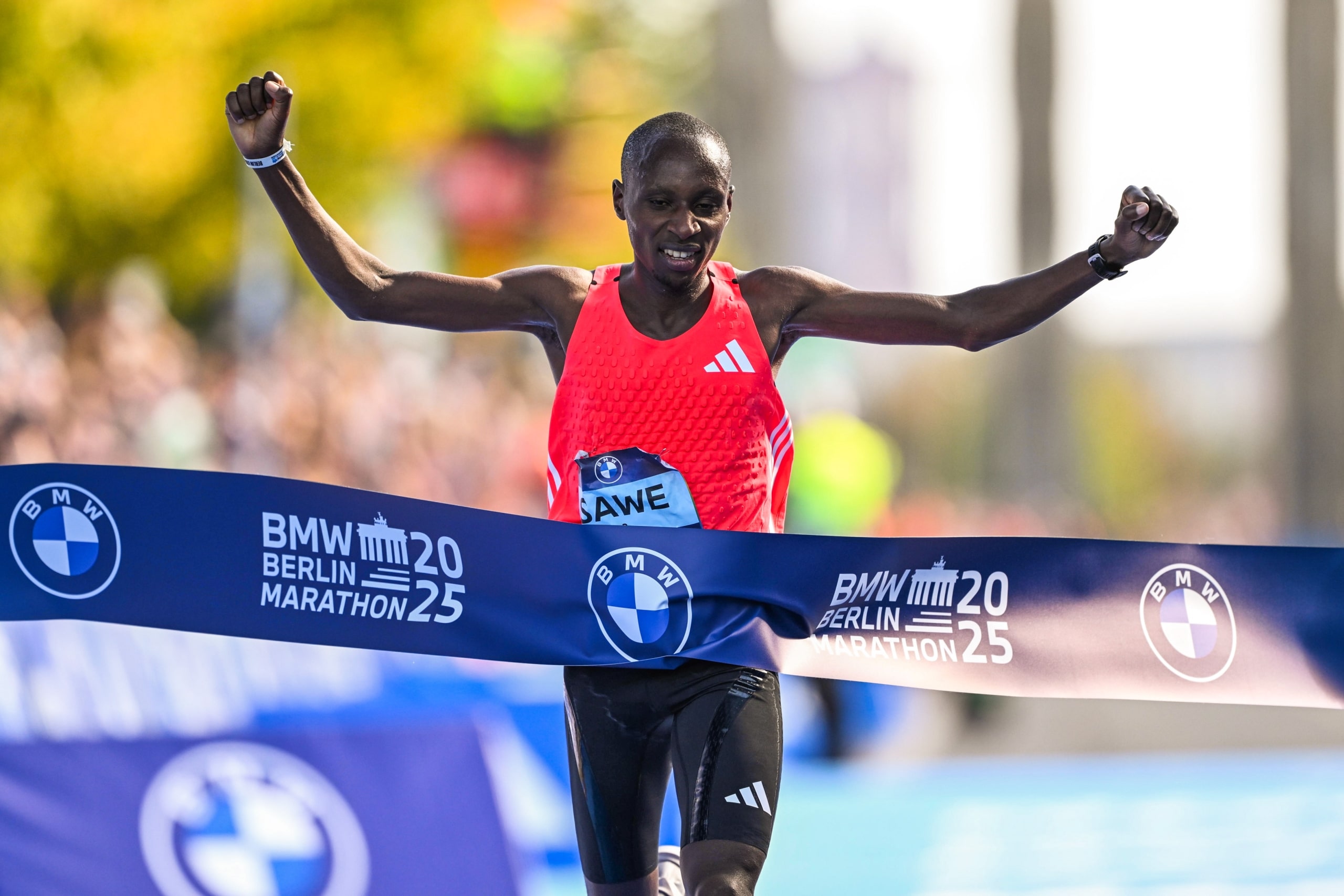
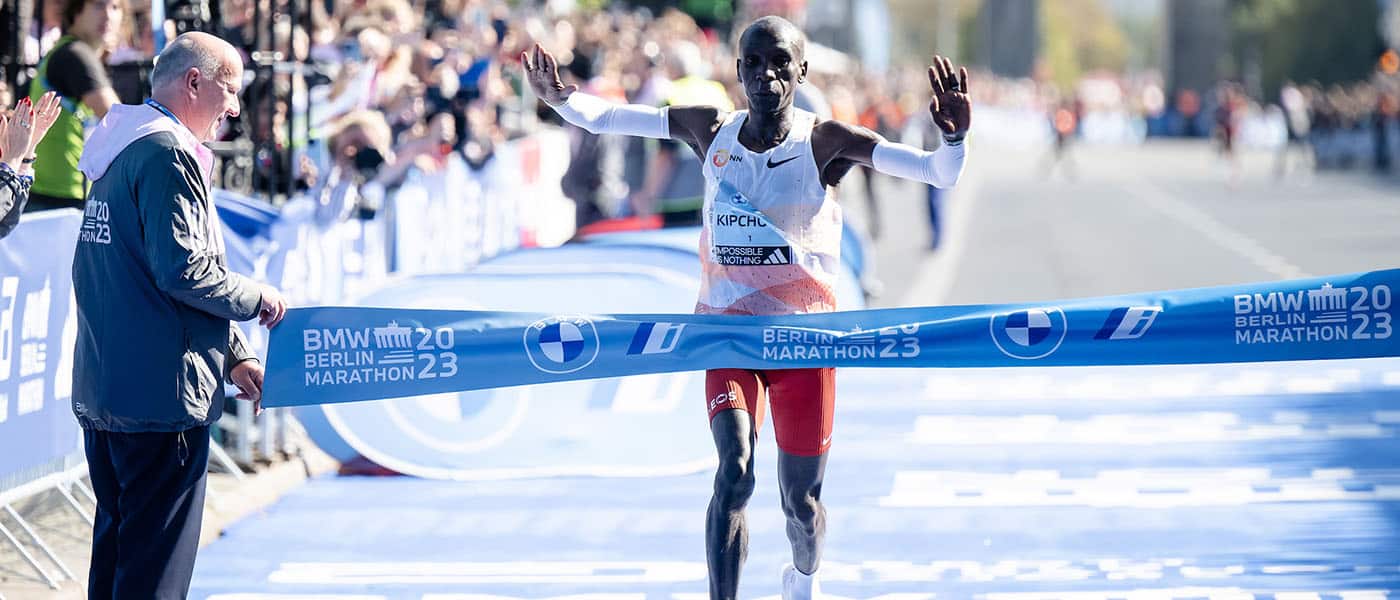
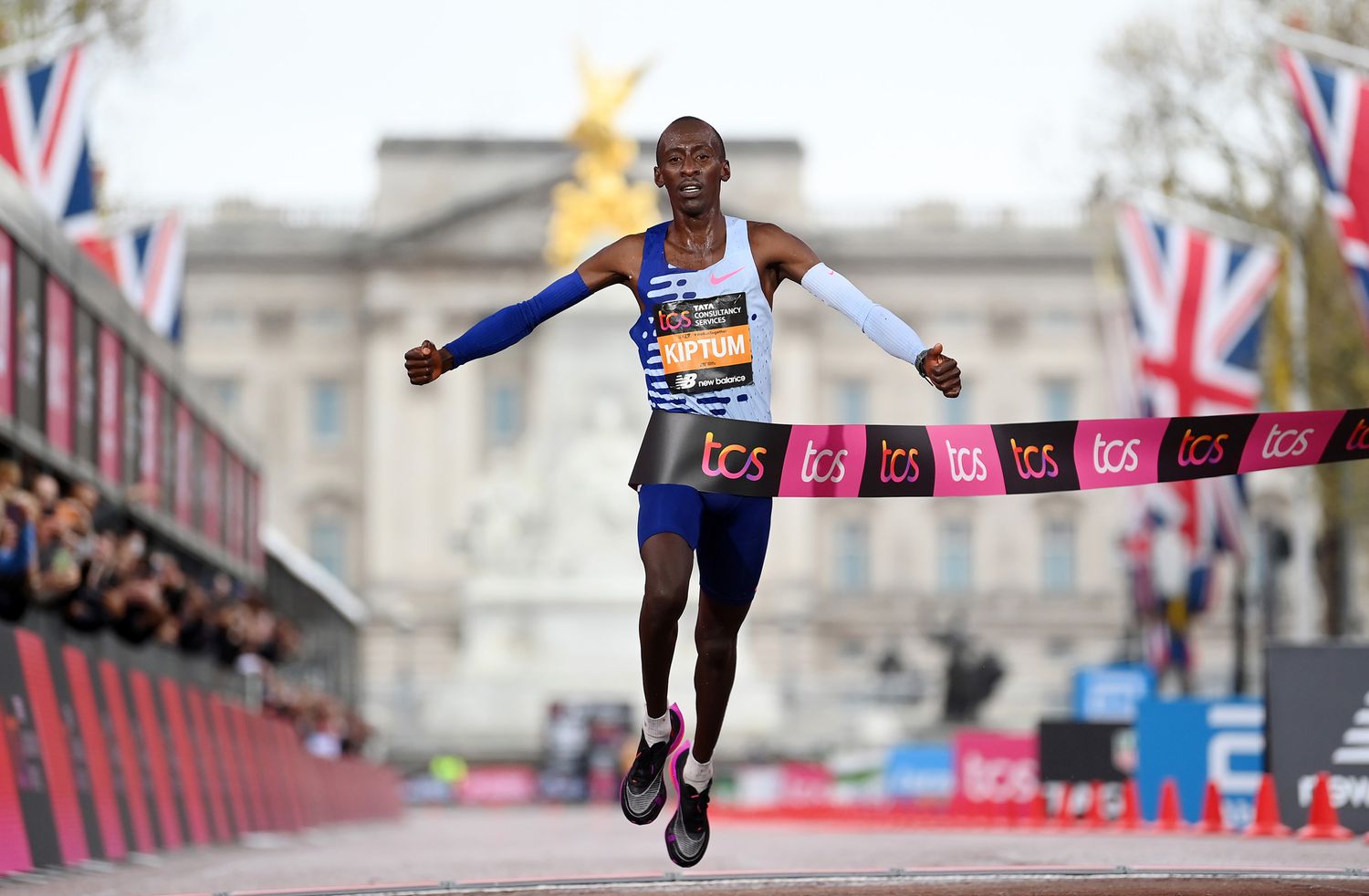
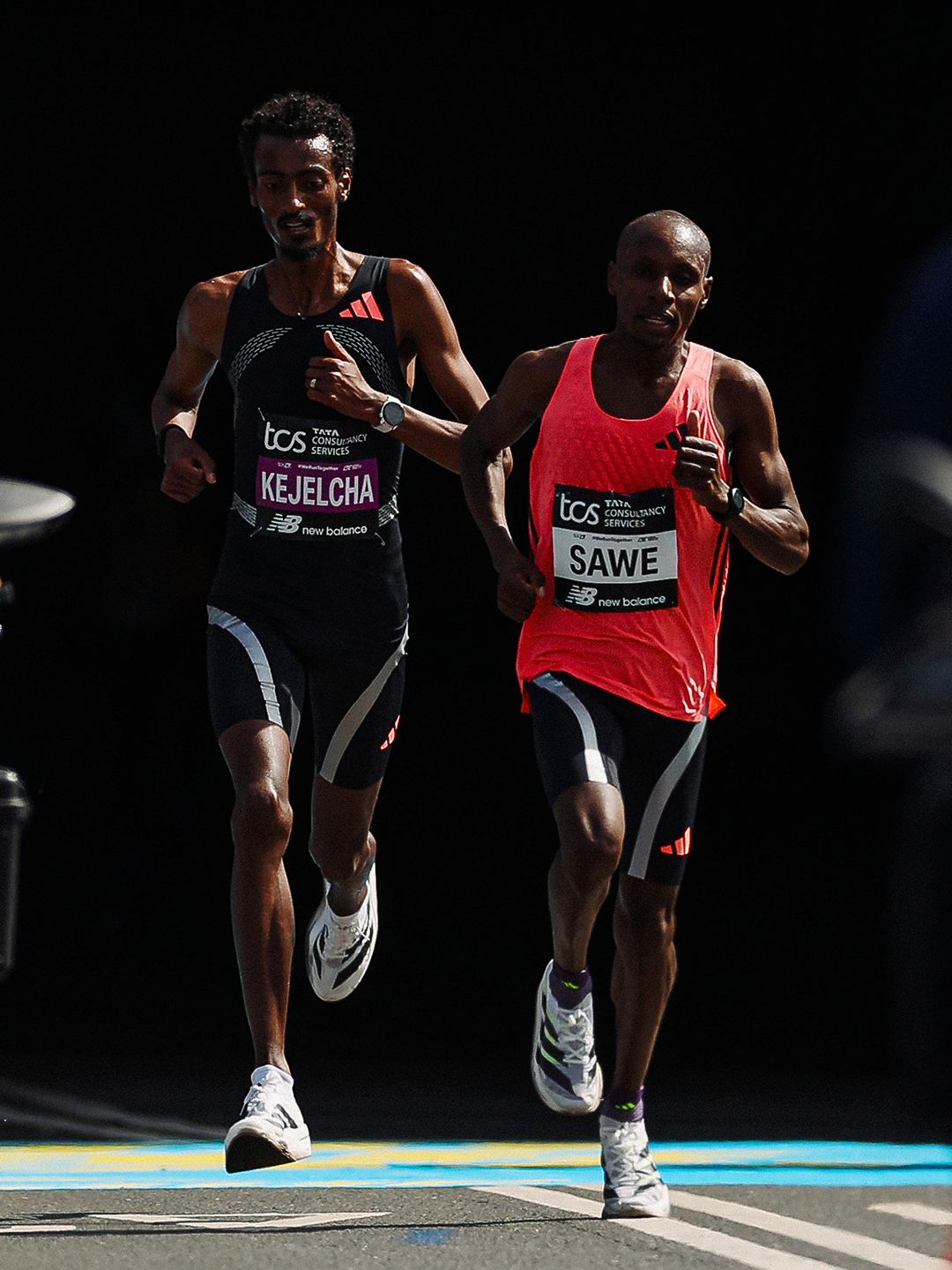
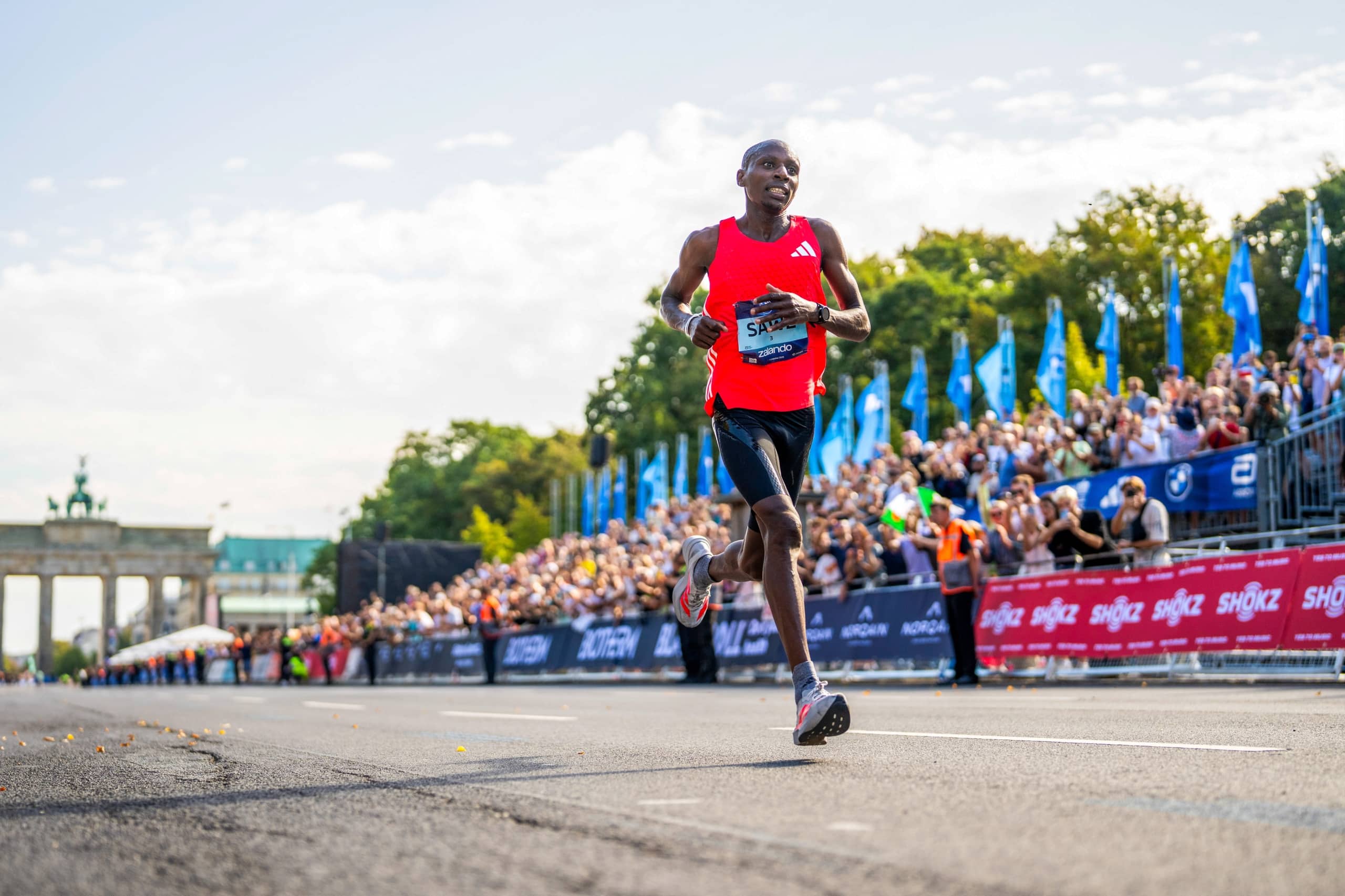
The marathon long had its mythical frontier: the famous two-hour barrier. A limit that felt almost philosophical. A barrier that went far beyond the finishing time displayed on the clock. For decades, running 42.195 km in under two hours belonged to the collective imagination. But ever since Eliud Kipchoge ran the INEOS 1:59 Challenge in 2019 and Kelvin Kiptum clocked 2:00:35 in 2023, the sub-2 marathon felt closer than ever. Then came a new generation of extraordinary talent — Sabastian Sawe, Jacob Kiplimo, John Korir, and Yomif Kejelcha — combined with technological advancements. Eventually, the barrier fell. At the London Marathon, Kenya’s Sabastian Sawe stopped the clock at 1:59:30 and pushed the marathon into another dimension. A performance that goes far beyond his own discipline. Marathons.com takes a closer look at where Sawe’s achievement belongs in athletics history.
| A performance that places Sawe among the greatest ever
Before discussing historical context or cultural impact, let’s begin with numbers. After all, that’s the essence of our sport. That’s what fascinates us.
The London Marathon delivered what will likely be remembered as the fastest marathon in history. With three men under the previous world record and two athletes breaking the two-hour barrier, this edition placed more runners inside the all-time Top 10 than any other race in history.
With his 1:59:30, Sawe immediately joins marathon royalty and rises to the very top alongside legends such as Eliud Kipchoge and Kenenisa Bekele.
Top 10 marathon performances in history
| Time | Athlete | Country | Race | Date | WA score | |
|---|---|---|---|---|---|---|
| 1 | 1:59:30 | Sabastian Kimaru Sawe | Kenya | London Marathon | Apr. 26, 2026 | 1328 |
| 2 | 1:59:41 | Yomif Kejelcha | Ethiopia | London Marathon | Apr. 26, 2026 | 1324 |
| 3 | 2:00:28 | Jacob Kiplimo | Uganda | London Marathon | Apr. 26, 2026 | 1309 |
| 4 | 2:00:35 | Kelvin Kiptum | Kenya | Chicago Marathon | Oct. 8, 2023 | 1307 |
| 5 | 2:01:09 | Eliud Kipchoge | Kenya | Berlin Marathon | Sept. 25, 2022 | 1296 |
| 6 | 2:01:25 | Kelvin Kiptum | Kenya | London Marathon | Apr. 23, 2023 | 1291 |
| 7 | 2:01:39 | Eliud Kipchoge | Kenya | Berlin Marathon | Sept. 22, 2018 | 1286 |
| 8 | 2:01:39 | Amos Kipruto | Kenya | London Marathon | Apr. 26, 2026 | 1286 |
| 9 | 2:01:41 | Kenenisa Bekele | Ethiopia | Berlin Marathon | Sept. 29, 2019 | 1286 |
| 10 | 2:01:48 | Sisay Lemma | Ethiopia | Valencia Marathon | Dec. 3, 2023 | 1283 |
| Comparing Sawe to Usain Bolt and athletics legends
To properly measure the value of a 1:59:30 marathon, it’s useful to look at the World Athletics scoring tables. These rankings attempt to compare performances across disciplines — never an easy exercise.
Sprints, middle-distance races, jumps, throws, road races: each performance receives a score based on statistical models incorporating competitive depth and rarity.
Sawe’s 1:59:30 was rated at 1328 points.
To understand what that means, here are some historical references:
| Athlete | Country | Event | Performance | WA score |
|---|---|---|---|---|
| Jan Železný | Czech Republic | Javelin | 98.48m | 1365 |
| Usain Bolt | Jamaica | 100m | 9.58 | 1356 |
| Armand Duplantis | Sweden | Pole Vault | 6.31m | 1353 |
| Usain Bolt | Jamaica | 200m | 19.19 | 1352 |
| Mike Powell | USA | Long Jump | 8.95m | 1346 |
| Karsten Warholm | Norway | 400m hurdles | 45.94 | 1341 |
| Ryan Crouser | USA | Shot Put | 23.56m | 1334 |
| Jakob Ingebrigtsen | Norway | Indoor Mile | 3:45.14 | 1330 |
| Sabastian Sawe | Kenya | Marathon | 1:59:30 | 1328 |
| Jacob Kiplimo | Ouganda | Half Marathon | 56:42 | 1323 |
| Jakob Ingebrigtsen | Norway | 3000m | 7:17.55 | 1320 |
According to World Athletics rankings, Sabastian Sawe’s performance already belongs among the most exclusive club of performances ever achieved in athletics history.
But it still sits behind the monumental achievements of Bolt, Jan Železný, and Duplantis. And in many ways, that also says something about the current era.
| The impact of supershoes on the modern marathon
Sawe’s 1328 points may initially feel “low” considering we’re talking about the first official sub-2 marathon in history. But World Athletics tables evaluate rarity within an era. And today, marathon running has changed completely.
Carbon-plated shoes have transformed the sport. Scientifically, their impact is well documented. Several studies have shown running economy improvements of roughly 2–4%. Over the marathon distance, that’s enormous. We’re talking about several minutes gained.
New foams, carbon shoes, fueling advances, and broader scientific support around performance have accelerated marathon times at an incredible rate over recent years. Of course, shoes don’t make the athlete. But it’s impossible to ignore the direct link between recent records and technological innovation.
The revolution truly began in 2017 with Nike’s Vaporfly. Before then, world records progressed gradually, sometimes by just a few seconds over many years. Prior to 2017, it took roughly 16 years to gain two minutes on the world record. During the supershoe era, over three minutes have disappeared in less than ten years. That’s colossal.
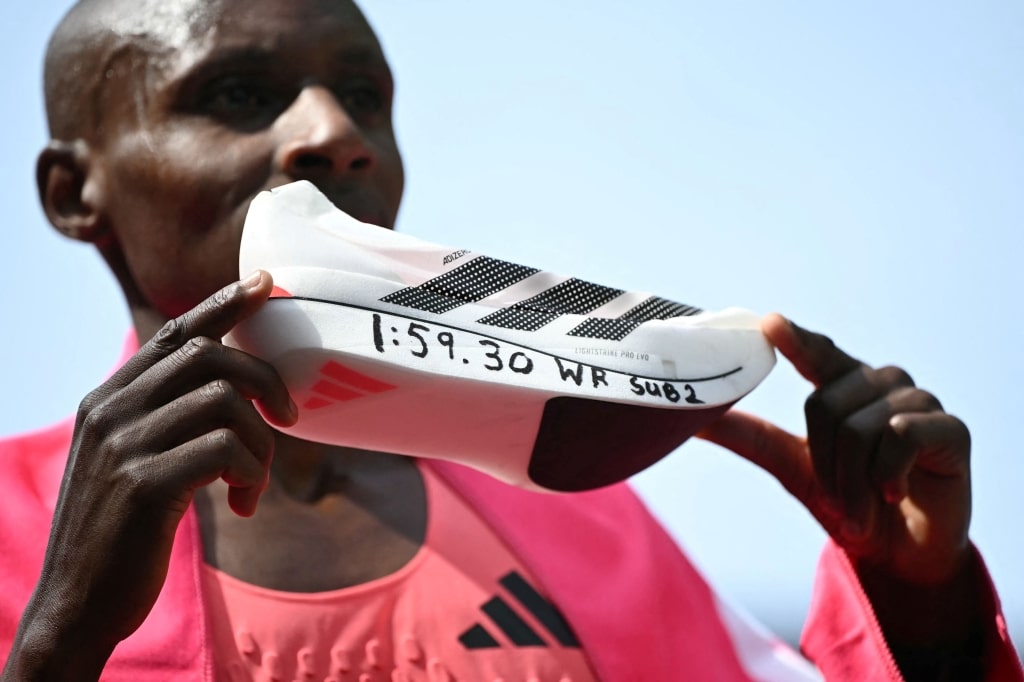
The density of athletes capable of running around 2:00–2:01 is now extremely high. Sawe, Kejelcha, Kiplimo, Korir, Amos Kipruto, and Sisay Lemma are examples. The marathon’s popularity has also exploded. More elite track and cross-country athletes are transitioning earlier rather than waiting until their thirties. Sponsors naturally encourage this movement too. Today, marathon running attracts immense attention.
None of this means Sawe’s sub-2 achievement matters less. Far from it. It simply means marathon performances are progressing statistically faster than many other disciplines. Elite performances are becoming more frequent. Perhaps the clearest example is the London race itself, where Yomif Kejelcha also ran under two hours — 1:59:40 in his marathon debut.
By contrast, Bolt’s 9.58 or Duplantis’ world records remain uniquely isolated achievements that nobody truly approaches today. That’s why their scores climb even higher. With the marathon, there’s already a sense that Sawe’s 1:59:30 could soon be under threat — perhaps as early as Berlin, Chicago, or Valencia this autumn.
| Has marathon running just experienced its Bannister moment?
The comparison with Roger Bannister feels almost inevitable. Before 1954, running a mile under four minutes was considered physiologically impossible. Some doctors even claimed the human body could never withstand such an effort. Then Bannister broke the barrier in 3:59 and suddenly the mental wall collapsed. Just weeks later, Australia’s John Landy lowered the record further with a remarkable 3:58.
Once a mental barrier falls in sport, progress can accelerate rapidly. The sub-2 marathon had exactly that psychological dimension. Of course, Kipchoge had already run under two hours during the INEOS project. He showed it was humanly possible. But this was different. A real race. A major international marathon. Competitors. Tactical decisions. Standard aid stations. True race dynamics. And that’s probably why Sawe’s performance carries such enormous historical weight.
For years we felt the breakthrough was coming. When Kelvin Kiptum ran 2:00:35 in Chicago in 2023, many believed he would become the first official sub-2 marathoner. Tragically, he passed away in a car accident in Kenya a few months later. His death shocked the running world, which had seen him as Kipchoge’s successor. Then came Sabastian Sawe. His arrival on the marathon scene marks a new era. He ran 2:02:05 in Valencia, then 2:02:27 in London and 2:02:16 in Berlin. Three major races. Three victories.
At 31 years old, he already dominates the sport and displays rare maturity over the distance. At Berlin in 2025, he passed halfway in 60:16 — world record pace — but high temperatures prevented him from finishing strongly. At London 2026, everything aligned: perfect conditions, a battle with Kejelcha, a massive negative split, a new shoe designed specifically for him, a dedicated nutrition team, and a remarkable training build-up. And perhaps the most exciting part? Sawe is only 31. He has run only four marathons. His career over the distance is just beginning. Kejelcha, after finishing in 1:59:41, already said he wants to run faster. Jacob Kiplimo also intends to join the fight after recently running 2:00:28.
What makes Sawe’s performance so powerful is also the unique place the marathon holds in our collective imagination. Even non-runners understand what it means to cover 42 kilometers in under two hours. Still, comparing it directly to Bolt or Duplantis remains difficult. Every discipline has its own history, context, and limits. But one thing is certain: Sabastian Sawe entered the history books forever by becoming the first man to break the two-hour barrier in an official marathon. And nobody can take that away from him. Now that the mental barrier no longer exists, things may move very quickly. At the next major marathons, athletes will likely go directly after Sawe’s pace. Big risks are coming. More aggressive racing is coming. And probably even more spectacle for running fans. Roll on autumn.
➜ Discover the details of the adidas Adios Pro Evo 3 worn by Sabastian Sawe at the London Marathon
Clément LABORIEUX
Journalist
 17/05/2026
 17/05/2026
 16/05/2026