 © ASO
© ASO
Semi de Paris: Sine Qua Non and HOKA speak out against the harassment faced by female runners
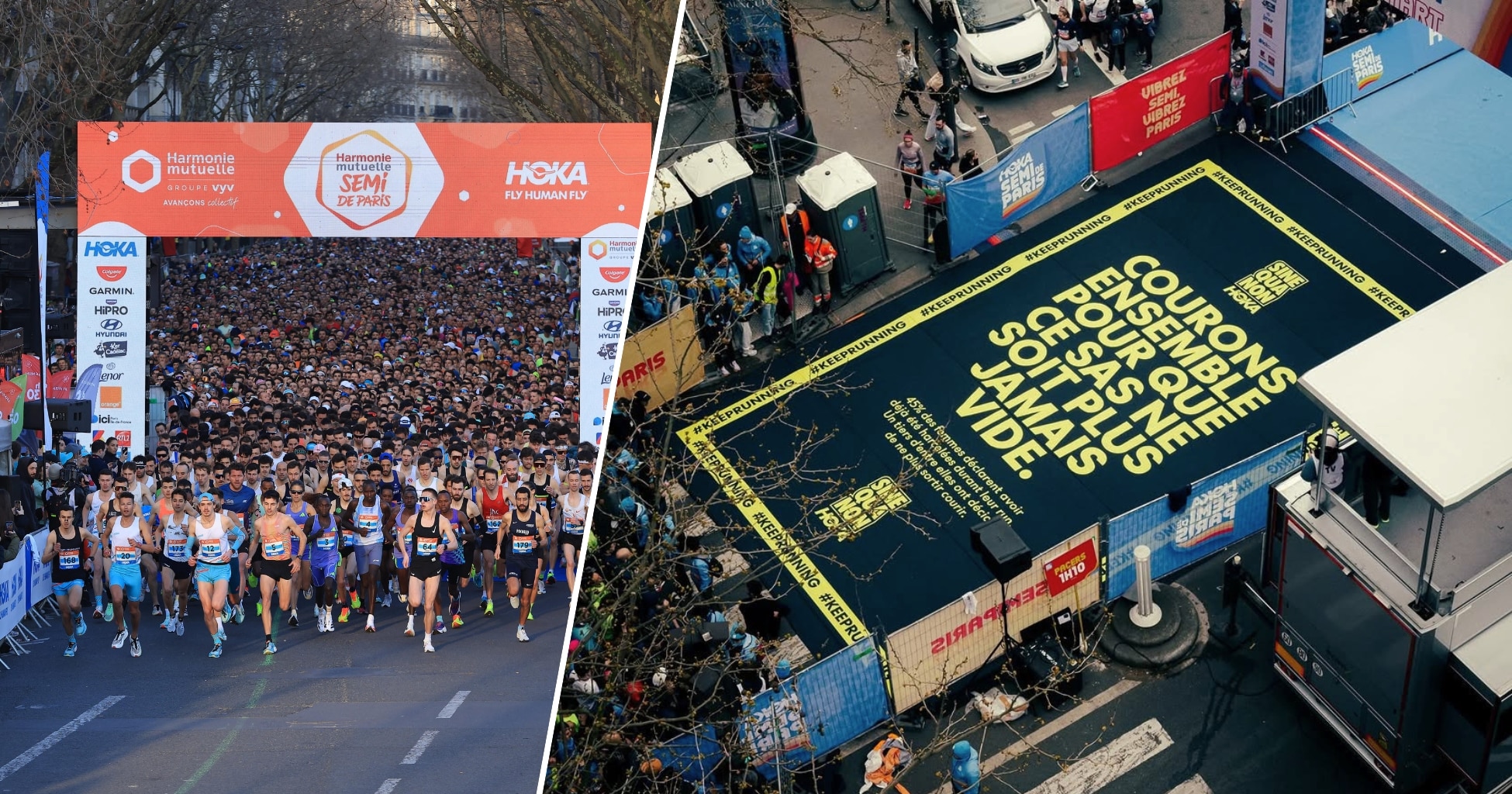
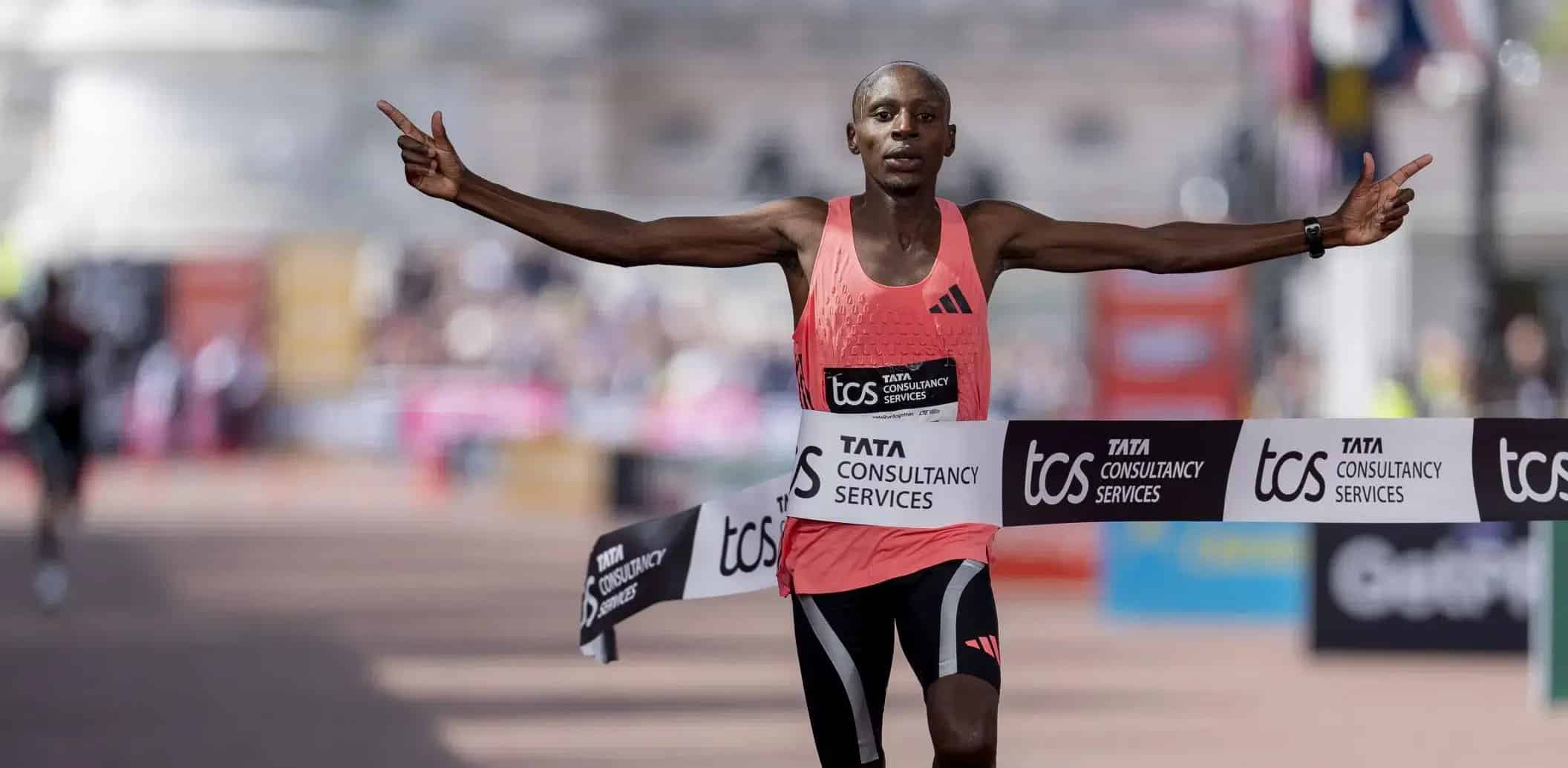
On March 8, during International Women’s Day, 50,000 runners took part in the Semi de Paris, setting a new participation record. The race was highlighted by victories from Ethiopian runner Ftaw Zeray in 1:05:12, a new women’s course record, and Kenyan athlete Kennedy Kimutai. HOKA and Sine Qua Non used the visibility of the event to raise awareness about the harassment women can face while practicing sport.
23,000. That was the number of women on the старт line, representing 46% of the field. A growing figure in a sport from which women were excluded for decades. More and more female runners are entering competitions and reclaiming public space. Yet according to a 2023 study published by RunRepeat, nearly 45% of women say they have already experienced street harassment while running. They are also 2.6 times more likely to be harassed than men. The consequences are very real: more than one third have reduced how often they run, switched activities, or stopped running altogether. The freedom to run therefore remains incomplete.
| A powerful statement
HOKA and Sine Qua Non wanted to make visible the missing runners, the women who have given up or reduced their running because of fear of harassment. An empty starting corral was placed at the front of the race to symbolize the absent runners. During the Semi de Paris, HOKA and Sine Qua Non made a strong impression by shining a light on a phenomenon that remains far too common: the harassment women face in running.
“We stand for the right to run wherever we want, whenever we want, and we are working to free that conversation through concrete actions,” explained Tiphaine Poulain, co founder of Sine Qua Non. “This physical installation symbolizes that absence and helps raise public awareness. Today, unfortunately, running is still not the same experience for women as it is for men.”
Sine Qua Non
- Sine Qua Non was founded in 2017 at the initiative of Mathilde Castres. After experiencing sexual assault, she turned to running as a way to channel her anger and confusion. The MeToo movement later made her realize that her experience was far from isolated. Sport became life changing for her. Sharing that practice with others then felt like a natural step. Her belief was that sport has a unique ability to create dialogue and help redefine shared spaces and social norms together.
- The organization first developed around a charity race before expanding its initiatives. The Sine Qua Non Squads, now active in around thirty cities across France, organize mixed gender, free, and almost daily group runs. The goal is to reclaim public space through collective running, especially in places, at times, or while wearing outfits that some women may otherwise avoid because of fear.
- The founders encourage people to bring sport into their daily lives and to claim their place in public spaces as a way to empower themselves. Their goal is also to create dialogue between women and men through mixed races and community gatherings.
- Sine Qua Non works to mobilize society against sexist and sexual violence, using sport as a tool for awareness and collective engagement.
| An issue that remains largely invisible
“HOKA approached us with the idea of the missing corral,” explained Tiphaine Poulain. “We regularly speak with equipment brands, which know female runners very well.” It marks a significant shift for an issue that was still barely acknowledged when Sine Qua Non was founded in 2017. She recalls that public institutions and sports organizations understood the issue at the time, but still tended to underestimate the scale of the problem and its consequences.
“For the past seven years, we’ve been working to make visible testimonies that nobody wanted to hear or speak about. It’s a real process of freeing people’s voices. It’s never easy to admit that you’ve been harassed, that you were afraid to go practice your sport, or that you gave it up altogether. Interest in the issue is gradually growing, and brands are now beginning to take ownership of the conversation,” the co founder said.
This “Missing Corral,” created by the agency Pavillon Noir, represents all the women absent from starting lines because of harassment. “The goal wasn’t only to show a reality, but to reveal the consequences and the outcome of these behaviors, women turning away from sport.” In a mixed event like the Semi de Paris, the message resonated with both women and men. The empty corral, very concrete in its presentation, helped make the image especially striking.
The project quickly won over Sine Qua Non, and the collaboration followed naturally. Beyond the visual impact, the initiative reflects a desire to support long term change. “The question was never about who carried the message, but how to make it as impactful as possible. With HOKA, we shared the same goal: finding the best way to make people understand it and remember it.”
| March 8, a major event and top performances to maximize impact
Choosing to deliver a strong and committed message on March 8 was no coincidence. Nearly 50,000 runners and a large number of spectators were present at the Semi de Paris. The half marathon distance holds a special place for Sine Qua Non. The organization initially wanted to include it in its own race, but many women expressed a feeling of illegitimacy. A more demanding distance, lack of confidence, self censorship, the barriers are numerous. The association is also working on increasing female participation at the Marathon de Paris, one of the least feminized major races in the world.
“The Marathon de Paris takes place in April, which means the preparation happens during winter, when night falls early. Women therefore tend to gravitate more toward autumn races. That’s why speaking out during the Semi de Paris created such a positive momentum around the issue. On this intermediate distance, with a record number of women on the start line, on March 8, with the women’s course record shattered, elite level performances, and major visibility, everything came together.”
Tiphaine Poulain
| “Making every female runner count”
As part of the “Making Every Female Runner Count” campaign, a film, a public awareness campaign, and a call for projects were launched. The goal is to support the development of women’s running and encourage local initiatives. The Sine Qua Non Squads allow female runners to train together in a reassuring and supportive environment.
HOKA is continuing its commitment alongside Sine Qua Non to help expand these groups. “The issue gains legitimacy when brands speak out,” emphasized Tiphaine Poulain. “This empty corral was seen by a huge number of people, the impact is real, and it’s also thanks to the positions taken by sportswear brands.”
Sine Qua Non also works with Nike, a partner since the launch of the Squads. During the first gatherings, 1,500 participants attended. They are expected to be 10,000 on March 28. “There’s a brand effect that attracts people. And that helps support the growth of women’s participation in running,” she said. “We want to support women who stopped running so they can regain their freedom and rediscover the joy of the sport.”
| Educating people about respectful behavior
Despite progress, the issue is still not taken seriously enough. “Above all, it’s a matter of education,” believes the co founder. Harassment is still too often minimized, and women tend to blame themselves in these situations. “These comments, even when they appear caring on the surface, reinforce fear and limit freedom: ‘you shouldn’t run at that time,’ ‘you shouldn’t wear that outfit,’ ‘where are you going, send me your location,’ ‘if you’re not home by this time, I’ll worry.’ These kinds of remarks normalize insecurity and place the burden on women.”
“The more women there are running, at every hour and in every place, the more it will create a positive cycle among female runners. That’s how we can build confidence and reclaim public space, by realizing that other women are daring to do the same,” highlighted the co founder of Sine Qua Non.
Running should be a right, not a struggle. At the Semi de Paris, HOKA and Sine Qua Non made visible a reality that is still too often ignored: the harassment faced by female runners. With this missing corral, absence became something people could finally see. The challenge now is making sure it fills up again, with all the women who once left their running shoes behind.
➜ Discover the calendar of marathons
Emma BERT
Journaliste
 29/04/2026
 29/04/2026
 23/04/2026