
 © London Marathon Events
Sabastian Sawe, the fight against doping and the need to believe in the marathon again
On April 26, 2026, Sabastian Sawe broke through a mythical barrier. In London, the Kenyan became the first man to officially run a marathon under two hours, clocking 1:59:30. A moment like that should spark nothing but admiration. Noise. Excitement. Goosebumps for everyone who loves running. At first, that’s exactly what happened. But another conversation soon took over: doping. Because marathon performances have reached a point where some of them are so extraordinary that there is now always a small shadow of doubt. And when the athlete is Kenyan, the suspicion is even stronger. For several years, the number of Kenyan athletes sanctioned for doping has continued to rise, damaging the reputation of a country that has dominated distance running for decades. But Sawe believes it is time for that to change. Before Berlin and then London, he volunteered to undergo an astonishing number of anti-doping tests. The initiative was funded by adidas, which pays $50,000 a year to the Athletics Integrity Unit to increase testing on the Kenyan. Marathons.com reveals the details of this unprecedented initiative, which could open the door to new practices and, hopefully, a cleaner sport.
Doping in Kenya, a reality the sport must face
The problem is that Kenya has found itself at the center of a huge wave of positive tests in recent years. Since the AIU was created in 2017, dozens upon dozens of Kenyan athletes have been suspended. More precisely, 145 Kenyan athletes have received suspensions, accounting for nearly a third of all cases recorded worldwide by the AIU. We are talking about Olympic medals, Major podiums and world records left under a cloud… Eventually, it starts to taint the image of the entire sport. Clean athletes see victories they earned taken away from them. It is unfair, but it has become the reality of the marathon today.
That said, we have to be careful not to lump everything together. Kenya is not an organized system like Russia was at one point. There is no evidence of state-sponsored doping or an organized program. What investigations and AIU officials mainly describe is more like a parallel economy. Dubious agents. Middlemen driven by money. Unscrupulous pharmacists. People orbiting the athletes and taking advantage of an environment where running fast can transform an entire life. That distinction matters when it comes to understanding the context.
In some parts of the Rift Valley, the marathon means an enormous amount. Perhaps more than it does in Europe or the United States. Winning a major race can lift an entire family out of poverty. So naturally, when there is that much money at stake and such a dense concentration of talent, some people are tempted by doping. That does not mean Kenyan performances are “fake.” It would be absurd to say so. Kenya has genuinely produced extraordinary runners for decades. Running culture is deeply rooted there. Altitude, running to school, training groups, mileage, lifestyle, constant competition between athletes… all of that is real. The problem is that alongside this reality, which obviously represents the vast majority, there have also been too many positive tests.
 © Dan King / Maurten
The role of the Athletics Integrity Unit, athletics’ global watchdog
This is where the AIU, the Athletics Integrity Unit created by World Athletics in 2017, comes in. In broad terms, it is athletics’ global watchdog, the integrity arm of World Athletics. Testing, investigations, athlete biological passports, sanctions… it handles every aspect of integrity and enforcement. Paradoxically, if so many Kenyans are being caught today, it is also because they are tested so extensively.
With so much success and so many positive cases, Kenya has become one of the most closely monitored countries in world athletics. The government has poured millions into the fight against doping. A blood-analysis laboratory has even been installed in Nairobi. The testing workforce has grown. According to AIU chief Brett Clothier, they can organize a test almost anywhere in the country at very short notice when they receive credible information.
There is an important nuance that many people still overlook: more positive cases do not necessarily mean there is more doping than before. It may also mean that nobody was really looking in the past and, above all, that the system is working better now. For a long time, resources were nowhere near sufficient for the size of Kenya’s talent pool. Now testing is everywhere. And athletes know it.
Kenya’s complicated fight against doping
The turning point came in 2016. At the time, doping cases were surging in Kenya and World Athletics began seriously considering heavy sanctions against the country. Just weeks before the Rio Olympics, Kenya was even at risk of being barred from international competition if no concrete measures were taken. Pressured by the World Anti-Doping Agency (WADA), the government reacted urgently and created ADAK, Kenya’s national anti-doping agency.
From there, the country gradually tried to regain control of a situation that had become critical. Nairobi then pledged to invest $25 million over five years in the fight against doping. Dozens of testing officers were recruited, awareness campaigns multiplied in training camps and the number of tests rose sharply.
Despite those efforts, Kenya continues to walk a tightrope. In 2022, the situation in Kenyan athletics remained critical as scandals continued to pile up. The AIU even spoke of increasingly organized doping, involving people with advanced medical knowledge. Some investigations uncovered fake medical documents, fake doctors and clandestine injection systems operating around elite athletes. Then came another blow in 2024: ADAK announced that it had to suspend part of its testing after massive government budget cuts in Kenya. The agency said it no longer had the resources to properly meet its obligations to the World Anti-Doping Agency. At that point, the country once again feared being banned from international competition…
A few months later, however, the Kenyan government put more money back into the fight against doping. In the 2025-26 budget, ADAK received more than $1.5 million to restart operations and resume large-scale testing. This constant back-and-forth says a lot about Kenya’s current situation: a country genuinely trying to clean up its athletics, while also battling its own economic limitations and a problem that has become deeply rooted in parts of the system.
The Ruth Chepngetich case highlights progress in the fight against doping
The Ruth Chepngetich case left a huge mark on the marathon. She represented exactly what the sport wanted to sell: otherworldly performances, a superstar, a monstrous world record. A time of 2:09:56 at the 2024 Chicago Marathon. For many people, that performance remains even more impressive than the men’s sub-2…
Then everything collapsed, except for her record, which still stands. Her positive test for HCTZ, a banned diuretic often used as a masking agent, reinforced a feeling that many fans already had: that we no longer really know who to believe. What made an even deeper impression was that she had already been tested many times before then.
That is probably the hardest thing for the general public to accept: an athlete can undergo a huge number of tests and still eventually test positive. Microdosing, very short detection windows, more sophisticated methods… all of that makes anti-doping far more complicated than a simple “positive test = cheat, negative test = clean.” The marathon exists in that permanent gray area. For a long time, the doping industry was ahead of the methods available to the AIU. That is no longer the case, and Ruth Chepngetich’s suspension is the perfect symbol of that shift. It is probably the biggest catch in the AIU’s history.
Sabastian Sawe’s Berlin and London protocol, a first in athletics history
That is also why what Sabastian Sawe did is so fascinating. For one thing, his path is not that of a star developed on the track and through the junior ranks. He broke through later, straight on the roads. Before arriving on the marathon scene, he did not have the high-profile image of some champions.
More importantly, he and his team understood something: if Sawe broke the world record or went under two hours, a huge number of people would not simply applaud. They would openly doubt him, criticize him and question his performance.
So before Berlin 2025, Sawe, his coach Claudio Berardelli, his agent Eric Lilot and adidas decided to establish an enhanced anti-doping protocol with the AIU. Not because they were required to. Because they sensed that Sawe was capable of breaking every marathon record and becoming the first man to officially run a marathon under two hours.
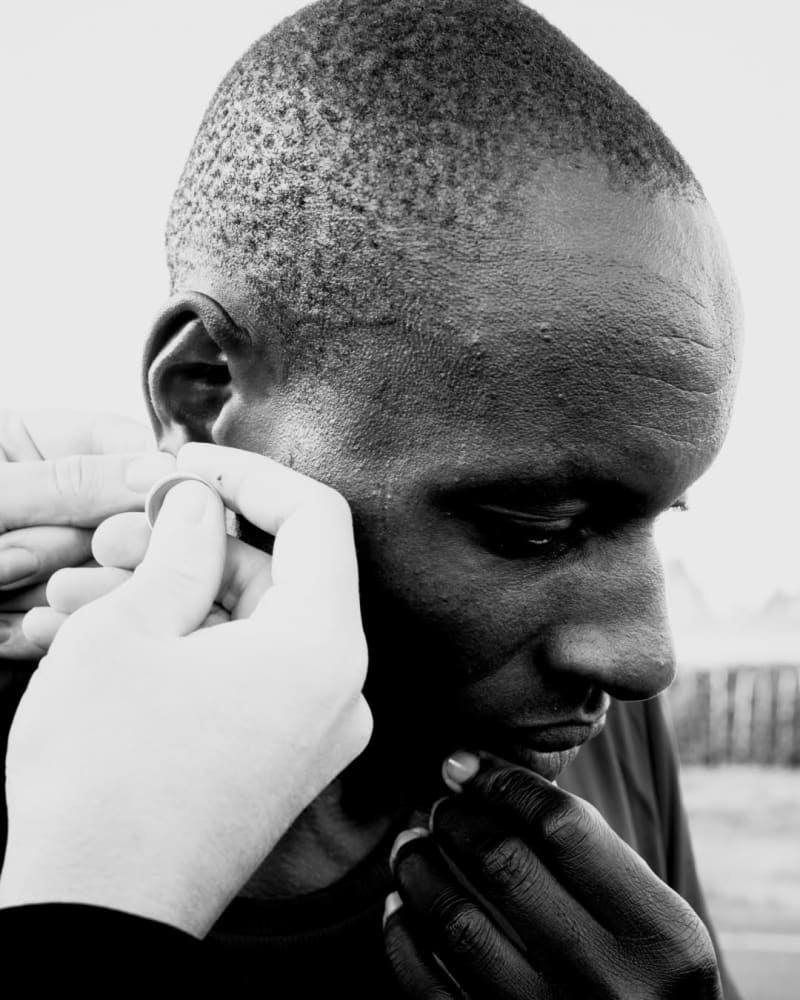
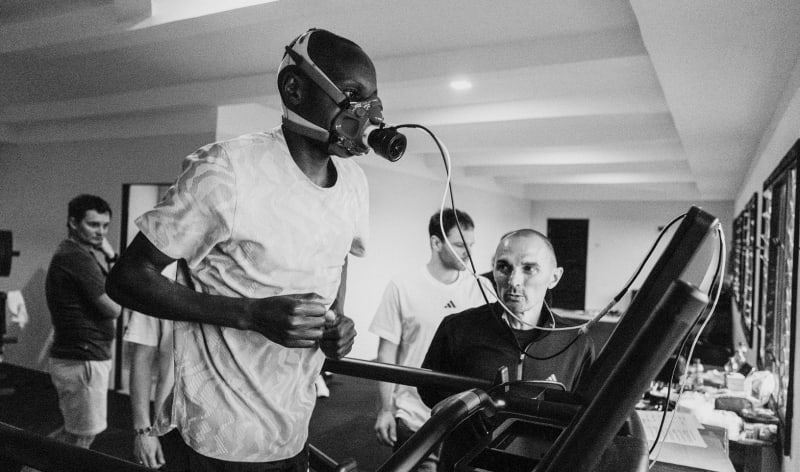
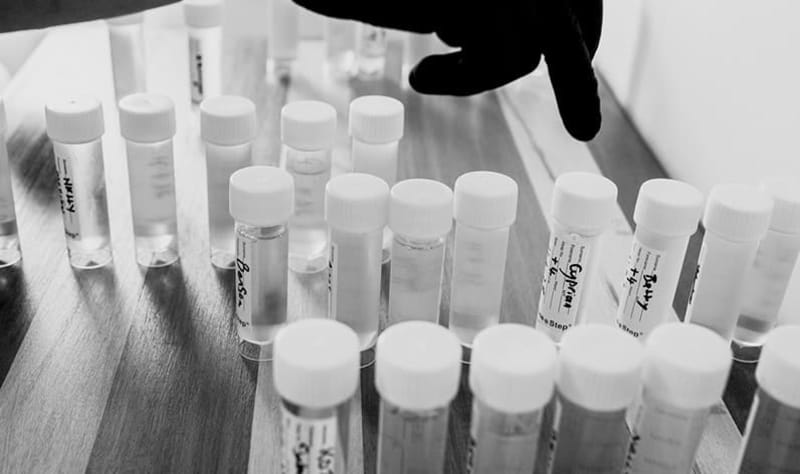
adidas therefore funded around $50,000 worth of additional testing. The result: Sawe was tested 25 times in the two months before Berlin. Blood, urine, surprise tests, sometimes very early before a hard workout, sometimes twice on the same day. Basically, he was tested almost every other day. And what is interesting is that this did not look like a last-minute publicity stunt. For the London Marathon 2026, they started again with another enhanced program spread across the year.
 © Maurten
 © Maurten
 © Maurten
Doubt is now part of the marathon
Does this protocol prove that he is 100% clean? It is important to say this clearly: no, it does not prove anything with absolute certainty. We will never be 100% certain. Sport has already seen too many cases where athletes appeared untouchable before everything came crashing down. Lance Armstrong never failed a test for years either. So yes, some people will remain skeptical no matter what. And honestly, it is easy to understand why. Even Sawe’s coach, Claudio Berardelli, has had his own reputation tarnished by a doping case in Kenya. In 2014, one of his athletes, Rita Jeptoo, tested positive for EPO just two weeks after winning the Chicago Marathon. Initially accused by the athlete, Claudio Berardelli was eventually cleared by a Nairobi court. The Italian coach has always denied taking part in any doping system. The story took another turn in late 2025 when Jeptoo, now 45 and long since separated from Berardelli’s group, was suspended again after testing positive for banned anabolic steroids.
Then there is the account by LetsRun.com journalist Weldon Johnson, who traveled to Kenya to visit the training camp of Jemima Sumgong, the Olympic marathon champion in Rio. He described a typical Kenyan environment that seemed entirely coherent: huge mileage, genuine discipline, group runs on red dirt, a highly structured team, discussions about nutrition and recovery, days organized around training…
The more time he spent with them, the more he thought: “Okay, maybe they really are just incredibly strong.” Then, a few days after he returned home, Sumgong tested positive for EPO. And that is probably what is most unsettling about the marathon. The talent is real. The training methods are real. The incredible performances are sometimes completely plausible… until they are not. Even when you want to believe in a beautiful story, a little doubt always remains somewhere.
At the same time, it is difficult to criticize an athlete who pays, with his sponsor, to be tested every day voluntarily… It does not guarantee that he is clean. But it does dramatically increase the level of scrutiny around him and the chances of catching him if he is cheating. Above all, it shows awareness. Sawe knows very well that today, a Kenyan marathoner who delivers a historic performance no longer benefits from the benefit of the doubt. He almost has to prove that he is credible more than anyone else.
Shoes have changed the marathon too
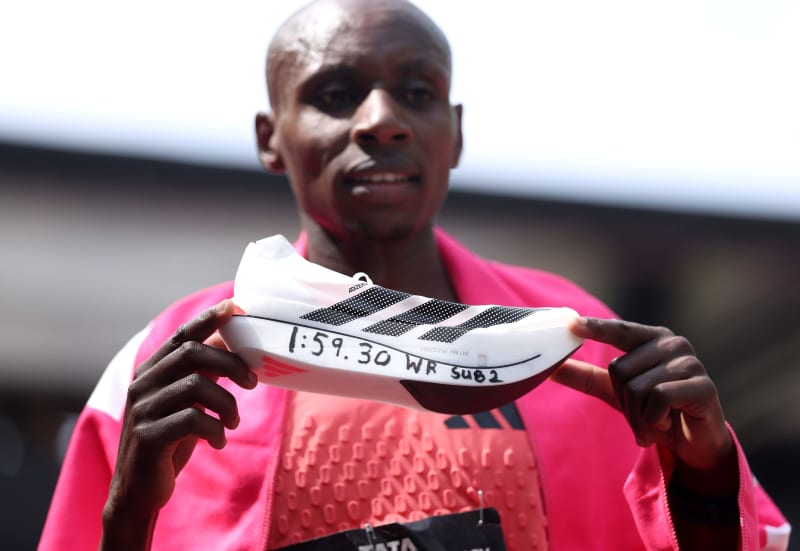
Obviously, it is impossible to talk about the sub-2 without talking about shoes. Some people refer to technological doping. Because yes, the latest generations of supershoes have completely transformed the marathon. Foams, carbon plates, energy return, shoe weight… all of it plays a major role in the evolution of marathon times.
Before the arrival of the Vaporfly, many studies saw the sub-2 as something very far away. After 2017, projections began to change rapidly. That does not mean shoes can make just anyone run 1:59. Obviously not. But they have clearly shifted the limits of what seemed possible. Sawe himself spoke extensively about his adidas shoes after London. The subject is now part of the modern history of the marathon, alongside altitude, nutrition and fueling strategies.
 © adidas
The marathon has changed profoundly. In the past, an exceptional time mainly inspired admiration. Now it also triggers heated debates on social media, analysis, suspicion and videos dissecting every detail frame by frame, second by second. For many running fans, doubt has become permanent. Kenya often finds itself at the center of that suspicion. Yet things are changing. The AIU has significantly strengthened its operations in Kenya in recent years, and testing is now far more extensive than before. Sabastian Sawe’s initiative is also part of an effort to restore some credibility to a sport that badly needs it. Because at heart, the modern marathon lives with a strange contradiction. We are probably witnessing the golden age of the discipline. Athletes are running faster than ever, shoes are pushing back the limits, training methods are evolving and the depth of the field is staggering. But the more extraordinary performances become, the more we need proof and transparency. In short, the marathon has become a sport in which credibility is now almost part of the performance…
➜ Discover the details of the adidas Adios Pro Evo 3 worn by Sabastian Sawe at the London Marathon
More articles

The Ironman Marathon Delivers the Final Verdict
The final 42.195 kilometres decide everything in an Ironman, exposing every mistake and testing the limits of endurance.
Thu, September 10, 2026
How to Choose the Right Running Shoes in 2025
Marathons.com shares the key points for choosing the right running shoes in autumn 2025.
Thu, September 10, 2026

Euro Marathon Metz 2026 is scaling up with more than 9,000 runners
Euro Marathon Metz 2026 is gathering serious momentum, with more than 9,000 runners entered one month before race day.
Thu, September 10, 2026