

Running is simple. A pair of shoes, a door to the outside, and you’re off. But behind that apparent simplicity sits a pile of stubborn beliefs, passed from runner to runner and blasted across social media in recent years. Myths that genuinely shape how we train and how we run. We’ve all heard “you’ll ruin your knees”, “you have to run on your forefoot”, or “no carbon plate, no PR”. Except science often tells a very different story. In this article, we break down 10 of running’s most common misconceptions, backed by the research. Beginner or seasoned marathoner, there’s something in here for everyone.
Myth #1 — A forefoot strike is the “best” running form
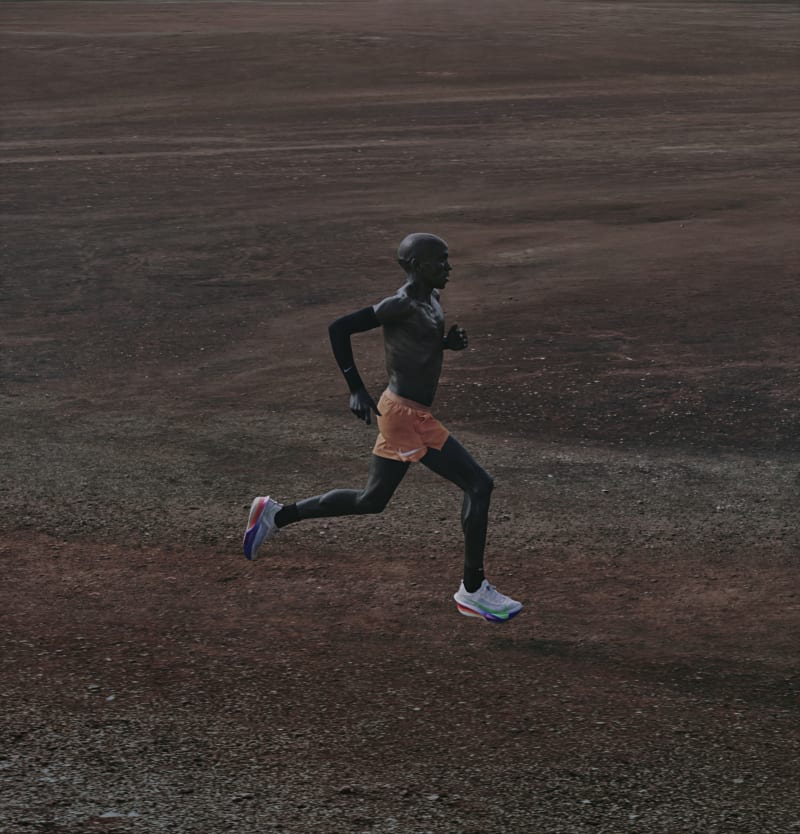
We’ve all seen those slow-motion clips of elite runners who seem to barely brush the ground with their toes, light as Kenyan gazelles. Think Eliud Kipchoge, with that majestic, almost artistic stride. And for many runners, the immediate conclusion is: “I need to run like that too. I want to float.” The problem with that thinking is simple: we’re mixing up cause and effect.
What we forget is that these athletes are professionals who’ve spent years building bodies that can absorb huge impact forces. Their calves, Achilles tendons, feet, ankles: solid as rock… It’s not the stride that makes them fast, it’s their body that makes that stride possible.
For most runners, especially those who started in adulthood, the best stride is the one that stays natural. According to La Clinique du Coureur, a forefoot strike may look more “efficient” on paper, but it’s also the most demanding when it comes to managing impact forces. It significantly increases load on the posterior chain (plantar fascia, Achilles tendon, calves) and the foot (metatarsal heads, metatarsals). Areas that can quickly turn into injury hotspots if the transition is rushed or poorly supervised. As always: not too fast, not too hard… two rules that apply as much to pacing as they do to running mechanics.
Because changing your stride is a bit like changing your swim stroke halfway across the English Channel. It’s possible, but it’s risky, it takes time and gradual progression, and ideally professional guidance. Without that, the injury risk is real.
The real question isn’t “what’s the best stride?” but “do I actually need to change mine?” If you’re pain-free and not dealing with recurring injuries, the answer is probably no. There are plenty of other levers to pull to improve your running.
 © Nike
Myth #2 — Running is bad for your knees
This one’s the classic. The thing you’ve heard everywhere… at family dinners, in the doctor’s office, at work. “You run? Watch your knees.” Except this idea, as widespread as it is (way too widespread…), doesn’t hold up to science.
Several solid studies, including one published in the Journal of Orthopedic & Sports Physical Therapy, show that regular runners actually have less knee osteoarthritis than sedentary people or athletes in contact sports. Cartilage, contrary to what many imagine, isn’t a passive tissue that simply wears out mechanically. It’s nourished and strengthened by movement and load. In other words: moving, running, maintains it.
What damages knees isn’t running itself. It’s too much, too soon, too fast. Increasing volume too quickly, running workouts too hard, inappropriate shoes, lack of strength work: those are the real culprits. La Clinique du Coureur also stresses this point: the vast majority of running injuries come from training-planning errors, not from the activity itself.
So no, running doesn’t destroy your knees. Quite the opposite. Just make sure you manage volume and intensity properly.
 © Alanis Duc
Myth #3 — You need to drink to prevent cramps
Water, electrolytes, sports drink… When a cramp hits at mile 22, we all think the same thing: “I should’ve hydrated better.” Well, that’s also probably wrong…
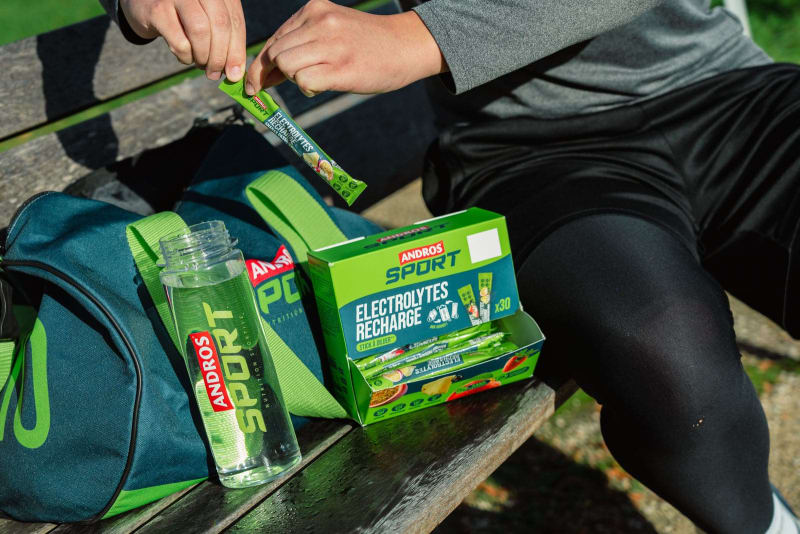
It’s one of the most common beliefs in running, especially among performance-minded athletes. But research in recent years has seriously challenged it. The work of Dr Martin Schwellnus, a world reference on the topic, points to a different culprit: neuromuscular fatigue. In plain terms, it’s exhausted nerves and muscles misfiring, not a lack of water or salt. A study on triathletes didn’t find any correlation between dehydration level and the onset of cramps, either.
That doesn’t mean hydration doesn’t matter. Of course it does, hugely, for performance and for health in general. But when it comes to cramps, you’re better off looking at training… What science suggests is that cramps are often your body saying you went too fast, too far, without being ready. So you’re better off improving fitness, pacing, and muscular prep than chugging liters of electrolytes…
 © Andros Sport
Myth #4 — The marathon starts at mile 20
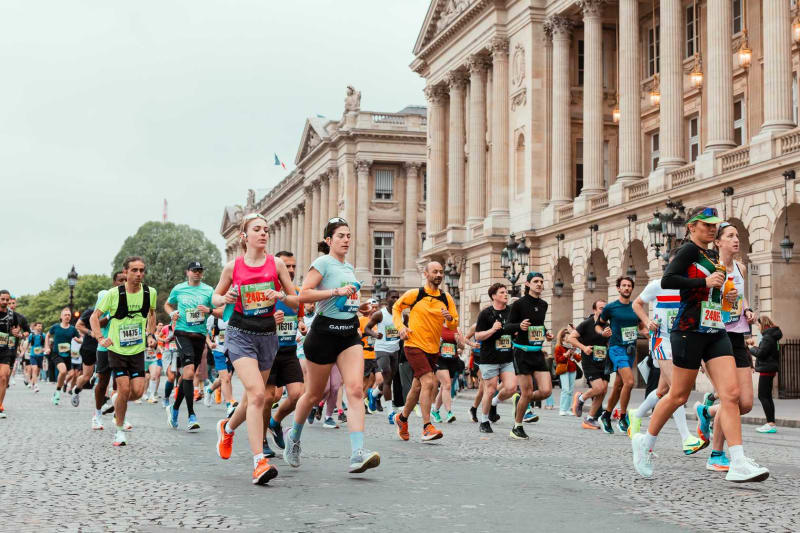
“The race really starts at mile 20.” You hear it all the time in marathon circles, and there’s some truth to it… but it’s also a trap.
Yes, mile 20 is often where things get serious. That’s when glycogen stores start to dip, legs turn heavy, and the mental game kicks in. It’s a make-or-break moment for the final stretch.
But saying the marathon starts at mile 20 gives the false impression that the first 20 miles are a walk in the park. And that’s exactly where the last 10K are won or lost. Going out too fast, neglecting fueling… the mistakes made before mile 20 are very often the ones that make runners implode later.
In a marathon, effort management is the biggest performance lever, from the very first minutes. Every mile matters, even the first. Mile 20 simply reveals the quality of the work done in training and early in the race.
 © ASO
© ASOMyth #5 — I have to train really fast to improve
The more I suffer, the more I improve. No pain, no gain. That logic works in a lot of sports. In running, it’s downright counterproductive.
It’s one of the most common traps for newer runners (and even the most motivated ones): turning every run into a VO2 max session, stacking high-intensity workouts, confusing fatigue and soreness with effectiveness and progress. The result: overtraining, injuries, and sometimes even falling out of love with running altogether.
Before you think about running fast, you need a body that can handle the training load. Many training plans are built around intensity polarization, like the famous 80/20 model popularized by American researcher Stephen Seiler. That “easy” 80% is where you build your aerobic base, improve cardiac efficiency, and give your body room to recover so you can hit the key sessions. Low intensity is also how you progress while keeping injury risk as low as possible. Think of easy runs as an investment: simple to execute, and the foundation everything else rests on. Without that base, it’s hard for the body to make the adaptations that let you run faster in the hard sessions.
 © KAPPA
Myth #6 — You can’t run fast without carbon-plated shoes
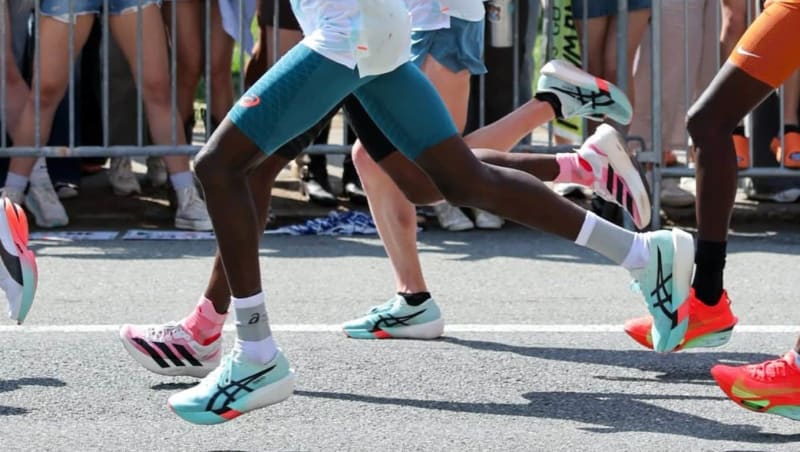
Since carbon plates took over, a new myth has spread at lightning speed: without supershoes, you can’t perform.
Can a carbon plate help? Sure. But it’s also, and above all, the superfoams around it that improve running economy and boost energy return. Since supershoes arrived in 2017, road records have been falling like crazy. But for the vast majority of runners, the gains are secondary compared to the fundamentals… training volume, workout quality, sleep, nutrition, and so on. A carbon-plated shoe on an undertrained runner is still an undertrained runner.
Carbon-plated shoes are a tool, not a magic wand. Sabastian Sawe did run under 2 hours with supershoes, but he also logs over 200 km per week, year after year. And a telling detail: his race model, the adidas Adizero Pro Evo 3, the first supershoe under 100 grams, actually had its carbon plate removed in favor of a simple ultralight carbon frame. Proof that shoe weight remains the number-one performance criterion.
Myth #7 — The more cushioned my shoes are, the more they protect me from injury
Probably the most overused marketing line in the business: the thicker the mattress, the less it hurts. Except the human body isn’t a twig, or a vase you wrap in bubble wrap.
Research shows shoe cushioning has no proven effect on reducing injuries. Why? Because the body adapts. With a very cushioned midsole, it naturally reduces flexibility and its own muscular and joint shock absorption. What’s more, net impact forces are often similar, regardless of how thick the foam is.
A maximal shoe can even become a risk factor if it muffles the warning signals your body is sending. More cushioning doesn’t mean more protection. It means more comfort. Not the same thing.
Myth #8 — Fueling during exercise is only for elites
“Gels are for pros.” A classic mistake from beginners, and sometimes even intermediate runners who underestimate their needs.
Reality is pretty simple: beyond 60 to 75 minutes of continuous effort, the body starts digging seriously into glycogen stores. Elite or not, physiology is the same for everyone. Skipping carbs during exercise is how you set yourself up for the bonk, the fade, and the infamous marathon wall.
It’s also a topic that’s taking up more and more space now. Experts agree: you should practice fueling in training, not just on race day. Eating on the move is a skill you learn and test. Your gut needs training too, to figure out what works for you.
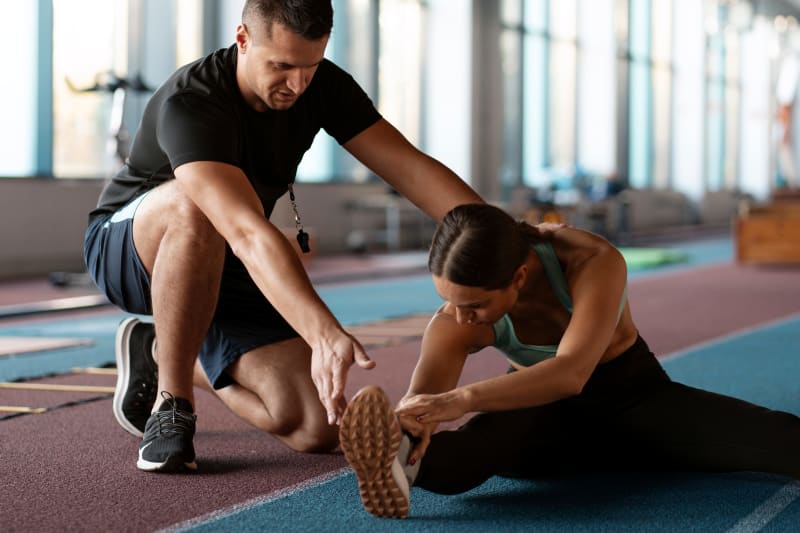
Myth #9 — You have to stretch after a run
The runner’s almost universal ritual: finish your run and knock out five minutes of static stretching. It’s been baked into sports culture for decades. But it’s ultimately pretty old-school and, above all, it’s increasingly hard to justify scientifically.
Recent studies even suggest the opposite: post-run static stretching doesn’t speed recovery, doesn’t reduce soreness, and doesn’t prevent injuries. Stretching a muscle that’s already fatigued and micro-damaged after a workout is just adding stress it doesn’t necessarily need right then.
So what should you do? You’ve got plenty of options to boost recovery: active recovery (walking, cycling), sleep, hydration, and solid nutrition. Stretching has its place in a mobility routine, but away from workouts, and never by forcing a hot, tired muscle. In short: post-run stretching is one of those old habits it’s time to leave behind…
Myth #10 — Overweight people can’t run
This one hurts. Not the knees. The head. How many people have stopped themselves from starting to run because of other people’s stares, or a mental block that says “this isn’t for you”?
The reality: there’s no absolute contraindication to running based on body weight. Studies show that overweight people who start running often progress quickly, improve cardiovascular fitness, and gain huge physiological and psychological benefits.
The key nuance, and it matters, is gradual progression. A body that’s less used to impact loading needs time to adapt. Increasing volume too quickly does raise injury risk. But that’s true for everyone, not just people who are overweight. Avoid too hard, too fast, too soon.
La Clinique du Coureur also stresses this: the body adapts to the load you impose, as long as you give it time. Start by alternating running and walking, add strength training in parallel, and build up progressively, that’s the key to a healthy, injury-resistant practice.
Running is a universal sport. For everyone. No exceptions.
Bonus — 3 more myths for the road
“You absolutely need full rest days”
Complete rest used to be the standard. Today, many prefer active recovery: an easy bike ride, swimming, walking. These activities help blood flow more than doing nothing, which is ideal for easing soreness without adding impact or mechanical stress. That said, true full rest still makes sense if you’re injured or deeply fatigued. There isn’t one hard rule.
“A marathon is just a half marathon x2”
If only it were that simple. On paper, sure, the distance doubles. In your legs, it’s a completely different story. The half marathon is run around lactate threshold: hard and sustained. In approach and training, it’s often closer to a spicy 10K than to a marathon. The marathon, on the other hand, moves into another dimension after mile 20: glycogen runs low, legs are cooked, and your brain has to take over. A half can hurt for a few miles, but in a marathon, the pain can last a long time, a very long time… Not to mention fueling, which plays a central role in the marathon (far more than in the half) and can decide the race all by itself. So doubling the distance doesn’t necessarily double the effort. They’re simply two different disciplines that demand different kinds of work. Anyone who’s raced both knows it.
“Long distance is for men”
In recent years, race fields have become more female, which is great, but women are still underrepresented at longer distances. And yet, the longer the format, the more women seem to close the gap with men. A 2023 study looking at nearly 1.9 million runners across 221 countries from 1989 to 2021 compared men’s and women’s performances over distances from 25 to 260 km. Result: the longer the distance, the smaller the performance gap. In ultras, women are right on the men’s heels and sometimes beat them. That’s exactly what happened recently at Cocodona 250, a 400 km ultra-trail race in the United States, where Rachel Entrekin won overall and set a new course record. Part of the explanation is women’s ability to manage long efforts: more efficient fueling, less tendency to go out too hard, and potentially better resistance to deep muscular fatigue. Over long distances, those qualities matter enormously. So no, running isn’t a men’s sport. Not even close. It might even be the sport where women have the most to gain as the distance gets longer.
A lot of beliefs still linger in running… The good news is that science and common sense mostly point in the same direction: running intelligently, progressively, and in tune with your body is far more effective than blindly following outdated traditions or trends cooked up by marketing campaigns. And yes, you don’t need the latest $300 shoes or “perfect” form to enjoy running. You don’t need a model’s physique to be a runner either. You just have to step outside and lace up. And for all the progress and the tech era we live in, let’s never forget that running is simple, and it should stay that way…
More articles

Night races: why does everyone want to run while everyone else is asleep?
From Glow Runs to low-key trail races, night running is taking off, offering a more festive experience and a different relationship with the clock.
Thu, September 10, 2026

Kenya, the distance-running powerhouse in a country where running is king
How Kenya became distance running’s powerhouse, from Kipchoge Keino to Eliud Kipchoge and the generations shaped by its unique culture.
Thu, September 10, 2026

Running Tattoos: When a Finish Becomes a Work of Art
Race memories in ink, from marathon finish times to GPS traces, with tattoo artist Agathe Cossement on the risks and precautions.
Thu, September 10, 2026