
 © Emma Bert / Marathons.com
Supershoes and spikes: why aren’t they evolving at the same pace?
Carbon-plated shoes keep driving road times lower, but spikes for track and cross country are advancing more slowly and far less visibly.
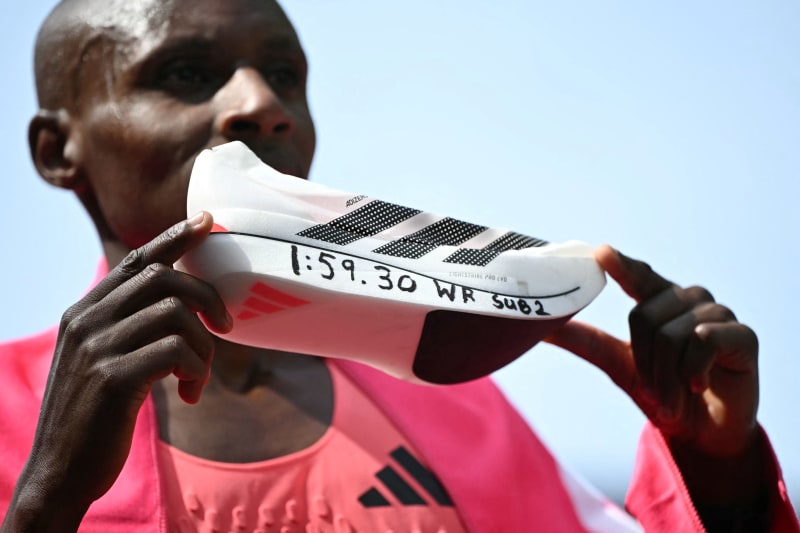
Road supershoes have revolutionized racing times, as illustrated by Sebastian Sawe’s recent 1:59:30 marathon world record. Track spikes are following a different path, held back by regulatory, technical and biomechanical constraints. While running shoes have gone mainstream and flooded the market at ever-higher prices, track spikes remain performance tools, even elite-only equipment, with a much narrower range of options.
 © adidas
The rise of supershoes
In early 2016, Nike sent shockwaves through the running world with the Vaporfly 4% at the US Olympic Trials for Rio. Released a year later after appearing on international podiums, the shoe quickly became highly coveted. Produced in limited numbers, it was hard to get hold of. Some athletes under contract with rival brands even covered the Swoosh with black tape so they could race in it, convinced that not wearing it meant giving up an advantage. The Vaporfly 4% was the first of a new generation and truly ushered in the supershoe era.
The other brands soon responded: adidas Evo, Adios Pro 4, ASICS Metaspeed, Hoka Cielo, Puma Deviate Nitro Elite 4 and more. Fierce competition developed around the fastest, lightest and most responsive shoe.
The formula combines a rigid plate with extremely light PEBA foams capable of delivering substantial energy return. Nike estimated the gain at 4%, hence the name Vaporfly 4%. The brand’s biggest stars kept producing remarkable performances, including Eliud Kipchoge’s 1:18 improvement on the marathon world record in Berlin in 2018. The following year, the Kenyan even went under two hours, running 1:59:40 at the Breaking2 project in Vienna, although the conditions were not officially ratifiable.
Different jobs to do
 © Emma Bert / Marathons.com
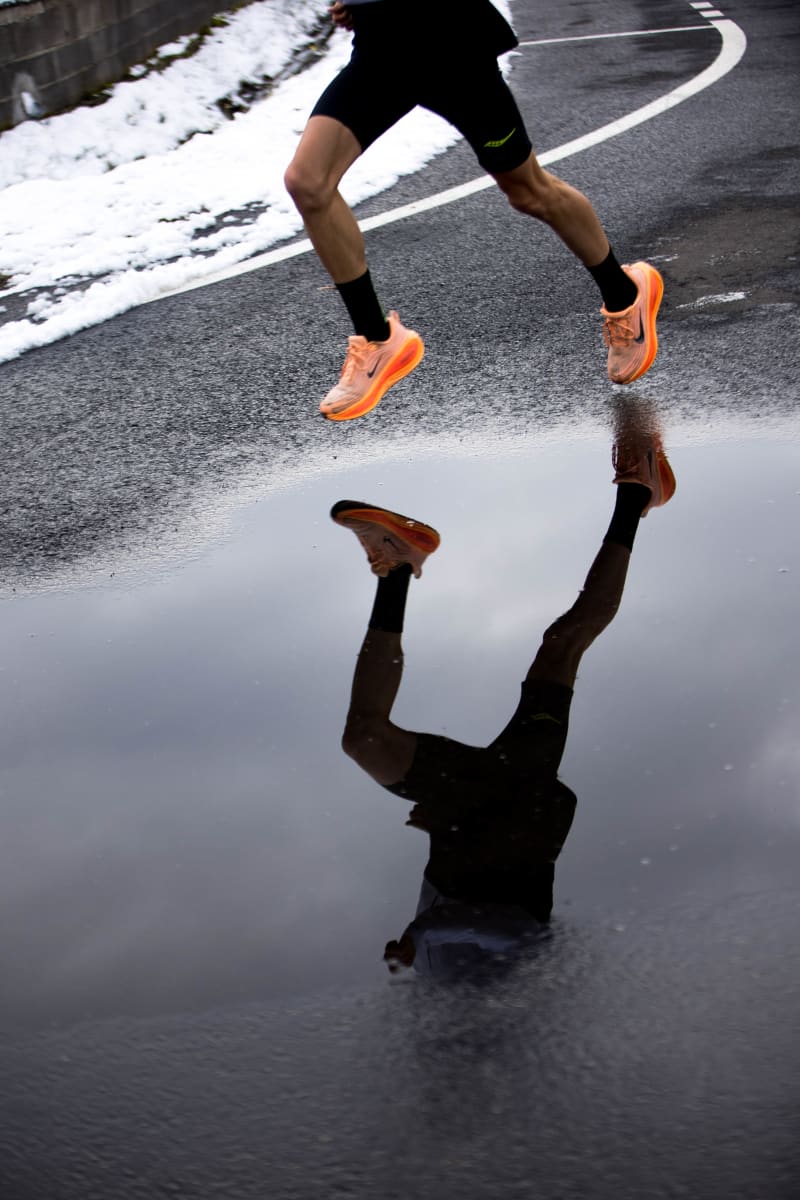
Minimalist midsoles have given way to eye-catching, almost ostentatious stack heights. On a hard surface like the road, where impact is repeated for tens of kilometres, modern foams play a major role in reducing muscular fatigue. The days of the pre-2016 Nike Streak and adidas Adizero Boston 6, with their low-to-the-ground midsoles that could leave calves aching for days, are gone. Supershoes improve not only performance but recovery as well.
In the marathon, the real gain comes mainly from being able to maintain an efficient stride for longer. Running economy becomes critical after several dozen kilometres, helping push the limits of human performance towards the mythical two-hour marathon barrier. Supershoes have also changed how athletes approach effort. Runners now dare to start faster, with fatigue delayed and the overall ride feeling better.
A quieter evolution for spikes
The boom in running and road racing is undeniable. Track and cross country, however, have not attracted the same mass following. Spikes were already highly specialised performance tools long before supershoes arrived. Unlike road shoes, track footwear had less technological ground to make up.
Efforts are shorter, the mechanical demands are different, and power and responsiveness matter more than running economy. A track’s synthetic surface is already more dynamic and cushioned than asphalt, reducing the appeal of very thick foams. On the track, especially over shorter distances, force and responsiveness at ground contact take priority over the fatigue reduction made possible by supershoes.
The revolution is also less visually dramatic. Supershoes became instantly recognizable thanks to their massive midsoles, while modern spikes remain far more understated despite their technical advances.
Nike once again played a pioneering role with the Dragonfly, Victory and Maxfly, launched in 2020. More responsive and comfortable, some use composite plates, while others combine highly rigid structures with soft, lively ZoomX foam. Geometries have become more aggressive, with rocker profiles that smooth the foot transition and optimize propulsion.
More limited room for progress
 © Emma Bert / Marathons.com
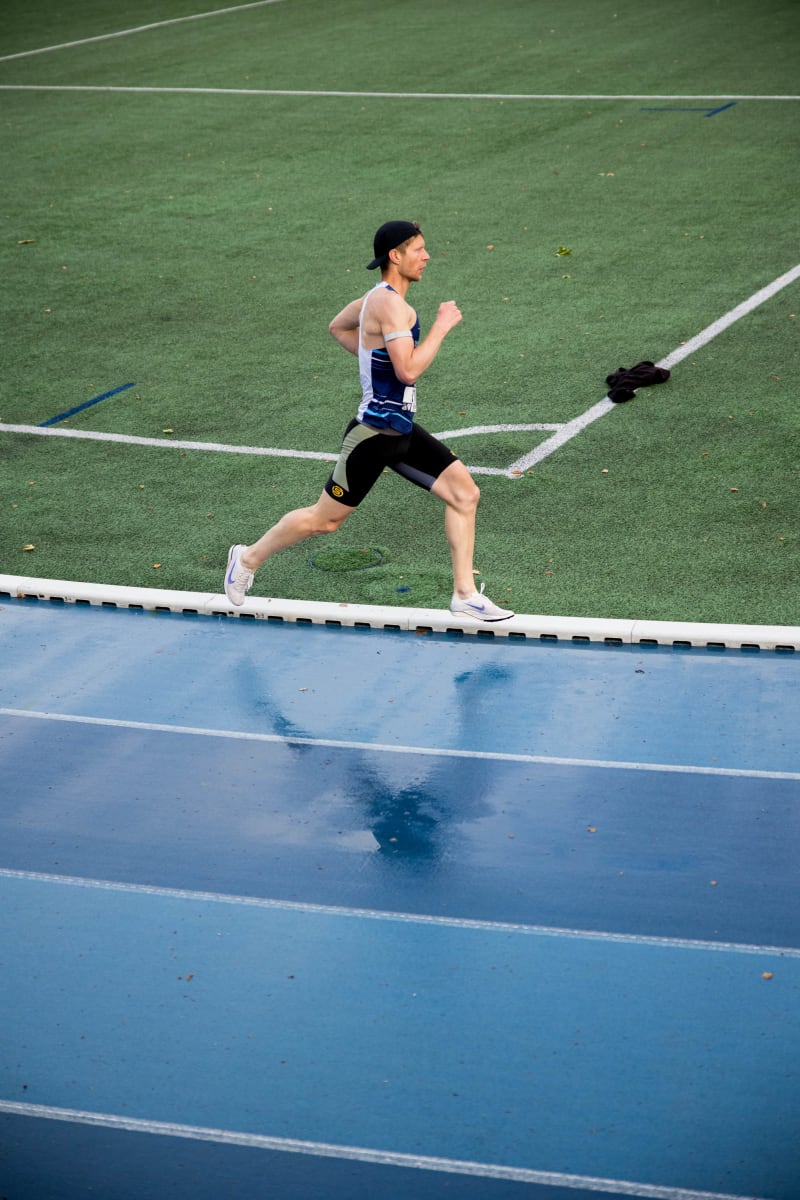
The Dragonfly, now a middle-distance benchmark, has since evolved through several new versions, including the even stiffer, faster Dragonfly Elite 2 in 2025. adidas, New Balance, ASICS, Hoka and On have all developed their own models to meet the demands of this new generation of spikes.
The Dragonfly nevertheless arrived well after the Vaporfly 4%, showing that road-shoe development remains a priority for the major brands. Yet track events, highly visible during the Olympic Games, still carry enormous value when it comes to brand image.
Spikes were already minimalist, stiff and light, designed for propulsion and traction, before this revolution. That leaves less room for improvement than on the road. A midsole that is too thick would quickly become unstable on the track, where foot strikes are fast and forceful.
Modern spikes have nevertheless changed significantly. Foams are more responsive, geometries more refined and structures more dynamic. But they remain close to the foot, with virtually no reinforcement, and are sometimes worn barefoot, so they are nowhere near as comfortable as trainers. Records have also multiplied on the track since 2020. Shoes play an important part in that progress, although it also reflects the professionalization of the sport, evolving training methods, the deepening global talent pool and improved track surfaces.
Strict regulations and economic realities
Faced with these innovations, World Athletics grew concerned about technological doping. The governing body responded by regulating the technology, with some shoes deemed to provide an excessive mechanical advantage. Maximum sole thickness, limits on the number of plates and mandatory approval make the rules far more restrictive on the track, in an effort to preserve fairness across the disciplines.
For brands, getting a track shoe approved is also more complicated than doing so for a road shoe, sharply limiting some innovations. The established market leaders still dominate, while emerging brands struggle to gain a foothold and secure approval for their products.
The other major difference is economic. The road-running market is enormous. With 13.2 million runners in France in 2025, the Observatoire du Running is seeing amateurs become increasingly performance-focused. Today, a recreational runner who breaks 45 minutes for 10K can wear almost the same equipment as an Olympic champion. The pursuit of marginal gains is no longer limited to the elite. Brands understand that perfectly and have brought carbon shoes to the masses. France’s running market is expected to approach €1.5 billion in 2025, including nearly €800 million in shoes alone.
The market for track and cross-country footwear is much smaller. There are far more runners than licensed athletes. This part of the sport is aimed at competitors, making innovation less profitable for equipment brands. The range of models therefore remains far narrower than it is for road shoes.
Marathons and road races also enjoy far greater media exposure, as well as being more accessible. Supershoes have become desirable objects, backed by omnipresent marketing. Spikes, by contrast, remain largely invisible outside major international events.
A specialised performance tool
A pair of spikes is almost a niche product. You may not find it in a regular store, but specialist websites will usually have them. Prices for the latest-generation models have also risen sharply in recent years, with many now costing more than €200.
Unlike supershoes, however, spikes are not for everyday use or every type of session. They are reserved for racing or specific, targeted workouts. Not everyone trains on a track, and these models require a certain level of speed, strong foot and ankle mechanics, and muscular adaptation.
Calves, tendons and hamstrings are placed under particular strain by these rigid models, which can leave their mark. Spikes are not for everyone. Where supershoes offer comfort and protection, spikes are minimalist, built to maximize performance and push athletes’ physical limits. They are specialised tools, used far less often. A pair of spikes can last several seasons, unlike a supershoe that quickly racks up hundreds of kilometres. Track and cross-country races rarely exceed 10,000 m or 10K, further reducing demand.
A spectacular revolution on the road, a quieter evolution on the track. Supershoes continue to push performance limits, while spikes change more gradually in a world shaped by different technical, regulatory and economic constraints. Supershoes are accessible to everyone and highly visible in the media; spikes remain specialised tools for specific settings and experienced athletes.
More articles

Nutripure named official nutrition and hydration partner of Paris Marathon through 2030
Nutripure becomes the official nutrition and hydration partner of the ASICS Paris Marathon from 2027 to 2030.
Thu, September 10, 2026

Spring on the plate: what runners really need to change (and what they can keep)
Warmer days make runners want lighter meals. Great idea, as long as you don’t cut energy intake too. Hydration, sodium and RED-S prevention.
Wed, August 5, 2026

What’s the Point of Bicarbonate for Runners? Fabrice Kuhn Cuts Through Locker-Room Myths and Road-Reality
Can bicarbonate really help runners? Marathons.com sat down with sports physician Fabrice Kuhn to find out.
Thu, December 4, 2025