
Why Is the Paris Marathon So Tough?
 © ASO / Marathon de Paris
Every year, tens of thousands of runners take on the 42.195 km of the Paris Marathon. A monumental challenge, yes, but in the French capital, strong legs are not enough: you also need nerves of steel. Like some of the world's biggest marathons, including New York and Boston, Paris has earned its formidable reputation. Behind the historic landmarks and postcard scenery lies a course that is as demanding as it is unforgettable.
A deceptively demanding elevation profile
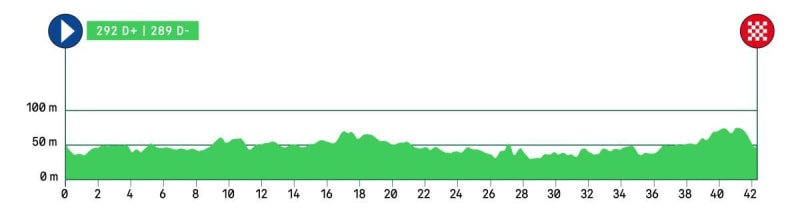
On paper, the Paris Marathon may look fairly accessible. A major city, slick organisation, wide roads, no mountains in sight. But take a closer look at the course profile and it quickly becomes clear that this is not one of those flat, fast marathons. With 292 metres of elevation gain, maintaining an even pace through the capital is a serious feat. The downhill sections are deceptive, while the many climbs take a toll on the legs. Unlike flat marathons such as Valencia or Seville, known for their long, straight stretches, the Paris course constantly forces runners to change pace. Energy reserves run down faster than expected, and one small oversight, such as skipping a gel, can quickly turn what follows into a nightmare. On this course, every mistake comes at a price. Many runners hit the dreaded wall, sometimes well before the 35 km mark.
Climbs, cobblestones and tunnels: a brutal cocktail for the quads
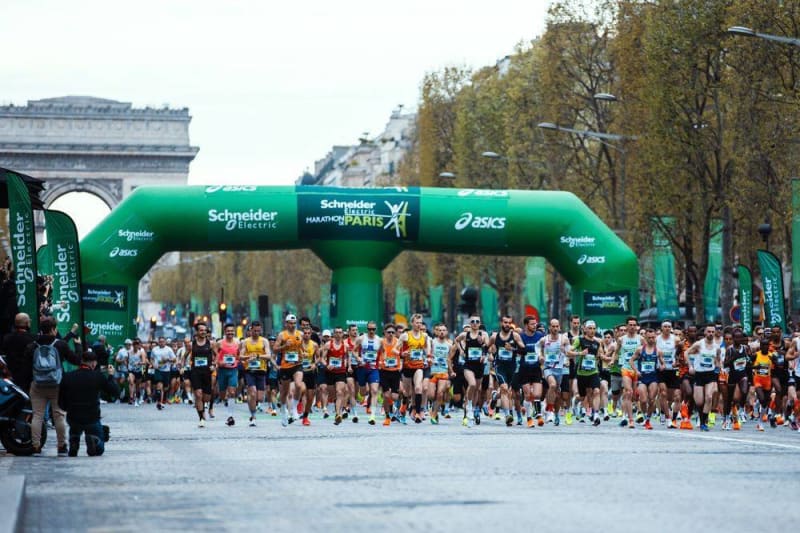
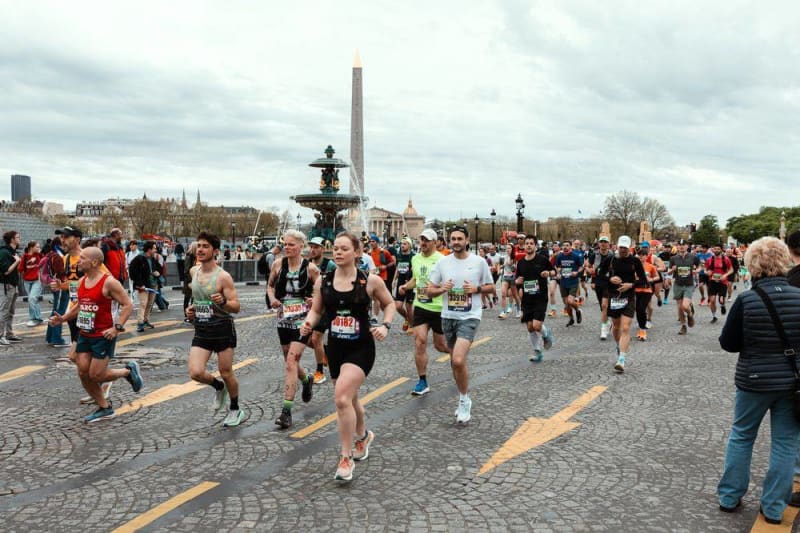
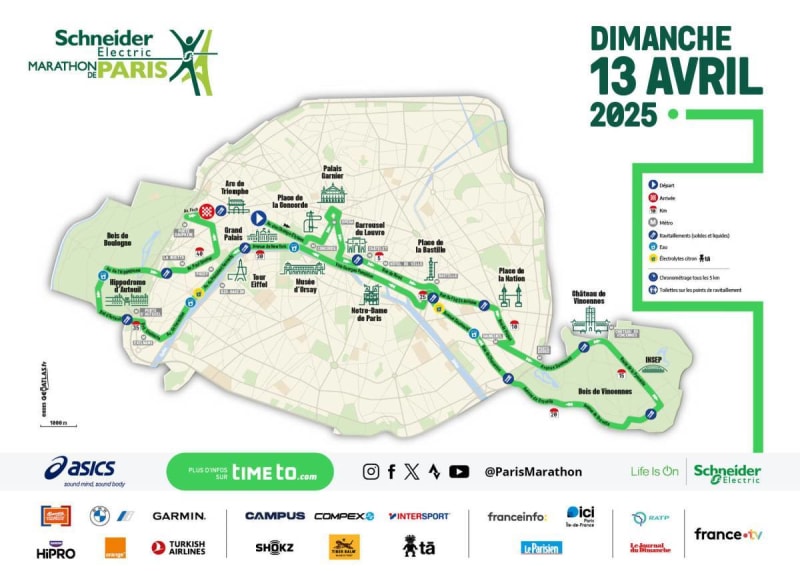
What makes Paris truly difficult are the infamous bumps scattered throughout the course. From the opening kilometres, the slight downhill on the Champs encourages runners to set off too fast, so beware of overconfidence. The first real challenge comes at 9 km on Rue du Faubourg Saint-Antoine, with a gentle but lengthy 1 km climb.
The cobblestones are another Parisian speciality. They arrive early, from the first strides on the Avenue des Champs-Élysées. They can disrupt your rhythm, fatigue your stride and chip away at your energy, especially when you have to stay focused on your footing. Over time, that can also dull your judgement.
But it is the banks of the Seine that really hurt. The underpasses beneath the bridges completely disrupt your rhythm and make it impossible to settle into an even pace. A succession of four short, leg-breaking climbs and descents between kilometres 28 and 32, including the passage beneath the Pont de l'Alma, arrives just as the quads start sending out fatigue signals. And just when you are dreaming of a little flat running, you have to head back through the 16th arrondissement and the Bois de Boulogne. The final kilometres rise gradually but relentlessly, with three climbs coming one after another between kilometres 34 and 41.
 © ASO
© ASO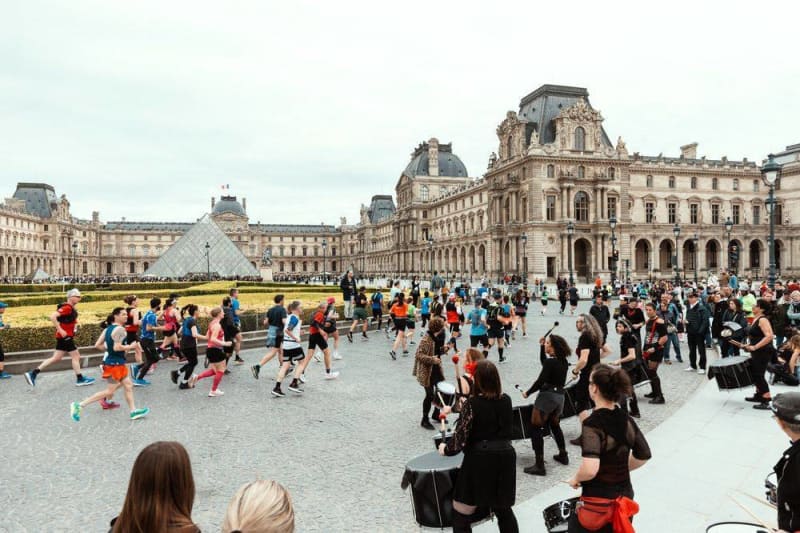
A far tougher second half
This is no myth: the second half of the Paris Marathon is much harder than the first. Of the 292 metres of total elevation gain, nearly two-thirds come in the second half. After the halfway point, runners should be looking to manage their effort more carefully, but in Paris the opposite is true. The race gets harder and more demanding just as the legs start to give way. That is also why Paris is so feared by marathoners chasing a personal best. Among those running their first 42 km, many still underestimate the importance of nutrition. In Paris, it is essential. The marathon is not just about pace or mental strength: without a proper fuelling strategy, the wall can arrive much sooner than expected.
Elite or amateur, the pain is the same
Even the elites get no favours from the Paris Marathon. It is telling that, among the men's and women's top 10, only one runner managed a negative split — Kenyan Benard Biwott, the winner in 2:05:25, with a faster second half than first (1:02:57 / 1:02:28). That says a lot about the difficulty of the second half of the course.
Among the French runners, the performance of Loréna Méningand also deserves recognition. She finished as the first Frenchwoman home, setting a new personal best. She passed halfway in 1:17:55, but the difficulty of the course caught up with her too, and she covered the second half in 1:18:38. Slower, but still a very strong performance on such a demanding course.
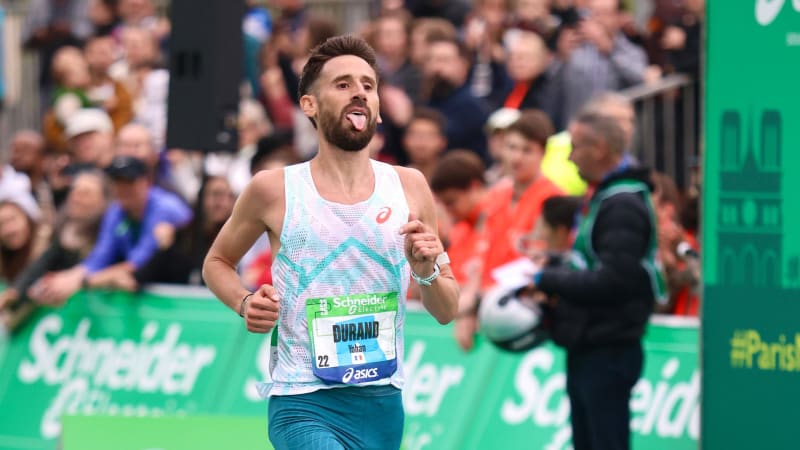
Yohan Durand also suffered on Paris's cobblestones. “Muscularly, it was difficult. The quays are very demanding, and the weather was changeable with a little wind…”, the runner from Bergerac finished in 2:14:44, well outside his 2:11:56 in Valencia, recorded a few months earlier. The difference is a clear illustration of the toughness of the Paris course.
The course isn't easy. Muscularly, it was difficult after 25 km. The quays are demanding, the weather was changeable… And then in Boulogne, I hit the brakes. I am very happy to have finished, because physically, it was one of my toughest marathons.
 © STADION-ACTU
All of this makes Morhad Amdouni's performance even more impressive. In 2022, he set a new French record in 2:05:22 in Paris, before lowering it to 2:03:46 in Seville in 2024. His time in Paris, in those conditions, commands real respect.
A demanding marathon that keeps growing in popularity
Despite all those difficulties, the Paris Marathon remains one of the most popular in the world. In 2025, 55,499 runners crossed the finish line. Why such enthusiasm? Because Paris will always be Paris. Running down the Champs-Élysées, passing beneath the Eiffel Tower, following the Seine and going past the Louvre... it is hard to match that combination of prestige and history.
It is also a genuine gateway to marathon running for newcomers to the distance. Many choose Paris for their first marathon: for the atmosphere, the support, the chance to share it with family and friends, and above all for what it represents. Even when the time on the clock is not what they hoped for, the emotion of the marathon is stronger than ever.
The Paris Marathon is not the fastest. Nor is it the easiest. But it may be one of the most emotionally powerful. Its deceptive elevation profile, hidden climbs and demanding cobblestones make it a true physical and mental test. To get the most from it, prepare properly and save something for the second half of the course. Above all, remember to look up and savour the privilege of running along the avenues of the world's most beautiful city.