 © ASO
© ASO
Running Observatory 2026: 13.2 million participants and a market still growing
The figures from the 2026 Running Observatory were unveiled during the Paris Marathon Expo on April 10. A record year for participation, marked by a younger and more female audience, as well as increased consumption and professionalization, running continues to attract ever-growing numbers.
13.2 million people in France reported running in 2025 — one million more than five years ago. The Running Observatory presented its annual benchmark study on the evolution of the sport. The UESC combined three separate studies and analyses, including a national running and trail survey based on a sample of 5,000 respondents. The runners surveyed appear highly engaged, urban, and connected, with strong levels of consumption and involvement in the sport. The French Athletics Federation’s Finisher barometer further enriched the study. “Reliable and unprecedented figures,” according to UESC General Delegate Virgile Caillet.
| Running as a social norm
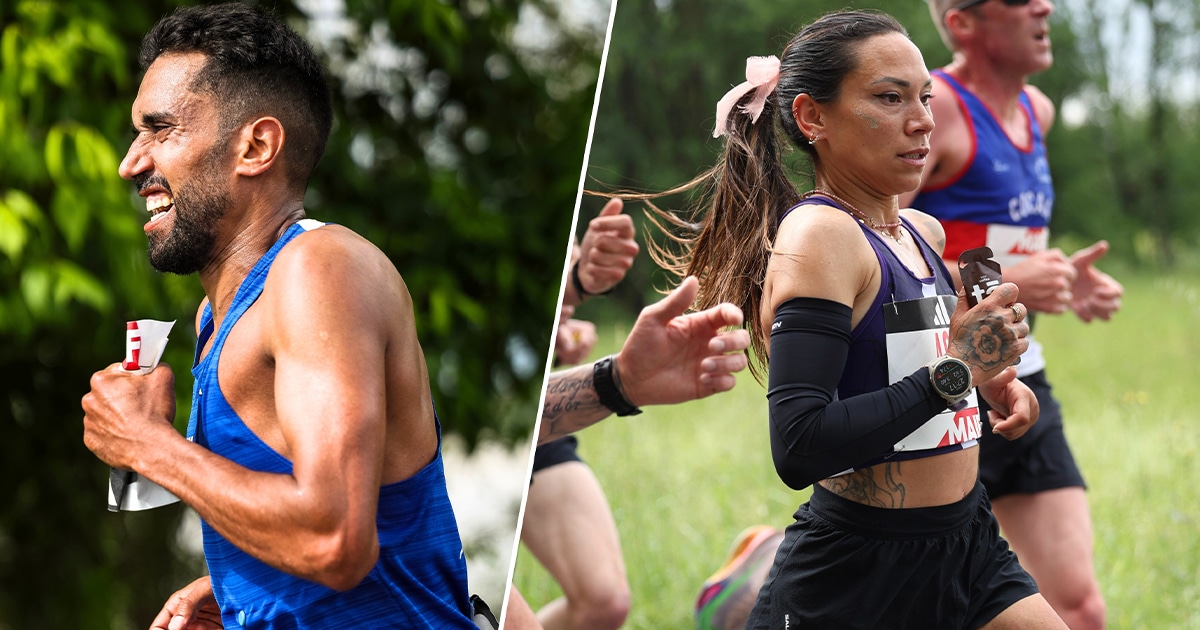
Beyond the record number of runners, two major trends stand out. On one hand, the practice is getting younger; on the other, it is becoming more female. In fact, 52% of women and 48% of men reported running last year, reflecting the overall distribution of the French population.
Following the health crisis, new runners have continued their practice, making it more sustainable and embedded in everyday life. “We can no longer talk about a social phenomenon, but a social norm,” emphasizes Virgile Caillet. As a result, 64% of respondents say they run at least once a week. Running is also becoming a powerful social connector, with 43% of individuals sharing the activity with others. Trail running continues to establish itself, with 40% of runners involved.
| Reasons behind the success
“There isn’t just one type of runner — there are many,” explains the general delegate. Each has their own source of motivation. Among the most common are well-being (55%), health (50%), enjoyment (42%), competition (39%), and weight management (24%). Running serves as a social connector, a point of anchoring. Apps like Strava, along with social media and community groups — especially widespread in major cities — reflect this dynamic. “Running is an individual sport practiced collectively,” he adds.
| The new codes of running
The discipline is being energized by a younger and more female participant base. Proof of this shift: 80% of new runners (those who have been running for less than two years) are under 35, and 44% are under 24. In addition, 63% of new participants are women. Long dominated by men, running is becoming more balanced — and more on-trend.
Antoine Courbon, Head of Digital at ASO, the organizer of the Paris Marathon, has observed this trend for several years through registration data. “It’s visible across all our races, and of course at the Paris Marathon,” he explains. “Before Covid, the average age was around 40–41, then 39 in 2023, and now it’s 37. That’s the kind of average age we used to see in half marathons in 2022–2023.” This evolution is shaping a new way of practicing — and consuming — running.
| The digitalization of running
Among those under 24, three out of four follow influencers — a trend that race organizers are increasingly paying attention to. “They’re people who bring entertainment into sport,” explains Mustapha Salmi (203,000 followers on Instagram), who was invited to speak at the conference. “In the past, you had to be a top performer to have legitimacy as an influencer, which isn’t necessarily the case anymore,” adds the athlete and content creator.
With this shift, digitalization is expanding rapidly. More and more runners are turning to artificial intelligence for training and advice (38% of new participants), while 73% of 18–24-year-olds say they follow a structured training plan.
Several trends have been identified among this under-30 audience. In terms of registration, they don’t necessarily sign up later than others, but there are fewer no-shows. They also tend to outperform expectations, entering races with a desire to push their limits and often achieving results better than their assigned starting wave would suggest. Another growing trend is running for others — whether through charity bibs, particularly popular among under-30s at the Paris Marathon, or by sharing their experience on social media. Finally, they place strong importance on equipment.
“Running is no longer just a sport — it’s a culture, with its own way of practicing, its own words, language, and rituals,” concludes Antoine Courbon.
| The frenzy for race bibs
Having a race on the calendar increases commitment, acting as a real driver for runners. Competitions play a major role, with some signing up for a race simply to motivate themselves to start a training plan — a trend also highlighted by Mustapha Salmi.
To meet growing demand, 13,320 races — across road, trail, and cross-country — were organized in 2025, generating one million results, around 2,000 more than in 2015. Today, trail races outnumber road races, although road events remain more popular overall.
The number of finishers per race is rising sharply, with an average increase of 50 additional finishers compared to 2024. This is reflected in increasingly full events, with an average of 310 finishers per race, up from 260 the previous year. There are now three times as many trail events as in 2015, even though trail running itself is not a new discipline.
The 10 km distance remains the benchmark in the running events market, with 1,320 races accounting for one million results. In 2025, race bibs generated €132 million in France. This growing demand also leads to frustration, with 62% of respondents reporting difficulties in securing a race entry. One of the French Athletics Federation’s major projects is to improve coordination with organizers, support smaller events, and better assist these key stakeholders by listening more closely to their needs.
| The professionalization of amateur runners
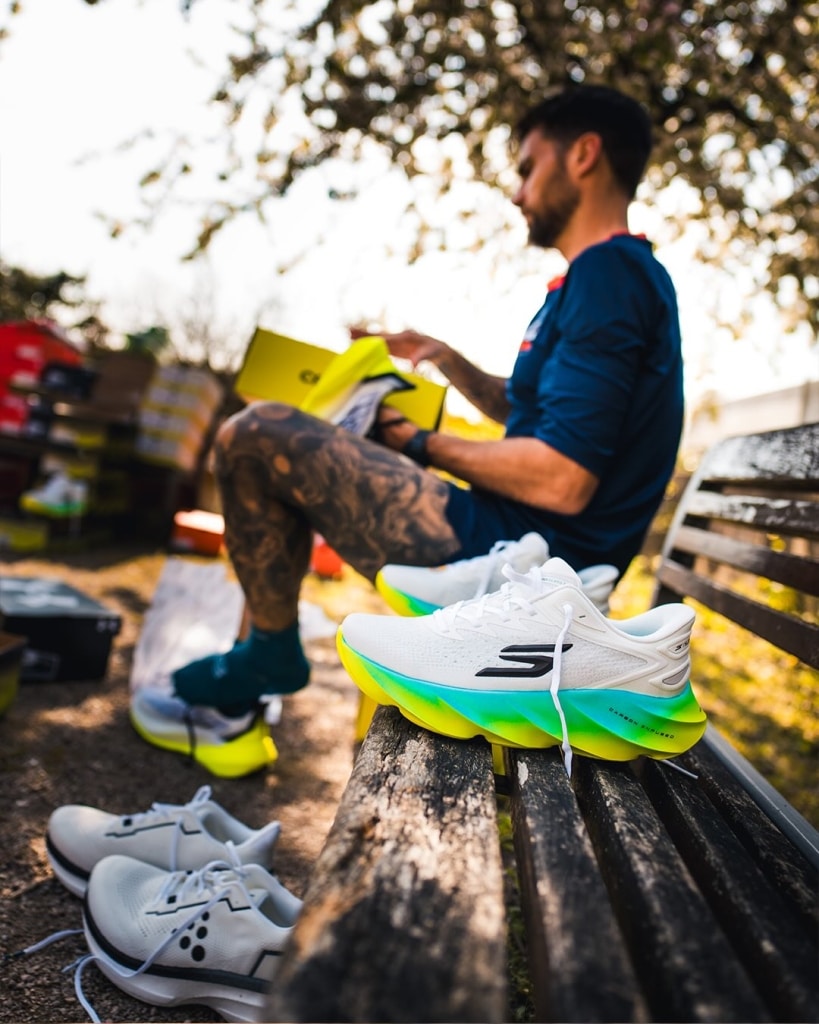
Training methods, strength conditioning, and overall lifestyle habits (81% of 25–34-year-olds say they pay close attention to them) are now seen as essential by amateur runners looking to improve their performance. The pursuit of marginal gains is no longer reserved for elites — the “desire to do things right” matters just as much for everyday runners. In fact, nearly 40% of respondents consider shoes to be a key factor in this quest.
| A highly powerful market
In 2025, the running market recorded growth of over 20%, approaching €1.5 billion in value, with €800 million generated by footwear and €400 million by apparel and accessories.
This is a striking increase in a broader sports and leisure market that remains relatively stagnant, even declining by 0.3% last year. Running, on the other hand, is on the rise (+17%) for the first time in fifteen years. “In a challenging economic context, running is outperforming, with more runners, younger participants, greater engagement, and higher spending,” notes Virgile Caillet. The trend is expected to continue growing steadily in the coming years, with particularly strong momentum.
Nutrition is also a closely watched and highly dynamic segment, aligning with the growing professionalization of runners. At the same time, the number of apparel brands is increasing, compression product companies are becoming more active, and technological products such as connected watches are gaining ground.
The average annual spend, excluding race entries, reached €550 in 2025, including €142 for shoes alone. This momentum shows no signs of slowing, as two-thirds of respondents say they plan to maintain or even increase their running-related spending in 2026.
With increasing female participation, a younger demographic, and a generation of runners who are more aware and engaged in their practice, running continues to grow in popularity, establishing itself more than ever as a true social phenomenon.

Emma BERT
Journaliste