 © Thomas Cambou
Thomas Cambou (Leclerc Pont-l’Abbé), running as a way of life
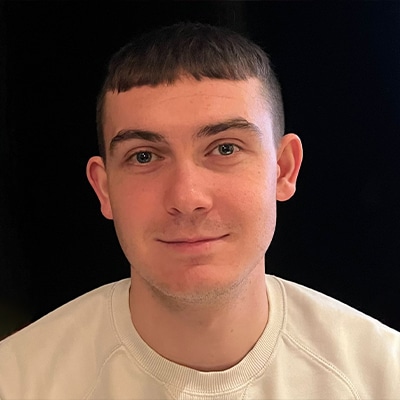
A familiar face on Leclerc Pont-l’Abbé’s social media channels, marathon runner Thomas Cambou—who has already lined up 22 marathons—has spent the past decade documenting his races around the world, from Berlin to Tokyo, Sydney to Cape Town. A self-taught runner who didn’t lace up for competition until the age of 44, he has turned late-blooming passion into a global journey. Interview (by phone) from South Africa, on the eve of his 22nd marathon.
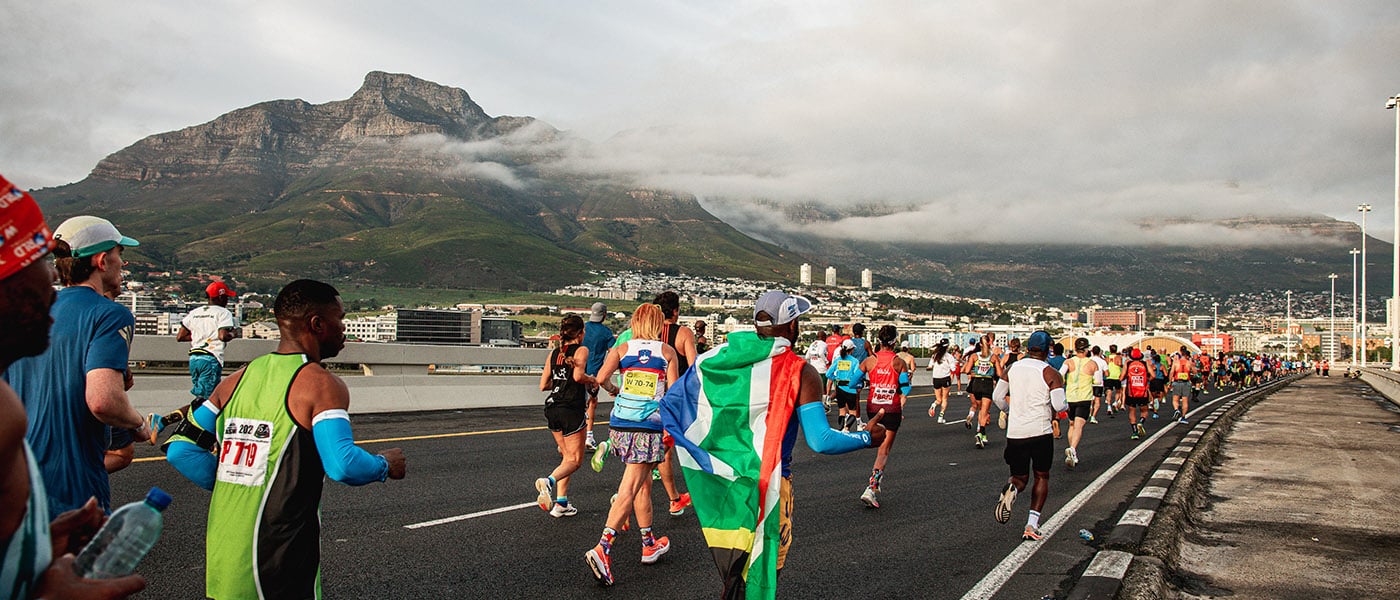
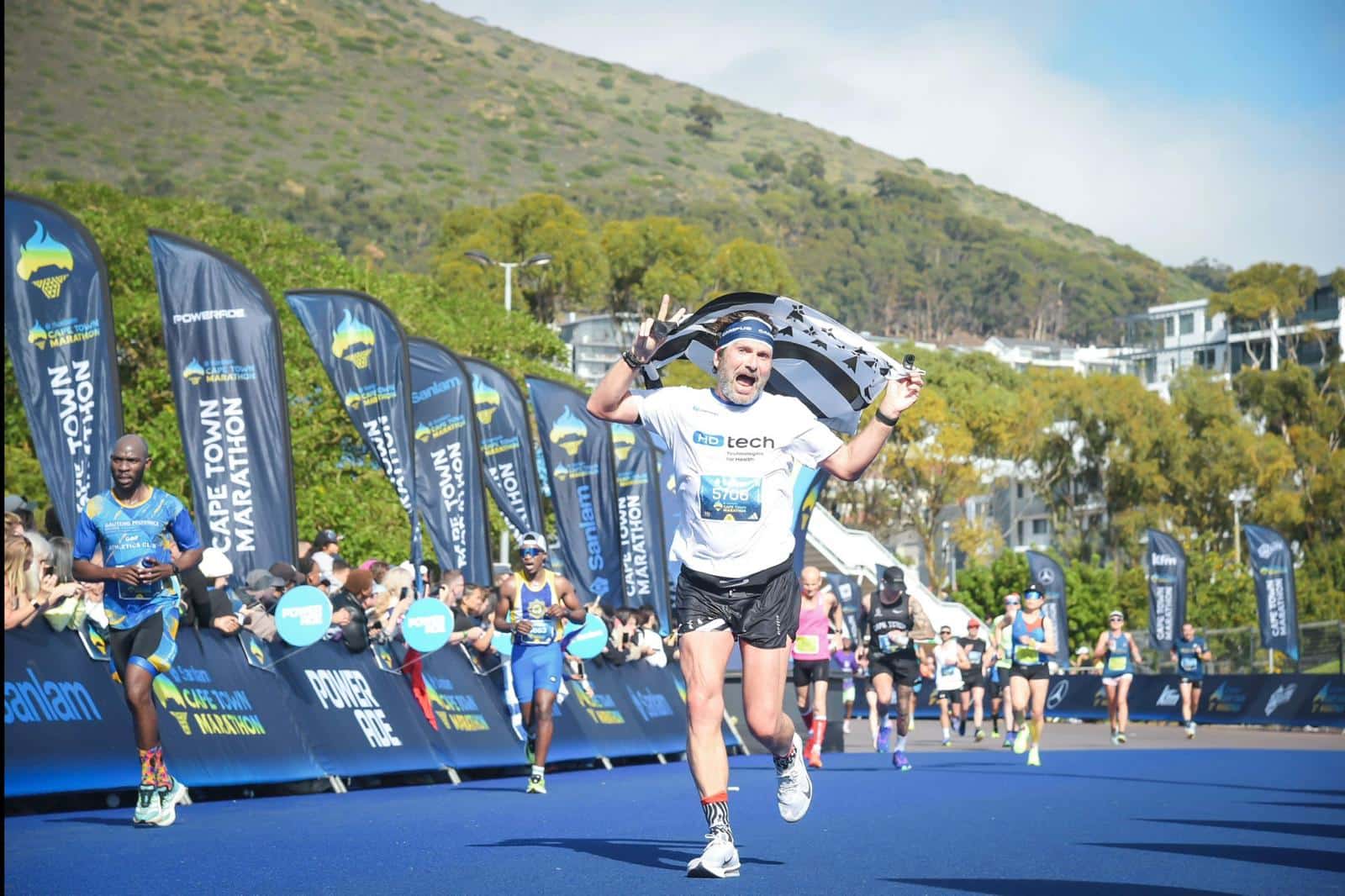
When he picks up the phone, Thomas Cambou is lying on a bed in South Africa, legs up in the air. Two days later, he would run the Cape Town Marathon in 3:31:43, his 22nd race and what he describes as an eighth World Marathon Major medal—pending official validation of the course in November. No pressure, he says. Just a bit of heat to deal with. The Breton-born runner only started running at 44, after reaching nearly 100 kilos and having stopped all sport since high school graduation. His first marathon came in Paris in 2016, without ever having run a 10K before. He set a personal best of 3:06 in Berlin in 2019, the same year he ran 3:09 in London. Since then, he has ticked off the Majors—Tokyo, Boston, Chicago, New-York, and Sydney —alongside weekly training for almost a decade without interruption. Strava data confirms it: nearly 500 consecutive weeks of activity. At the same time, the Finistère native works as community manager for Leclerc Pont-l’Abbé, whose videos have brought him millions of views and even selfies in the Paris metro. Two lives, one pair of running shoes.
| You now have 22 marathons under your belt. When did running stop being a challenge and become a necessity?
To explain my journey, like many people I stopped sport after finishing high school. I gained around 30 kilos, and at 44 I started running—just 3 km at first, and it was really, really tough. But I didn’t give up. I kept going once a week, slowly increasing the distance. My best friend Valérie lived in Paris while I was in the southwest of France, and she was running too. We set ourselves a little challenge: I would run 5 km on Sunday, she would do 6 km the next week, so I had to do 7, and so on. At that time, I thought marathons were insane, completely impossible. Then Valérie signed up for the 2015 Paris Marathon. I went to watch her. And I told myself: in 2016, I’m doing it. I signed up for both the half and full marathon in Paris. That was my first marathon, ten years ago. And once you get started… it’s over.
| You hadn’t even run a 10K or a half marathon before jumping straight to a marathon. That’s a bold approach, isn’t it?
Yes, absolutely. And over time I realised I actually prefer the marathon distance to the half. I’ve only ever done one 10K in my life, and that was just to pace someone who wanted to finish in under an hour. I dragged him the whole way. But I never truly trained for or raced a 10K. In fact, I’m doing the adidas 10K Paris on June 7, and it’s going to be a surprise. I even asked ChatGPT what I should do, and it told me: “It’s too late to do anything—rest and go for it.” (smiles)
| Out of all your marathons, is there one that truly changed your relationship with the distance?
Yes—my first Major in London in 2019. That’s still my best experience. I set a PB there with 3:09, then improved again in Berlin the same year with 3:06. A Major marathon is on another planet in terms of atmosphere. Paris in 2016 had nothing like London. The British crowds are shoulder to shoulder from start to finish, with an incredible finish line atmosphere and music all the way in. It was an emotional trigger, a real moment of joy. That’s when I decided to go after the Majors, especially after reading that fewer than 100 French runners had completed all six at the time. It felt special. There are more now, but that was my goal.
« Amateur runners gain experience over ten years. They work twice as hard as at the beginning for slower times. But that’s part of the game—you have to accept it. »
Thomas Cambou
| You always have your next bib lined up and a training block ahead. What keeps you motivated?
Having a race already booked means starting a new training cycle. I really enjoy long builds—starting slowly and finishing with 30–32 km long runs. That’s my life now: ten years, 22 marathons, constant preparation. But it’s not something exceptional. It’s five to six runs per week with intervals, and a long run on Sundays—that’s the real pleasure. And then there’s the endorphin rush at the finish line, which usually means I already have the next marathon in mind. I don’t try to break barriers. It’s part of my lifestyle. If I don’t run for two days, I don’t feel right.
| Your personal best dates back to 2019. You yourself say you’ve “slowed down” since then. How do you live with that?
Because I started late, I set my PB in Berlin in 2019 at 3:06. Then COVID hit and slowed everything down. I turned to triathlon because events were still happening, and I could train on the bike at home. I did about a year and a half of triathlon preparation. But when I returned to marathons, I realised I had lost fitness. Age also plays a role. At the Cape Town Marathon—part of the World Marathon Majors World Championship—you have runners my age running 2:30. But that’s elite level. I’m still an amateur. And amateurs improve through experience over ten years, but end up working twice as hard for slower times. That’s just how it is—you have to accept it.
| Was the idea of documenting your runs there from the beginning?
Completely, from day one. In 2014, we created an Instagram account for Leclerc Pont-l’Abbé, and I didn’t have a personal account yet. I thought I’d open one to test what worked and bring it back professionally. I started posting short runs, photos, race times, sharing with friends. It took off quickly—5,000, then 10,000, up to 30,000 followers. Back then, it pushed me to run. If I didn’t run, I had no content. So it kept me motivated.
| When you run, are you still thinking about content or can you fully switch off?
No, I run. Sometimes I think a moment could be interesting, so I film it. But it’s mostly before the race in the start pen, or one or two moments during the race—London’s bridge, the Brandenburg Gate in Berlin, New York. Those are key moments I try to capture. Afterward, I edit a bit. I enjoy it, but nothing more than that.
« The only time I truly enjoyed the Paris course was pacing someone for 3:45. On my first four marathons, I don’t even think I saw the Eiffel Tower. »
Thomas Cambou
| Does the camera capture what memory alone can’t?
Exactly. Without the videos and photos, I wouldn’t know what happened. It’s like a three-hour blackout. Some people remember every kilometre—I don’t. The only time I actually enjoyed the Paris course was on my fifth marathon, pacing someone at 3:45. I was slower than my usual pace and could finally look around: “This marathon is beautiful, there’s the Eiffel Tower.” On the first four, I didn’t see anything. The video also helps me analyse—going too fast, missing a drink station. It helps me improve.
| You have one running community and one Leclerc community. Are you recognised on races too?
Yes, quite recently. At the Ultramarin event, doing the 34 km race, people were shouting “Go Pont-l’Abbé!” or referencing Leclerc. It made me laugh. At first I was surprised. At the Paris Marathon too, people recognised me. It’s always nice—personalised encouragement is better than the endless “go go go” you hear for 42 km.
| Does it bother you not being seen only as “the marathon runner”?
Ideally I’d prefer to have 190,000 followers as a runner only. But that’s how it is. It also helped bring people from Leclerc content to my running account. Some followed me for years without realising I was the same person behind both accounts. That was quite funny.
| Does the word “influencer” bother you?
Not really, but it doesn’t fit me. I don’t see how I influence anything. The only thing that matters is when someone tells me, “I started running because of you.” But “buy this, buy that” influencer culture—that’s not me. I only promote products I’ve used for ten years. I ran my first marathons with Overstim.s without any partnership. Later they contacted me, and I accepted because I already used their products. My goal is to encourage people to move, do sport, improve their lifestyle. The only difference between an influencer and an average person is follower count. I’m just a guy with Instagram.
| 22 marathons—what does that do to a body? Has yours changed a lot since 2014?
I was overweight for a long time, nearly 100 kilos. Losing 30 kilos changes everything—you don’t want to go back. But the biggest change has been my diet, indirectly through running. My body naturally started asking for better fuel. I used to get injured more at the beginning because I didn’t warm up properly. Now, I haven’t had a major injury in maybe six years. And I barely get sore after marathons anymore. I just pretend a bit so people don’t get suspicious when I’m fine taking the stairs the next day. I feel tight tendons, but nothing that stops me functioning.
| The Majors have taken you to Tokyo, Sydney, Boston, London, Berlin, New York. Which city left the strongest impression off the course?
Tokyo 2023, without hesitation. My kids are obsessed with Japan and were mad at me for a week before I left because they couldn’t come. It exceeded all expectations. Then Sydney—so much so that I told my wife we had to come back and road-trip across Australia. Boston also stands out: it feels like the birthplace of America, very different from New York or Chicago. That’s why I run marathons—without them, I’d never have gone to Japan, Australia or South Africa. You always think you’ll go someday, but racing gives you a reason to make it happen.
« The human body is made to run. We are biologically designed for it, yet we live in the opposite way of what we should. »
Thomas Cambou
| Do you see yourself continuing for a long time?
I’m already scheduled until April 2027. Shanghai is expected to join the Majors in 2028, so I’m set until then. I still have London and Tokyo left to complete my second Six Star medal. I’ve also planned Valencia in December. After that, I don’t plan to stop. And beyond the Majors, I’d like to try something crazy: a marathon every week for a year. Combining official races and solo weeks, I think it’s doable at a slow pace.
| If you had to sum up your view of running today in one sentence?
The human body is made to run. We are biologically designed for it, yet we live in the exact opposite way. Most people are inactive, even though we aren’t built for that. It’s probably not great for the future of humanity—that’s just my opinion.
Dorian VUILLET
Journalist