 © Boston Athletic Association
Boston Marathon: the 5 key sections and how to manage them
In just a few days, the Boston Marathon will celebrate its 130th edition. And as every third Monday in April, there will be something in the air that you simply can’t find anywhere else. Boston isn’t just a marathon. It’s a rite of passage. A living legend. The oldest annual marathon in the world, a monument of running, and probably the one that inspires the most among performance-driven runners. On April 20, 2026, thousands of runners will set off from Hopkinton toward Boylston Street to write their own story on that iconic finish line. The thing is, qualifying for Boston is only half the journey. Getting your BQ, securing your bib, boarding the buses early in the morning… that’s already huge. But then, you still have to run Boston. And running Boston is a different challenge altogether. Because this course is full of traps from start to finish. Because there’s barely a flat meter. Because the downhills destroy your quads before the Newton Hills and the infamous Heartbreak Hill show up. And because the atmosphere, the history, the crowd, the emotion… all push you to go out too fast. Way too fast. Here are the five key sections of the Boston Marathon—and how to manage them smartly.
| 1. Hopkinton: the downhill start that can ruin your race
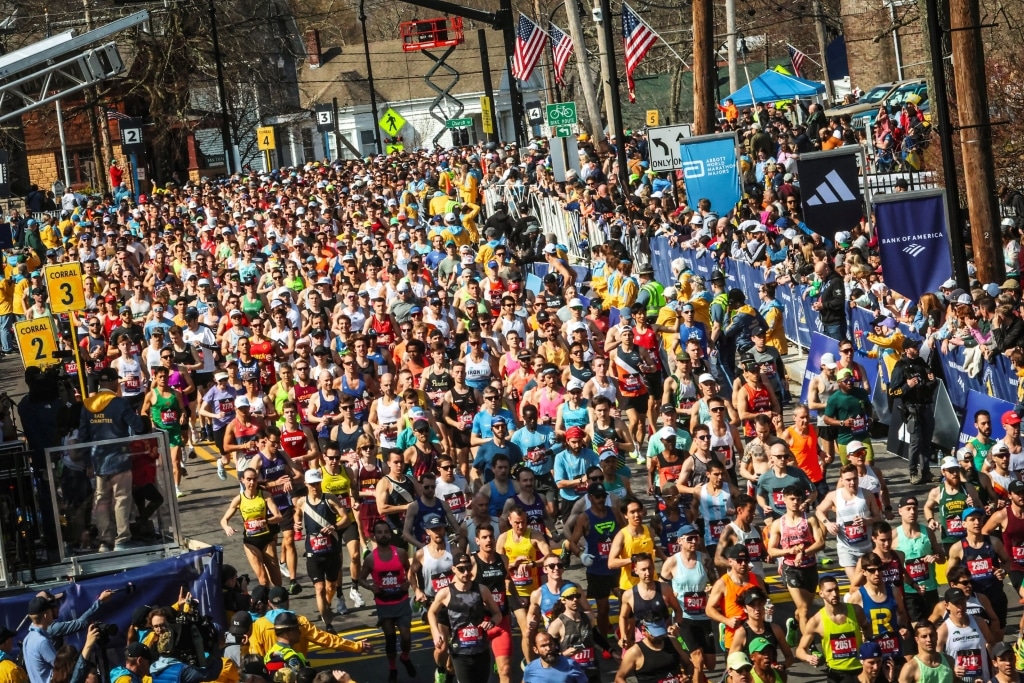
The race begins in Hopkinton, and almost immediately, the course drops sharply downhill. On paper, it looks like a gift. In reality, it’s often a trap. The first miles are the steepest and most deceptive of the entire race. With fresh legs and race-day excitement, your target pace feels ridiculously easy. This is exactly where many runners unknowingly ruin their race.
Because the real danger in Boston isn’t just the hills—it’s the downhills. Repeated descents either force you to brake too much or push too hard, both of which destroy your quadriceps. If you let gravity dictate your race, you’ll pay the price later—long before Heartbreak Hill.
The key here is counterintuitive: slow down slightly. Keep a high cadence, shorten your stride, and let your body flow downhill without attacking the pavement. Descend without damage—that’s the smart runner’s move.
| 2. Framingham, Natick, Wellesley: finding your rhythm
Between mile 6 and halfway, the course becomes more manageable. Not flat—nothing is flat in Boston—but more predictable.
This is where you finally settle into your marathon rhythm. You pass through Framingham, Natick, and Wellesley, including the legendary Scream Tunnel near halfway, where Wellesley College students create an unforgettable wall of noise.
The trap here is getting carried away. The energy is so intense it feels like a movie scene. But this is exactly when you need to stay disciplined.
This section isn’t for gaining time—it’s for finding your flow. Set a steady effort, hydrate regularly, and stay relaxed. The best advice: run by effort, not by your GPS watch. If you still feel good after Wellesley, you’re in great shape. If your legs are already burning, Newton will be brutal.

| 3. Newton Lower Falls turn: where the race changes
Before the famous Newton Hills, there’s a key moment many runners underestimate. Around kilometer 25, there’s a sharp downhill just before the Newton fire station—and suddenly, the race feels different.
This is a very “Boston” moment. The crowd is loud, the atmosphere electric. You can feel that the easy part is over and the real battle is about to begin.
The best strategy? Mentally break the race into segments: before the fire station, after the fire station. It helps you stay present and focused. Boston rewards runners who run by feel—not those glued to their watch.
| 4. The Newton Hills and Heartbreak Hill: the most famous section
This is the section everyone talks about. Four consecutive climbs between roughly miles 16 and 21, ending with Heartbreak Hill around mile 20.
They’re not insanely steep. For trail runners, they might even feel manageable. But they come at the worst possible moment—when your legs are already damaged from the downhills, when energy is fading, when breathing gets heavier.
The biggest mistake here is trying to hold your marathon pace at all costs. That’s a bad idea. In Boston, pace isn’t constant—effort is.
Accept slowing down on the climbs. Shorten your stride, stay smooth, and listen to your body. Heartbreak Hill isn’t as brutal as its reputation suggests—but it’s revealing. If you still have energy, it’s manageable. If you’re already empty, it feels endless. That’s why people say: you don’t win Boston in the Newton Hills… but you can lose everything there.
And then there’s the crowd. Thousands of spectators, screaming, cheering, standing along the iconic Heartbreak Hill Running Company. The energy is overwhelming. Few races in the world deliver this level of emotion.
| 5. The Citgo sign and Boylston Street: the final reward
After Heartbreak Hill, it’s time for the финал. A long downhill leads back into Boston. Two iconic landmarks define this moment.
First, the Citgo sign. Every runner knows it. Once you pass it, there’s about one mile to go. But it looks deceptively close—hovering above the city, almost mocking you.
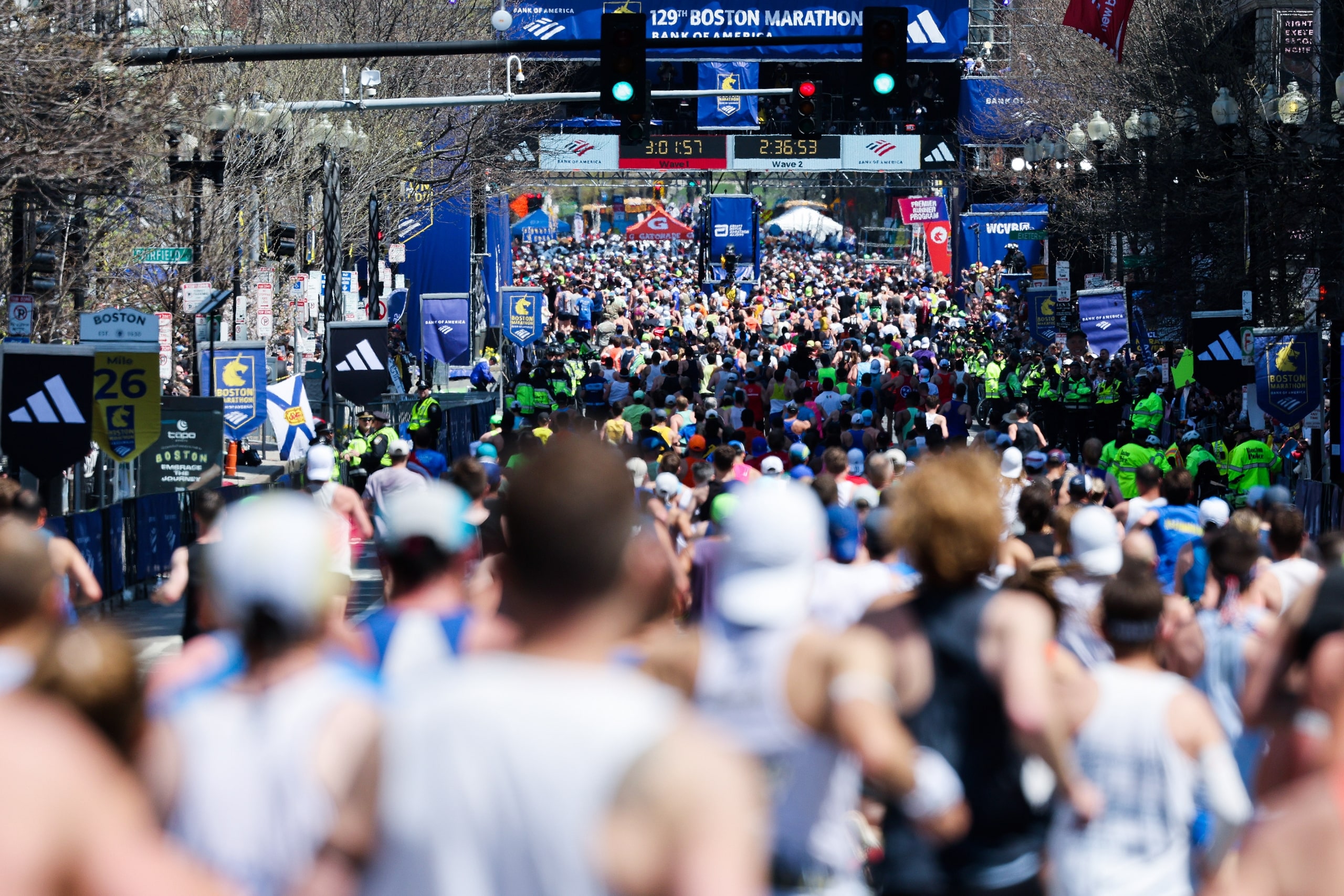
Then come Hereford and Boylston streets. A right turn. Roaring crowds. Then the final left turn onto Boylston. That legendary finish stretch you’ve seen a thousand times.
The trap? Thinking it’s over too soon. If you’re exhausted, Boylston can feel endless. It’s 500 meters long—and at this stage, that’s a lot. But if you still have energy, it becomes magical. The crowd is insane. This is where you empty the tank and enjoy the moment.
One last detail many forget: at kilometer 41, runners pass under the Massachusetts Avenue bridge. A short, quiet section with a slight incline that feels like a mountain at that point. Tough—but thankfully brief.
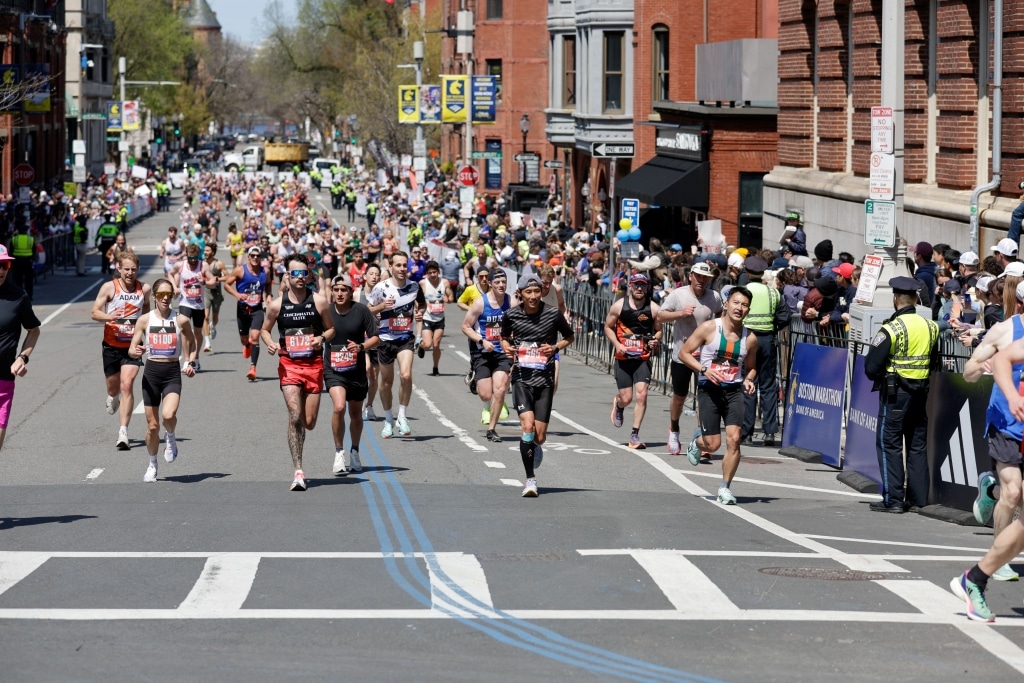
The Boston Marathon is a race of feeling, instinct, and course awareness. It rewards runners who listen to their bodies more than those obsessed with pace. Here, you don’t force a time—you negotiate with the course. You respect the downhills. You survive the climbs. And if everything goes well, you reach the final miles with something close to gratitude… and immense pride. In four days, the 130th edition will write new stories between Hopkinton and Boylston Street. Some will be glorious, others tougher. But all will carry that unique Boston feeling—the one that makes this race so special.
✔ Find all the information about the Boston Marathon
Clément LABORIEUX
Journalist