
Paris Marathon 2026: detailed course analysis
 © Marathon de Paris
The Paris Marathon is ndoubtedly a must-attend event for all running enthusiasts. Every year, more than 50,000 runners take to the capital’s most beautiful avenues, driven by the adrenaline of the challenge and the magic of the iconic landmarks along the way. While the course is recognized as one of the most spectacular in the world, it remains a demanding one. Here’s a detailed breakdown of the route.
The Paris Marathon course map
 © Marathon de Paris
The Paris Marathon offers a unique opportunity to cross the city from east to west, passing through 11 of its most iconic neighborhoods. From the banks of the Seine to the city’s most famous monuments, every kilometer is a true immersion into Parisian heritage and history.
Elevation profile
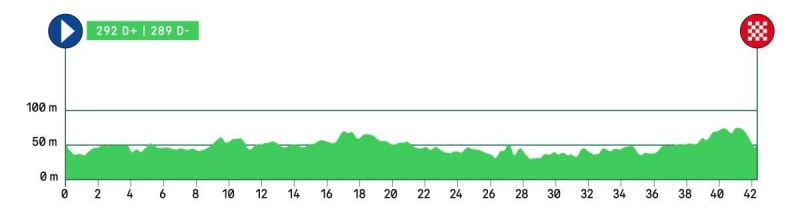
With 292 meters of elevation gain and 289 meters of descent, the 2026 Paris Marathon (Sunday, April 12) cannot be considered a “flat” course. Although it ranks as the fifth fastest marathon in the world with an average finish time of 4:11, the route features several climbs—particularly in the Bois de Vincennes and Bois de Boulogne, as well as along the Seine riverbanks with the notorious underpasses, which are very demanding on the legs.
Add to that the cumulative fatigue and the late-race climbs, which can feel like real walls. To run a strong race, it’s essential to know these challenges in advance and adapt your strategy. A marathon isn’t a sprint—everything happens in the second half. Staying disciplined early on is key, and avoiding getting carried away by overly ambitious runners is crucial.
 © Marathon de Paris
KM 0 to KM 10: a majestic start… but a trap to avoid
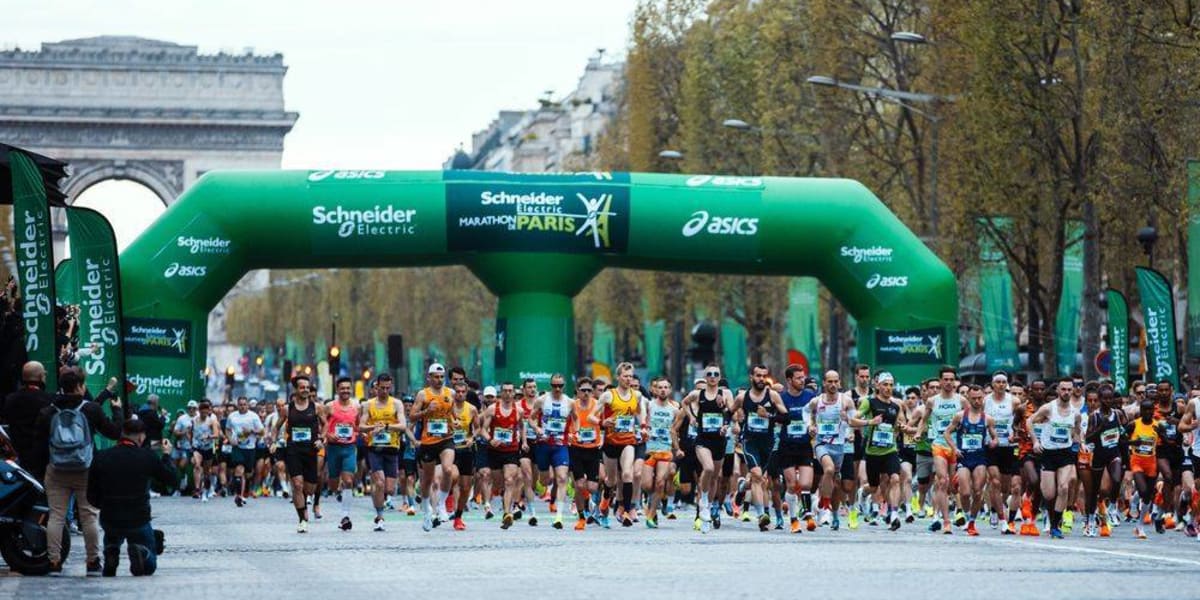
The race begins, as always, on the Champs-Élysées, with a stunning view of the Arc de Triomphe. Carried by the collective excitement and the exceptional setting, runners start on a slight downhill, which can tempt them to go out too fast. One golden rule of marathon running: hold back at the start.
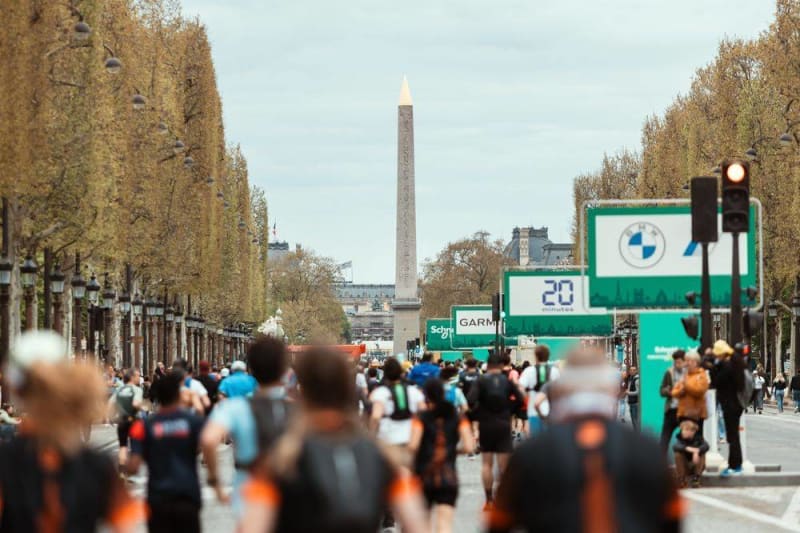
After passing Place de la Concorde, the first loop takes runners around the Palais Garnier, then toward the Carrousel du Louvre and the famous Rue de Rivoli. Around kilometer 6, the crowd thickens at Place de la Bastille, the first major atmosphere hotspot.
But things quickly get tougher: the climb toward Place de la Nation via Rue du Faubourg Saint-Antoine and Rue de Picpus is the first real muscular challenge. Managing effort on this gradual uphill section is essential.
 © Marathon de Paris
KM 10 to KM 20: the rolling terrain of Bois de Vincennes
Around the 10 km mark, runners enter the Bois de Vincennes, known for its short climbs and descents that disrupt rhythm. This section is quieter, with fewer spectators—perfect for focusing on your running sensations. You’ll pass landmarks like the Château de Vincennes and near INSEP, France’s elite sports training center.
From kilometer 16, the course gets tougher with two consecutive climbs that test your legs. The strategy here is clear: slow down on the climbs, gently accelerate on the descents without overexerting. After this section, the terrain becomes more runnable again as you approach the halfway point.
KM 20 to KM 30: scenic riverbanks… and the approach to the wall
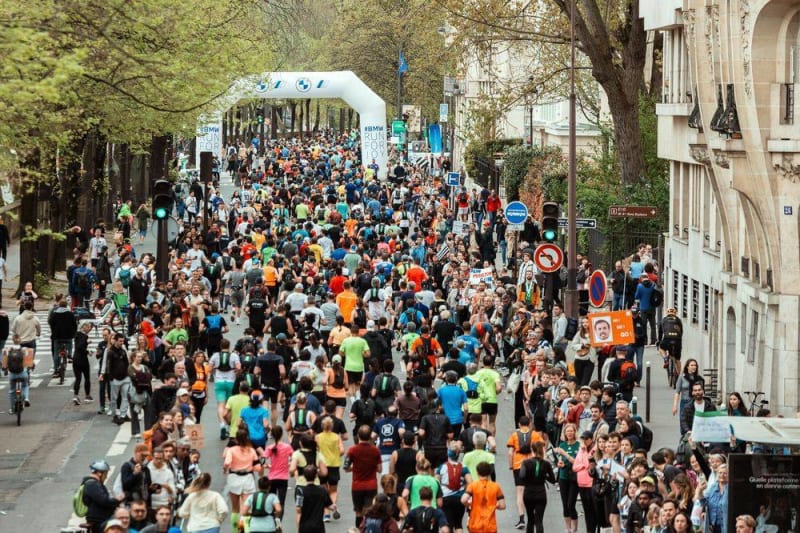
Halfway done! At kilometer 21, runners return to the urban buzz as they exit the woods. A nice downhill leads onto the Seine riverbanks, starting a section that is both beautiful and tricky. Iconic landmarks line the route: Notre-Dame, Musée d’Orsay, and soon the Eiffel Tower.
But this seemingly idyllic stretch hides some traps. The tunnels at Tuileries and Pont de l’Alma disrupt rhythm with sharp descents followed by climbs. At this stage, conserving energy is still critical. It’s not the time to play hero—save your strength. Enjoy the scenery and the crowd support, especially from spectators gathered on the bridges.
Handling this rolling section requires adjusting your stride—longer on descents, shorter on climbs—while staying in tune with your body. Kilometer 30, often called “the wall,” marks a turning point. Right near the Eiffel Tower, many runners see their pace drop or their motivation falter.
At this moment, your preparation, fitness, and race management will make all the difference.
 © Marathon de Paris
KM 30 to the finish: the real marathon begins
You’ve probably heard it before: “the marathon starts at 30 km.” In Paris, this is absolutely true, especially with the climb toward Boulevard Exelmans. At kilometer 33, your legs are already burning, and you’ll face a steep incline (3–5%) over 500 meters. This can be brutal—especially if you started too fast.
After kilometer 35, the course flattens slightly as you enter the Bois de Boulogne, offering some relief. But from kilometer 37 onward, the difficulty returns with a long gradual uphill. At this stage, your legs are heavy, your mind is tested—but the crowd support helps push you forward.
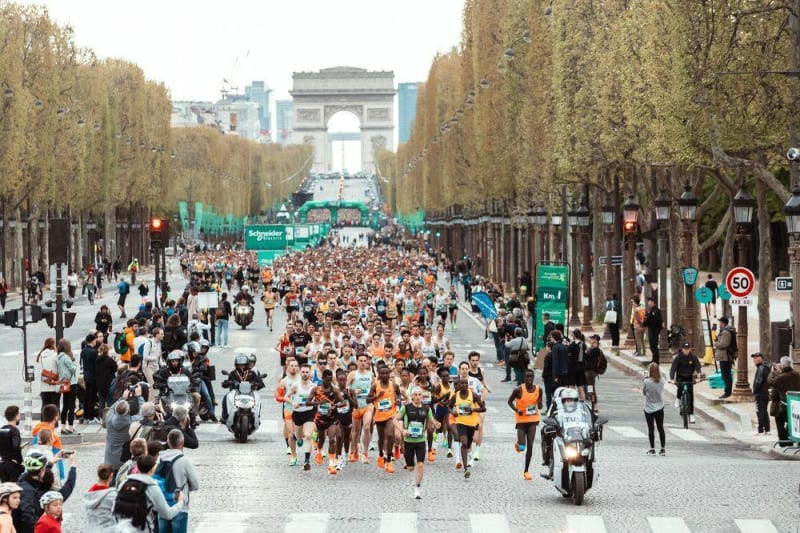
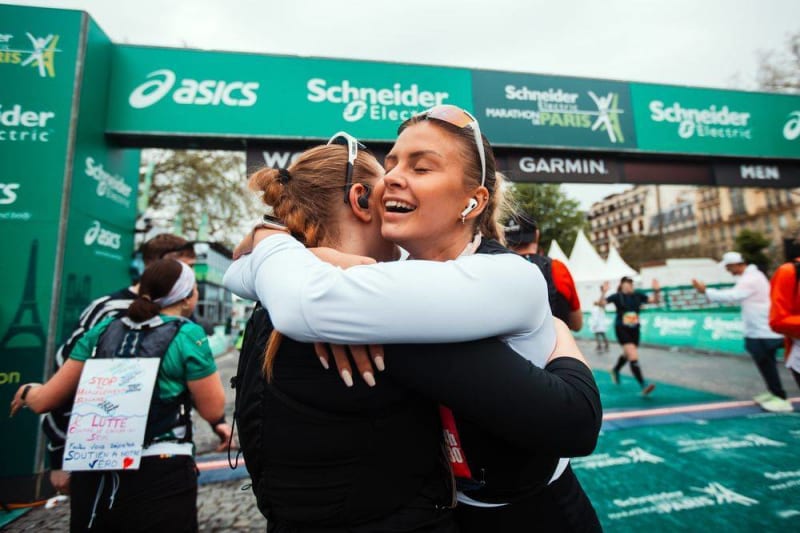
At kilometer 40, the finish draws near. A long downhill allows you to gradually accelerate. The atmosphere becomes electric, and in the distance, the finish arch appears: Avenue Foch, with the Arc de Triomphe in the background. A magical finish to an effort you’ll never forget. You did it—you’re a marathoner!
 © Marathon de Paris
Race strategy: aid stations and cheering zones
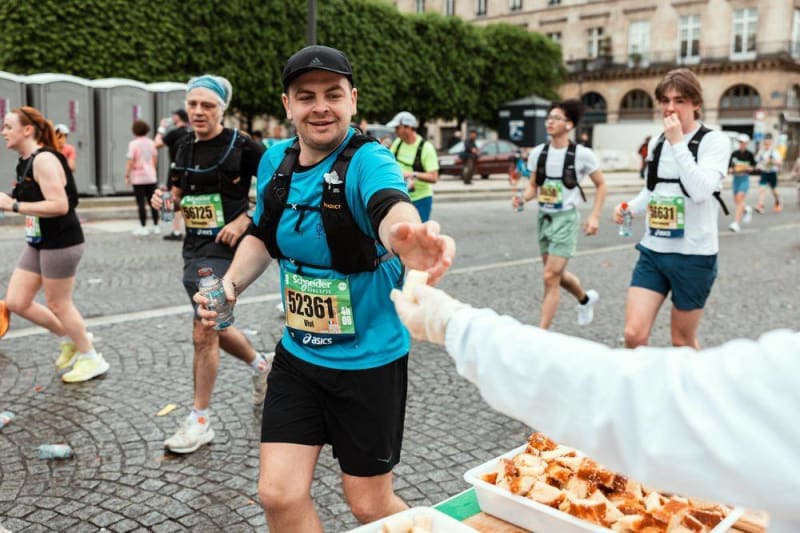
Succeeding at the Paris Marathon is all about managing effort and fueling properly. This 49th edition marks a turning point in sustainability. ASO (Amaury Sport Organisation), the race organizer, has introduced eco-friendly measures: runners must carry their own hydration container (soft flask, collapsible cup, or hydration pack). Gone are the days of thousands of cups littering the ground.
➔ Volunteers will quickly refill runners’ containers
➔ High-flow push-button fountains will allow refills in under two seconds for a 350–400 ml flask
➔ More hydration points will be added, with stations every 2 to 2.5 km from the halfway mark to avoid congestion
 © Marathon de Paris
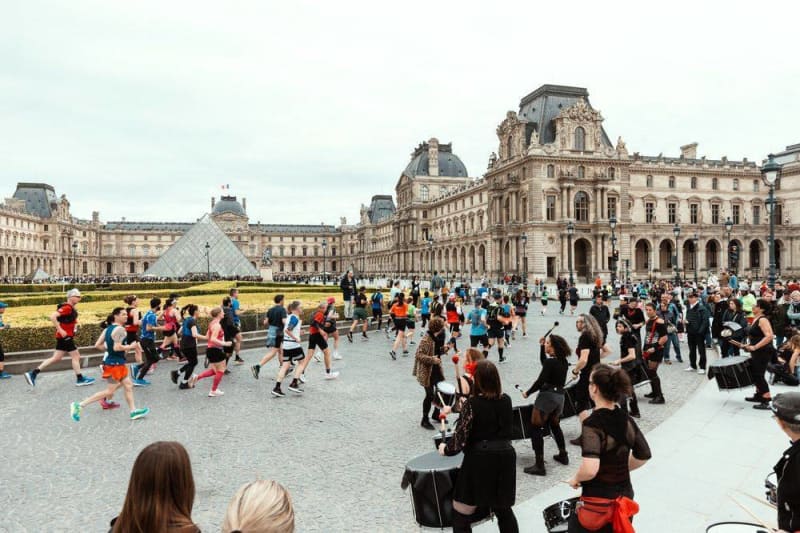
Cheering zones are strategically placed at key points:
➔ Bastille (km 6–7)
➔ Seine riverbanks (km 25–30)
➔ Exit of Bois de Boulogne (around km 40), where runners need support the most
In total, nearly 50 entertainment points will energize the course. For spectators, the best spots remain Bastille, Trocadéro (for the Eiffel Tower view), and the finish on Avenue Foch.
 © Marathon de Paris
The Paris Marathon course is both a visual and physical journey. It combines the beauty of an open-air museum with the demands of a challenging route. Becoming a finisher requires humility, resilience, and above all, passion. Whether your goal is a personal best, finishing for the first time, or simply running through Paris, the marathon awaits you.