
Saucony Endorphin Azura: review and verdict after 200 km
 © Marathons.com
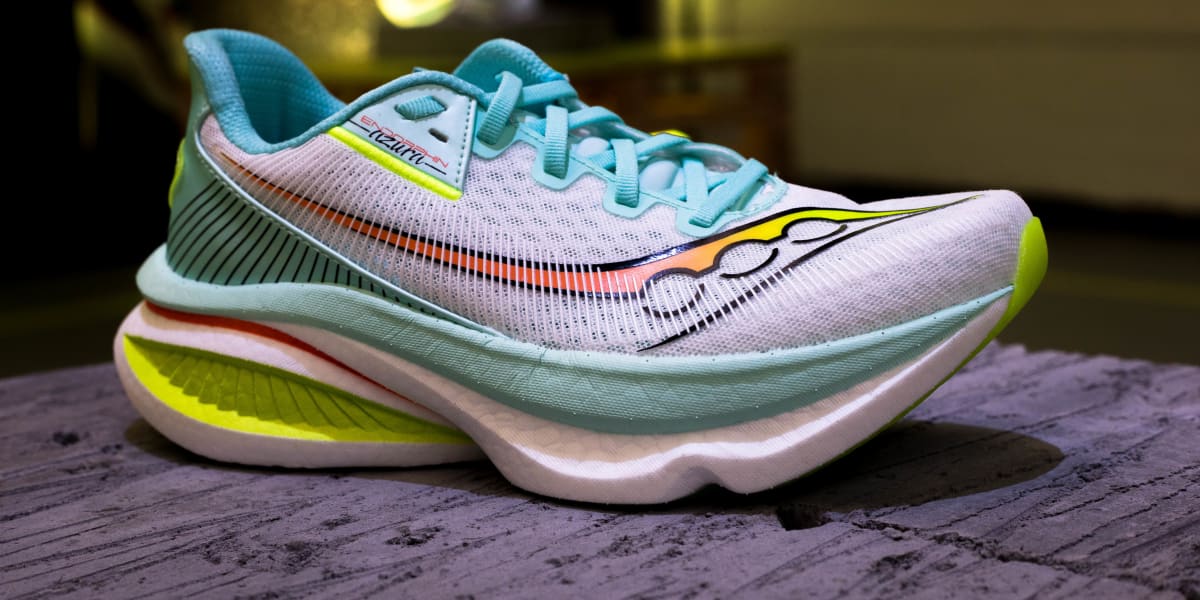
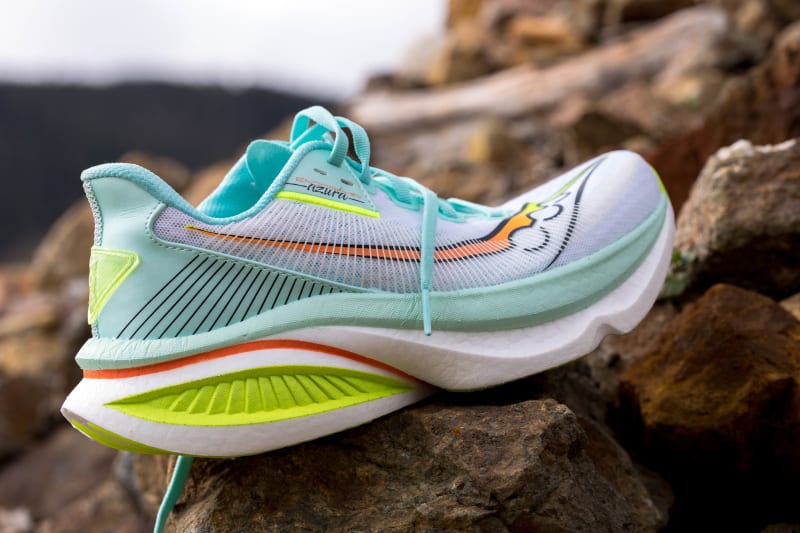
The new Saucony Endorphin Azura has quickly become one of the most talked-about releases of early 2026. This new addition to the Endorphin line brings fun to everyday runs with a simple but ambitious promise: a shoe that can do it all. Designed as a versatile daily trainer, it fills the gap left by the disappearance of the Endorphin Shift, while borrowing some DNA from Saucony’s more performance-oriented models, including the Endorphin Elite. After more than 200 km in the shoe, across easy runs, faster sessions and long runs, one thing is clear: the Azura does not go unnoticed. Here’s our full review of a shoe that ticks a lot of boxes.
As you’ve probably noticed, the super trainer segment is booming. These versatile, high-stack shoes can take you through speed sessions, easy runs and long runs. At Saucony, the Endorphin Speed more or less filled that role, with its PWRRUN PB foam and nylon plate offering impressive bounce and comfort. With the new Endorphin Azura, Saucony offers an interesting alternative. No plate, but more PWRRUN PB foam underfoot and the same very pronounced forefoot rocker. A great option for runners looking for a daily trainer that can run fast and go long.
Testing conditions
➜ Clément : Experienced runner preparing for the London Marathon. I ran over 200 km in the Saucony Azura, mainly on roads. I used it mostly for easy endurance runs, two long steady runs (32 km and 34 km), and a few threshold sessions.
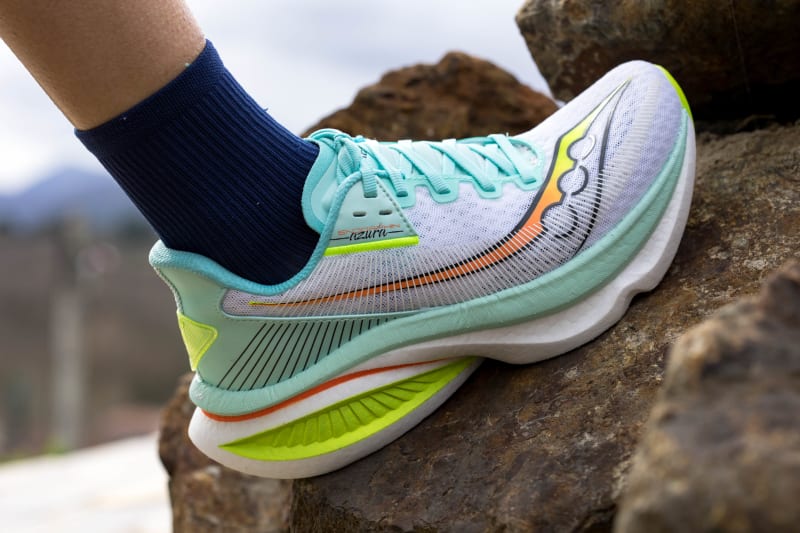
➜ Emma : Athlete preparing for the summer track season over 5000 m. I ran over 100 km on roads, paths and treadmill with the Endorphin Azura, across varied sessions: threshold, intervals, hills and a few easy runs. The goal was to assess how it performs at different intensities.
 © Marathons.com / Emma Bert
Fit and comfort
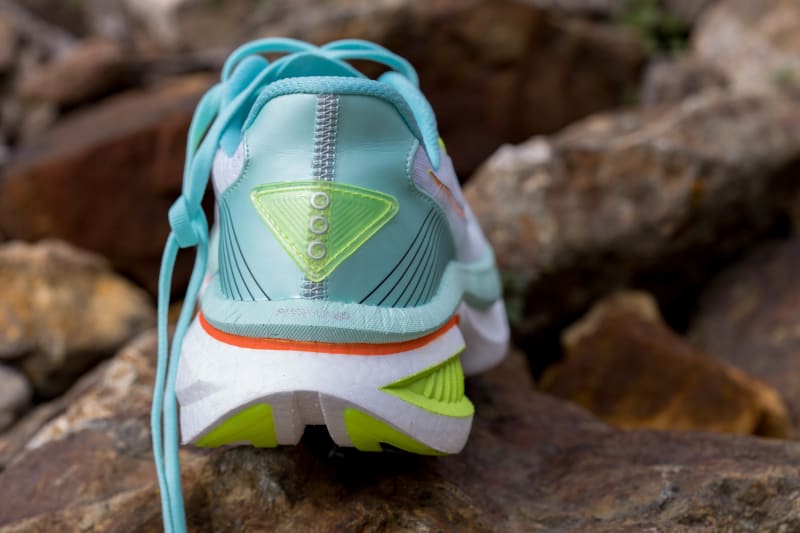
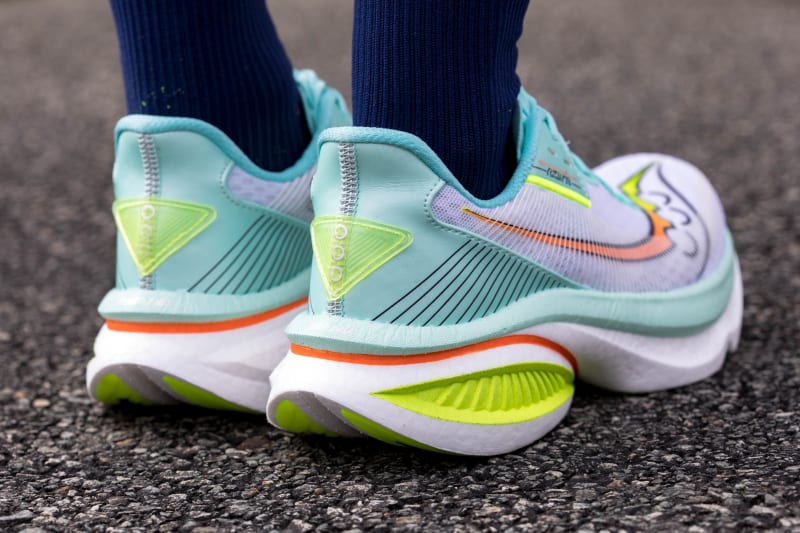
➜ Clément : In terms of fit, Saucony sticks to what it does well. The mesh is very breathable and technical—almost too technical. For me, it lacks a bit of comfort. You don’t really get that “slipper-like” feel when putting it on. I went with my usual size and the fit is fairly standard: not too narrow, not too wide, with good overall lockdown. But on long runs, I experienced some rubbing on the little toes of both feet. It happened around the midfoot, where the rocker begins. After a few runs, my feet adapted and I had no further issues. The heel hold is excellent, with rigid structural elements giving a real sense of security. I noticed no heel movement during my runs.
➜Emma : From my point of view, this shoe is not necessarily best suited for easy runs. I’m used to the Nike Vomero 18 and Vomero Plus, and I didn’t find the same enveloping, reassuring comfort. The ride feels close to the ground, fairly rigid and firm, with limited cushioning sensation and a very pronounced forward rocker. These elements aren’t a problem when running fast, but they become more noticeable at slower paces. The mesh is performance-oriented. Breathability is good and the foot stays well locked in, although forefoot hold could be improved slightly.
Performance
➜ Clément : From the first runs, what stood out with the Endorphin Azura was its ability to adapt well to almost any pace. I used it mostly for easy runs, but also for threshold sessions, hill workouts and long runs. Each time, the shoe responded well. The thing I enjoyed most was the rolling sensation underfoot—the famous SpeedRoll rocker. The PWRRUN PB foam also brings good energy return, even if it is not the brand’s most explosive foam.
The foam is not super soft. On the contrary, it feels rather firm, but with enough dynamism to keep the ride enjoyable, even on long runs. The foot never sinks into the shoe, and when you speed up, it clearly shifts personality. As often with Saucony’s Endorphin line, the geometry matters just as much as the foam. The pronounced SpeedRoll rocker at the forefoot naturally encourages forward momentum. At easy pace, it can feel slightly rigid or long through the stance phase, but once you find your rhythm, it becomes smooth.
At faster paces, everything feels more fluid and natural. That’s when the shoe truly shines. I tested it on two long runs over 30 km and really felt like I was being propelled forward with each stride. The cushioning is dynamic and protective enough. The next day, I was able to continue training without too much muscular soreness, partly thanks to the generous foam absorbing impact well.
➜ Emma : The first thing you notice is the lightness, along with a very aggressive SpeedRoll rocker that encourages a natural forward roll. These features immediately position the shoe for faster sessions. I mainly used it for threshold work, hill sessions, track workouts and treadmill runs. I also tested it for easy runs, but it convinced me less in that context due to its lack of softness and comfort.
For intervals, I liked the forward roll and the responsiveness. I was less convinced by the fairly rigid sole, which gives the impression of a sharper ground impact, especially at slower speeds. When the pace increases, the shoe becomes much more useful, with effective energy return. The Azura is particularly relevant for tempo sessions, where it expresses its full potential. Progressive runs illustrate its qualities well: at 5:00/km, the behavior remains neutral. At 3:45/km, the rocker is more noticeable, the sole becomes more responsive, and the forward propulsion feels smoother and more natural.
The Azura feels close to a racing shoe, but without a carbon plate, making it an interesting option for adding intensity to all kinds of workouts. That may also be the limitation of these trendy daily trainers: they are versatile and suitable for non-specific sessions, but they don’t truly excel in one specific area. For a good runner who doesn’t want too many shoes, the Azura makes sense. For a more experienced athlete used to specific shoes for specific workouts, it may feel less convincing.
Technical specs – Endorphin Azura
Category: premium daily trainer
Use: daily runs, long runs, tempo sessions
Foam: PWRRUN PB (PEBA)
Technology: SpeedRoll rocker
Outsole: XT-900 rubber
Surface: road
Level: all runners
Weight: 212 g (women) / 240 g (men)
Stack height: 40 mm / 32 mm
Drop: 8 mm
Available: February 1, 2026
Price: €160
Similar models: New Balance Rebel v5, ASICS Superblast 2, adidas EVO SL
Stability
➜ Clément :Even though the Endorphin Azura is a neutral shoe, it offers good stability. The structure is not very flexible, the platform is quite wide, the foam is relatively firm, and the whole package feels secure underfoot. With the rocker, you clearly feel the shoe pushing you forward, which can make walking uncomfortable. In my opinion, this is definitely not a shoe designed for walking—only for running. That’s worth noting if you’re looking for a daily trainer you can also wear casually. There are much better options for that.
➜ Emma : The Azura remains stable on roads, but slightly less so on paths, which is consistent with its positioning. The sole is wide, relatively close to the ground and not overly bulky, avoiding the elevated feeling found in many shoes that can reduce stability. The ride feels fairly natural, and you adapt quickly to its structure. That’s a plus for runners who don’t like shoes with a very high stack. The XT-900 rubber grip could be improved, especially on wet surfaces, which is common in this category. The 8 mm drop is fairly classic and contributes to a smooth transition, in line with the strong forward rocker.
Durability
➜ Clément : After 200 km, the overall condition of the shoe is fine, but visible wear on the outside of the outsole is already clear. I’ve noticed this wear pattern on all Saucony models I use. I’m a midfoot striker, but with accumulated fatigue and slightly bowed legs, I tend to supinate toward the end of long runs, which puts more impact on the outer sole. I found that the outsole rubber is not protective enough. Performance-wise, the foam still has its bounce and cushioning properties, and the shoe will probably reach around 600 km—but likely not much more. That’s a negative point, especially for a shoe designed as an all-in-one solution. You expect this type of model to last, and the Azura’s lifespan seems lower than some competitors.
➜Emma : The very lightweight construction raised questions about durability, so I avoided using it for easy runs. That feeling was confirmed: after around 100 km, the outsole already shows some signs of wear. Durability is not its strongest point. The shoe wears fairly quickly. However, the foam has not lost dynamism or collapsed. For an everyday training shoe meant to handle lots of kilometers, that’s disappointing. This kind of model should offer solid durability and allow runners to reduce their rotation. Used exclusively, the shoe may reach its limits quickly, unlike a Nike Pegasus or New Balance 1080v15, which feel more robust.
Respirabilité
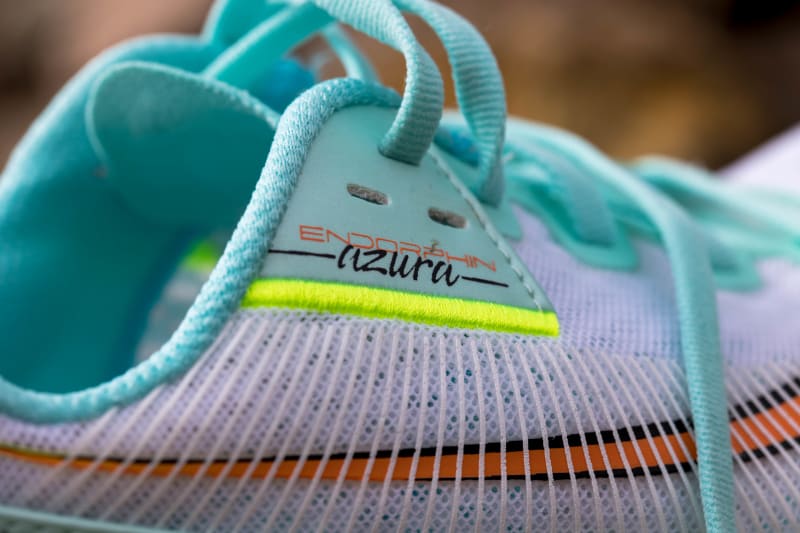
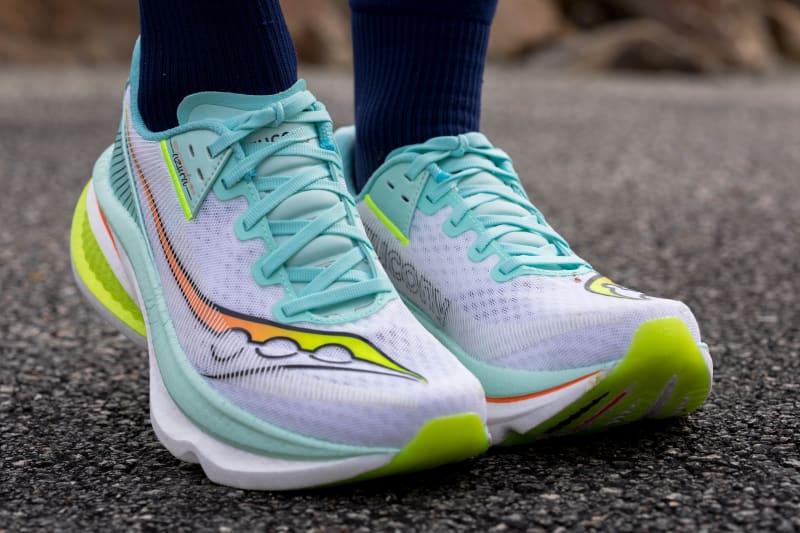
➜ Clément : The mesh is very breathable and almost feels like a racing shoe upper. Saucony focused on lightweight materials with a two-layer upper: a structured outer mesh with small holes and a second inner layer with larger openings. Overall, it’s a very strong upper for the price. It’s not the most comfortable mesh on the market, but it performs very well. Ventilation is excellent, even after long runs of over two hours.
➜ Emma : The mesh, close to a racing model, offers excellent breathability. The dual-layer upper performs well and prevents the foot from overheating. This is a strong point for runners looking for lightness and technical construction. Ventilation is effective, but it comes at the expense of comfort, which could be improved.
Weight
➜ Clément : At 240 g for men and 212 g for women, the shoe is impressively light. With this much cushioning underfoot, that’s a real technical achievement. It disappears quickly during runs, especially at faster paces.
➜ Emma : The lightness is immediately noticeable, even in hand. That feeling is striking, especially given that the cushioning remains comfortable and dynamic. From the first strides, the shoe feels close to a racing model, making it ideal for runners looking for a daily trainer without unnecessary weight.
Comparison with competitors
➜ Clément : The shoe sits in a highly competitive segment alongside models like the adidas Evo SL and New Balance Rebel v5—dynamic, versatile, plateless shoes. It stands out with its very pronounced rocker and fairly firm ride. With 40 mm of foam underfoot, it can go long, and versatility is its biggest strength. From a 40-minute easy run to a demanding 35 km long run, its range is impressive and will appeal to many runners.
➜Emma : In the daily trainer category, the Azura is a coherent model, but perhaps not the best. Lightweight, dynamic, with a strong forward roll, it is a performance-oriented, plateless shoe for daily training. It can be compared to a Nike Zoom Fly 6 or a New Balance 1080v15, perhaps with a higher level of responsiveness. I was less satisfied with the very stiff sole. In this segment, the lack of comfort is noticeable, and comfort is crucial for this type of shoe. However, its potential comes through at faster paces, where the ride feels much better than at easy pace.
 © Marathons.com / Emma Bert
Value for money
➜ Clément : At €160, the Saucony Endorphin Azura is simply one of the best value-for-money shoes on the market. At this price, it competes with the adidas Evo SL, which has a more dynamic foam, but the Azura has the advantage of handling longer distances and bigger volume. For the price, it’s a banger.
➜ Emma : Its €160 price is a strong point. In a market where shoe prices keep rising, Saucony offers a competitive option, probably among the most accessible in this segment.
Final verdict
➜ Clément : I loved running in the Azura. With its very pronounced forefoot rocker, it quickly became part of my rotation, especially for long runs, which I prefer to do without a carbon plate. What impresses me most is its versatility. It’s truly a shoe you can put on without thinking. Right now, if I had to take only one pair on a trip, it would be this one. It doesn’t try to be the fastest, the most comfortable, or the most technical—but it manages to be good enough everywhere. I also noticed limited muscular soreness the day after sessions, despite demanding long runs during marathon training, and that’s partly thanks to the cushioning doing a good job. For the next version, I hope Saucony works on making the mesh a bit more comfortable. I expect more comfort from a daily trainer.
➜Emma : I’m more mixed than Clément. I see it as a versatile shoe without one clearly outstanding area, which may be the inherent limitation of this type of model. I tend to prefer shoes that are very strong in one specific area, which leads me to use a larger rotation. The cushioning is decent, and the dynamism is quite remarkable at higher intensities. I was less convinced by the very rigid feel, the extreme lightness and therefore limited durability—especially in my case, after recent foot surgery, which makes me particularly sensitive to that. Comfort is not its strongest point, but that is consistent with the performance-oriented mesh. Its potential is best expressed during hill sessions, threshold runs or progressive runs, when the pace increases and the rocker becomes more noticeable.
Who is it for?
✔ Runners looking for a versatile shoe that can do almost everything
✔ Those who love pronounced rockers (especially Saucony fans)
✔ Runners who prefer firm cushioning
✔ Runners looking for a performance daily trainer at a reasonable price
The Saucony Endorphin Azura is a versatile, reliable and fun shoe that will suit a very wide audience. It’s one of the best surprises of early 2026. Whether you’re building a rotation or looking for just one shoe that can handle almost everything, it has plenty to offer. Easy runs, tempo workouts, long runs—it’s a safe bet. At just €160, despite rising shoe prices, Saucony keeps things grounded, much to the delight of the running community.
✔ Find the Saucony Endorphin Azura on the official saucony.com website for €160.