
Twins: An Advantage in Running ?
From sharing sporting activities in childhood to reaching the stage of running together as adults, it is only a small step for twins, born under the same star, which may or may not make them prodigies in the discipline. Once their characteristics are identified, all that remains is to train: together, sometimes apart, but always with the same joy of meeting at the starting line to run side by side.
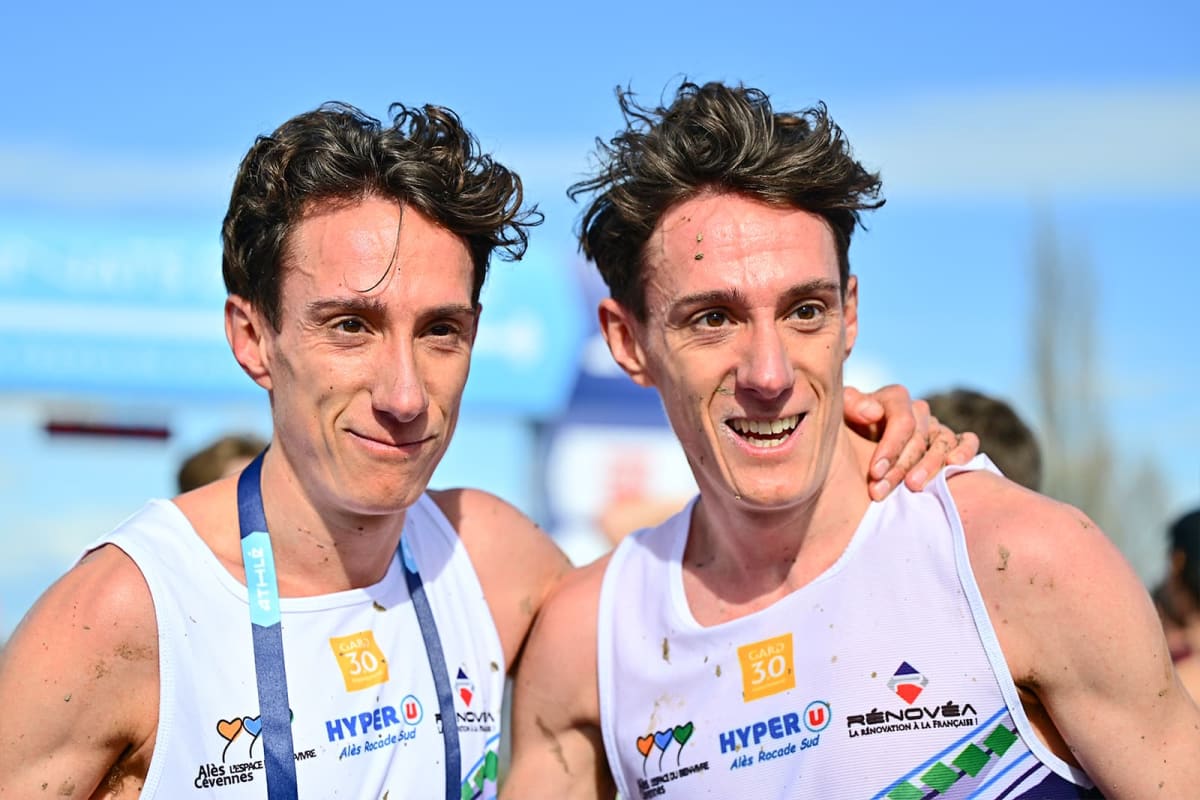
No, you didn’t dream it: when Michaël Gras crossed the finish line, a few minutes later it was his brother Damien Gras who appeared in the final straight. And if, by chance, they swapped places in the rankings, it would be hard to notice. Being twins and high-level athletes is everyday life for the Gras brothers, aged 33. But they are not the only ones sharing their passion as a duo: Amélie and Carole Sinquin, 32, also share a love for the sport. While one excels in the marathon, the other stands out in the 5km. A look at a sport where being a twin can make a difference… or not.
Being two to improve, stay motivated, and perform: a real advantage
Working as a pair—whether “as a couple,” meaning feeling different but sharing a common approach, or “as doubles,” mirroring each other and doing everything the same—offers many advantages, especially in a sport where morphology plays a crucial role in performance. From a very young age, the Sinquin sisters engaged in various sports, always side by side. « We were a bit of everything. Every term, we would change activities, » recalls Amélie, the older of the two sisters. Athletics soon became obvious. « We started by taking part in small races in our village. During one of them, our father saw us entering the stadium and thought we had a very beautiful stride, because he himself was a bit of a runner. » At age 10, they joined the Pontivy club before moving to the Cesson-Sévigné high school sports program, where one focused more on the 1500m, while the other turned to the 800m. « My sister did short cross-country, and I preferred long cross-country. She doesn’t like it much when there are climbs or too much elevation. »
Similarities appear with the Gras brothers, who were also immersed in sports from a very young age, never leaving each other’s side. « We always did more or less the same things. Our parents signed us up for football around the age of seven, »recalls Michaël. Spotted by the athletics coach of the Pessac AC club, whose son played on their team, they excelled in cross-country races as young athletes. « He saw that we ran well in preseason and, above all, that we enjoyed it. So he had us try cross-country, and we ended up winning quite easily, without too much training. » They nonetheless distinguished themselves through different aptitudes: one leaning more toward 800-1500m, the other toward 3000m. « But really, it was split… », Michaël emphasizes.
Sharing training sessions, for both the sisters and the brothers, proved beneficial. « Training with someone at the same level worked well. On a daily basis, it wasn’t easy to find partners who matched us. And if one of us didn’t feel like running, tired or bothered by a small pain, the other would motivate them to go, » explains Michaël. Amélie confirms, recalling weekends at their parents’ home: « We were in boarding school, and when we came home, we knew we wouldn’t train alone. We had our partner right away, and it made training and staying motivated easier. It was a strength. » A strength confirmed by Michaël: « Being twins allowed us to help each other in our professional and sporting careers. In all our life choices, sport was often prioritized. I remember the Thule half marathon, where we ran side by side and crossed the finish line together in a sprint because we were exactly at the same level. »
Competition that pushes you forward, but must not become unhealthy
On the other hand, there were times when the competitive spirit took over. « It’s hard to cross the line hand in hand. We want to compete with each other. At the regional cross-country championships in Carcassonne, we had a big lead over the others, but that didn’t stop us from finishing in a sprint. We are competitors first and foremost, » explains Michaël. « There was rivalry, but a healthy one. » Even during training sessions, the desire not to fall behind pushed them to excel. Positive for progress, certainly. « When I was a bit ahead in training, he wanted to match my times, so he pushed himself to do it, and it lifted both of us. » But it could be negative when thinking about inevitable injuries and pushing the body to its limits. « The downside is that we tended to compare ourselves too much. My brother got injured often because of this. He would push himself a bit more to keep up with me during training sessions and to have the same goals as me. He was always running a little beyond his limits, so he frequently got injured. »
At the time, the Sinquin sisters spent almost all their time together, to the point that they sometimes compared themselves, which caused the younger sister some frustration toward the older. « There was always a bit of a rivalry in cross-country. Sometimes I was a little frustrated because my father was proud of both of us. But I felt he was prouder of her because she had a better placing, » she confides, before adding, aware of the privilege of sharing these moments with her sister: « But unconsciously, I think it helps, because it motivates us to run together. »
A Separation to Preserve Healthy Competition
Throughout their lives, both professionally and in sport, these pairs of twins will evolve together and then separately. They will come together, then drift apart. Taking flight independently from the other can be the key, as Damien Gras experienced at one point. Michaël recalls this temporary separation: « He tried changing coaches for a year or two, to have different training from me. He had lost a lot of time due to injuries, so he couldn’t follow the same training. Well, he could have, but he would have been too focused on comparing himself. In the end, his departure didn’t really work out, because our strength is training together. » Soon scattered, and later reunited, they accomplished everything together—one becoming a physical therapist and the other an anatomical pathologist.
Without coordinating with each other, Amélie and Carole returned to running in 2022. When one became pregnant and paused her training, the other resumed definitively. « Our comebacks roughly crossed paths. Before my pregnancy, I did a first 10km without knowing my pace. I aimed for around 40 minutes, and I felt good, so I finished in 39’17. » Even though they are still drawn to different distances—one favoring shorter distances like 5km and 10km, the other longer ones, alternating trail, half-marathon, and marathon—and despite living far apart, whenever they have the opportunity to run together, they savor it. « Since we resumed, we’ve never had the chance to run a race together. We’re doing the Amsterdam half-marathon in October. I’m sponsored by Mizuno, and since they sponsor the race, I asked for a bib for each of us. The idea is that we dress alike, since we look like two peas in a pod, and finish hand in hand. We’ll push each other and take turns to achieve the best time possible. That’s when you really see the advantage of having similar levels. » Both also keep in mind their father’s dream: to win the Pontivy marathon, near their village, hand in hand.
Without coordinating with each other, Amélie and Carole returned to running in 2022. When one became pregnant and paused her training, the other resumed definitively. « Our comebacks roughly crossed paths. Before my pregnancy, I did a first 10km without knowing my pace. I aimed for around 40 minutes, and I felt good, so I finished in 39’17. » Even though they are still drawn to different distances—one favoring shorter distances like 5km and 10km, the other longer ones, alternating trail, half-marathon, and marathon—and despite living far apart, whenever they have the opportunity to run together, they savor it. « Since we resumed, we’ve never had the chance to run a race together. We’re doing the Amsterdam half-marathon in October. I’m sponsored by Mizuno, and since they sponsor the race, I asked for a bib for each of us. The idea is that we dress alike, since we look like two peas in a pod, and finish hand in hand. We’ll push each other and take turns to achieve the best time possible. That’s when you really see the advantage of having similar levels. » Both also keep in mind their father’s dream: to win the Pontivy marathon, near their village, hand in hand.
It’s the same dynamic that seems to bring the Gras brothers closer, both members of Alès Cévennes Athlétisme, who are going through « a somewhat more complicated period, » related to adult life, and in particular, for one of them, a demanding family life. Even though they live in the same city, Clermont-Ferrand, the 10km race in Saint-Médard in March marked their reunion at the starting line: « Lately, it’s true that we’ve often been injured intermittently. In recent years, we’ve rarely managed to train and compete together. » Damien finished ahead of his brother, impressed and happy to see him back at that level: « He finished third and I was fourth. I was a bit surprised by his performance, as he trains very little at the moment. I hoped it would give him renewed motivation to train seriously again, but apparently, that’s not really the case. » Damien remains, however, deeply committed to his sport, whether it involves running, riding through mud, on the road, or climbing mountain passes.
We’re going to run the Amsterdam half-marathon in October. I’m sponsored by Mizuno, and since they are sponsoring the race, I asked them to give each of us a bib. The idea is that we’ll dress the same, since we look like two peas in a pod, and finish hand in hand.
An Advantage Linked to Shared Genes
Performing together, the Sinquin sisters owe it to their similar stride and identical morphology. « We have good predispositions; we are tall and slim, with the same build. Coming out of athletics school gave us a solid foundation for road running: good posture and strong cardiovascular capacity. » Likewise for the Gras brothers, who emphasize the point: « I think we have the right morphology, with obvious predispositions. We couldn’t have reached this level through training alone, even though we did everything necessary to put our abilities into practice. »
Beyond the undeniable physical traits specific to twin pairs, a deeper and almost inexplicable connection seems to manifest among both the Bordelais brothers and the Breton sisters. Michaël Gras shares a remarkable observation: « Often, I had the same pains as him, slightly delayed. It allowed me to anticipate certain injuries. I think there’s a large physiological component. » But he is not the only one to report such phenomena. « The feeling of telepathy always reflects a very close psychic solidarity among identical twins, » explains René Zazzo, a French clinical psychologist and academic, in the book Les jumeaux, le couple et la personne (Twins, the Couple, and the Person). « The remarkable emotional attunement observed in identical twins, much more frequently and strongly than in other twins, leads to a syncretism of language, thought, and bodily reactions, which can even extend to parapsychological phenomena such as thought communication and telepathy. » During a cross-country race, Carole reportedly arrived in tears, sensing that something had happened to her sister. Indeed, Amélie had experienced a vasovagal episode, while « she had felt inside that something was wrong. » This story is just one among many, where « concern arises without knowing its source. Sometimes we call each other, I ask her, ‘Are you okay? Is everything fine?’ For me, it’s a bit supernatural. »
Being twins is obviously not a prerequisite for performing in running, even though training as a pair offers certain physical, physiological, and mental advantages. For some, practicing as a duo can even be counterproductive, as it encourages comparisons. To keep the pace in a healthy spirit, Michaël Gras emphasizes that one must be « very fraternal, even fused, » which is not the case for all “couples” or “doubles.” From the outside, their similarities arouse interest, both among brands following the athletes and among spectators, because « the experience of the fascination that twins exert on those who try to comprehend them » (from the book Les jumeaux: 1 fois 2 ou 2 fois 1? by Christian Robineau and Mireille Wojakowski) is profoundly human.
More articles

World Marathon Majors Qualifying Times: Which Marathons Require the Fastest Standards?
Discover all the qualifying standards for the World Marathon Majors: Boston, London, New York, Berlin, Tokyo, Chicago and Sydney. Learn which marathons have the toughest entry requirements and how to earn your place on the start line.
Sun, May 17, 2026
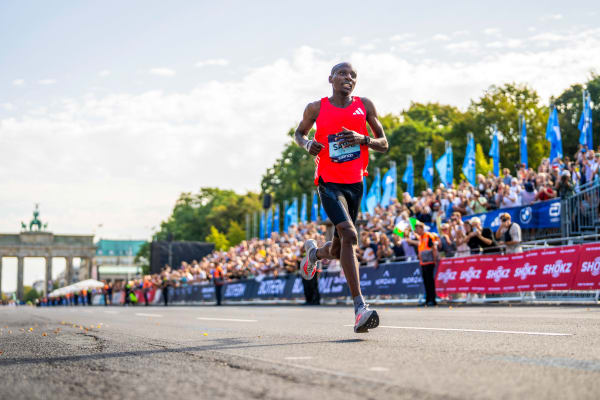
How Far Can Sabastian Sawe Go in the Marathon? Why His 1:59:30 Might Only Be the Beginning
Can Sabastian Sawe run faster than 1:59:30? Training, Berlin, shoes and nutrition: a deep dive into why his best marathon performances may still be ahead of him.
Sun, May 17, 2026
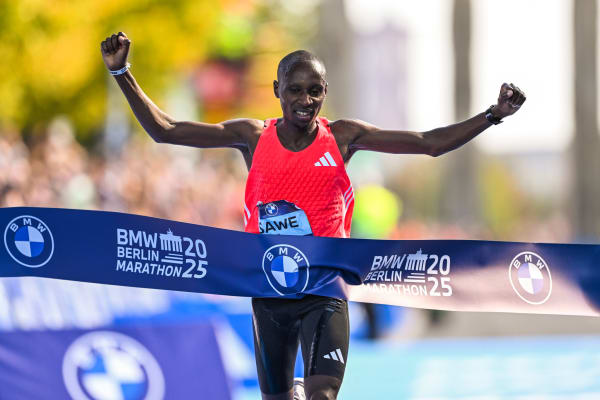
Where Does Sabastian Sawe’s 1:59:30 Rank Among the Greatest Performances in Athletics History?
Is Sabastian Sawe’s 1:59:30 at the London Marathon one of the greatest achievements in athletics history? Historical analysis, World Athletics rankings, and the impact of the sub-2 marathon.
Mon, May 11, 2026